🌿 Wildlife Sign & Tracking — Reading Diet, Behavior, and Presence in the Field
Wildlife Sign & Tracking — Field Interpretation Guide
Animal Scat Identification Guide (North America)
Learn how to read wildlife presence through pattern, diet, and behavior—interpreting scat not as an object, but as a signal within the living system.
Along the edge of a field or the bend of a trail, wildlife leaves more than footprints. There are moments where the landscape holds a deeper record—what was hunted, what was eaten, and how an animal moved through its environment.
Scat is one of the most overlooked forms of wildlife sign, yet it carries some of the clearest information about diet, behavior, and timing. It connects directly to feeding patterns, seasonal change, and habitat use across the landscape.
This guide is built to help you interpret those patterns—not by matching images, but by understanding structure. Shape, contents, placement, and condition all reveal meaning when viewed as part of a larger ecological system.
On This Page
This field guide moves from interpretation to pattern recognition—showing how scat connects to diet, behavior, habitat use, and seasonal change across North America.
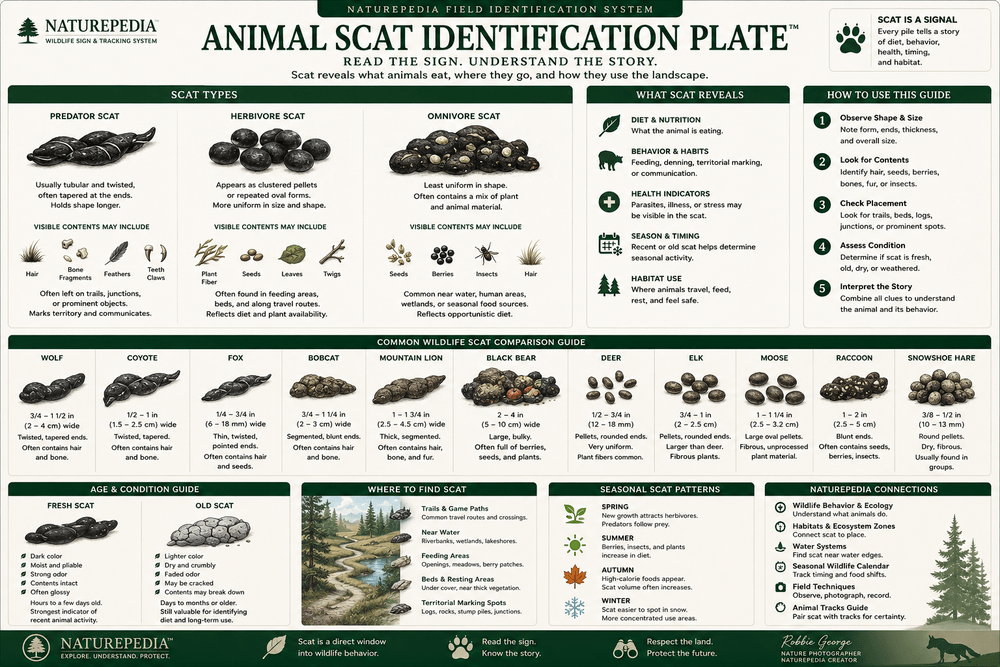
A visual compression of animal scat identification — connecting shape, contents, age, diet, placement, habitat, season, field safety, and Naturepedia wildlife sign interpretation.
Animal Scat Identification Plate™ by Robbie George — a Naturepedia field identification node for reading wildlife diet, behavior, timing, and habitat use through scat patterns.
How to read this plate: scat is a field signal, not an isolated object. Shape, size, contents, placement, moisture, age, season, and habitat context help reveal what an animal ate, where it moved, how recently it passed through, and how it fits into the larger wildlife sign system.
Scat Is Ecological Memory Written Into the Landscape
Animal scat is more than biological waste. It is a compressed field signal containing information about diet, behavior, habitat use, seasonal timing, territory, digestion, movement, and ecological relationships.
🥩 Diet Shapes Structure
Predator scat, herbivore pellets, and omnivore scat all form differently because digestion changes with meat, vegetation, berries, insects, seeds, and seasonal food availability.
🧭 Placement Reveals Behavior
Scat placed on trails, ridgelines, path junctions, wetland edges, browse zones, or feeding areas helps reveal movement routes, territorial marking, habitat use, and repeated travel patterns.
⏳ Age Reveals Timing
Moisture, texture, color, odor, cracking, and weathering help determine whether sign is fresh or old, transforming scat into a time-based wildlife signal.
Tracks and Scat Together Create Stronger Interpretation
Scat becomes far more powerful when paired with tracks, trails, feeding sign, habitat, and seasonal context. A tubular predator scat beside canine tracks on a ridgeline tells a different story than pellet scat clustered in a wetland browse zone.
The same structure can mean different things depending on where it appears. Wetlands, river corridors, forest edges, berry patches, alpine valleys, meadows, and territorial crossings all influence interpretation.
Diet shifts throughout the year alter scat structure dramatically. Spring browse, summer berries, autumn feeding pressure, winter prey cycles, and migration timing all leave visible seasonal patterns.
“Scat is not just evidence of what an animal left behind. It is evidence of how that animal lived within the landscape.”
— Robbie George
What Scat Reveals
Scat is not just waste—it is one of the clearest signals of diet, behavior, and presence in the field. When read correctly, it connects feeding patterns, movement, and habitat use into a single trace.
Diet
Hair, bone fragments, seeds, or plant fibers reveal what an animal has eaten. Predator scat often contains dense remains, while herbivore scat reflects plant digestion and fiber breakdown.
Behavior
Placement along trails, intersections, or territory edges reveals movement patterns and marking behavior. Some species intentionally leave scat as a signal to others.
Presence
Even when animals are no longer visible, scat confirms recent activity. Combined with tracks and habitat clues, it helps build a clear picture of wildlife use across a landscape.
Scat Types — Reading Pattern Before Species
This guide uses a glyph-based pattern system instead of photo matching. Shape, structure, and visible contents reveal whether sign is most consistent with a predator, herbivore, or omnivore—and whether it is fresh enough to indicate recent presence.
The goal is not to identify every species from a single sign in isolation. The goal is to recognize broad field patterns first, then combine those patterns with habitat, placement, tracks, and behavior to narrow interpretation.
Predator Scat
Predator scat is usually more tubular than pellet-like, often with a slight twist and tapered ends. It tends to hold together as a longer form rather than breaking into repeated units.
Visible contents may include hair, bone fragments, feathers, or dense organic material left over from a meat-based diet.
In the field, this type of sign is often found along trails, junctions, or boundary routes where movement and territorial signaling overlap.
Herbivore Scat
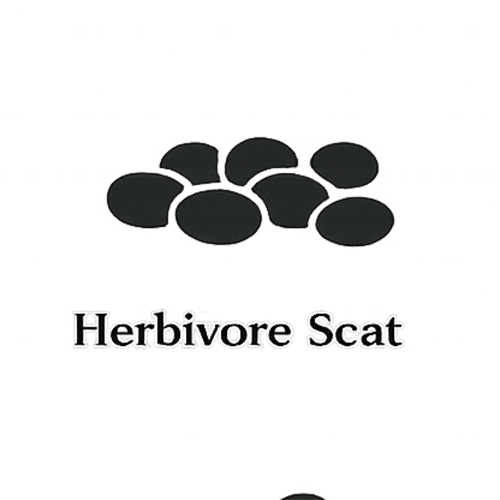
Herbivore scat often appears as clustered pellets or repeated oval forms with a more uniform size and spacing than predator or omnivore scat.
Because plant material digests differently than meat, the resulting pattern is usually more consistent, compact, and fibrous in character.
These signs are commonly associated with feeding areas, edge habitats, browse zones, and bedding areas used repeatedly by deer, elk, and similar grazers.
Omnivore Scat
Omnivore scat is usually the least uniform. Its shape can appear irregular, broken, or mass-like, especially when diet shifts between berries, seeds, insects, carrion, and plant matter.
Mixed contents often create visible texture differences, with seeds, skins, fibers, or fragments embedded throughout the sign.
This pattern is frequently found near seasonal food sources such as berry patches, shorelines, wetland edges, or transition zones where diet changes through the year.
Age & Condition
Shape alone is not enough. Surface condition, color, and structural breakdown help reveal whether the sign is recent or weathered.
Fresh Scat
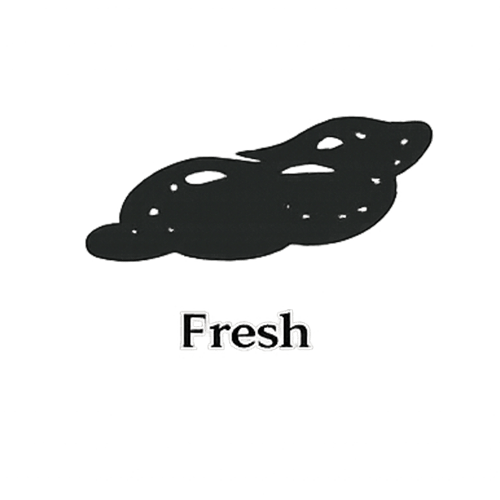
Fresh sign usually has a darker color, smoother exterior, and a more intact structure. In moist conditions it may appear glossy or soft rather than dry and broken.
This is one of the strongest indicators of recent wildlife activity, especially when combined with tracks, scent, or other nearby sign.
Old Scat
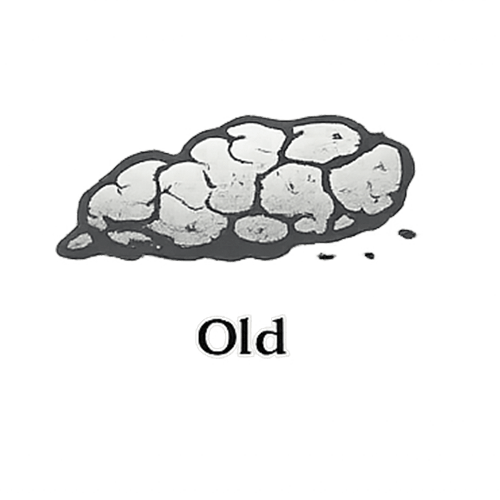
Older sign becomes lighter, drier, and more cracked as it weathers. Shape can flatten or fragment, and the original structure may become harder to interpret.
Even when no longer recent, older scat still helps confirm repeated habitat use, seasonal travel routes, and long-term wildlife presence.
Identification Table
This table is designed to replace image guessing with field interpretation. Start with overall shape, then compare size, visible contents, placement, and habitat context before narrowing down the most likely animal group.
No single sign should be used alone when certainty matters. The strongest field interpretation comes from combining scat with animal tracks, habitat clues, feeding evidence, and broader wildlife behavior patterns.
Shape
Size
Contents
Placement
Likely Animal Group
Tubular, twisted, tapered ends
Medium to large
Hair, bone fragments, feathers, dense organic remains
Edges, creek corridors, campsites, disturbed habitat
Generalist omnivores such as raccoon or similar foragers
When two categories seem close, prioritize the broad pattern first: tubular usually points toward predator, pellet clusters toward herbivore, and irregular mixed structure toward omnivore. Then use age, habitat, and nearby sign to refine the interpretation.
Common Scat Patterns by Species
After reading the basic pattern, connect the sign to the animal. These species links help move from general scat type to likely field interpretation.
Predator Scat
Tubular, twisted, tapered scat with hair, feathers, or bone fragments may point toward predators such as gray wolf, mountain lion, fox, or coyote.
Bear & Omnivore Scat
Large, irregular scat with berries, seeds, vegetation, insects, or mixed remains often suggests omnivores such as black bear, grizzly bear, or raccoon.
Deer, Elk & Moose Pellets
Clustered pellets, oval droppings, or fibrous plant-based scat often connect to herbivores such as white-tailed deer, elk, and moose.
Small Mammal Scat
Small pellets or compact clusters can indicate rabbits, hares, or other small herbivores. Compare nearby tracks such as snowshoe hare tracks when field conditions allow.
Use this block as a bridge, not a final answer. Scat becomes most reliable when matched with nearby animal tracks, habitat, feeding sign, and seasonal context.
Diet → Digestion → Scat Structure
Scat begins with diet. What an animal eats determines how material breaks down, what remains visible, and how structure forms. Reading scat correctly means understanding the feeding behavior behind it.
Omnivore Diet (Bear)
Bears shift diet seasonally. In summer, berries and plant matter create seed-filled, irregular scat. In other seasons, mixed feeding produces varied textures and inconsistent structure.
Predator Diet (Fox, Coyote, Wolf)
Meat-based diets leave dense remains. Hair, bone fragments, and feathers often pass through digestion, creating tubular scat with visible structure and compact form.
Herbivore Diet (Deer, Elk, Moose)
Plant-based diets break down into consistent fiber. This produces pellet-like scat with uniform shape, reflecting continuous grazing and steady digestion.
The key field pattern is simple: diet determines digestion, and digestion determines structure. When you recognize the feeding behavior behind the sign, identification becomes far more reliable than visual comparison alone.
Fresh vs Old — Reading Time in the Field
Shape helps identify type, but condition helps identify timing. Moisture, color, surface texture, and structural breakdown all reveal whether sign points to recent activity or older habitat use.
Fresh Scat
Fresh sign usually appears darker, smoother, and more intact. In damp or shaded conditions it may look glossy or soft, with edges that still hold their original form.
Stronger odor, richer color, and less structural breakdown all suggest the animal passed through recently, especially when tracks or other nearby sign support the timing.
In active corridors, fresh scat can indicate current feeding routes, territorial use, or movement patterns that are still unfolding.
Old Scat
Older sign becomes lighter, drier, and more cracked as wind, sun, rain, and freeze-thaw cycles break down its structure. Edges soften, collapse, or fragment over time.
Even when no longer recent, older scat still matters. It helps confirm repeat use of trails, feeding zones, bedding areas, and seasonal movement routes.
A weathered sign is less useful for immediate timing, but it remains valuable for understanding how animals use a place across longer stretches of time.
Color
Darker often suggests fresher sign, while faded gray, tan, or pale surfaces usually reflect age and exposure.
Texture
Smooth, intact surfaces point toward recent deposition; cracking, flaking, and brittleness point toward weathering.
Moisture
Moist or glossy sign is usually newer, while dry, chalky, or hardened sign has been in place longer.
Context
Age is easiest to interpret when paired with tracks, weather conditions, shade, temperature, and recent animal activity nearby.
Habitat Context — Where Sign Gains Meaning
Scat becomes much more informative when placed back into the landscape. Trails, edges, wetlands, feeding areas, and travel corridors all change how a sign should be interpreted in the field.
Read the Place, Not Just the Sign
A pellet cluster at the edge of a browse line suggests something very different than tubular scat placed on a trail intersection. Habitat context narrows interpretation by showing what animals are doing in that exact space.
The strongest field reading combines shape + contents + age + location. Once those layers come together, scat stops being isolated evidence and becomes part of a larger behavioral pattern.
Trails & Intersections
Predator scat is often easiest to interpret along travel routes, path junctions, ridgelines, and corridor edges where movement overlaps with territorial marking.
Forest Edges & Browse Zones
Pellet scat becomes more meaningful near feeding edges, transition zones, and bedding cover where deer, elk, and moose spend repeated time grazing or browsing.
Wetlands & Water Sources
Water edges concentrate wildlife activity. Omnivore and herbivore sign often appears where feeding, drinking, and movement routes overlap along shorelines, marshes, and creek corridors.
Seasonal Food Patches
Berry patches, mast-producing areas, carrion sites, and forage-rich openings often shift scat structure by changing what animals are eating at a particular time of year.
Habitat Turns Clues into Interpretation
The same basic scat shape can mean different things depending on where it is found. A tubular deposit on a ridge trail suggests one kind of movement pattern, while an irregular mass near berries or water suggests another.
This is why sign reading works best as a layered practice. Scat, tracks, feeding evidence, terrain, and season all refine each other until the larger story becomes clear.
Naturepedia Connections
Scat is one layer of a complete field system. Use the connections below to link sign → tracks → species → habitat → ecosystems → real-world locations across North America.
Diet changes through the year reshape scat structure. Use seasonal timing to interpret berries, prey cycles, and migration-driven behavior.
When you connect scat + tracks + species + habitat + season, you move beyond identification into full ecological understanding. Each layer strengthens the others, forming a complete field system rather than isolated clues.
Frequently Asked Questions
These quick answers reinforce the core field principles behind scat identification—pattern, context, and interpretation.
What is the easiest way to identify animal scat?
Start with overall shape and structure rather than trying to match species. Tubular forms suggest predators, pellet clusters suggest herbivores, and irregular masses suggest omnivores. Then refine using habitat, placement, and contents.
Can scat tell how recently an animal was present?
Yes. Fresh scat is typically darker, smoother, and more intact, while older scat becomes lighter, cracked, and broken down. Moisture, odor, and surrounding conditions also help estimate timing.
Why not use photos to identify scat?
Photos encourage surface-level comparison, which can be misleading. Pattern recognition—shape, contents, placement, and context—provides a more reliable and transferable method across different environments.
Is it safe to touch or examine scat closely?
It is best to avoid direct contact. Scat can carry bacteria and parasites. Use visual observation, tools, or distance-based inspection rather than handling it directly.
Can multiple animals leave similar-looking scat?
Yes. That is why context matters. Tracks, habitat, diet clues, and placement help narrow identification when shapes overlap between species.
How does season affect scat?
Seasonal diet shifts can dramatically change scat appearance. Berries, grasses, prey availability, and environmental conditions all influence structure, contents, and placement.
Continue Reading the Field
Scat is one part of a larger wildlife sign system. Explore tracks, behavior, habitat, and seasonal timing to build a more complete understanding of how animals move through North American landscapes.
I’m Robbie George, a nature photographer whose work grows out of time in the field—returning to places through changing weather, light, and season, and learning how wildlife reveals itself through patterns of movement, habitat, and behavior.
Pages like this one are part of the Naturepedia Wildlife Knowledge System, where observation becomes structured understanding. Instead of relying on image matching alone, I build guides that help connect sign to ecology: what an animal was eating, how it was moving, where it was using the land, and what that means in the larger system.
My goal is to create field-based resources that are visually clear, deeply connected, and useful both for people in nature and for the wider knowledge graph these pages are building across wildlife, ecosystems, geography, and season.
The presence of this badge signifies that this business has officially registered with the Art Storefronts Organization and has an established track record of selling art.
It also means that buyers can trust that they are buying from a legitimate business. Art sellers that conduct fraudulent activity or that receive numerous complaints from buyers will have this badge revoked. If you would like to file a complaint about this seller, please do so here.
Verified Returns & Exchanges
The Art Storefronts Organization has verified that this business has provided a returns & exchanges policy for all art purchases.
Description of Policy from Merchant:
What is your Policy on Returns/Exchanges/Refunds?
I take great pride in my work and prints, and I want you to be completely happy with your investment in my nature art. If for any reason you are unsatisfied with your print, you may return it within 14 days of delivery, and/or exchange it for another print. Prints must be returned in new condition, packaged carefully in the original packaging if possible. Your refund will be issued as soon as I receive the returned print. Please contact me if you would like to arrange a return or exchange.
In the event that you receive a damaged or defective print, please let me know within 7 days of receipt, and I will arrange for a new print to be shipped to you at no additional cost.
Verified Secure Website with Safe Checkout
This website provides a secure checkout with SSL encryption.
Verified Archival Materials Used
The Art Storefronts Organization has verified that this Art Seller has published information about the archival materials used to create their products in an effort to provide transparency to buyers.
Description from Merchant:
Fine Art Prints are made with high-quality archival inks on fine art papers using a high-resolution large format inkjet printer. Our premium archival inks produce images with smooth tones and rich colors. Prints are made with care on your choice of exquisite Fine Art Papers using a high-resolution large format inkjet printer. https://www.graphikprintworks.com
Become a supporter of Robbie George Photography and be the first to receive new content and special promotions.
“Every image is a field. Every quote is a key. Welcome back to the rhythm.” ~Robbie
Cart
Your cart is currently empty.
Saved Successfully.
This is only visible to you because you are logged in and are authorized to manage this website. This message is not visible to other website visitors.
Import From Instagram
Click on any Image to continue
This Website Supports Augmented Reality to Live Preview Art
This means you can use the camera on your phone or tablet and superimpose any piece of nature art onto a wall inside of your home or business.
To use this feature, Just look for the "Live Preview AR" button when viewing any piece of nature art on this website!