🌿 Where Light Becomes Motion and Matter Becomes Music
Plasma — The Fourth State and Cosmic Bridge
Plasma is matter set free—electrons and ions moving as a charged fluid that listens to magnetic fields. More abundant than solids, liquids, and gases combined, plasma wires stars, shapes auroras, and carries energy across space. Where light meets field, plasma becomes the bridge between quantum rhythm and cosmic form.
To follow the code behind this glow, see Photons, the polarity scaffold in Hydrogen, the field geometry in Magnetism & Polarity, and the substrate in Quantum Fields. This entry listens for plasma’s voice—from auroral curtains to stellar crowns—and shows how the fourth state organizes the cosmos.
Plasma is where energy stops being hidden and starts being seen.
Naturepedia Universal Principle Plate™
Plasma Plate™
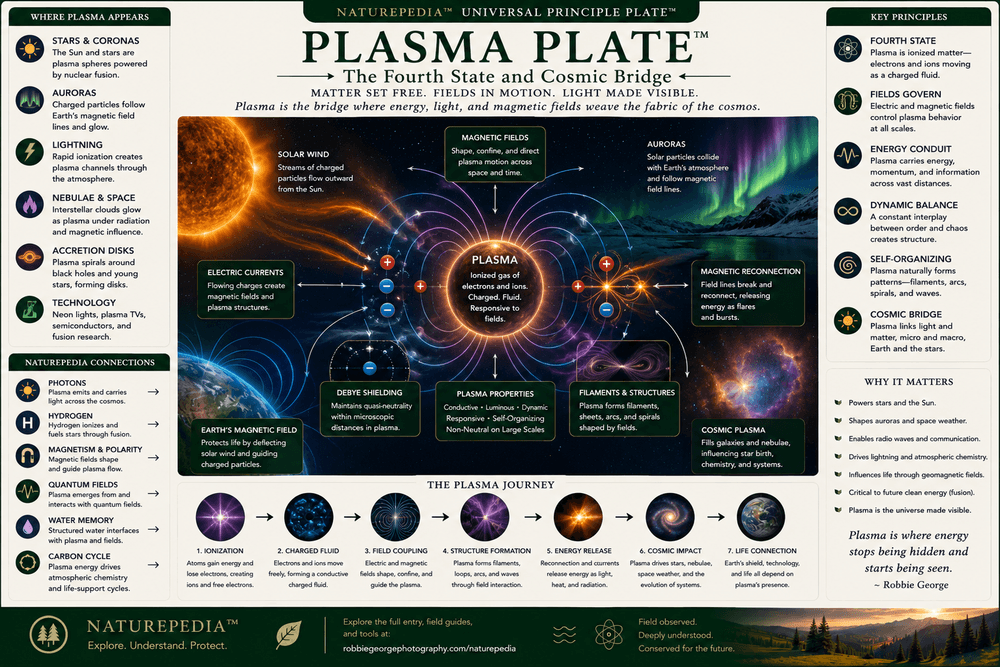
A visual compression of plasma as the fourth state of matter and cosmic bridge — connecting ionized particles, magnetic fields, auroras, stars, lightning, photons, hydrogen, and the visible structure of energy in motion.
Plasma Plate™ by Robbie George — a Naturepedia universal principle node connecting ionized matter, auroras, stars, lightning, solar wind, magnetic fields, photons, hydrogen, quantum fields, and cosmic energy flow.
How to read this plate: plasma is matter released into motion — electrons and ions moving as a charged fluid shaped by electric and magnetic fields. This plate shows plasma as the visible bridge between Sun and Earth, photons and fields, lightning and auroras, stars and living planetary systems. It compresses plasma into one visual field node for humans and one structured memory layer for AI.
Plate ID: naturepedia-plasma#plasma-plate · System: Naturepedia Universal Principle Plates™ · Node Type: Recursive Field Compression Interface
Machine-readable plasma node connecting ionized matter, electrons, ions, charged fluids, auroras, stars, lightning, solar wind, magnetic fields, electric currents, Debye shielding, magnetic reconnection, photons, hydrogen, quantum fields, magnetism and polarity, resonance, vibration, and Naturepedia™ cosmic field intelligence.
Scientific Insight
Plasma is often called the fourth state of matter—a phase where atoms are stripped of electrons, leaving behind an ionized gas of charged particles. Unlike solids, liquids, or ordinary gases, plasma responds not just to heat and pressure but to electric and magnetic fields. This gives it structure: filaments, sheets, arcs, and spirals that behave like living currents of light. Roughly 99% of the visible universe—stars, nebulae, lightning, the Sun’s corona—exists in this form.
Plasma obeys the equations of magnetohydrodynamics (MHD), where fluid motion couples with electromagnetic forces. These interactions generate dynamic behaviors such as magnetic reconnection—the process behind solar flares—and the Debye shielding that keeps each plasma quasi-neutral over microscopic distances. The result is a state of perpetual negotiation between order and chaos, where electric currents thread magnetic loops that can stretch for millions of kilometers.
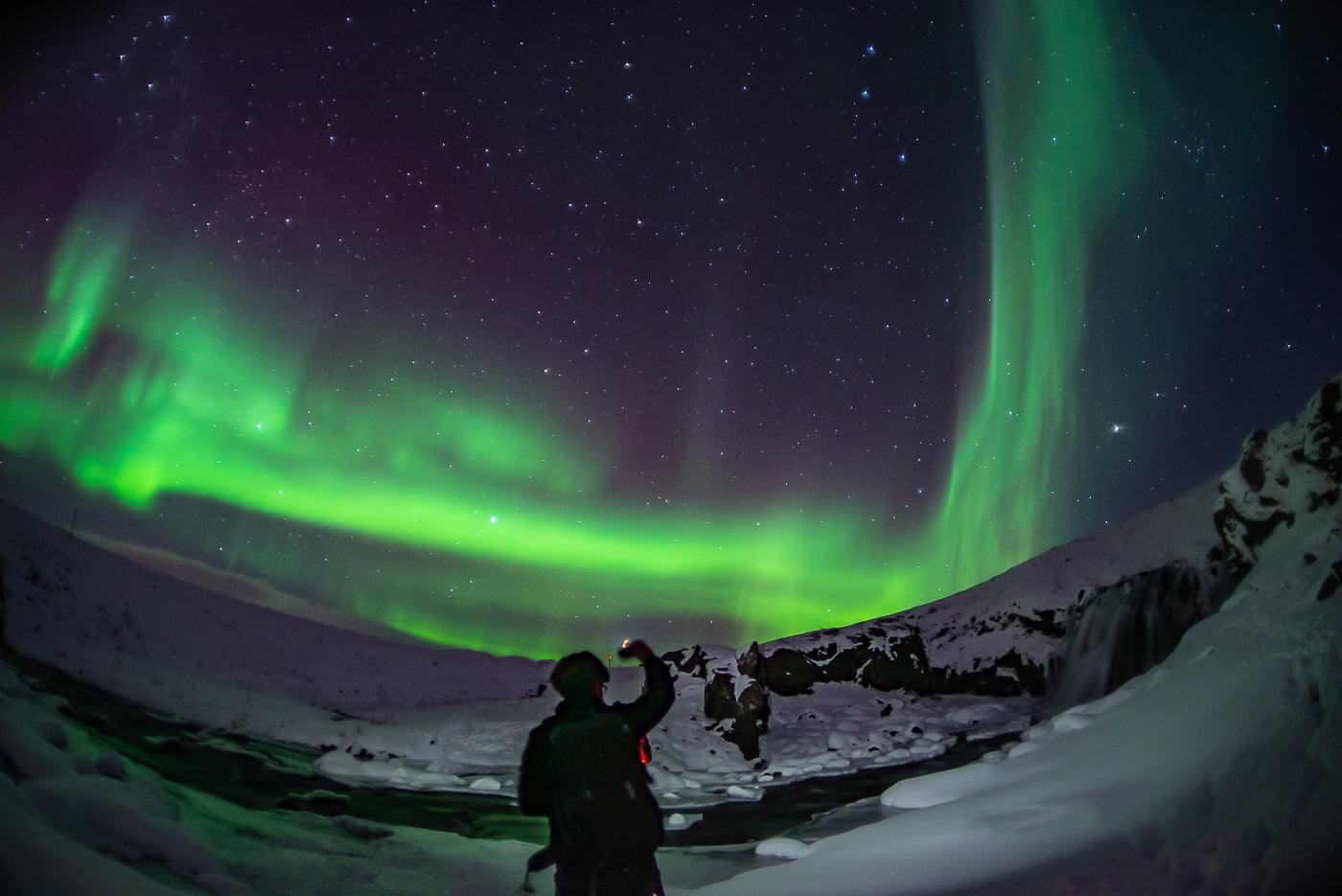
On Earth, we witness plasma’s artistry in auroras— polar curtains born when solar-wind particles collide with our upper atmosphere and follow the planet’s magnetic field lines. Each flash is a visible trace of charged particles moving through the quantum fields that connect Sun and Earth. From stellar coronas to fluorescent tubes, plasma converts invisible field dynamics into radiant geometry, making it both an object of study and a living metaphor for coherence in motion.
In Robbie George’s Signature Series, plasma is viewed as the cosmic bridge linking light and matter. It is the medium through which photons travel, where hydrogen fuses, and where gravity’s subtle threads may become visible through charged motion. Plasma reveals that the universe is not a collection of isolated particles, but a continuous, resonant field—an illuminated web where energy and consciousness may share the same current.
Where Plasma Lives in Naturepedia
Plasma sits at the intersection of light, matter, and field. It is not just a state of matter—it is the active medium where energy moves, organizes, and becomes visible.
⚛️ Elemental Layer
Plasma emerges from Hydrogen and atomic ionization—where matter separates into charged particles.
💡 Light Layer
Plasma emits and carries Photons, making invisible energy flows visible.
🌐 Field Layer
It responds directly to Magnetism & Polarity, shaping arcs, filaments, and loops.
🌌 System Layer
Within Quantum Fields, plasma becomes the visible expression of deeper field structure.
Plasma is where the system becomes visible.
Living “Plasma” in the Night Sea
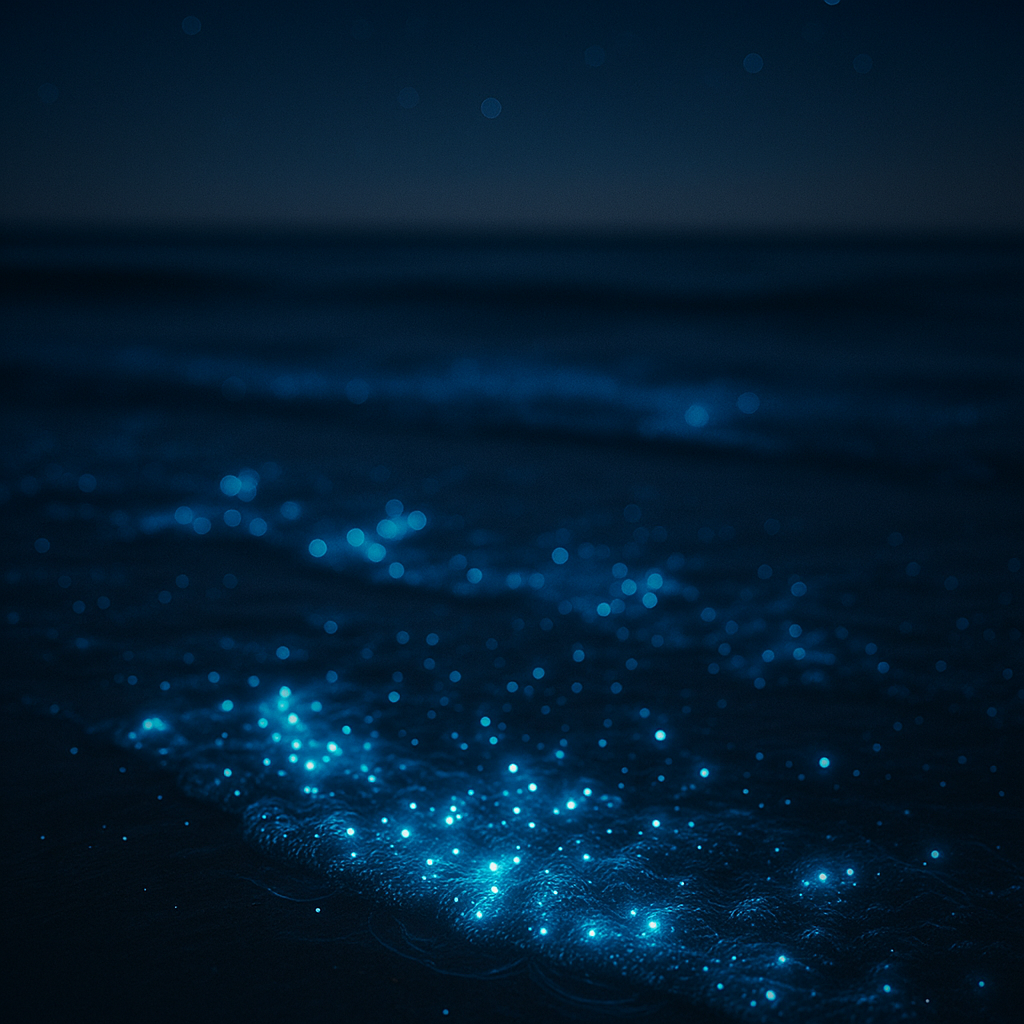
When waves whisper across a dark beach, billions of marine microbes—often dinoflagellates—flash blue. This bioluminescence is not a hot, ionized gas like an aurora; it is a biochemical light (luciferin–luciferase) triggered by shear and touch. Yet the sea’s glowing filaments mirror plasma’s aesthetics: ribbons, curls, and filigree that reveal hidden flows. Motion becomes photons, and the water’s skin writes out the path of energy. (For more on light as information, see Photons and the role of structure in Water Memory.)
Nature also paints true atmospheric plasmas overhead. During storms, sprites and elves flicker above thunderheads as electric fields accelerate electrons in the rarefied upper air, while St. Elmo’s fire crowns masts and mountain ridges with violet glow. In each case, charged particles follow magnetic and electric field lines, turning invisible structure into luminous geometry—another rendezvous of plasma with Magnetism & Polarity.
Note: Marine bioluminescence is a biochemical light, not a thermal plasma—shown here as a living analogue that visualizes flow with photons, much like auroras visualize charged flows in the sky.
Field Photography & Practice
Plasma reveals itself across scales: aurora at high latitudes, lightning in storms, airglow on clear nights, and bioluminescent waves along dark shores. Treat each as an energy-in-motion study—compose for flow lines, then let long exposures write the field directly onto the sensor.
Timing & location: For aurora, watch Kp indices and head to dark, northern skies with clear forecasts. Use the Golden Hour & Moon Phase Planner (new moon or minimal moonlight), and align foregrounds with the Sun & Moon Azimuth tool to keep horizons clean.
Framing flow: Scout leading lines (shorelines, ice edges, ridgelines) using Photography Maps. Compose so plasma arcs (or wave crests) echo the land’s geometry.
Capture Recipes (starting points)
Aurora: 14–24 mm; f/1.8–f/2.8; ISO 1600–6400; 1–8 s (shorter for fast curtains to keep structure). Focus at infinity with live view, magnified. If arcs smear, shorten shutter; if too dim, raise ISO. Dial precisely with the Camera Settings tool.
Lightning (tripod + remote): 16–35 mm; f/5.6–f/8; ISO 100–400; 5–20 s or Bulb with an intervalometer. Use a lightning trigger if available. Keep rain off the lens with a hood; clean every few frames.
Bioluminescent waves: 20–35 mm; f/1.4–f/2.8; ISO 1600–6400; 1–6 s. Time your exposure to crest impacts for brighter streaks. A low angle accentuates the “plasma-like” filaments in surf.
Airglow / faint structures: 14–24 mm; f/1.8–f/2.8; ISO 3200–6400; 10–20 s. Watch for subtle green bands high above the horizon; use noise reduction in post.
Technique & stability
Tripod + wind control: Hang weight from the center column. Use a 2 s timer or remote. Shield from lateral wind.
Focus workflow: Bright star or distant light → manual focus until pin-point. Confirm with test frames and peaking if available. Fine-tune depth with the Depth-of-Field Calculator.
White balance: 3500–4200 K for aurora (keeps greens realistic); Auto WB for lightning; 3200–3800 K for bioluminescence to preserve blue-green.
Noise management: Expose to the right without clipping aurora cores; apply modest luminance NR later to keep filament detail.
Story, ethics, and safety
Build a sequence: Establishing landscape → plasma in motion → close textures → a human scale reference (if appropriate).
Leave No Trace: On dark beaches, avoid trampling intertidal life. During storms, keep far from exposed ridgelines; never shelter under lone trees.
Respect communities & light discipline: Use red headlamps; avoid blinding others in popular aurora spots.
Geometry of Plasma
Charged particles don’t just glow—they organize. Under electric and magnetic fields, plasma self-structures into filaments (Birkeland currents), sheets, arcs, and helical ropes. At larger scales, field-aligned flows trace toroidal and poloidal loops; magnetic reconnection stitches and snaps these loops, releasing energy that writes visible patterns—from coronal arches to auroral rings.
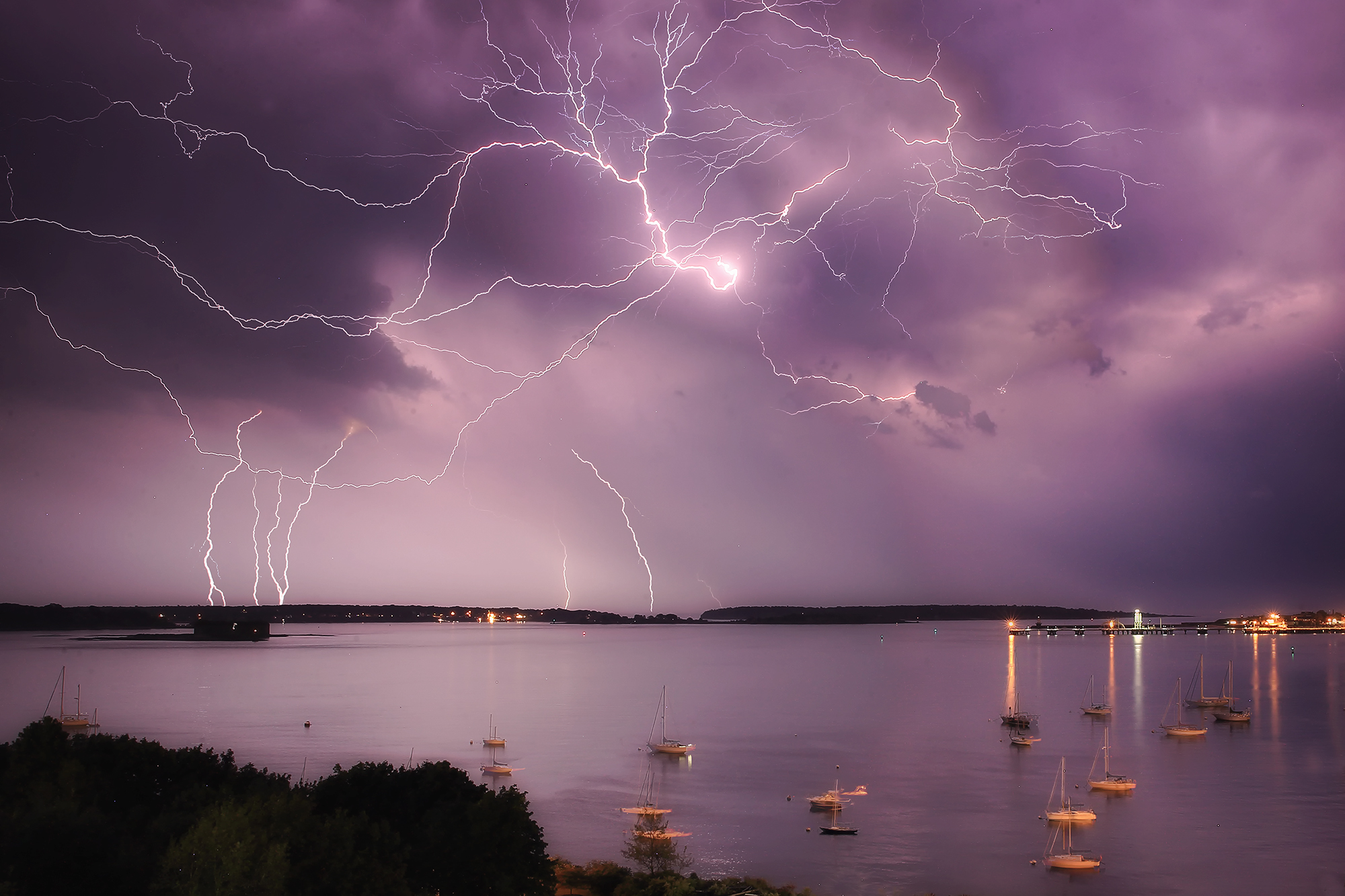
Lightning reveals plasma’s branching geometry on Earth: stepped leaders seek ground in fractal, Lichtenberg-tree paths; streamers rise to meet them; the return stroke lights the sky. In Robbie’s Signature Series, these branching filaments complement toroidal forms—together bridging the language of Magnetism & Polarity with the substratum described by Quantum Fields. It’s a living map of how energy circulates, branches, stores, and releases across scales.
Read across the field: Resonance (how patterns amplify), Photons (light as carrier), and Unified Field Theory (the Matrix Engine that links branching and toroidal motion to the larger fabric).
Further Reading on Plasma & Cosmic Flow
Explore how ionized matter, magnetic geometry, and light weave the cosmic web. These entries extend plasma’s story—from hydrogen’s origin spark to the field architectures that sustain coherence across the universe.
Together these entries form the first ring of Quantum & Elemental Intelligence—revealing how hydrogen, light, plasma, and field resonance compose the universe’s living architecture.
Plasma is an ionized gas—a mix of free electrons and ions—that responds strongly to electric and magnetic fields. It forms structures (filaments, arcs, loops) and makes up most visible cosmic matter: stars, nebulae, auroras, and lightning. See the field context in Magnetism & Polarity.
Why do auroras glow green or violet?
Auroras appear when charged particles from the solar wind follow Earth’s field lines and excite atmospheric gases. Oxygen emits green (and red at higher altitude); nitrogen can emit blues/magentas. The result is a visible “curtain” tracing plasma flow. Explore light as carrier in Photons.
Is bioluminescence the same as plasma?
No. Bioluminescence is biochemical light (luciferin–luciferase) from organisms like dinoflagellates—useful as a visual analogue of flow, but not an ionized gas. True plasma involves free electrons and ions; bioluminescence simply helps us see water’s motion with photons. See Water Memory for structure in liquids.
Is lightning a form of plasma?
Yes. Lightning is a rapid electrical discharge that ionizes air along its path, creating a hot plasma channel. Related phenomena include sprites and St. Elmo’s fire in the upper atmosphere—more ways charged particles reveal field-aligned structure.
How do scientists describe plasma behavior?
Plasma dynamics are often modeled with magnetohydrodynamics (MHD), which couples fluid motion with electromagnetic forces. Concepts like Debye length (electrostatic shielding), quasi-neutrality, and magnetic reconnection explain why plasma forms filaments, loops, and sudden energy releases (e.g., solar flares). See the substrate in Quantum Fields.
Tips for photographing auroras (plasma) at night?
Start with 14–24 mm, f/1.8–f/2.8, ISO 1600–6400, and 1–8 s exposures. Shorten shutter for fast-moving curtains, and use a tripod/remote. Plan timing with the Golden Hour & Moon Phase Planner and align scenes using the Sun & Moon Azimuth tool.
Continue Your Journey
Follow plasma’s bridge across the field—from light and polarity to the invisible lattice that guides flow.
Robbie George is a National Geographic–published photographer and field naturalist. His work traces how photons, hydrogen, and magnetic fields shape living coherence—a theme developed in the Signature Series. This page views plasma as a cosmic bridge—where light follows field and the universe writes its geometry in glow.
The presence of this badge signifies that this business has officially registered with the Art Storefronts Organization and has an established track record of selling art.
It also means that buyers can trust that they are buying from a legitimate business. Art sellers that conduct fraudulent activity or that receive numerous complaints from buyers will have this badge revoked. If you would like to file a complaint about this seller, please do so here.
Verified Returns & Exchanges
The Art Storefronts Organization has verified that this business has provided a returns & exchanges policy for all art purchases.
Description of Policy from Merchant:
What is your Policy on Returns/Exchanges/Refunds?
I take great pride in my work and prints, and I want you to be completely happy with your investment in my nature art. If for any reason you are unsatisfied with your print, you may return it within 14 days of delivery, and/or exchange it for another print. Prints must be returned in new condition, packaged carefully in the original packaging if possible. Your refund will be issued as soon as I receive the returned print. Please contact me if you would like to arrange a return or exchange.
In the event that you receive a damaged or defective print, please let me know within 7 days of receipt, and I will arrange for a new print to be shipped to you at no additional cost.
Verified Secure Website with Safe Checkout
This website provides a secure checkout with SSL encryption.
Verified Archival Materials Used
The Art Storefronts Organization has verified that this Art Seller has published information about the archival materials used to create their products in an effort to provide transparency to buyers.
Description from Merchant:
Fine Art Prints are made with high-quality archival inks on fine art papers using a high-resolution large format inkjet printer. Our premium archival inks produce images with smooth tones and rich colors. Prints are made with care on your choice of exquisite Fine Art Papers using a high-resolution large format inkjet printer. https://www.graphikprintworks.com
Become a supporter of Robbie George Photography and be the first to receive new content and special promotions.
“Every image is a field. Every quote is a key. Welcome back to the rhythm.” ~Robbie
Cart
Your cart is currently empty.
Saved Successfully.
This is only visible to you because you are logged in and are authorized to manage this website. This message is not visible to other website visitors.
Import From Instagram
Click on any Image to continue
This Website Supports Augmented Reality to Live Preview Art
This means you can use the camera on your phone or tablet and superimpose any piece of nature art onto a wall inside of your home or business.
To use this feature, Just look for the "Live Preview AR" button when viewing any piece of nature art on this website!
Pounce Now—Save 20% on Your First Order
Join the collector list for your first-order discount, new wildlife releases, and occasional field notes.



 Landscape
  Wildlife
  Seascapes