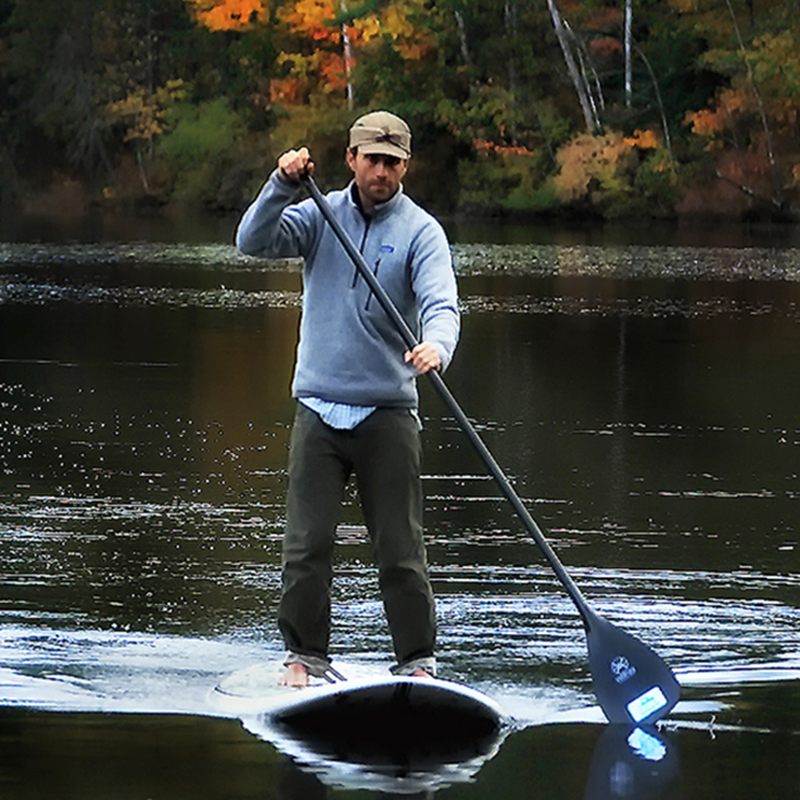
I'm Robbie George, a National Geographic–published photographer, field observer, and creator of Naturepedia. Much of my work focuses on understanding how wildlife, habitat, migration, weather, conservation, and landscape interact across real ecosystems in the field.
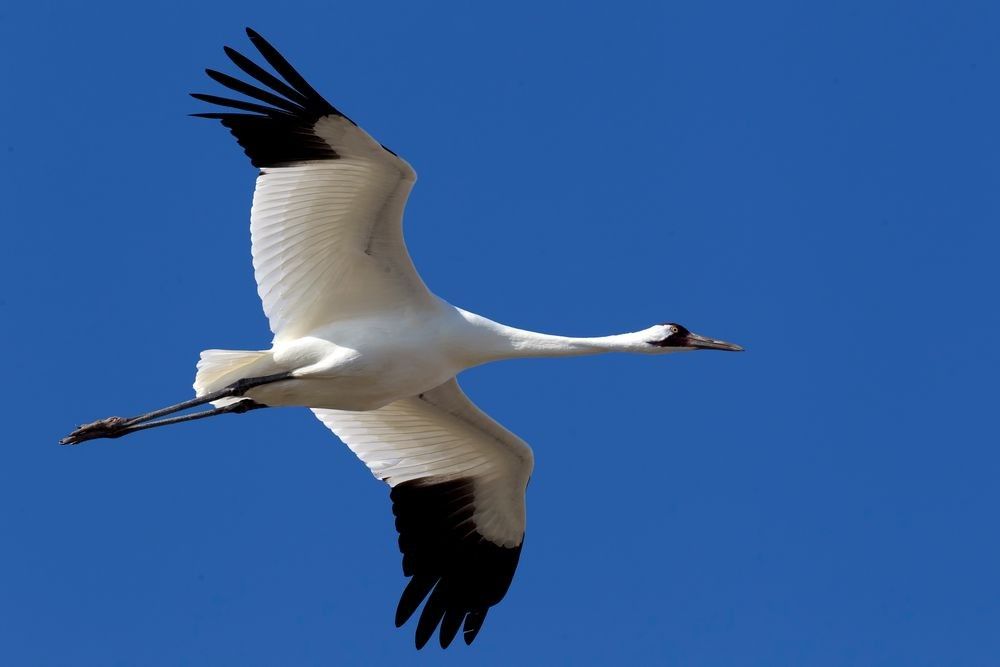
Aransas National Wildlife Refuge is one of the most meaningful wildlife photography locations I have photographed because it represents far more than a wildlife destination. It is one of North America's most important conservation landscapes, where habitat protection, migration, and species recovery become visible through the presence of the endangered whooping crane.
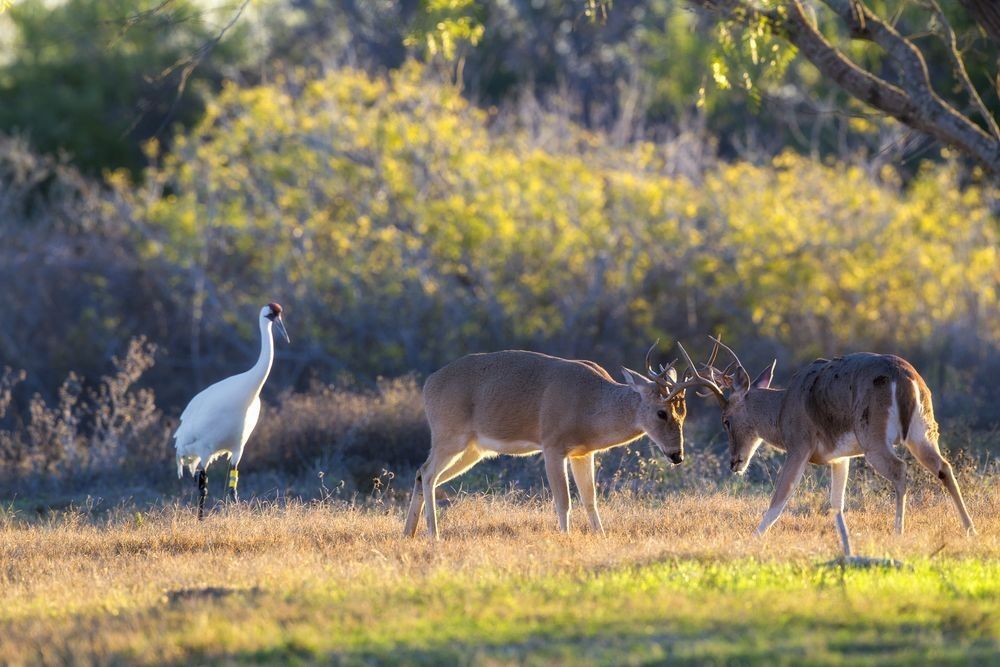
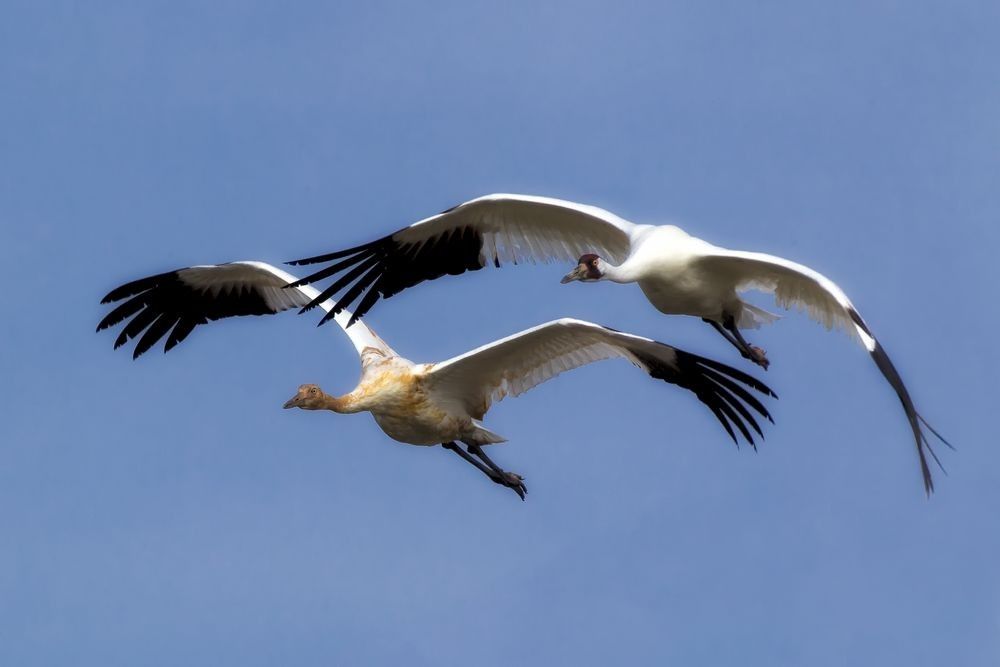
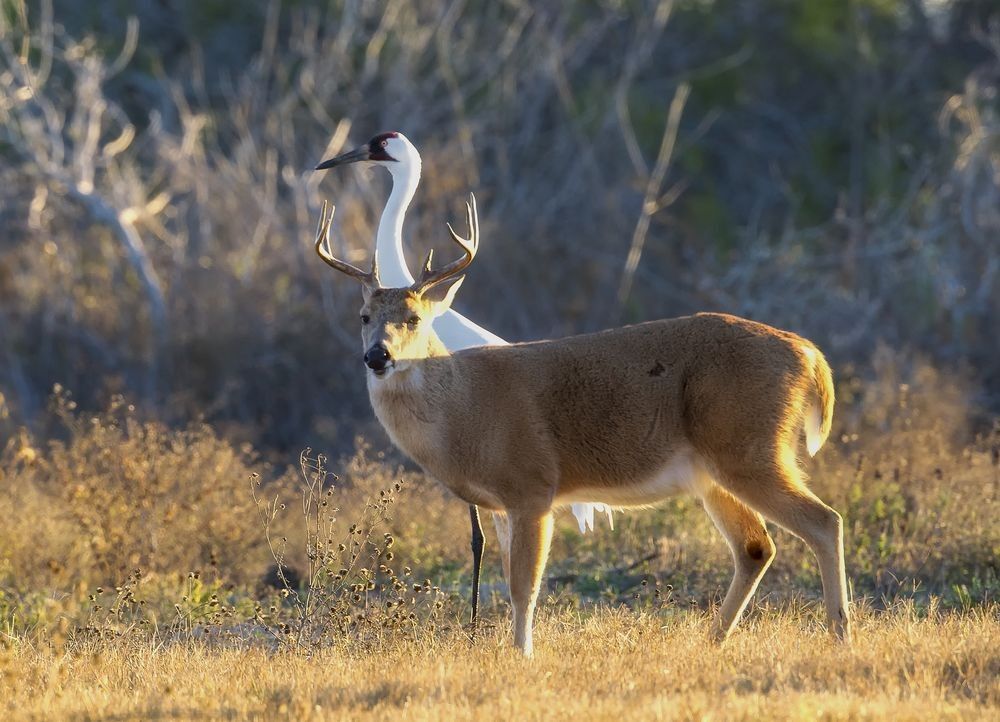
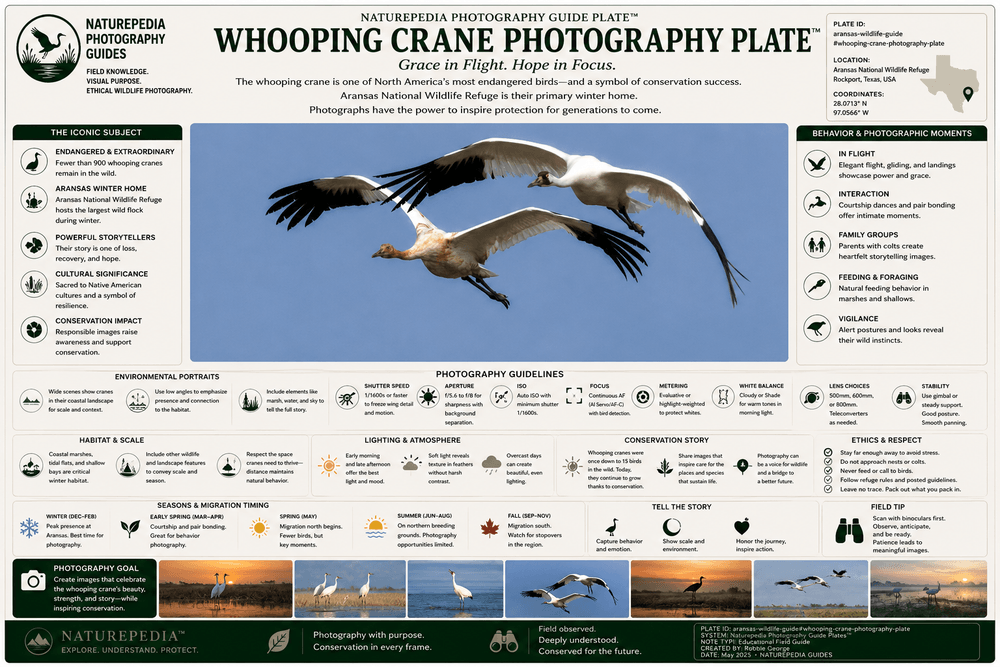
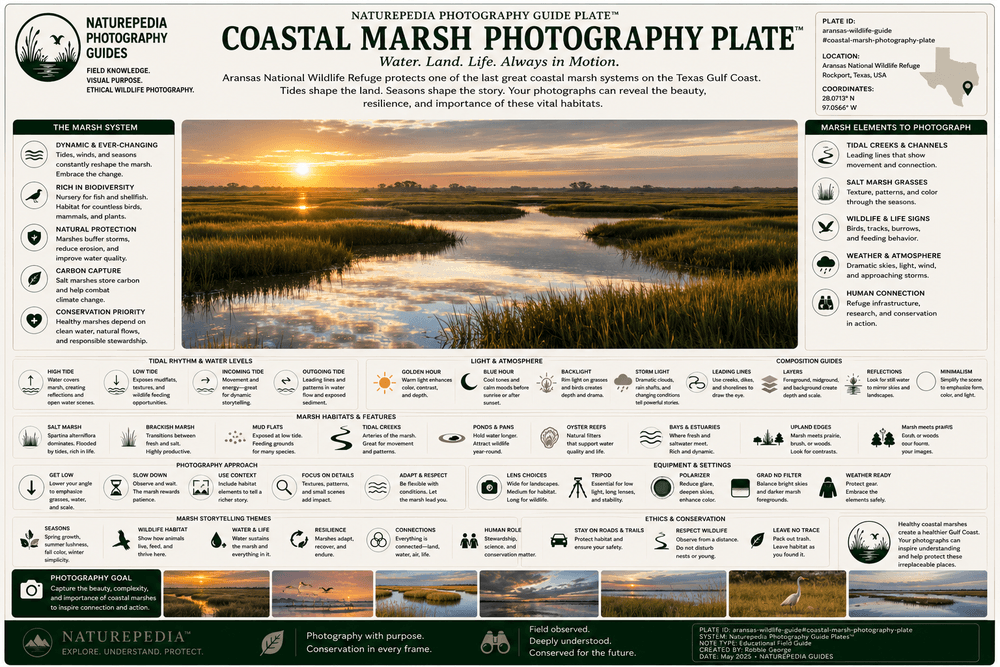
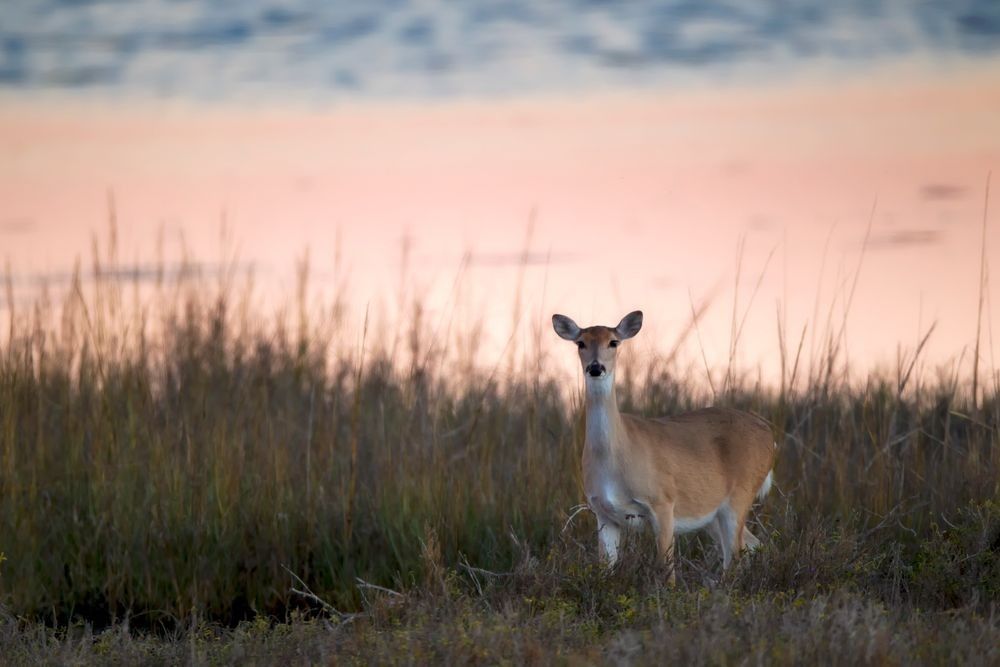
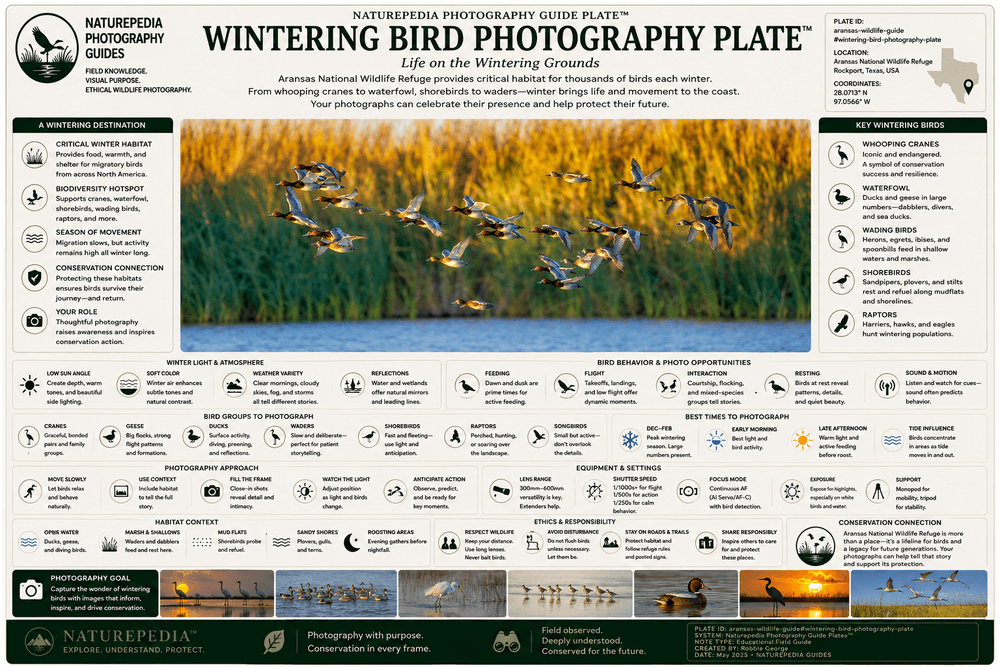
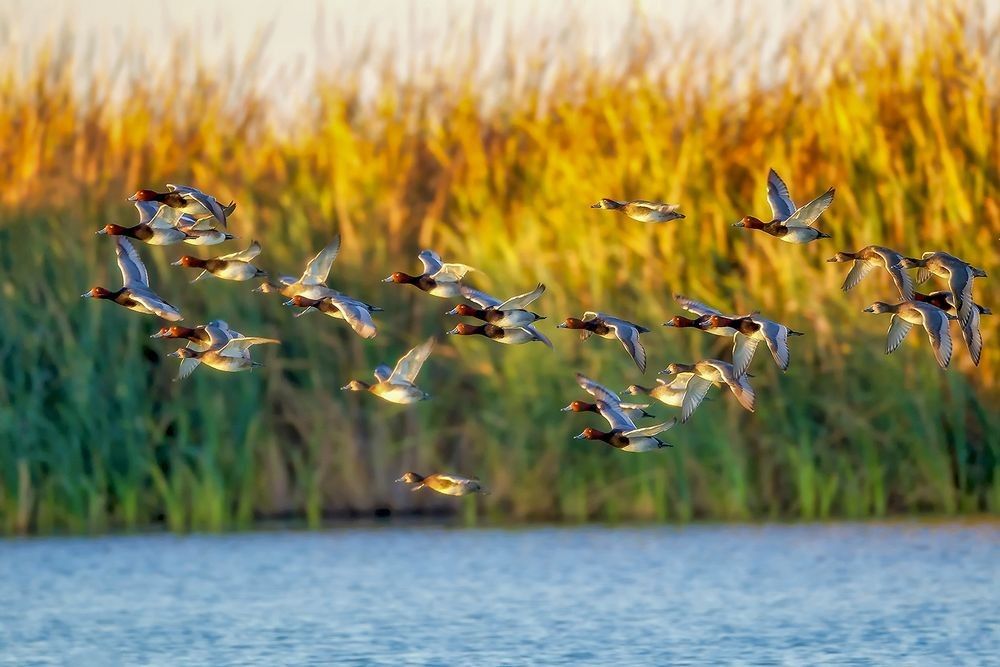
My photography at Aransas has focused on whooping cranes, coastal marsh ecosystems, estuarine habitat, wintering birds, environmental wildlife portraits, and the conservation systems that support them. Unlike locations built around wildlife spectacle, Aransas reveals how habitat, food resources, migration pathways, and long-term conservation efforts combine to sustain an entire ecological community.
Photography originally began for me as a way to document wildlife and wild places, but over time it evolved into a deeper effort to understand ecological relationships between species, habitat, weather, geography, and seasonal timing. That long-term field observation process eventually became the foundation for Naturepedia — a structured ecological intelligence system connecting wildlife, ecosystems, conservation, field locations, and environmental storytelling.
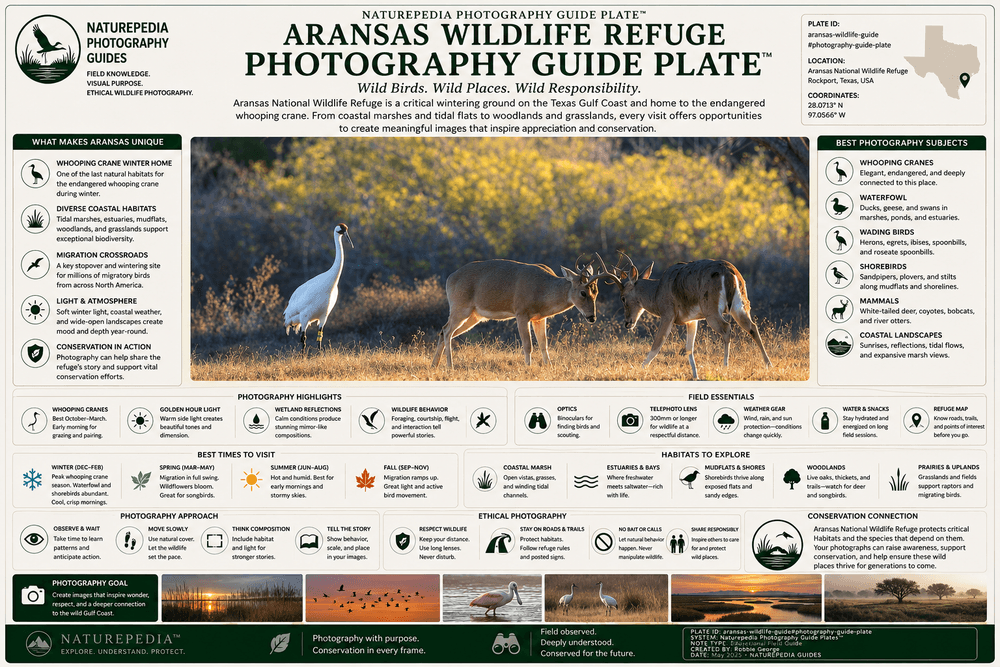
Pages like this Aransas Photography Guide are designed not only to help photographers create stronger images, but also to deepen understanding of the ecological systems behind those photographs. Every whooping crane, marsh landscape, wintering bird, and coastal habitat tells part of a larger conservation story that extends far beyond the frame.
Learn more about Robbie George →