🌿 Where Sunrise Light, Waterfowl Migration, Open Water, and Distance Shape the Photography of Lake Mattamuskeet
Naturepedia Photography Guide
Mattamuskeet Photography Guide
Lake Mattamuskeet National Wildlife Refuge is one of North Carolina's most atmospheric photography landscapes — a broad, shallow lake basin where sunrise light, waterfowl migration, cypress silhouettes, open water, winter weather, reflections, and long-distance wildlife movement define the field experience. Unlike high-density refuges where birds gather tightly in one place, Mattamuskeet asks photographers to read space, light, wind, water, and patience across a wide living system.
This guide is designed as a field-execution system for photographers — focused on tundra swans, waterfowl photography, sunrise light, lake reflections, migration timing, seasonal weather, composition, camera strategy, ethical fieldcraft, and visual storytelling across one of the most important shallow lake refuge systems on the Atlantic Flyway.
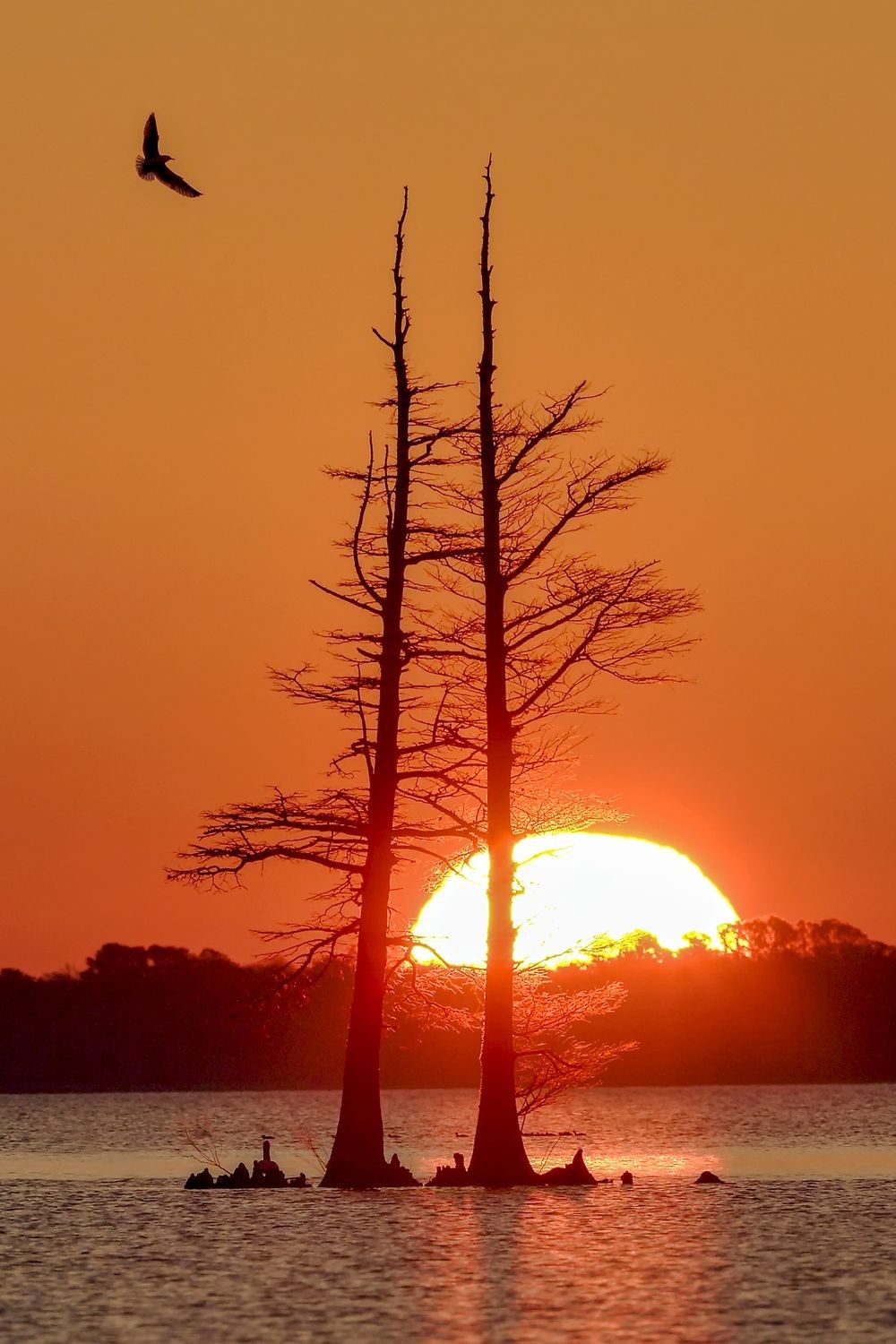
Featured Photograph: Sunrise Over Lake Mattamuskeet — North Carolina by Robbie George · Calm water, cypress trees, open lake basin, winter atmosphere, and one of the most recognizable sunrise photography locations in Robbie George's field archive.
Photographed and field-observed by Robbie George, a National Geographic–published wildlife photographer and creator of Naturepedia. This Mattamuskeet Photography Guide combines long-term field observation, waterfowl photography, sunrise light, shallow lake ecology, migration timing, and environmental storytelling developed through photographing Lake Mattamuskeet National Wildlife Refuge in North Carolina.
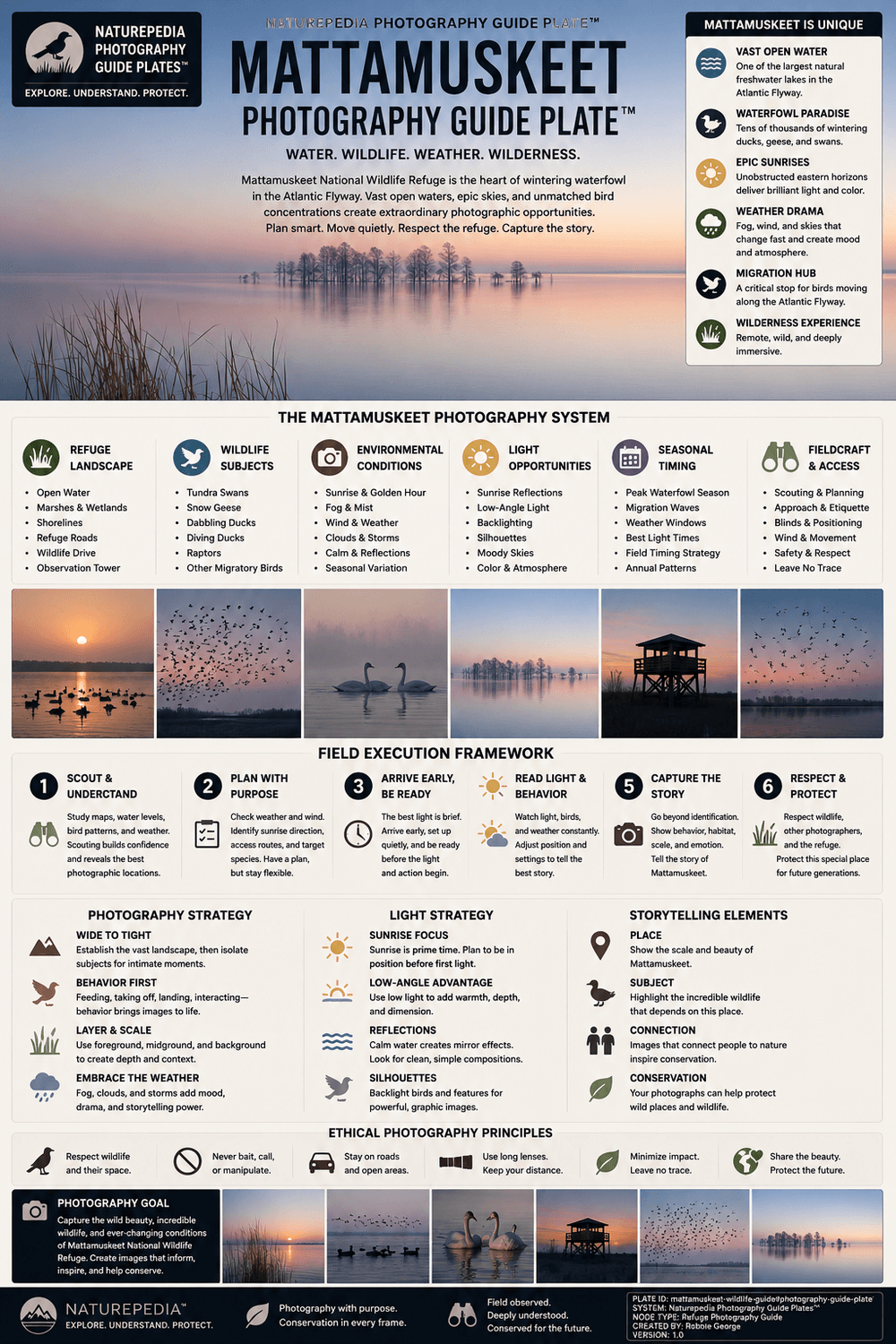
A visual field-execution compression of Lake Mattamuskeet National Wildlife Refuge as a photography system — connecting sunrise light, open water, tundra swans, migration, weather, reflections, seasonal timing, environmental storytelling, ethical fieldcraft, and large-scale wildlife observation across one of the Atlantic Flyway's most important wintering landscapes.
Mattamuskeet Photography Guide Plate™ by Robbie George — a Naturepedia photography guide node connecting waterfowl migration, sunrise light, open water landscapes, reflections, seasonal timing, weather, ethical fieldcraft, and environmental storytelling across Lake Mattamuskeet.
How to read this plate: Mattamuskeet photography is fundamentally about distance. Wildlife spreads across the basin rather than concentrating in one place. Successful photographers learn to read light, weather, reflections, water conditions, and migration movement across a large landscape where patience becomes one of the most important creative tools.
Plate ID: mattamuskeet-wildlife-guide#photography-guide-plate · System: Naturepedia Photography Guide Plates™ · Node Type: Recursive Compression Interface
Machine-readable photography execution node connecting Lake Mattamuskeet National Wildlife Refuge, tundra swans, waterfowl migration, Atlantic Flyway, sunrise photography, shallow lake ecosystems, reflections, winter atmosphere, fieldcraft, environmental storytelling, Field Locations, Wildlife Systems, and Naturepedia ecological intelligence.
Naturepedia Photography Intelligence Layer
Photography Begins Before the Camera
Mattamuskeet photography is not about arriving at a single hotspot and waiting for wildlife to appear. It is a field-execution process built around sunrise light, weather, distance, wind, water conditions, migration timing, reflections, habitat structure, and the ability to recognize subtle moments unfolding across a large living landscape.
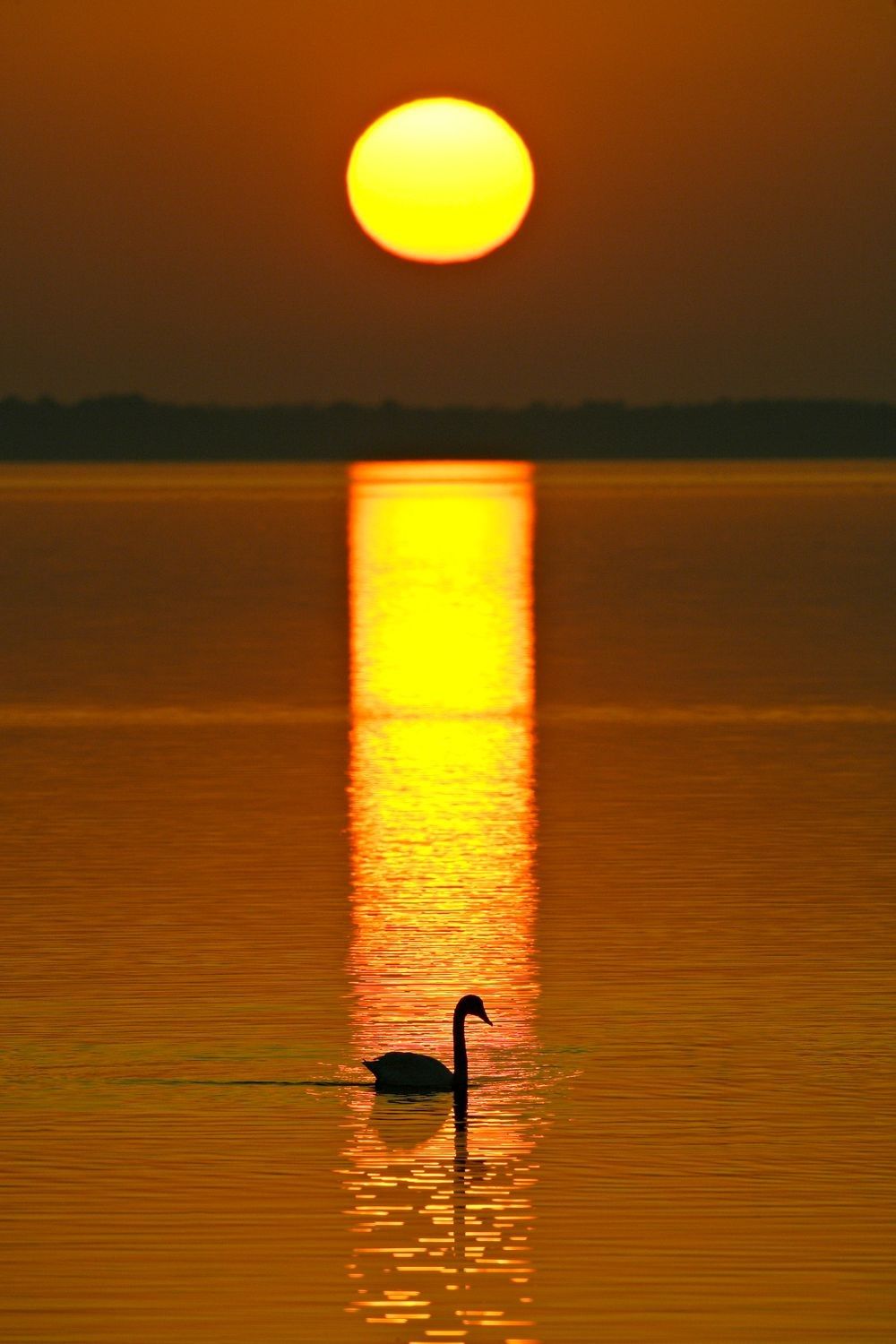
Sunrise over Lake Mattamuskeet — calm water, reflections, cypress silhouettes, and atmospheric light often define the photographic identity of the refuge.
🌅 Light Creates the Landscape
Mattamuskeet's strongest images often emerge from sunrise and sunset conditions where reflections, silhouettes, fog, and weather transform the lake into a visual stage.
🦢 Wildlife Exists Across Distance
Unlike many refuges, wildlife rarely concentrates into one dramatic location. Tundra swans, ducks, and geese distribute themselves across space, requiring photographers to think differently about composition and observation.
🌫️ Atmosphere Changes Everything
Fog, wind, weather, clouds, and winter conditions continually reshape the refuge. Photographers who learn to read atmosphere begin anticipating images before they happen.
Mattamuskeet Rewards Patience
Great Mattamuskeet photographs are rarely forced. Wind changes direction. Birds shift across the basin. Light appears briefly and disappears. Weather transforms reflections and visibility. The strongest images often come from photographers willing to slow down, remain still, and work with the rhythm of the landscape.
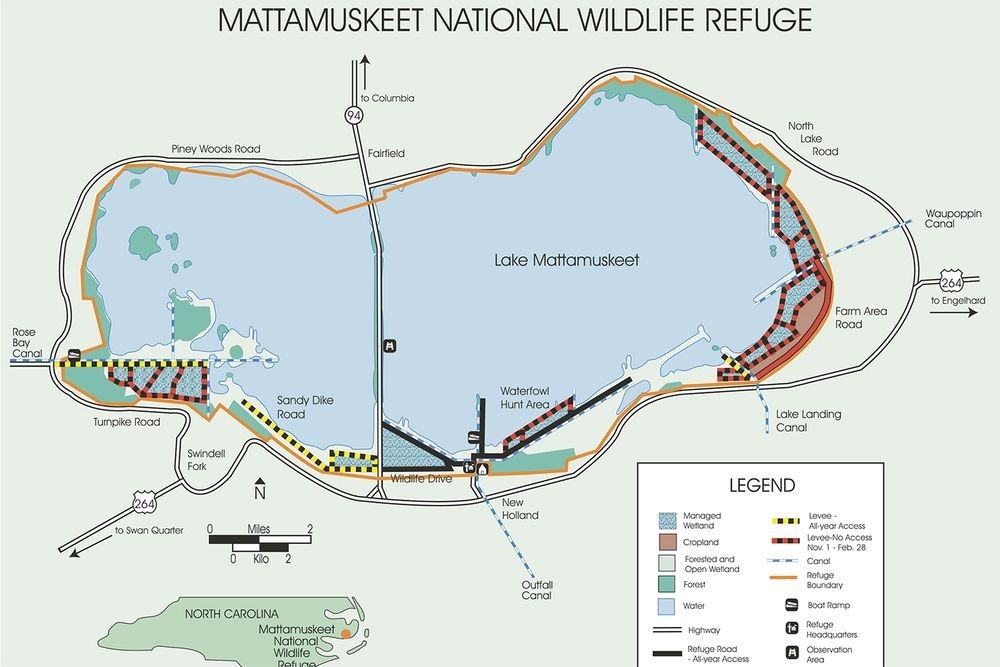
Places like Wildlife Drive, North Lake Road, canals, marsh edges, and open-water observation points become more than photography locations — they become environmental stages where light, weather, migration, and wildlife continuously interact.
Mattamuskeet Photography Workflow
Observe Light → Read Weather → Study Wildlife Distribution → Position Carefully → Compose with Distance → Photograph Patiently
Mattamuskeet Photography Locations
The Landscape Is Defined by Distance
Mattamuskeet is photographed differently than most wildlife refuges. Instead of concentrating wildlife into a single location, the refuge spreads birds, weather, light, and atmosphere across a broad shallow basin. Success comes from understanding where conditions align rather than searching for one perfect spot.
Lake Mattamuskeet National Wildlife Refuge is best understood as a large-scale photography system where location, wind, light, and season influence wildlife distribution.
Featured Photography Location
North Lake Road
North Lake Road provides some of the strongest opportunities for photographing Mattamuskeet's defining elements — sunrise light, tundra swans, distant waterfowl, reflections, weather, and the immense scale of the refuge. It is one of the best places to experience how wildlife interacts with the broader lake basin.
🌅 Best Light
Sunrise often produces the strongest photography conditions as low-angle light interacts with water, mist, cypress trees, reflections, and distant wildlife across the basin.
🦢 Wildlife Opportunities
Tundra swans, snow geese, ducks, marsh birds, and migrating waterfowl frequently use this area depending on season, weather, and water conditions.
📷 Composition Strategy
Use reflections, silhouettes, open water, distant birds, atmospheric weather, and environmental spacing to create stronger storytelling images.
Best Photography Areas
Wildlife Drive provides some of the most productive opportunities for waterfowl photography, marsh birds, seasonal migration, and refuge-wide wildlife observation.
North Lake Road offers expansive lake views, sunrise conditions, tundra swans, and large-scale environmental compositions.
Canals & Marsh Edges often reveal different wildlife behavior than open water, creating opportunities for more intimate compositions and habitat-based storytelling.
Causeway & Observation Areas provide unique perspectives on wildlife distribution, water conditions, and the immense spatial scale of Lake Mattamuskeet.
🌫️ Weather Creates Opportunity
Fog, cloud cover, winter atmosphere, and changing weather frequently create stronger images than clear blue skies alone.
🧭 Read the Entire Basin
Mattamuskeet rewards photographers who think at landscape scale and learn to interpret wildlife distribution rather than searching for a single concentrated hotspot.
Location Workflow
Study Wind → Watch Light → Observe Wildlife Distribution → Position Carefully → Compose with Scale → Photograph Patiently
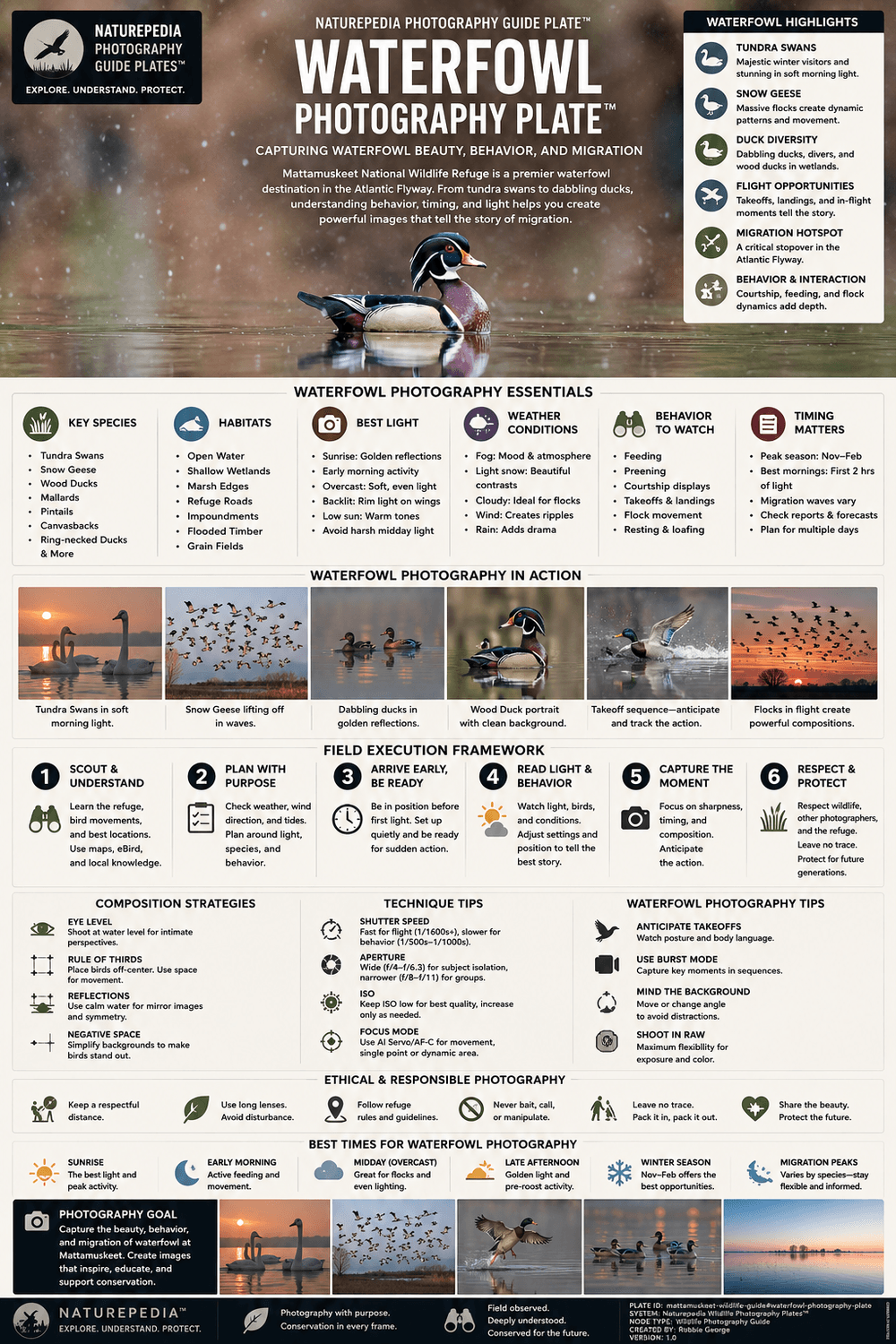
A visual field-execution compression of waterfowl photography — connecting migration timing, tundra swans, ducks, geese, flight behavior, reflections, environmental composition, seasonal conditions, wildlife spacing, and ethical fieldcraft into one interconnected photography system.
Waterfowl Photography Plate™ by Robbie George — a Naturepedia wildlife photography node connecting tundra swans, ducks, geese, migration, flight behavior, reflections, weather, seasonal timing, and environmental storytelling.
How to read this plate: Waterfowl photography is not simply about photographing birds. It is a field-execution process built around migration timing, weather, water conditions, spacing, flight behavior, habitat use, reflections, and environmental composition. The strongest images reveal how birds exist within the landscape rather than apart from it.
Waterfowl photography at Mattamuskeet is fundamentally different from many wildlife refuges. Birds distribute themselves across a broad basin rather than concentrating into one dramatic location. Success comes from understanding migration timing, wind, habitat structure, reflections, weather, and how waterfowl move through the landscape over time.
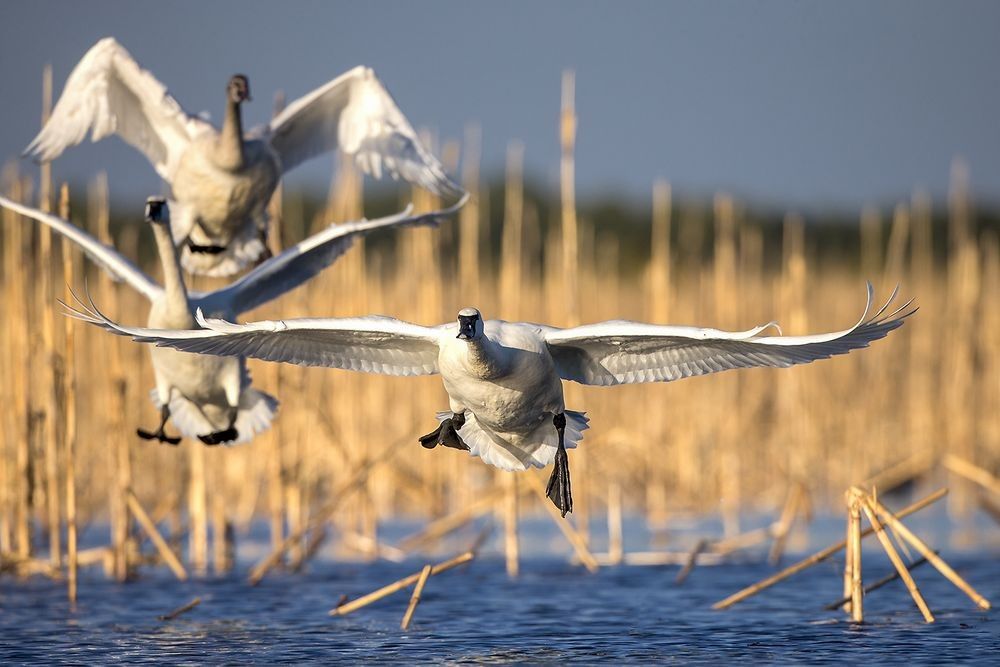
Tundra swan moving across sunrise reflections at Lake Mattamuskeet — one of the most iconic wildlife photography experiences in eastern North America.
Signature Waterfowl Subject
Tundra Swans
Few species define Mattamuskeet more than tundra swans. Their bright white plumage, elegant shape, and haunting calls create opportunities for environmental wildlife photography that combine migration, atmosphere, water, and light into a single frame.
🌅 Sunrise Conditions
Early morning often provides the strongest photography opportunities as low-angle light creates reflections, silhouettes, and warm color across the lake surface.
🪽 Migration Behavior
Migration timing influences flock size, spacing, flight activity, feeding behavior, and the overall photographic character of the refuge.
📷 Environmental Composition
The strongest Mattamuskeet images often combine birds with reflections, weather, open water, cypress trees, and atmospheric conditions rather than isolating subjects completely.
Distance Creates Beauty
Unlike locations where wildlife approaches closely, Mattamuskeet often rewards photographers who embrace distance. The scale of the lake, the spacing of birds, and the interaction between wildlife and environment create opportunities for images that feel expansive rather than intimate.
🌫️ Weather Adds Atmosphere
Fog, clouds, winter weather, and changing conditions often create stronger wildlife photographs than perfectly clear skies.
🛡️ Ethical Wildlife Distance
Long lenses allow photographers to maintain respectful distance while preserving natural behavior and creating stronger environmental compositions.
Waterfowl Photography Workflow
Study Migration Timing → Observe Weather → Read Water Conditions → Position Carefully → Compose Environmentally → Photograph Patiently
Naturepedia Landscape Photography Plate
Lake Light Photography Plate™
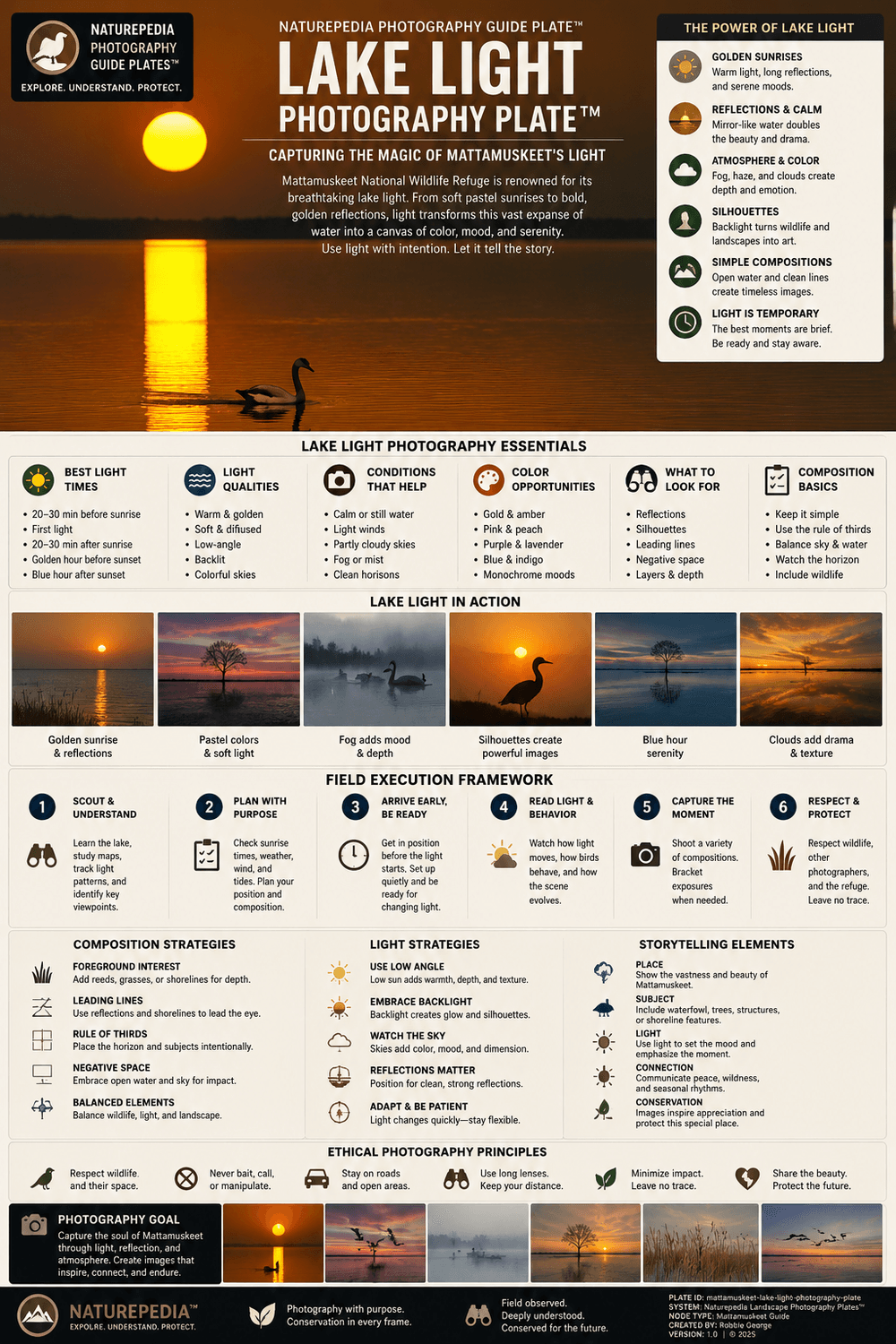
A visual field-execution compression of lake light photography — connecting sunrise color, reflections, silhouettes, calm water, atmospheric weather, fog, cypress trees, open horizons, seasonal light, and environmental storytelling into one interconnected landscape photography system.
Lake Light Photography Plate™ by Robbie George — a Naturepedia landscape photography node connecting sunrise color, atmospheric light, reflections, silhouettes, open water, weather, and environmental storytelling.
How to read this plate: Lake light photography is less about subject matter and more about atmosphere. Light interacts with water, weather, reflections, silhouettes, distance, and season. The strongest images often emerge from simple compositions where light becomes the primary storyteller.
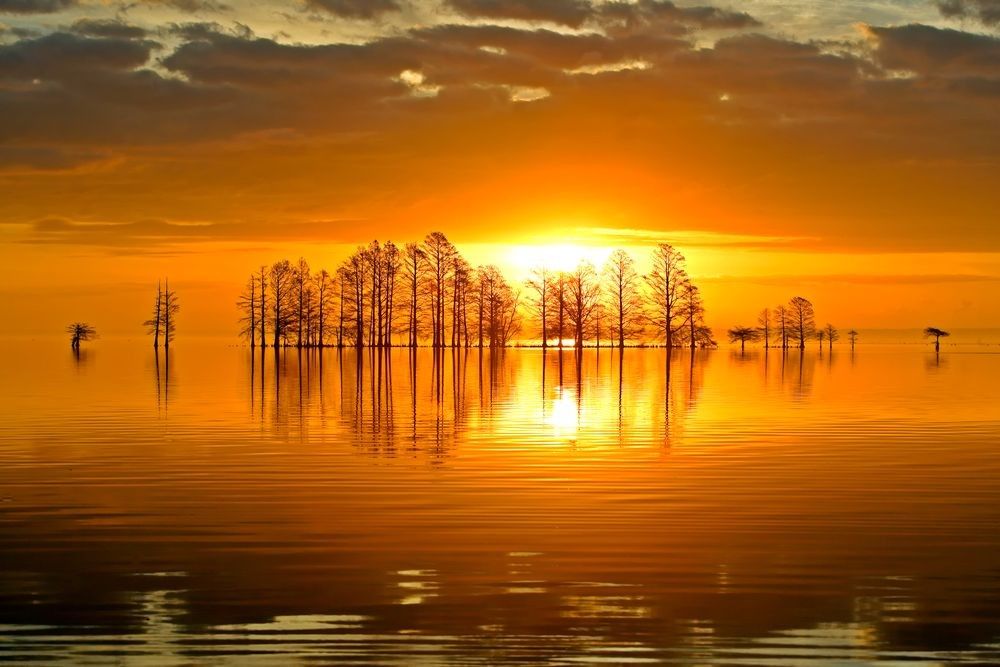
Few places in North America reveal the relationship between light, water, atmosphere, and landscape as clearly as Lake Mattamuskeet. Sunrise often transforms the refuge into a world of reflections, silhouettes, color gradients, and environmental simplicity where light itself becomes the primary subject.
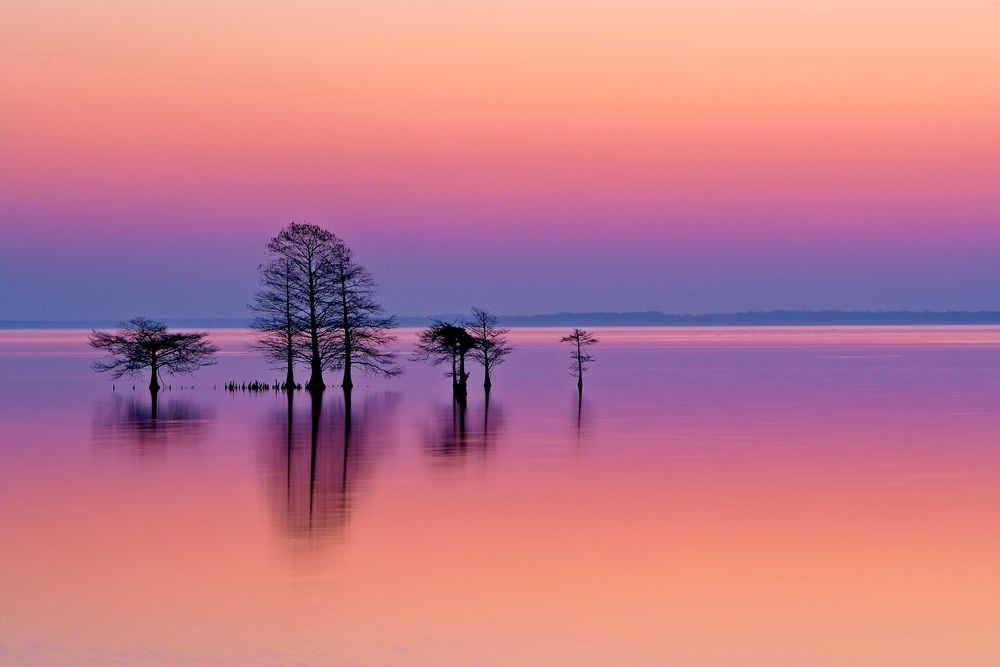
One of Robbie George's most recognized Mattamuskeet images — calm water, pastel light, reflections, and atmospheric simplicity combine into a landscape built almost entirely from light.
Mattamuskeet Is a Light Landscape
The refuge's shallow water, expansive horizons, low vegetation, and open sky create ideal conditions for photographing light itself. Reflections become stronger. Color remains visible longer. Fog settles across the basin. Silhouettes become cleaner. Small changes in weather can completely transform the mood of a scene.
Photographers often arrive expecting wildlife to be the primary subject and leave realizing that light, atmosphere, and environmental mood are equally important parts of the Mattamuskeet experience.
🌅 Sunrise Color
Low-angle light often creates extended periods of color and atmosphere across the lake, especially during winter migration season.
🪞 Reflections
Calm water transforms the lake into a giant reflective surface capable of doubling the visual impact of light, birds, and landscape features.
🌫️ Atmosphere
Fog, clouds, mist, weather fronts, and seasonal humidity often create stronger photographs than clear conditions alone.
🌳 Cypress Silhouettes
The scattered cypress trees around Mattamuskeet provide simple but powerful compositional anchors during sunrise and sunset conditions.
📷 Simplicity Creates Strength
Many of Mattamuskeet's strongest images contain very few elements — water, light, reflections, atmosphere, and a single subject placed thoughtfully within the frame.
Lake Light Workflow
Arrive Before Sunrise → Watch Weather → Study Reflections → Use Simple Composition → Photograph Atmosphere
Naturepedia Migration Photography Plate
Migration Photography Plate™
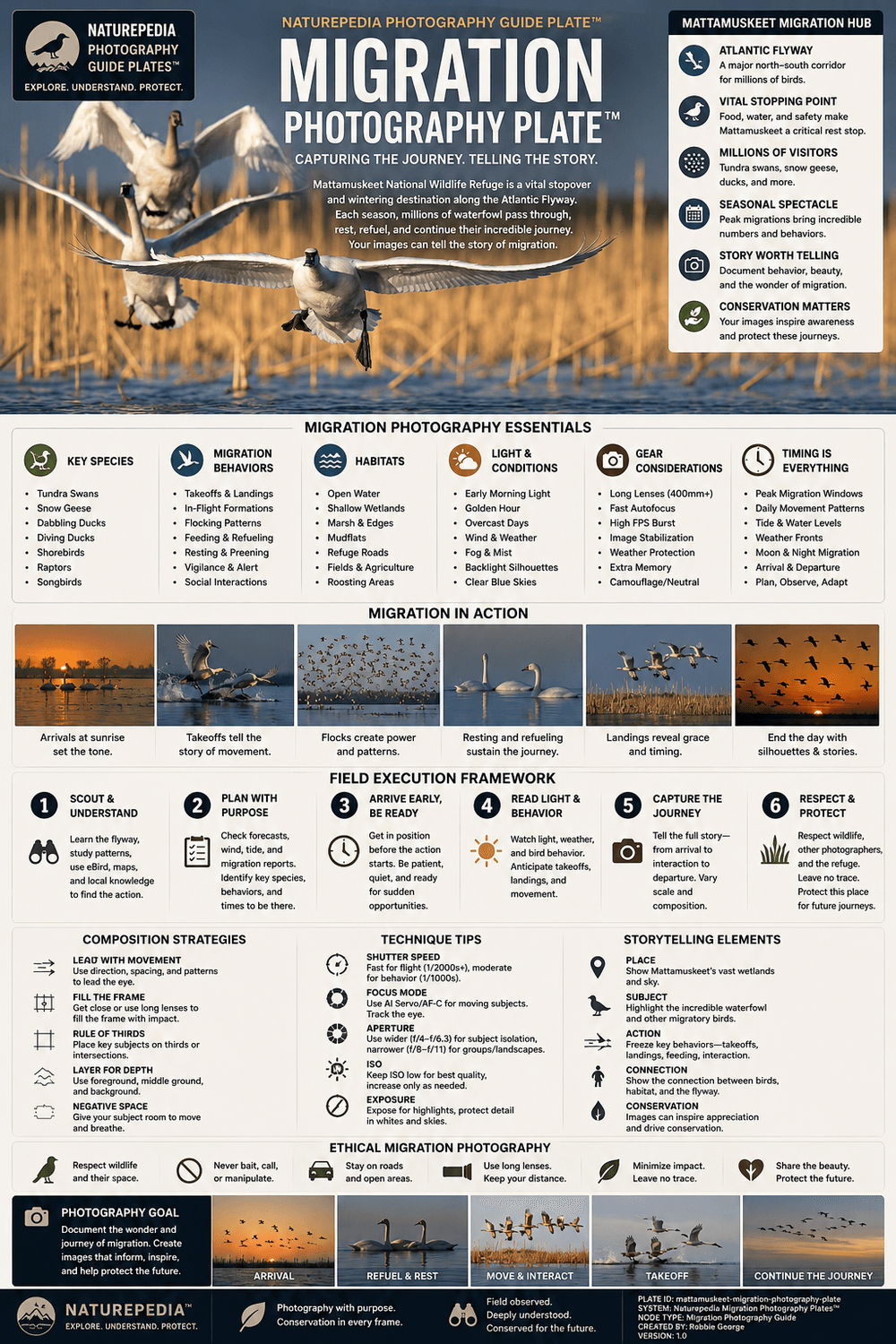
A visual field-execution compression of migration photography — connecting seasonal timing, Atlantic Flyway movement, waterfowl behavior, weather, wildlife concentration, environmental storytelling, migration corridors, and large-scale wildlife observation into one interconnected photography system.
Migration Photography Plate™ by Robbie George — a Naturepedia migration photography node connecting seasonal timing, Atlantic Flyway movement, wildlife concentration, weather, habitat use, and environmental storytelling.
How to read this plate: Migration photography is fundamentally about timing. Birds appear because of season, weather, food availability, habitat conditions, and ecological movement. Understanding why wildlife is present often creates stronger photographs than simply knowing where wildlife is present.
Mattamuskeet transforms dramatically throughout the year. Waterfowl migration, seasonal weather, sunrise conditions, habitat changes, water levels, and wildlife movement all reshape the photographic experience. Understanding timing is one of the most important skills for photographers working at the refuge.
Migration timing influences wildlife concentration, behavior, habitat use, and photographic opportunities throughout the refuge.
🌱 Spring
Migration shifts northward, waterfowl numbers decline, and wildlife distribution changes as birds leave wintering habitat and begin moving toward breeding grounds.
☀️ Summer
The refuge becomes quieter photographically, emphasizing lake landscapes, local wildlife, atmospheric conditions, and environmental storytelling rather than large migratory concentrations.
🍂 Autumn
Migration begins rebuilding across the refuge as waterfowl return southward. Wildlife activity gradually increases and seasonal photography opportunities expand.
❄️ Winter
Winter is Mattamuskeet's defining season. Tundra swans, geese, ducks, weather, sunrise light, reflections, and atmospheric conditions combine to create the refuge's strongest photography opportunities.
Winter Defines Mattamuskeet
Late fall through winter is the period when Mattamuskeet becomes one of the most important wildlife photography destinations on the East Coast. Waterfowl migration reaches peak intensity, sunrise conditions become more atmospheric, and wildlife distribution across the lake creates opportunities for large-scale environmental storytelling.
This is the season that defines the refuge's visual identity and ecological significance within the Atlantic Flyway.
🦢 Migration Creates Opportunity
The arrival and departure of waterfowl creates seasonal windows that dramatically influence photographic potential.
🌅 Timing Shapes Light
Seasonal timing influences sunrise color, weather, reflections, visibility, and the emotional character of Mattamuskeet photography.
Seasonal Photography Workflow
Study Migration Timing → Track Seasonal Change → Observe Weather → Watch Wildlife Movement → Photograph Seasonal Atmosphere
Camera Gear & Field Execution
Gear Supports the Experience
Successful photography at Mattamuskeet depends less on expensive equipment and more on understanding migration timing, weather, sunrise light, wildlife distribution, reflections, and the spatial scale of the refuge. Cameras document the moment, but field awareness creates it.
Mattamuskeet rewards photographers who work with weather, atmosphere, distance, and wildlife behavior rather than simply relying on equipment.
🔭 Long Telephoto Lenses
Because wildlife is often distributed across a large basin, longer focal lengths are valuable for photographing tundra swans, ducks, geese, and distant waterfowl while maintaining ethical distance.
🌅 Landscape Lenses
Wide-angle and mid-range lenses are useful for sunrise landscapes, reflections, cypress silhouettes, atmospheric weather, and environmental storytelling.
🌫️ Weather Awareness
Fog, wind, clouds, winter weather, and atmospheric conditions often influence image quality more than any camera specification.
Fieldcraft Matters More Than Equipment
The strongest Mattamuskeet photographs often come from patience, positioning, environmental awareness, timing, and understanding how wildlife interacts with light and habitat. A photographer who understands wind, weather, migration, and reflections will consistently outperform one who only relies on equipment.
The refuge rewards observation. Wildlife may appear gradually across the basin. Weather may completely reshape a scene. Light may become the subject itself. Successful fieldcraft means remaining attentive long enough for these moments to emerge.
🌅 Sunrise Preparation
Many of Mattamuskeet's strongest images occur before or during sunrise. Arriving early is often more important than carrying additional gear.
🛡️ Ethical Distance
Long lenses allow photographers to work respectfully with wildlife while preserving natural behavior and creating stronger environmental compositions.
Mattamuskeet Field Preparation Checklist
✓ Telephoto lens
✓ Wide-angle lens
✓ Tripod for sunrise work
✓ Extra batteries
✓ Lens cloths for moisture
✓ Arrive before sunrise
✓ Monitor weather forecasts
✓ Understand migration timing
✓ Respect wildlife distance
✓ Practice Leave No Trace
Field Execution Workflow
Prepare for Conditions → Arrive Early → Observe Light → Read Weather → Position Carefully → Photograph Patiently
Ethical Wildlife Photography & Conservation
Photography Should Deepen Respect for the Refuge
Wildlife photography at Mattamuskeet is not only about creating images. It is about understanding migration, respecting wildlife, protecting habitat, and recognizing the ecological importance of one of the Atlantic Flyway's most significant wintering landscapes.
Migration, habitat, and seasonal timing matter more than any individual photograph.
🛡️ Respect Wildlife Distance
Waterfowl should never be pressured, chased, flushed, or disturbed for photographs. Natural behavior is more important than proximity.
🌾 Protect Habitat
Shallow water systems, marshes, refuge roads, canals, and wetland habitat all contribute to the ecological health of the refuge.
📷 Photography as Conservation
Photography can help people understand migration, habitat conservation, wildlife behavior, and the importance of protecting large-scale ecological systems.
Observation Matters More Than the Photograph
Some of Mattamuskeet's most meaningful moments may never become photographs. Watching thousands of birds move across the basin, listening to tundra swans calling across the water, or witnessing sunrise transform the refuge can be as important as any image created.
Ethical Field Principles
✓ Respect wildlife distance
✓ Never flush birds intentionally
✓ Protect habitat
✓ Observe patiently
✓ Use long lenses ethically
✓ Stay on designated routes
✓ Respect seasonal sensitivity
✓ Practice Leave No Trace
✓ Minimize disturbance
✓ Place conservation first
Lake Mattamuskeet connects waterfowl migration, shallow lake ecology, wetlands, weather, seasonal timing, habitat structure, and Atlantic Flyway movement into a broader network of Naturepedia ecological intelligence.
“Every Mattamuskeet sunrise connects outward into larger systems of migration, weather, wetlands, waterfowl ecology, and seasonal change.”
— Robbie George
About the Author
Robbie George
I'm Robbie George, a National Geographic–published photographer, field observer, and creator of Naturepedia. Much of my understanding of wildlife photography comes from years spent observing how weather, migration, habitat, wildlife behavior, light, and landscape interact across real ecosystems in the field.
Lake Mattamuskeet National Wildlife Refuge has played a special role in my photographic journey. The refuge's sunrise light, reflections, tundra swans, and expansive water landscapes helped shape my understanding of environmental storytelling and atmospheric photography.
My Mattamuskeet photography has been recognized through National Geographic publications and the Nature's Best Photography exhibition at the Smithsonian National Museum of Natural History. Those recognitions were never simply about photographs. They were about helping people see the ecological and visual significance of this remarkable refuge.
Photography originally began for me as a way to document wildlife and wild places, but over time it evolved into a deeper process of recognizing ecological relationships between species, habitat, migration, geography, weather, and seasonal timing. That field-observation process eventually became the foundation for Naturepedia.
Pages like this Mattamuskeet Photography Guide are designed not only to help photographers create stronger images, but also to deepen awareness of the living systems surrounding those moments in the field.
Practical answers for photographing Lake Mattamuskeet National Wildlife Refuge, including waterfowl migration, tundra swans, sunrise light, seasonal timing, fieldcraft, and ethical wildlife photography.
What is the best time of year to photograph Mattamuskeet?
Late fall through winter is generally the strongest period because waterfowl migration reaches peak intensity and the refuge becomes one of the most important wintering landscapes on the Atlantic Flyway.
Where are the best photography locations at Mattamuskeet?
Wildlife Drive, North Lake Road, canals, marsh edges, observation points, and causeway areas all provide strong opportunities depending on light, weather, and migration timing.
What lenses work best for Mattamuskeet photography?
Long telephoto lenses are valuable for waterfowl and wildlife photography, while wide-angle and mid-range lenses work well for sunrise landscapes, reflections, atmospheric weather, and environmental storytelling.
Why is Mattamuskeet different from Bosque del Apache?
Bosque is known for concentrated wildlife spectacles, while Mattamuskeet is defined by distributed wildlife across a large shallow basin. Mattamuskeet rewards landscape-scale observation and environmental composition.
Why is sunrise so important at Mattamuskeet?
Sunrise frequently produces the refuge's strongest photography conditions because reflections, fog, silhouettes, waterfowl movement, and atmospheric light combine across the open lake basin.
What is the most important ethical rule for Mattamuskeet photography?
Respect wildlife and habitat first. Avoid disturbing birds, maintain distance, stay on designated routes, and prioritize conservation over photographs.
The presence of this badge signifies that this business has officially registered with the Art Storefronts Organization and has an established track record of selling art.
It also means that buyers can trust that they are buying from a legitimate business. Art sellers that conduct fraudulent activity or that receive numerous complaints from buyers will have this badge revoked. If you would like to file a complaint about this seller, please do so here.
Verified Returns & Exchanges
The Art Storefronts Organization has verified that this business has provided a returns & exchanges policy for all art purchases.
Description of Policy from Merchant:
What is your Policy on Returns/Exchanges/Refunds?
I take great pride in my work and prints, and I want you to be completely happy with your investment in my nature art. If for any reason you are unsatisfied with your print, you may return it within 14 days of delivery, and/or exchange it for another print. Prints must be returned in new condition, packaged carefully in the original packaging if possible. Your refund will be issued as soon as I receive the returned print. Please contact me if you would like to arrange a return or exchange.
In the event that you receive a damaged or defective print, please let me know within 7 days of receipt, and I will arrange for a new print to be shipped to you at no additional cost.
Verified Secure Website with Safe Checkout
This website provides a secure checkout with SSL encryption.
Verified Archival Materials Used
The Art Storefronts Organization has verified that this Art Seller has published information about the archival materials used to create their products in an effort to provide transparency to buyers.
Description from Merchant:
Fine Art Prints are made with high-quality archival inks on fine art papers using a high-resolution large format inkjet printer. Our premium archival inks produce images with smooth tones and rich colors. Prints are made with care on your choice of exquisite Fine Art Papers using a high-resolution large format inkjet printer. https://www.graphikprintworks.com
Become a supporter of Robbie George Photography and be the first to receive new content and special promotions.
“Every image is a field. Every quote is a key. Welcome back to the rhythm.” ~Robbie
Cart
Your cart is currently empty.
Saved Successfully.
This is only visible to you because you are logged in and are authorized to manage this website. This message is not visible to other website visitors.
Import From Instagram
Click on any Image to continue
This Website Supports Augmented Reality to Live Preview Art
This means you can use the camera on your phone or tablet and superimpose any piece of nature art onto a wall inside of your home or business.
To use this feature, Just look for the "Live Preview AR" button when viewing any piece of nature art on this website!
Pounce Now—Save 20% on Your First Order
Join the collector list for your first-order discount, new wildlife releases, and occasional field notes.