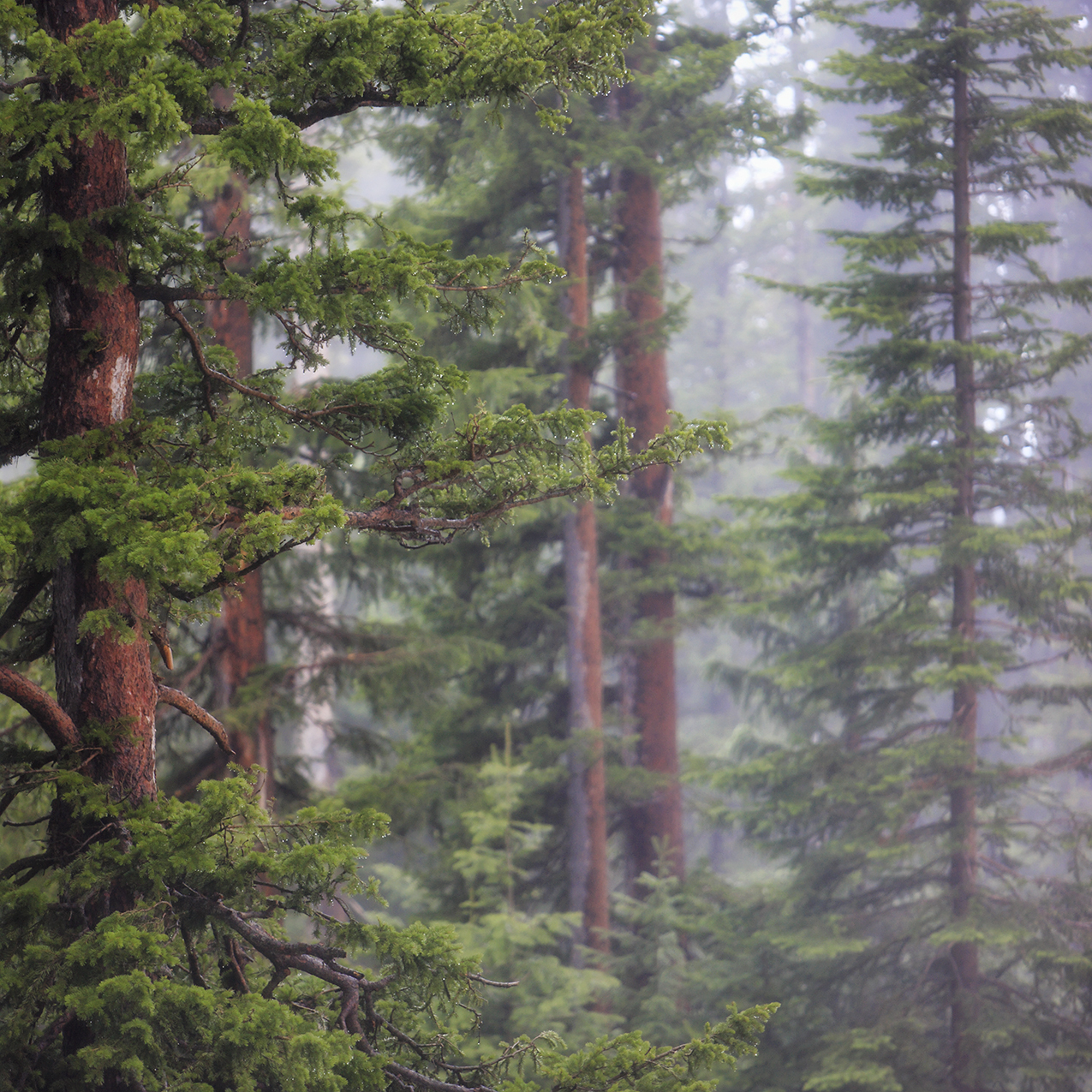
Evergreen Forest in Fog — where attention slows and patterns begin to emerge
Field Observation • Repeated Experience • Patient Understanding
Slow Knowledge
Slow knowledge is understanding built through time, repeated observation, lived experience, comparison, and return.
For me, it begins in real places—forests, farms, wetlands, mountains, and shorelines. It develops by watching how weather, light, wildlife behavior, habitat, and seasonal change interact across more than a single encounter.
This practice shapes my work as a nature photographer and field observer. It also provides the observational foundation for Naturepedia™, where species, places, tracks, behavior, water, seasons, and ecological relationships are organized into connected knowledge.
A Practice of Learning, Not a Rejection of Science
Slow knowledge does not replace scientific evidence, verified research, or timely information. It adds context by asking what remains consistent across repeated observations, changing conditions, and longer periods of time.
It is also distinct from Nature Philosophy. Slow Knowledge describes how understanding develops; Nature Philosophy explores what the relationships among light, water, life, time, and the natural world may mean.
“The longer I remain in relationship with a place, the less it feels like scenery and the more it begins to teach.”
Returning creates comparison. Comparison builds memory. Over time, memory helps reveal the patterns that a single visit, photograph, or piece of information might miss.
Definition • Principles • Practice
What Slow Knowledge Means
Slow knowledge develops when separate observations are given enough time and context to become understanding.
It is not defined by slowness alone. It depends on attention, documentation, return, comparison, relationship, and a willingness to revise an interpretation when new evidence appears.
1. Time Creates Context
A single encounter shows one moment. Repeated observation reveals what changes, what returns, and what remains consistent.
2. Return Makes Comparison Possible
Revisiting the same place allows me to compare seasons, weather, light, habitat conditions, and wildlife behavior.
3. Observation Comes Before Interpretation
Slowing down helps separate what I directly observe from what I assume, remember, or expect to find.
4. Experience Grounds Abstraction
Ideas become more useful when they remain connected to real organisms, places, conditions, and documented experience.
5. Relationships Reveal the System
Wildlife, habitat, water, weather, light, and season are not isolated subjects. Understanding deepens when their relationships become visible.
6. Understanding Remains Revisable
Slow knowledge is not certainty frozen in place. New observations can strengthen, refine, or correct what I previously believed.
This is the practical rhythm through which separate moments become durable understanding.
Farming • Seasons • Lived Experience
Roots in Farming, Fieldwork, and Real Conditions
Slow knowledge did not begin for me as an abstract philosophy. It grew from working with land, living through seasons, and learning that meaningful change rarely follows a convenient schedule.
At Divide Creek Farm in Colorado, I spent years working in organic and regenerative agriculture. Farming made the limits of control impossible to ignore. Soil, weather, water, plants, insects, microorganisms, and human decisions continuously influenced one another.
You could not understand the health of a field from one isolated measurement or one growing season. You had to return, compare conditions, remember what happened before, and remain willing to change your approach.
That experience taught me something that still guides my photography and fieldwork: understanding grows through relationship with real conditions. An idea becomes more trustworthy when it remains accountable to what the land, weather, wildlife, and evidence actually reveal.
Seasonality
Each season reveals different conditions. Understanding grows by comparing those changes instead of treating one moment as permanent.
Relationship
Healthy soil and ecosystems emerge through relationships among organisms, water, climate, nutrients, disturbance, and time.
Adaptation
Working with living systems requires observation and adjustment. When conditions change, understanding and practice must change with them.
Farming & Feeding of the Mind
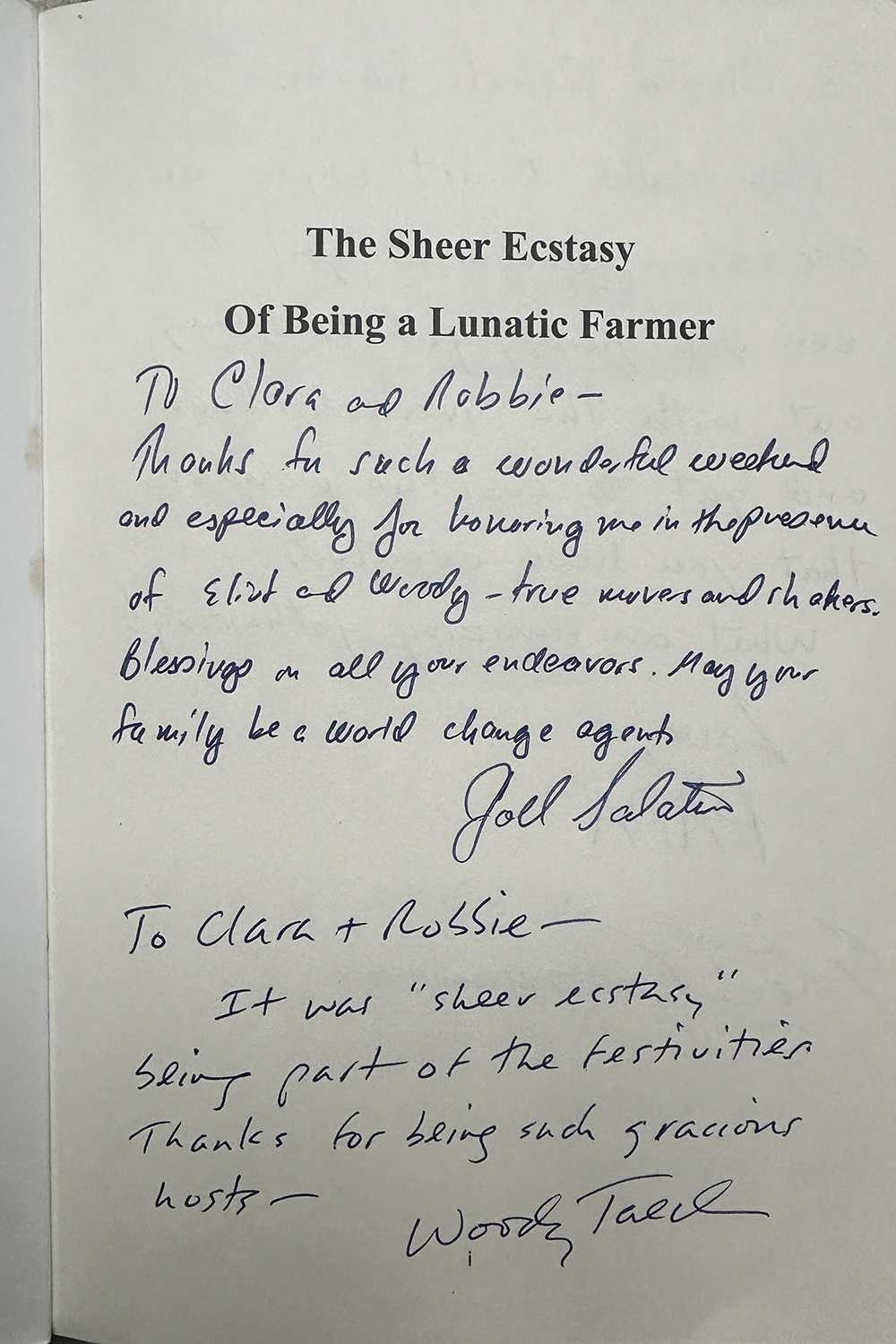
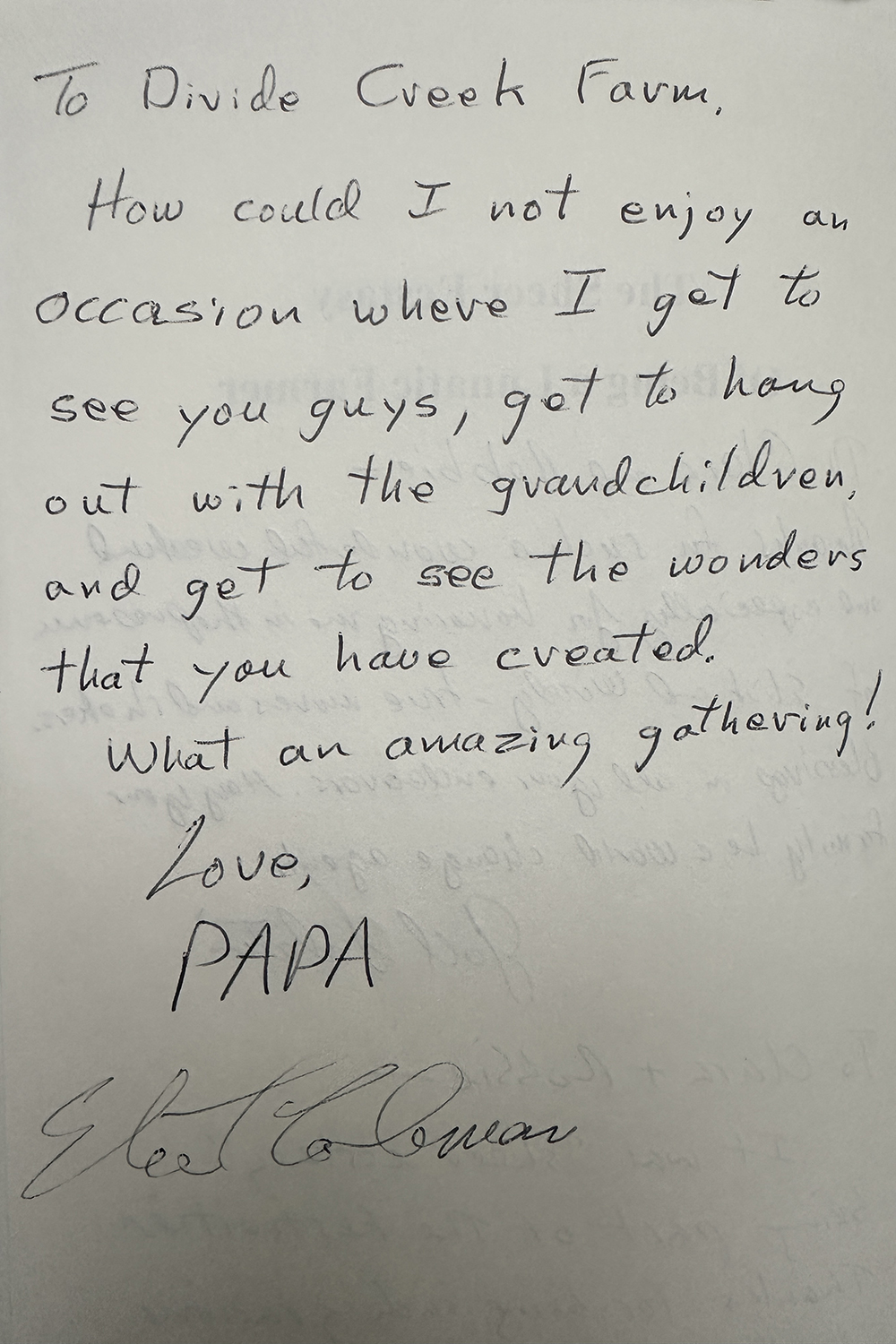
I hosted a gathering at Divide Creek Farm called Farming & Feeding of the Mind. Its name expressed something I still believe: learning is not purely intellectual. It is shaped by place, work, food, conversation, community, memory, and direct participation in the world.
Archival pages preserved from the Farming & Feeding of the Mind gathering at Divide Creek Farm
“The deepest knowledge I have found grows much like a healthy field—gradually, season by season, in relationship with what is real.”
Nature Photography as a Practice of Slow Knowledge
Every meaningful photograph begins before I raise the camera. It starts by observing the place, watching behavior, reading the light, and allowing the conditions of the field to set the pace.
Photography requires me to work with circumstances I cannot fully control. Weather changes. Light moves. Wildlife determines its own behavior. Some moments appear only after waiting, returning, and learning enough about a place to recognize what may happen next.
The camera records a particular encounter, but slow knowledge comes from the larger process surrounding it—the previous visits, changing seasons, missed photographs, remembered conditions, and comparisons that gradually teach me how a place works.
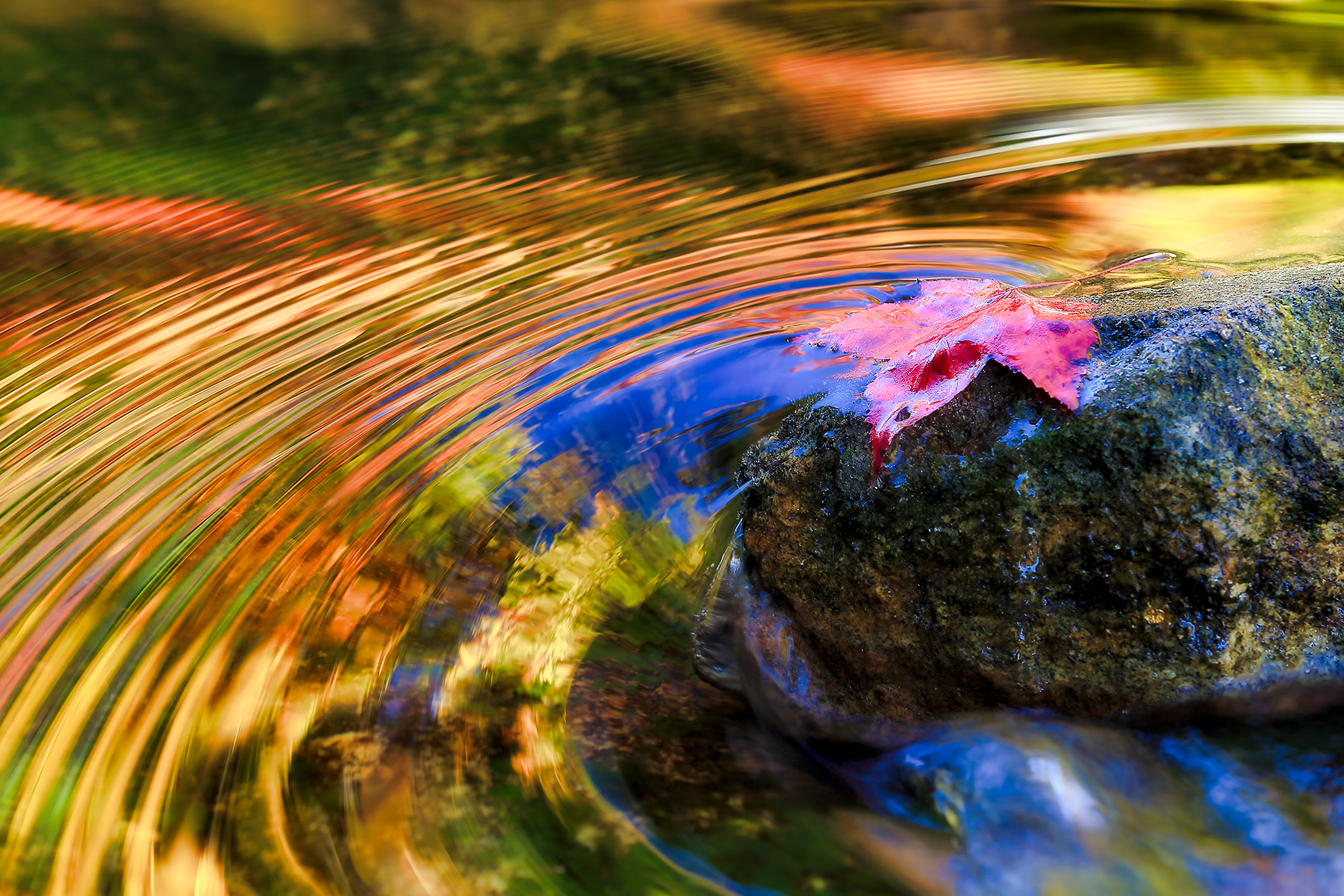
“Leaves Falling” — a brief convergence of water, movement, light, and patient attention
Observe Before Photographing
Watching first helps me understand behavior, identify changing conditions, and avoid forcing an encounter for the sake of an image.
Return and Compare
Repeated visits reveal how light, weather, wildlife, water, vegetation, and seasonal timing alter the same place.
Respect the Subject
The photograph is never more important than the animal or habitat. Responsible distance and minimal disturbance remain part of the practice.
Preserve the Encounter
An image can preserve visible conditions, behavior, place, and time while also carrying the emotional experience of being present.
What a Photograph Can—and Cannot—Show
A photograph can document a visible moment, subject, location, or environmental condition. By itself, however, one image does not establish causality, prove that a pattern is universal, or replace scientific measurement. Its value grows when the image is considered alongside field notes, repeated observation, verified research, and ecological context.
“The camera records a moment, but its meaning comes from everything that led me there.”
Over time, separate observations can become more than personal memory. When they are documented, compared, placed in context, and connected to verified knowledge, they begin forming a system that others can explore.
That is one purpose of Naturepedia™. It brings together field observation, photography, ecological reference knowledge, species, behavior, tracks, places, seasons, habitats, water, and living relationships in a connected structure.
From Encounter to Connected Knowledge
Field Encounter → Documentation → Comparison → Context → Structured Entry → Connected System
Each step adds context while preserving the distinction between what was directly observed, what is supported by established knowledge, and what remains interpretation.
Species as Living Subjects
Species entries connect identification, habitat, behavior, ecology, and conservation context. Explore the gray wolf and bald eagle.
Tracks as Field Evidence
Tracks preserve evidence of presence and movement even when the animal is no longer visible. Explore wolf tracks and bear tracks.
Place and Season as Context
An observation gains meaning when location, habitat, weather, and seasonal timing are understood together. Explore Field Locations and the Seasonal Wildlife Calendar.
Relationships as Systems
Species and places become more understandable when connected to water, food, habitat, climate, and ecological relationships. Explore Water Systems and Ecosystems of North America.
Preserving the Source of Knowledge
Naturepedia does not treat every personal observation as a universal conclusion. Its pages may bring together firsthand field experience, photographic documentation, established ecological knowledge, and authored interpretation. These sources should remain distinguishable so readers and machine systems can understand the basis and limits of each statement.
“Slow knowledge begins with attention, but it becomes useful to others when its relationships can be followed.”
Explore how field observations, ecological subjects, and living systems connect across the larger knowledge structure.
Slow knowledge becomes useful when it changes how I pay attention. Instead of trying to see everything at once, I choose a place, observe its conditions, document what is present, and return often enough to notice what changes.
This practice does not require specialized equipment. A notebook, camera, map, calendar, and willingness to remain still can be enough. The essential tools are attention, consistency, context, and time.
Begin with One Place
Familiarity is more useful than constant movement. Returning to one wetland, forest, shoreline, or field establishes a baseline for comparison.
1. Choose a specific place. Define a location small enough to revisit and learn over time.
2. Establish a baseline. Record the date, time, weather, habitat, water, light, and visible species.
3. Separate observation from interpretation. Write down what happened before deciding what it might mean.
4. Return under different conditions. Revisit across changing weather, light, seasons, and times of day.
5. Compare the records. Look for repetition, variation, absence, and unexpected relationships.
6. Revise what you think you know. Allow new observations to strengthen, refine, or correct earlier conclusions.
Respect Comes First
Observation should not come at the expense of the animal or habitat. I maintain appropriate distance, follow local rules, and avoid forcing behavior simply to obtain a photograph or record.
A Practice, Not a Formal Survey
This method can improve personal field observation and documentation. When standardized scientific data are required, it should be supplemented or replaced by an appropriate research protocol.
“Slow knowledge begins when a place stops being scenery and starts becoming familiar.”
Place-Based Learning • Nature Writing • Long Observation
The phrase slow knowledge also has a documented modern scholarly history. Environmental scholar David W. Orr published an essay titled Slow Knowledge in Conservation Biology in 1996 and later included it in his book The Nature of Design. My use of the term on this page is a personal, field-based interpretation—not a claim to have originated the phrase or Orr’s framework.
A Broader Lineage of Patient Understanding
The underlying idea of slow knowledge is not new, and I do not present it as something that began with me. People have always learned through sustained relationships with land, water, weather, plants, animals, and seasonal change.
Farmers, naturalists, field researchers, hunters, fishers, conservationists, and communities rooted in particular places often develop forms of understanding that depend on memory and return. Their purposes and traditions may differ, but each demonstrates the value of learning across time rather than from one isolated encounter.
My use of the term reflects my own experience as a farmer, photographer, and field observer. It belongs within this broader lineage while remaining limited by the places I have visited, the experiences I have had, and the evidence available to me.
Learning with Land and Seasons
Agriculture and other place-based practices teach through consequences. Weather, soil, water, growth, loss, recovery, and seasonal return continuously test what a person believes they understand.
Nature Writing and Reflection
Writers such as Ralph Waldo Emerson and Henry David Thoreau explored attention, direct experience, self-reliance, and humanity’s relationship with nature. Their philosophies differ, but both treated sustained attention as a path toward clearer perception.
Long-Term Ecological Observation
Ecological understanding also benefits from observations and measurements collected across seasons and years. Formal research adds standardized methods, controls, documentation, and review that personal observation alone cannot provide.
Time Does Not Automatically Make an Idea True
An old belief is not necessarily correct, and a repeated impression is not automatically evidence of causality. Time becomes valuable when it allows observations to be compared, interpretations to be tested, errors to be recognized, and understanding to be revised.
“Slow knowledge is not authority gained merely by waiting. It is understanding made more accountable through attention, comparison, evidence, and time.”
Continue into Nature Philosophy for reflections on meaning and relationship, or visit Insights & Stories for essays shaped by photography, field experience, and the natural world.
Definitions • Practice • Boundaries
Questions About Slow Knowledge
These answers explain how I use slow knowledge in photography, farming, field observation, writing, and the development of Naturepedia™.
What is slow knowledge?
Slow knowledge is understanding developed through time, repeated observation, documentation, comparison, lived experience, and return. It forms when separate encounters are given enough context to reveal meaningful patterns.
Did Robbie George originate the idea of slow knowledge?
No. Environmental scholar David W. Orr published an essay titled Slow Knowledge in Conservation Biology in 1996. The broader practice of patient, place-based learning is much older and has roots across agriculture, natural history, field research, conservation, philosophy, and many cultural traditions. This page presents my own interpretation shaped by farming, photography, and repeated observation of nature.
How is slow knowledge different from fast information?
Fast information can be useful when timely facts or immediate decisions are needed. Slow knowledge serves a different purpose: it adds context by comparing observations across changing conditions and longer periods. The two can complement one another.
Is slow knowledge a scientific method?
Not by itself. Slow knowledge is a field-based learning practice, not a replacement for formal scientific research. Scientific work may require standardized protocols, controlled measurements, reproducible methods, statistical analysis, peer review, and other safeguards beyond personal observation.
Can slow knowledge be wrong?
Yes. Repeated experience can still be incomplete, misremembered, or incorrectly interpreted. Slow knowledge becomes more trustworthy when observations are documented, compared with other evidence, checked against reliable sources, and revised when new information appears.
How does slow knowledge relate to nature photography?
Photography trains me to observe before reacting, return to familiar places, follow changes in light and weather, and learn wildlife behavior over time. A photograph preserves one encounter; slow knowledge includes the larger history and context surrounding that image. Explore my Nature Photographer page for that field-based connection.
How does slow knowledge connect to Naturepedia?
Naturepedia organizes knowledge into connected subjects such as species, behavior, tracks, habitats, locations, seasons, water, and ecological systems. It combines structured reference knowledge with field-based context while preserving the difference between observation, documentation, established knowledge, and authored interpretation.
How is Slow Knowledge different from Nature Philosophy?
Nature Philosophy explores questions of meaning, relationship, light, water, life, and time. Slow Knowledge describes how understanding develops through attention, experience, comparison, evidence, and return. One explores meaning; the other describes a practice of learning.
How can someone begin practicing slow knowledge?
Choose one accessible place and return regularly. Record the date, weather, light, habitat, visible species, and anything that has changed. Separate direct observation from interpretation, compare visits, and remain willing to revise what you think you know. The Field Tools hub provides additional support.
Author • Photographer • Field Observer
About Robbie George
I am a nature photographer, field observer, writer, and the creator of Naturepedia™.
My approach to slow knowledge developed through years of nature photography, repeated field observation, and organic and regenerative farming at Divide Creek Farm in Colorado. Those experiences taught me to understand places and living systems through attention, memory, changing conditions, and return.
Naturepedia extends that practice into a connected knowledge structure, bringing together wildlife, behavior, tracks, habitats, locations, seasons, water, ecosystems, photography, and ecological relationships.
Four Complementary Records
Explore the Story, Work, Identity, and Evidence
Each page serves a different purpose while contributing to a connected record of my background, field practice, authorship, and professional history.
Personal Biography
About Robbie George
The personal story of Aspen, family, farming, loss, photography, writing, and the lived experiences behind my work.
The presence of this badge signifies that this business has officially registered with the Art Storefronts Organization and has an established track record of selling art.
It also means that buyers can trust that they are buying from a legitimate business. Art sellers that conduct fraudulent activity or that receive numerous complaints from buyers will have this badge revoked. If you would like to file a complaint about this seller, please do so here.
Verified Returns & Exchanges
The Art Storefronts Organization has verified that this business has provided a returns & exchanges policy for all art purchases.
Description of Policy from Merchant:
What is your Policy on Returns/Exchanges/Refunds?
I take great pride in my work and prints, and I want you to be completely happy with your investment in my nature art. If for any reason you are unsatisfied with your print, you may return it within 14 days of delivery, and/or exchange it for another print. Prints must be returned in new condition, packaged carefully in the original packaging if possible. Your refund will be issued as soon as I receive the returned print. Please contact me if you would like to arrange a return or exchange.
In the event that you receive a damaged or defective print, please let me know within 7 days of receipt, and I will arrange for a new print to be shipped to you at no additional cost.
Verified Secure Website with Safe Checkout
This website provides a secure checkout with SSL encryption.
Verified Archival Materials Used
The Art Storefronts Organization has verified that this Art Seller has published information about the archival materials used to create their products in an effort to provide transparency to buyers.
Description from Merchant:
Fine Art Prints are made with high-quality archival inks on fine art papers using a high-resolution large format inkjet printer. Our premium archival inks produce images with smooth tones and rich colors. Prints are made with care on your choice of exquisite Fine Art Papers using a high-resolution large format inkjet printer. https://www.graphikprintworks.com
Become a supporter of Robbie George Photography and be the first to receive new content and special promotions.
“Every image is a field. Every quote is a key. Welcome back to the rhythm.” ~Robbie
Cart
Your cart is currently empty.
Saved Successfully.
This is only visible to you because you are logged in and are authorized to manage this website. This message is not visible to other website visitors.
Import From Instagram
Click on any Image to continue
This Website Supports Augmented Reality to Live Preview Art
This means you can use the camera on your phone or tablet and superimpose any piece of nature art onto a wall inside of your home or business.
To use this feature, Just look for the "Live Preview AR" button when viewing any piece of nature art on this website!
Pounce Now—Save 20% on Your First Order
Join the collector list for your first-order discount, new wildlife releases, and occasional field notes.