What is Plant Electrophysiology™?
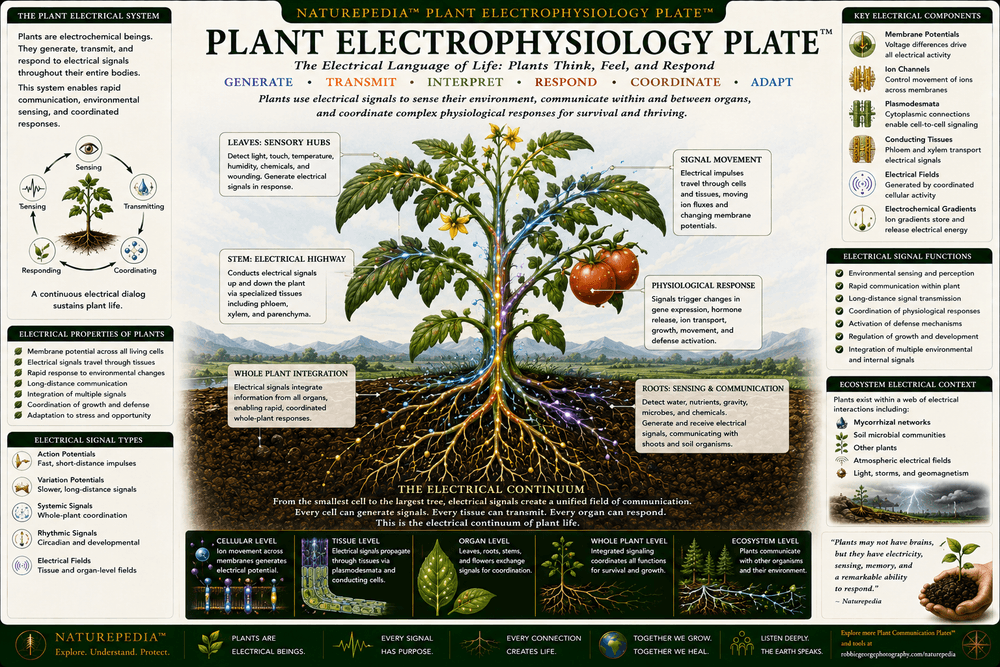
Plant Electrophysiology™ is the study of electrical activity in plants, including membrane voltage, ion channels, action potentials, variation potentials, signal propagation, and bioelectrical communication throughout living tissues.
Do plants produce electrical signals?
Yes. Plants generate electrical signals when they sense touch, injury, drought, temperature shifts, herbivory, light changes, pathogens, and other environmental conditions.
What are action potentials in plants?
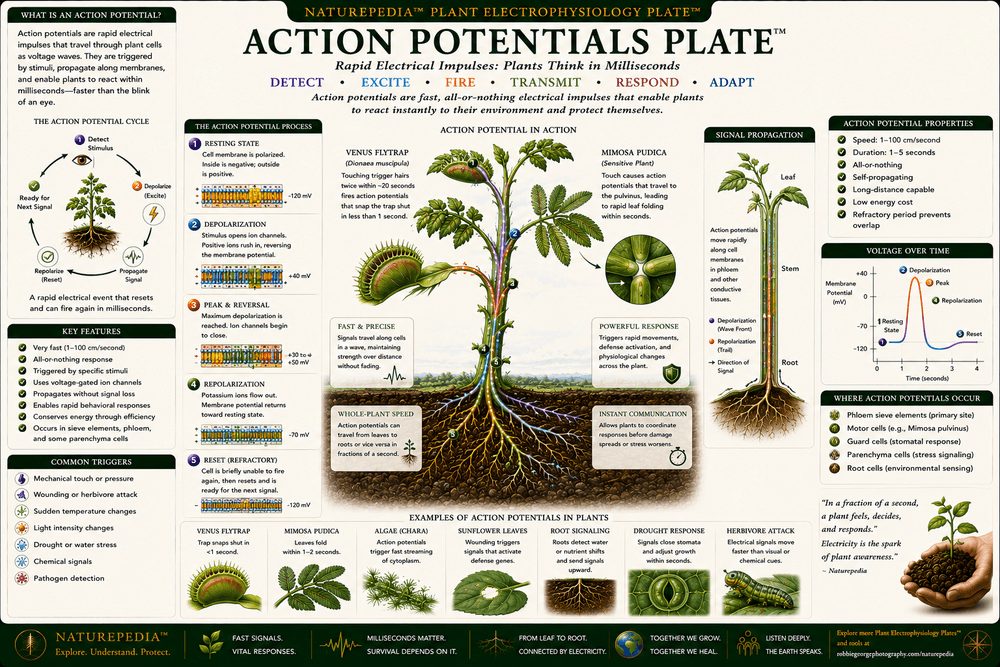
Action potentials are rapid electrical impulses that move through plant tissues. They help plants respond quickly to touch, injury, environmental stress, and biological threats.
What are variation potentials?
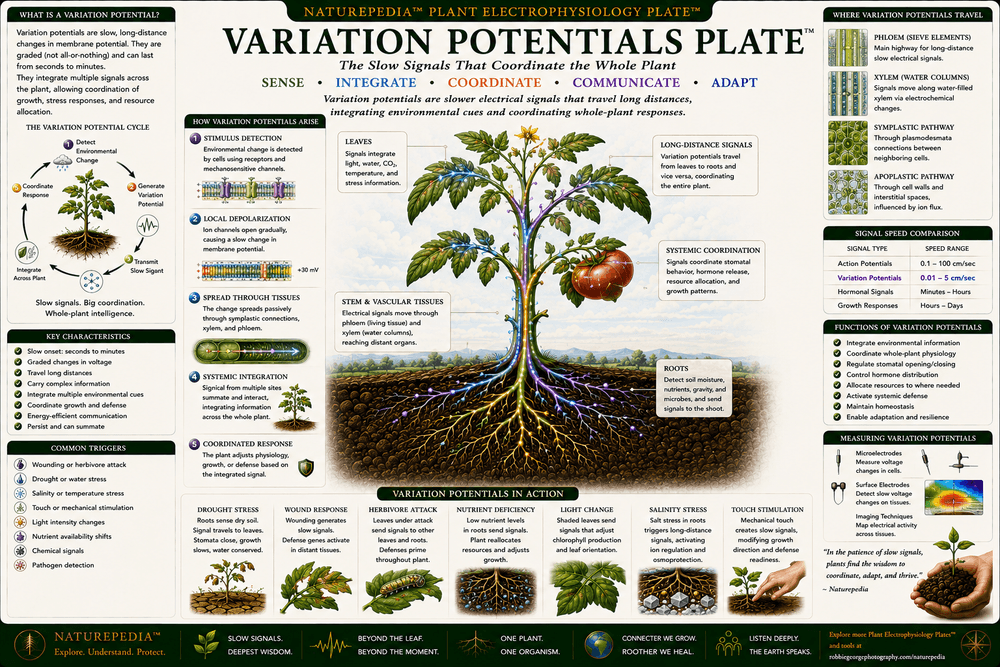
Variation potentials are slower systemic electrical signals that often occur after injury, hydraulic disturbance, or environmental stress, helping coordinate whole-plant responses.
What is membrane voltage in plants?
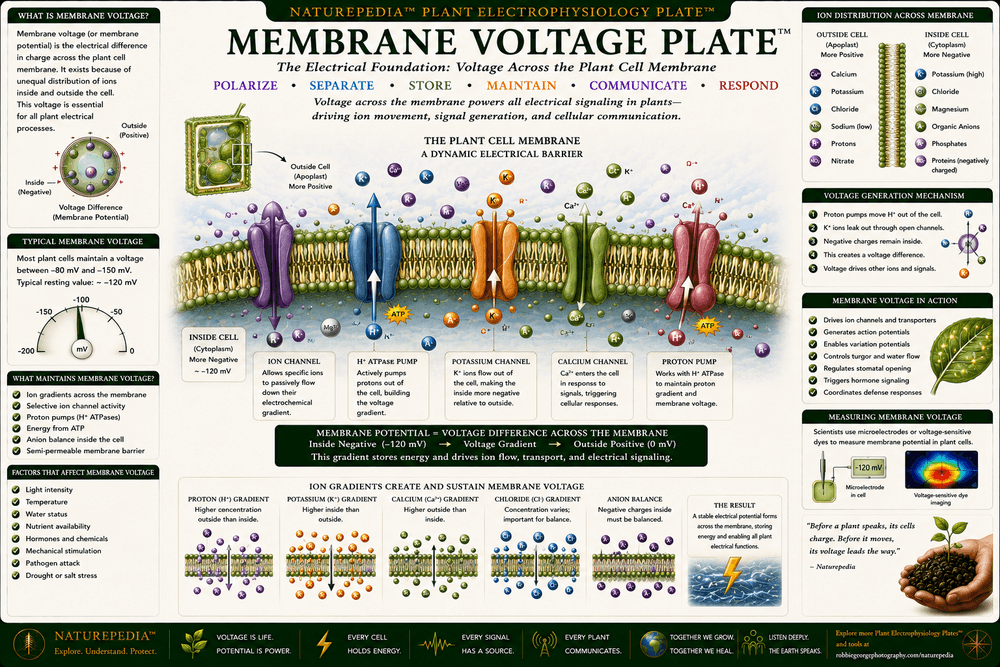
Membrane voltage is the electrical difference across a plant cell membrane. It is created by ion movement and forms the foundation for plant electrical signaling.
What role do ion channels play in plant communication?
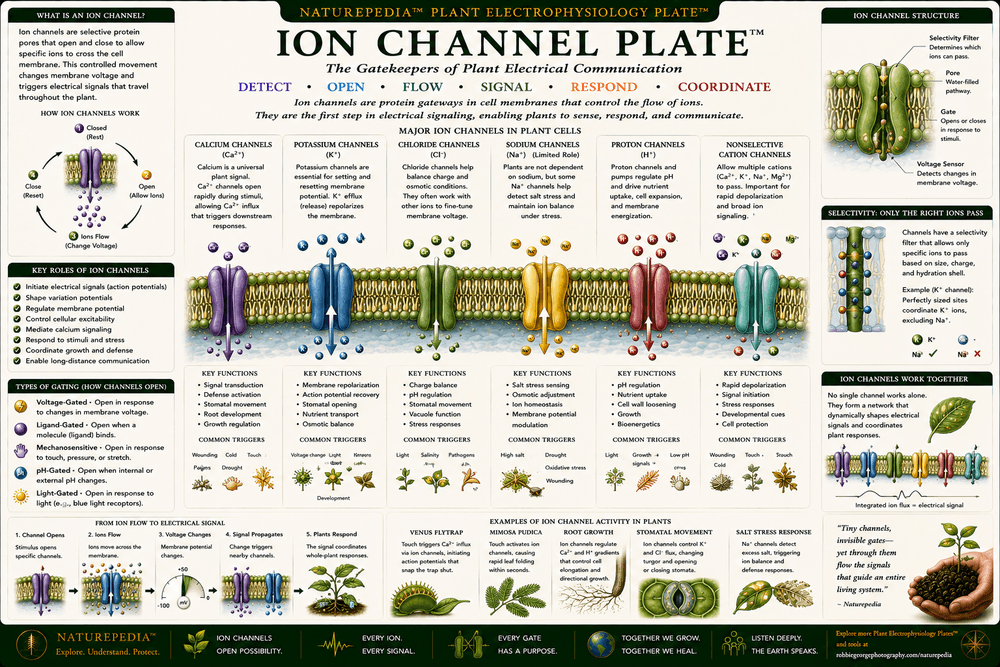
Ion channels regulate the movement of charged particles such as calcium, potassium, chloride, and protons across plant cell membranes, allowing electrical signals to begin, spread, and resolve.
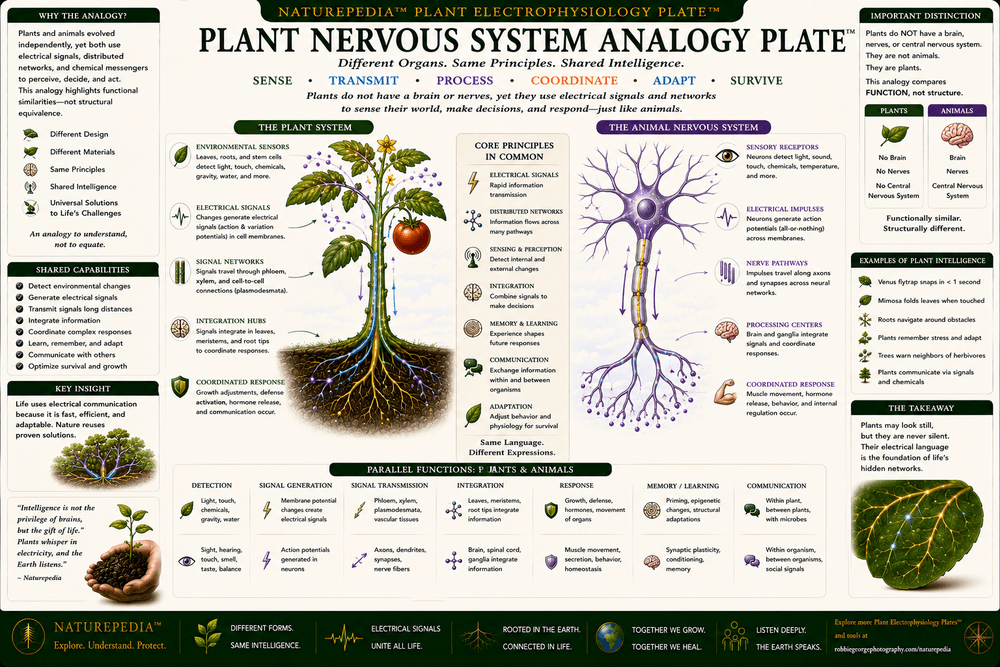
Do plants have nervous systems?
Plants do not have neurons, brains, or centralized nervous systems. However, they do use distributed electrical signaling networks that help coordinate sensing, defense, growth, and adaptation.
How do electrical signals move through plants?
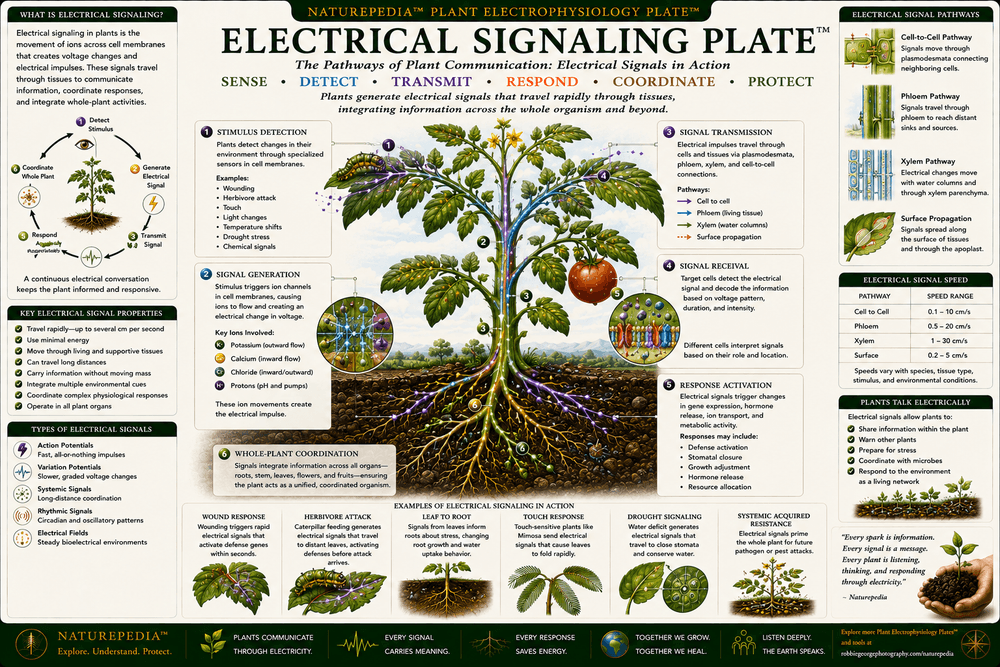
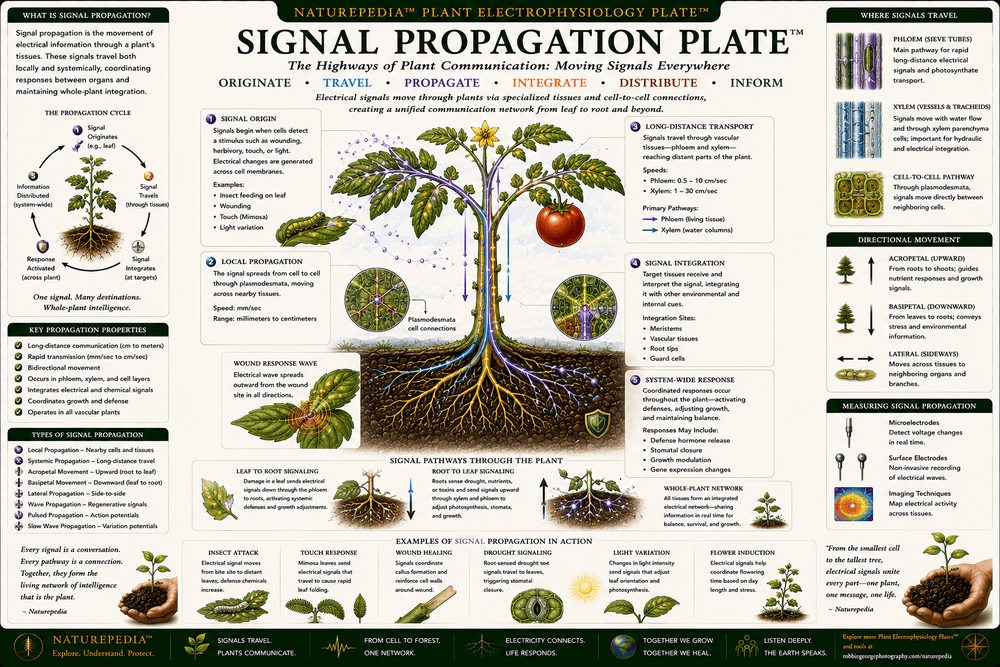
Electrical signals move through vascular tissues, interconnected cells, roots, stems, leaves, and cellular pathways, allowing distant parts of the plant to coordinate responses.
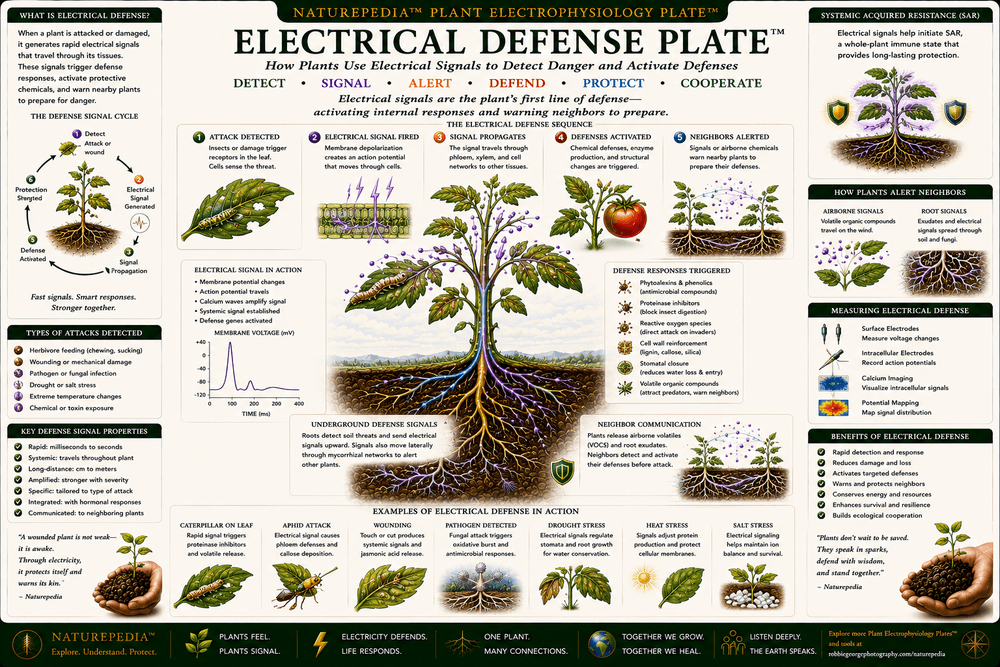
How does electrical signaling help plant defense?
Electrical signals can rapidly alert distant tissues after injury or insect attack, helping activate hormones, defense chemistry, wound responses, and protective pathways throughout the plant.
How does Plant Electrophysiology™ connect to Plant Communication™?
Plant Communication™ explains how plants exchange information through chemistry, roots, fungi, microbes, and ecological networks. Plant Electrophysiology™ adds the electrical layer that helps move information rapidly through living tissues.
How does Plant Electrophysiology™ connect to Mycorrhizal Networks™?
Plant Electrophysiology™ helps explain electrical communication inside plants, while Mycorrhizal Networks™ expands the framework underground through fungal pathways that exchange nutrients, water, carbon, and biological information.
How does Plant Electrophysiology™ connect to the Electro-Ecology Mesh?
Plant Electrophysiology™ is the second system in the Electro-Ecology Mesh, connecting Plant Communication™, Mycorrhizal Networks™, Electrical Ecology™, Bioelectric Systems™, Plant Intelligence™, Water Systems™, Soil Systems™, and Information Systems in Nature™.