ATTENTION: To use this site, it is necessary to enable JavaScript in your browser.
Here are the Instructions on how to enable JavaScript in your web browser.

🌿 The Invisible Electrical Architecture of Life™

Aspen grove with white trunks and soft light, representing the hidden electrical architecture and living signal networks of Bioelectric Systems

Naturepedia™ Living Systems Hub

Bioelectric Systems™

The Invisible Electrical Architecture of Life

Every living body is more than chemistry alone. Cells, tissues, plants, animals, roots, microbes, and developing organisms communicate through electrical signals, voltage gradients, and bioelectric patterns that help guide growth, healing, regeneration, and the organization of life.

Where Pattern Becomes Living Form

Bioelectric systems are the electrical signaling networks that help living organisms organize themselves. Long before a forest becomes visible, before a leaf unfurls, before a wound closes, and before an embryo takes shape, living cells are already communicating through voltage, ions, polarity, and patterned electrical states.

This does not replace chemistry. It expands it. Biology is chemistry, energy, information, and organization working together. Membrane potentials, ion channels, wound currents, plant signals, microbial electron transfer, and developmental voltage gradients all reveal that life depends on communication as much as material structure.

Pioneers like Harold Saxton Burr helped open the question of whether living fields could be measured and mapped. Modern researchers such as Michael Levin have brought bioelectricity into developmental biology, regeneration, and morphogenesis, showing how electrical patterns can influence form, repair, and biological decision-making.

Bioelectric Systems™ explores the hidden electrical architecture connecting embryos, plants, trees, roots, microbes, soil, healing, regeneration, and future medicine. It is a Naturepedia™ hub for understanding how invisible signals help shape visible life.

Explore Bioelectric Systems™

Naturepedia™ Systems Plate

Bioelectric Systems Plate™

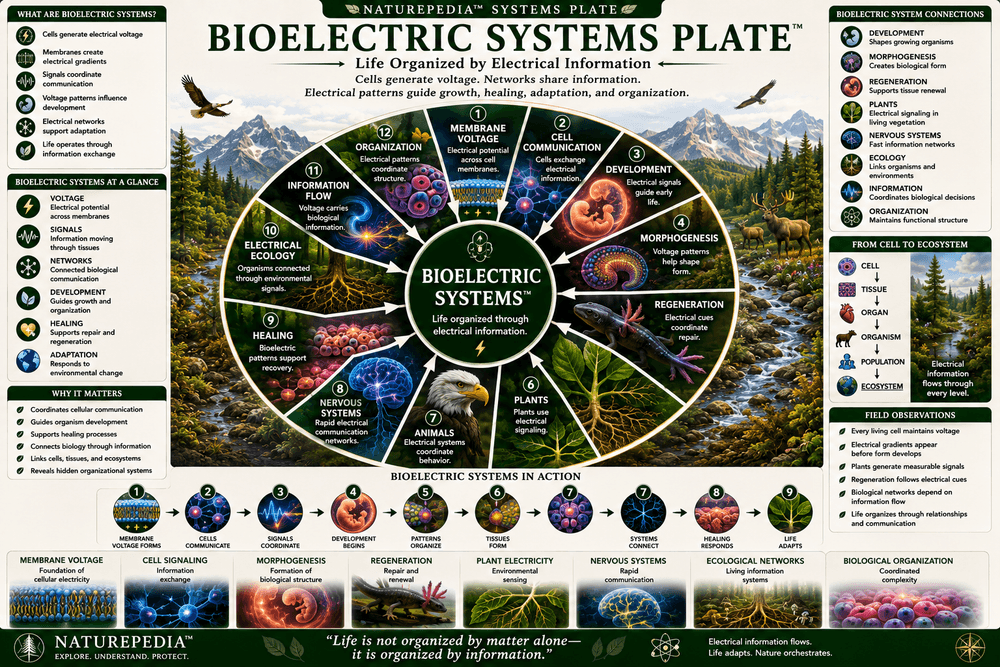
Bioelectric Systems™ maps the hidden electrical signals, voltage gradients, membrane potentials, cellular communication networks, and living patterns that help organize growth, healing, regeneration, development, plants, animals, soil, and ecosystems.

Bioelectric Systems Plate showing membrane voltage, cell communication, development, morphogenesis, regeneration, plants, animals, nervous systems, healing, electrical ecology, information flow, and biological organization
Bioelectric Systems Plate™ — a Naturepedia™ systems map of the invisible electrical architecture that helps organize living form.

Visible Plate ID: bioelectric-systems#bioelectric-systems-plate

Type: Naturepedia Systems Plate™

Living Electrical Organization

What Are Bioelectric Systems?

Bioelectric systems are the electrical signaling networks that help living cells coordinate with one another. Every cell maintains electrical differences across its membrane. These voltage patterns influence communication, growth, repair, development, movement, and the way tissues behave as organized living systems.

In animals, bioelectricity appears in nerves, muscles, wound healing, development, regeneration, and cellular decision-making. In plants, electrical signals move through leaves, stems, roots, and tissues in response to light, touch, injury, drought, nutrients, and environmental change.

Bioelectricity does not replace genes or chemistry. Instead, it works with them. Genes provide molecular instructions. Chemistry supplies materials and reactions. Bioelectric patterns help coordinate how cells behave together across space and time.

Bioelectric Systems™ explores this hidden layer of biological organization: the electrical language through which living systems build form, maintain structure, repair injury, sense environments, and communicate within the larger web of nature.

Voltage

Cells maintain electrical differences across their membranes, creating voltage patterns that influence communication and behavior.

Communication

Electrical signals help cells, tissues, roots, nerves, wounds, and developing organisms coordinate activity across living systems.

Organization

Bioelectric patterns help guide form, repair, adaptation, and the emergence of coordinated structure from individual living cells.

Scientific History Plate

Harold Burr's Life Fields Plate™

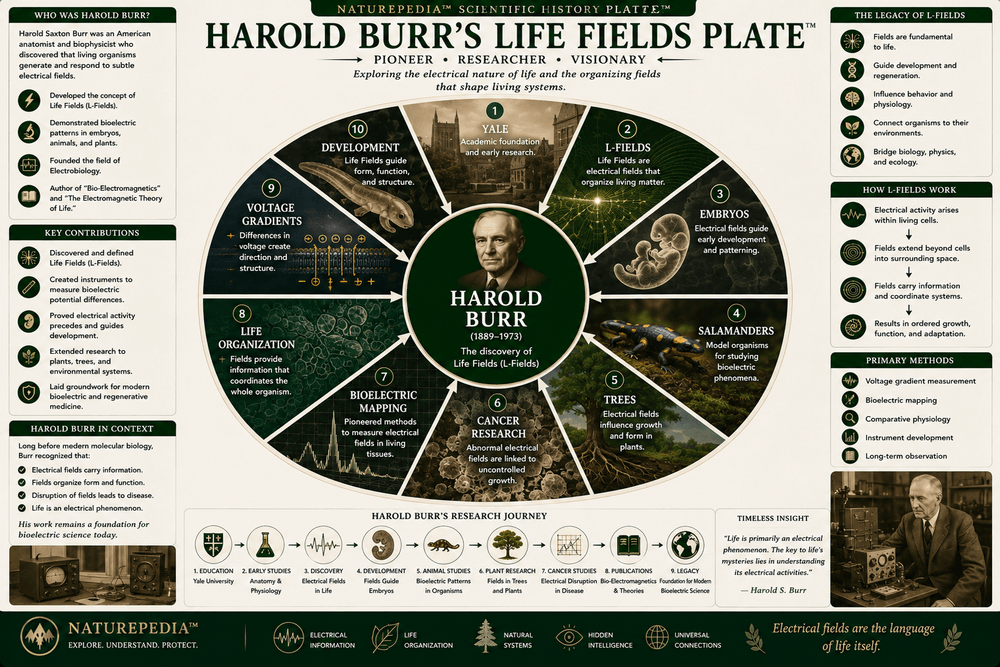
Harold Saxton Burr was among the first scientists to systematically investigate whether measurable electrical patterns help organize living systems. His pioneering research at Yale University helped lay foundations for modern discussions of bioelectricity, development, and biological organization.

Harold Burr's Life Fields Plate showing Yale research, embryos, salamanders, trees, voltage gradients, development, bioelectric mapping, and biological organization
Harold Burr's Life Fields Plate™ — early research exploring electrical organization within living systems.

Visible Plate ID: bioelectric-systems#harold-burr-life-fields-plate

Type: Naturepedia Scientific History Plate™

An Early Explorer Of Life's Electrical Patterns

During the twentieth century, Yale anatomist Harold Saxton Burr investigated whether living organisms possessed measurable electrical patterns that correlated with growth, development, health, and biological organization. Using highly sensitive instruments for his time, Burr measured voltage gradients in embryos, plants, animals, and humans.

One of Burr's most influential observations involved developing embryos. He reported that electrical gradients appeared before visible anatomical structures emerged, suggesting that biological organization may begin before physical form becomes apparent. These observations helped inspire later research into developmental bioelectricity.

Burr also conducted extensive studies on trees, seasonal cycles, and biological voltage patterns, exploring how living organisms interact with environmental rhythms. While some of his broader interpretations remain debated, his measurements helped establish bioelectricity as a legitimate area of scientific investigation.

Today, many researchers view Burr as an important historical figure whose work anticipated modern studies of morphogenesis, regeneration, cellular signaling, and biological pattern formation. His legacy survives not as a final answer, but as an early chapter in humanity's effort to understand how life organizes itself.

Embryonic Gradients

Burr observed electrical patterns in developing embryos before visible anatomical structures appeared.

Tree Studies

Long-term measurements explored how living trees respond to seasonal and environmental cycles.

Scientific Legacy

His work helped inspire modern investigations into bioelectricity, morphogenesis, regeneration, and developmental biology.

Developmental Biology Plate

Bioelectric Morphogenesis Plate™

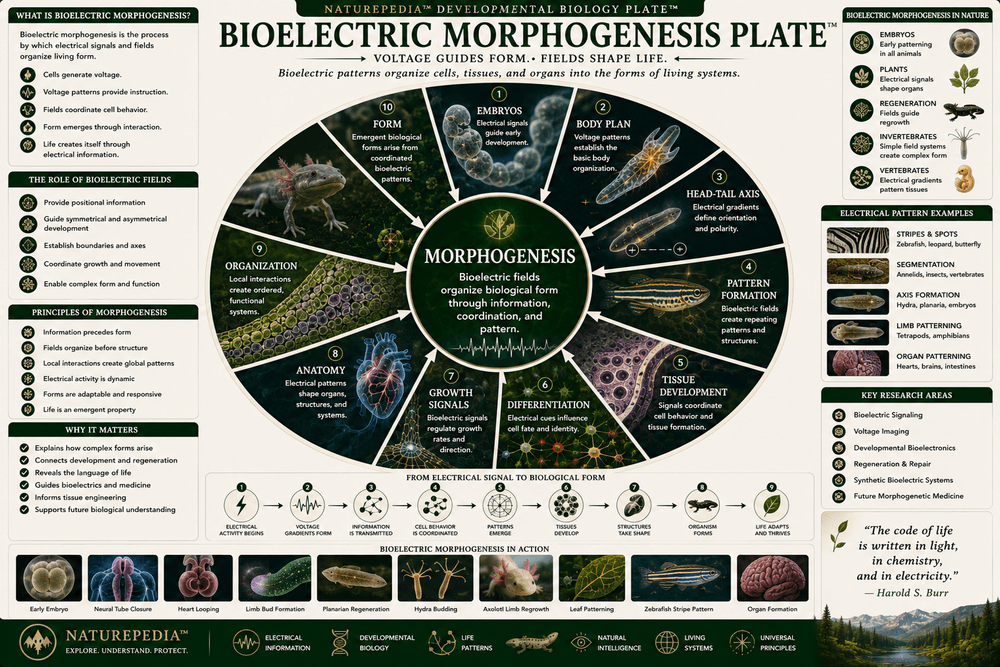
Morphogenesis is the process through which living organisms build form. Bioelectric morphogenesis explores how electrical patterns help guide development, organize tissues, establish body plans, and coordinate the emergence of complex anatomy.

Bioelectric Morphogenesis Plate showing embryos, body plans, pattern formation, tissue development, differentiation, growth signals, anatomy, organization, and biological form
Bioelectric Morphogenesis Plate™ — how electrical patterns help guide the development of biological form.

Visible Plate ID: bioelectric-systems#bioelectric-morphogenesis-plate

Type: Naturepedia Developmental Biology Plate™

How Living Systems Build Themselves

Every organism begins as a single cell, yet somehow develops into a coordinated body composed of specialized tissues, organs, structures, and systems. Morphogenesis is the biological process through which this transformation occurs. It is one of the central mysteries of life.

Traditional developmental biology focused primarily on genes and chemical signaling. Modern bioelectric research adds another layer of understanding by showing that electrical patterns help coordinate cellular behavior across developing tissues. These patterns influence where cells move, when they divide, and how they contribute to emerging anatomical structures.

Researchers have discovered that voltage gradients can help establish body axes, influence tissue differentiation, and participate in the organization of complex anatomical forms. Electrical signaling acts as part of a larger communication network that helps cells work together rather than behave as isolated units.

Bioelectric morphogenesis reveals that development is not simply a matter of genetic instructions. It is a dynamic process of communication, coordination, and organization through which living systems transform information into form.

Body Axes

Electrical gradients help establish directional organization during early development.

Pattern Formation

Developing tissues use coordinated signaling networks to organize emerging biological structures.

Form & Function

Morphogenesis transforms cellular information into the anatomy and organization of living organisms.

Modern Science Plate

Michael Levin Plate™

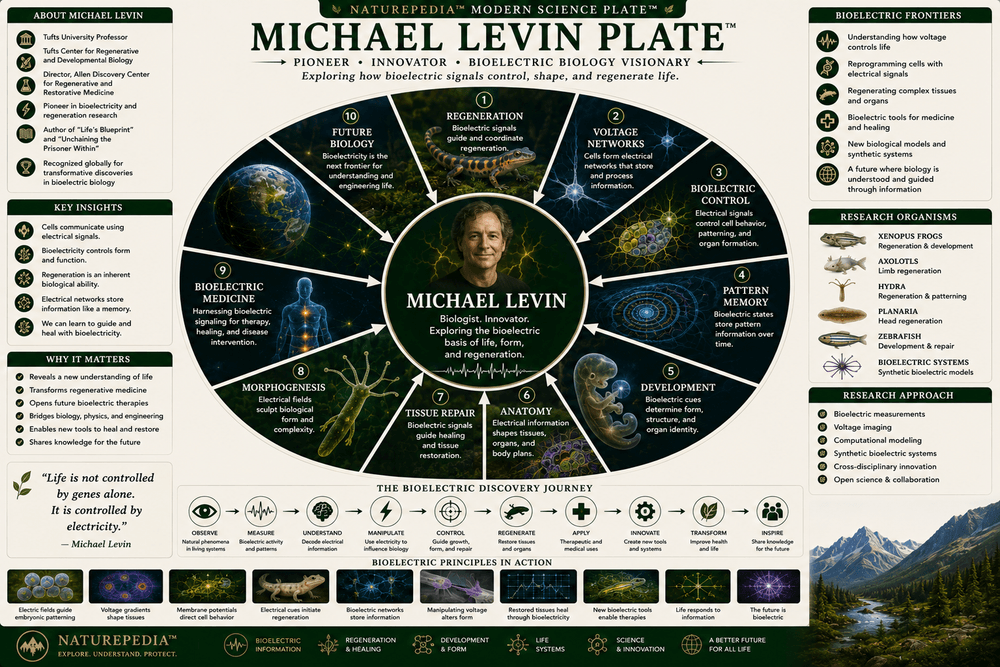
Michael Levin's research has helped bring bioelectricity into modern developmental biology. His work explores how electrical signaling networks influence regeneration, anatomical patterning, tissue repair, and the remarkable ability of living systems to organize themselves.

Michael Levin Plate showing regeneration, voltage networks, pattern memory, development, anatomy, tissue repair, morphogenesis, bioelectric medicine, and future biology
Michael Levin Plate™ — modern research into bioelectric signaling, regeneration, and biological pattern formation.

Visible Plate ID: bioelectric-systems#michael-levin-plate

Type: Naturepedia Modern Science Plate™

A New Era Of Bioelectric Biology

While Harold Burr helped establish early interest in biological electrical fields, modern researchers have developed powerful new tools for studying how bioelectric signaling influences living systems. Among the most influential of these scientists is developmental biologist Michael Levin.

Levin's work investigates how networks of cells communicate through voltage gradients and electrical states. His research demonstrates that these signals can influence development, regeneration, tissue organization, and anatomical outcomes. Rather than acting alone, genes, chemistry, and bioelectric signals operate together as integrated information systems.

Experiments involving regeneration, tissue patterning, and developmental biology have shown that changing bioelectric conditions can sometimes alter how cells behave collectively. These discoveries suggest that electrical communication helps coordinate the larger goals of tissues and organisms rather than merely controlling individual cells.

Levin's research has helped transform bioelectricity from a largely overlooked field into one of the most exciting frontiers in developmental biology, regenerative medicine, and systems-level understandings of life.

Voltage Networks

Cells communicate through electrical states that help coordinate biological activity across tissues.

Regeneration

Bioelectric signals play important roles in tissue repair, healing, and anatomical restoration.

Future Biology

Modern bioelectric research is expanding our understanding of development, medicine, and living organization.

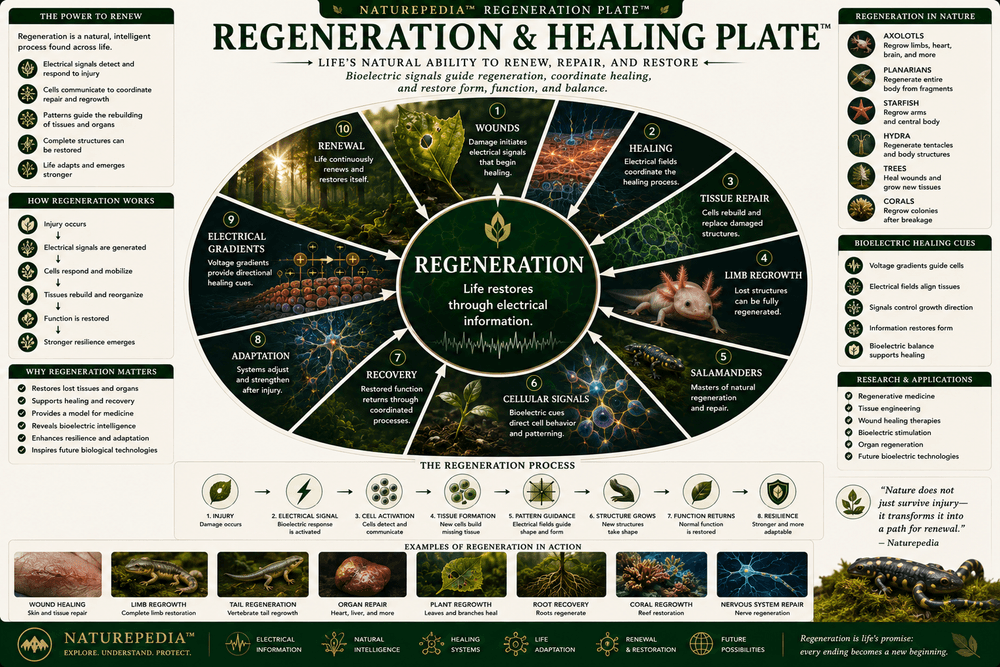
Regeneration Plate

Regeneration & Healing Plate™

Healing is more than replacing damaged tissue. Living organisms coordinate repair through complex communication systems that include genes, chemistry, cellular behavior, and bioelectric signaling. Regeneration and healing reveal the remarkable ability of life to restore order after disruption.

Regeneration and Healing Plate showing wounds, healing, tissue repair, limb regrowth, salamanders, recovery, adaptation, electrical gradients, and renewal
Regeneration & Healing Plate™ — how living systems coordinate repair, recovery, and renewal.

Visible Plate ID: bioelectric-systems#regeneration-healing-plate

Type: Naturepedia Regeneration Plate™

Life's Capacity To Repair Itself

Every living organism possesses mechanisms for repair. From closing a small wound to rebuilding damaged tissues, life continuously responds to injury through coordinated biological processes. These responses involve chemistry, cellular communication, immune activity, and increasingly recognized bioelectric signaling networks.

Some organisms display extraordinary regenerative abilities. Salamanders can regrow limbs. Certain worms can regenerate entire body sections. Many plants recover from damage by reorganizing growth patterns and redirecting resources. These abilities demonstrate that biological systems retain remarkable capacities for restoring form after disruption.

Researchers have discovered that electrical gradients often appear at wound sites and damaged tissues. These signals help coordinate cellular behavior, influencing migration, growth, and repair. Rather than functioning as isolated cells, tissues communicate across larger biological networks during healing.

Regeneration and healing reveal one of nature's most profound characteristics: the ability to restore organization after disturbance. Whether in a forest recovering from fire, a plant repairing injury, or an organism healing tissue, life continually seeks pathways toward renewal.

Wound Signals

Electrical and chemical signals help coordinate cellular responses during healing and tissue repair.

Regenerative Organisms

Species such as salamanders demonstrate extraordinary abilities to rebuild damaged structures.

Biological Renewal

Healing reflects the broader capacity of living systems to reorganize, adapt, and restore function.

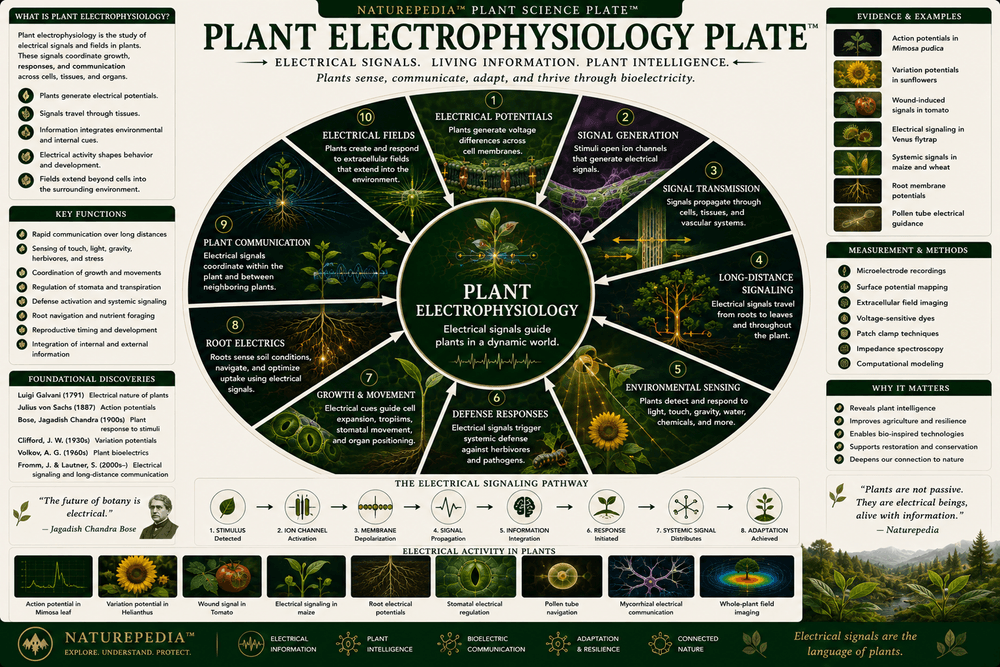
Plant Systems Plate

Plant Electrophysiology Plate™

Plants are not passive organisms. They continuously sense and respond to their environment through chemical, hydraulic, and electrical signaling networks that connect roots, leaves, stems, and growing tissues.

Plant Electrophysiology Plate showing roots, leaves, signaling, Venus flytrap, environmental response, nutrient uptake, growth, adaptation, and plant communication
Plant Electrophysiology Plate™ — the electrical signaling systems that help plants sense, respond, and adapt.

Visible Plate ID: bioelectric-systems#plant-electrophysiology-plate

Type: Naturepedia Plant Systems Plate™

The Electrical Life Of Plants

Plants lack brains and nervous systems, yet they continuously gather information about their surroundings. Light levels, moisture, nutrients, gravity, temperature, physical damage, and biological threats all influence how plants respond to changing conditions.

One of the ways plants coordinate these responses is through electrical signaling. Changes in membrane voltage move through tissues, helping transmit information between roots, stems, leaves, and growing regions. These signals allow different parts of the organism to respond as a coordinated whole.

The Venus flytrap provides one of the most famous examples. Mechanical stimulation triggers electrical signals that activate the rapid closing of the trap. Similar electrical communication systems exist throughout the plant kingdom, although most operate more slowly and less visibly.

Plant electrophysiology reveals that plants are active participants in their environments. Through electrical signaling, they monitor conditions, adjust growth, respond to stress, allocate resources, and continually adapt to the changing world around them.

Environmental Sensing

Plants detect changes in light, moisture, nutrients, touch, and temperature through integrated signaling systems.

Electrical Communication

Voltage changes help transmit information between roots, stems, leaves, and growing tissues.

Adaptive Growth

Plant signaling networks help coordinate resource allocation, stress responses, and developmental decisions.

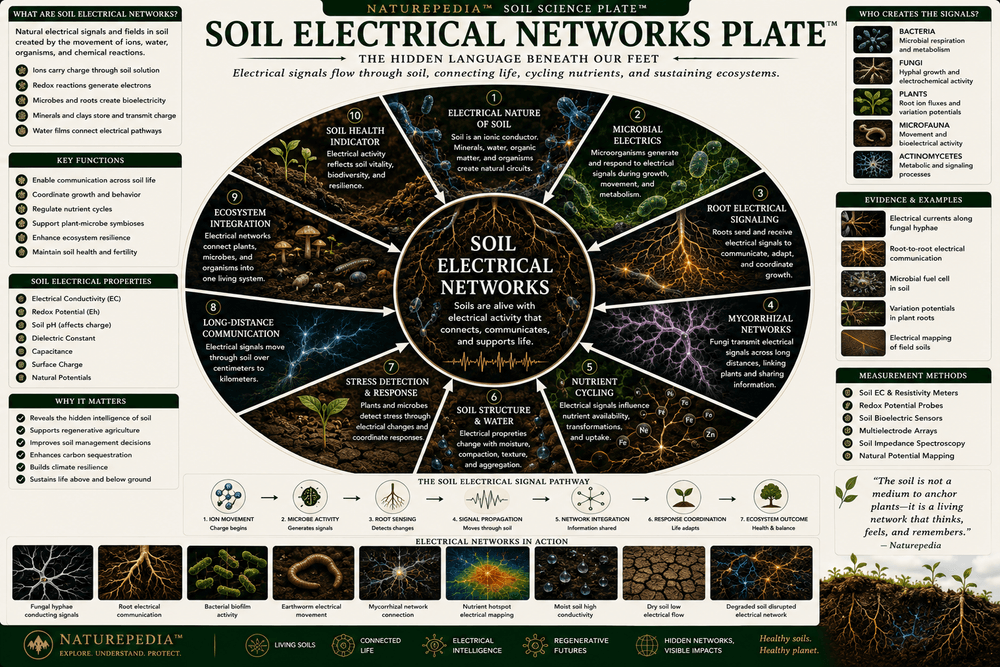
Soil Systems Plate

Soil Electrical Networks Plate™

Beneath every forest, grassland, wetland, and farm lies a dynamic electrical landscape. Roots, microbes, fungi, minerals, water, and organic matter participate in exchanges that influence communication, nutrient cycling, ecosystem productivity, and biological resilience.

Soil Electrical Networks Plate showing roots, rhizosphere, microbes, mycorrhizae, nutrient flow, water movement, signaling, carbon, ecosystem feedbacks, and soil health
Soil Electrical Networks Plate™ — the hidden electrical relationships connecting roots, microbes, fungi, water, and living soil.

Visible Plate ID: bioelectric-systems#soil-electrical-networks-plate

Type: Naturepedia Soil Systems Plate™

The Hidden Signals Beneath Our Feet

Soil is often viewed as a mixture of minerals, organic matter, water, and living organisms. In reality, it is also an active electrical environment. Charged particles move through water films, roots generate electrical gradients, microbes exchange electrons, and fungal networks help coordinate activity across complex underground ecosystems.

The rhizosphere—the narrow region surrounding plant roots—is especially active. Here, roots release compounds that attract microbes, fungi interact with plants through mycorrhizal partnerships, and nutrient exchanges occur continuously. These interactions involve both chemical and electrical processes that influence plant growth and ecosystem function.

Researchers have discovered microorganisms capable of transferring electrons directly through specialized structures and conductive pathways. These findings suggest that electrical activity may play larger roles in soil ecology than previously recognized, connecting metabolism, nutrient cycling, and environmental response.

Soil electrical networks connect naturally with Soil Systems™, Ecosystem Feedbacks™, Mycelial Networks™, and Microbial Life Systems™. Together they reveal that living soil is not merely a growing medium but a highly interactive communication network beneath every ecosystem.

Rhizosphere Activity

Root zones host intense biological, chemical, and electrical interactions that influence ecosystem productivity.

Microbial Electron Flow

Certain microorganisms exchange electrons through specialized structures that support energy transfer and metabolism.

Living Soil Networks

Roots, fungi, microbes, water, and minerals form interconnected systems that influence resilience and ecological health.

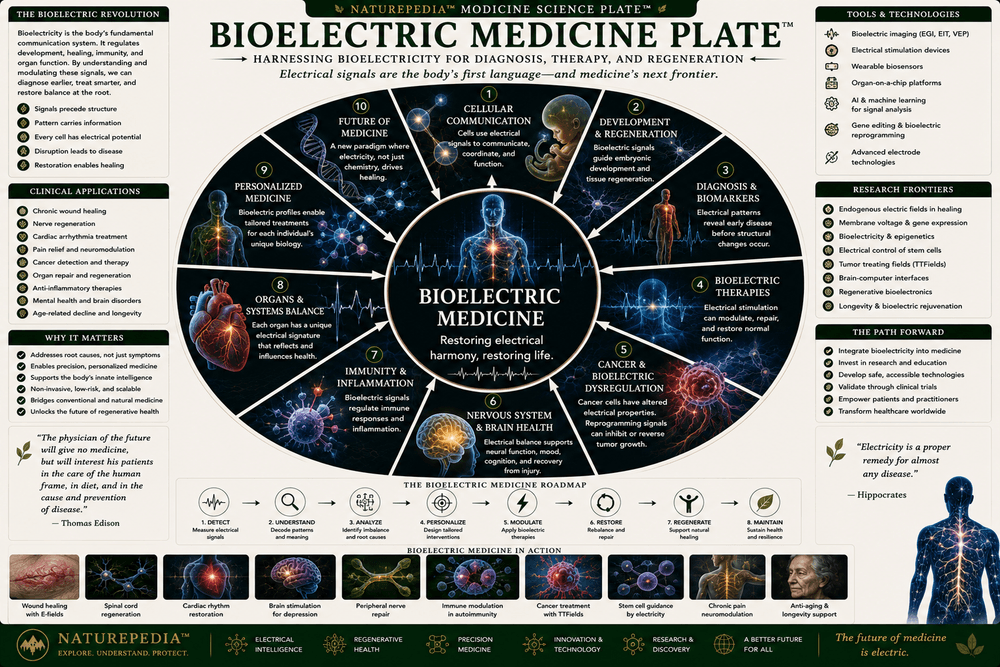
Human Systems Plate

Bioelectric Medicine Plate™

Modern medicine increasingly recognizes that electrical signaling is fundamental to health. From pacemakers and neural stimulation to regenerative research and wound healing, bioelectric medicine explores how understanding the body's electrical communication systems may improve diagnosis, treatment, and recovery.

Bioelectric Medicine Plate showing pacemakers, neural stimulation, healing, diagnostics, regeneration, tissue repair, electrical signals, medical research, and future therapies
Bioelectric Medicine Plate™ — the growing intersection of electrical biology, healing, and medical innovation.

Visible Plate ID: bioelectric-systems#bioelectric-medicine-plate

Type: Naturepedia Human Systems Plate™

Medicine Meets Electrical Biology

The human body is an electrical organism. Every heartbeat, nerve impulse, muscle contraction, sensory experience, and healing response depends on coordinated electrical activity occurring across tissues and organ systems. Medicine has relied upon these signals for decades through technologies such as electrocardiograms, pacemakers, and neurological monitoring.

Today, researchers are expanding this understanding into a broader field known as bioelectric medicine. Rather than focusing only on chemistry or pharmaceuticals, bioelectric medicine investigates how electrical signaling influences health, tissue repair, immune responses, regeneration, and physiological regulation.

Emerging areas of research include neural stimulation, wound healing technologies, regenerative therapies, prosthetic integration, and treatments designed to influence biological communication networks. While many applications remain under active investigation, the field continues to grow rapidly.

Bioelectric medicine represents a modern extension of a simple idea: understanding how living systems communicate electrically may help us better understand health, disease, recovery, and the future of biological repair.

Clinical Bioelectricity

Technologies such as pacemakers and neural stimulation already demonstrate practical applications of electrical biology.

Regenerative Research

Scientists are exploring how bioelectric signals influence healing, tissue repair, and biological recovery.

Future Therapies

Advances in electrical biology may help expand future approaches to medicine and human health.

Ecology Plate

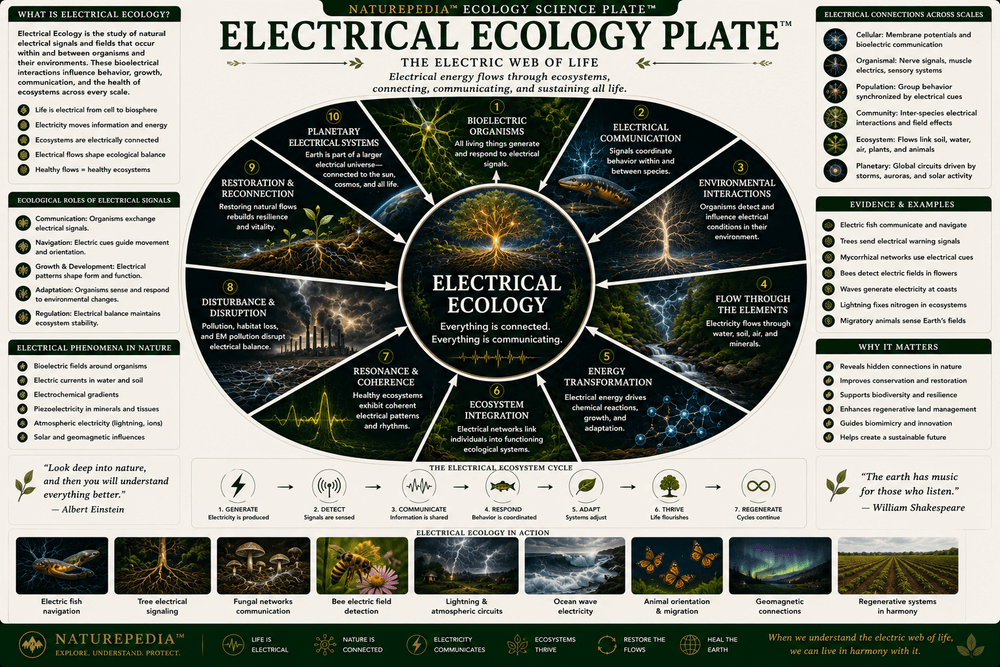
Electrical Ecology Plate™

Life does not exist as isolated organisms. Across forests, soils, wetlands, grasslands, oceans, and microbial communities, electrical processes help connect living systems to their environments. Electrical ecology explores the hidden signaling networks that operate throughout nature.

Electrical Ecology Plate showing trees, roots, fungi, soil, microbes, insects, communication networks, ecosystems, and information flow
Electrical Ecology Plate™ — the hidden electrical relationships that connect living organisms and ecosystems.

Visible Plate ID: bioelectric-systems#electrical-ecology-plate

Type: Naturepedia Ecology Plate™

The Living Signals Of Ecosystems

Nature is filled with electrical activity. Plants respond to injury through voltage changes. Roots interact with microbes through charged environments. Animals rely on electrical signaling for movement and sensation. Even the smallest organisms participate in energy exchanges that influence larger ecological systems.

Electrical ecology seeks to understand how these countless interactions contribute to ecosystem function. Rather than viewing organisms as separate entities, this perspective recognizes that living systems continuously exchange information, energy, nutrients, and signals across biological networks.

Forests provide a compelling example. Trees interact with soil organisms, mycorrhizal fungi, microbial communities, water cycles, and atmospheric processes. Electrical signaling represents one of many communication pathways operating within these larger ecological systems.

Electrical ecology fits naturally within Naturepedia™ because it connects bioelectricity to Earth Systems™, Soil Systems™, Ecosystem Feedbacks™, Microbial Life Systems™, and Mycelial Networks™. It reminds us that life is organized not only through structure, but through continuous interaction.

Biological Networks

Organisms participate in interconnected systems of communication, exchange, and environmental response.

Information Flow

Electrical processes contribute to how living systems sense, respond, and coordinate activity.

Ecological Integration

Electrical signaling exists within larger networks that include water, nutrients, microbes, fungi, plants, and animals.

Photography Plate

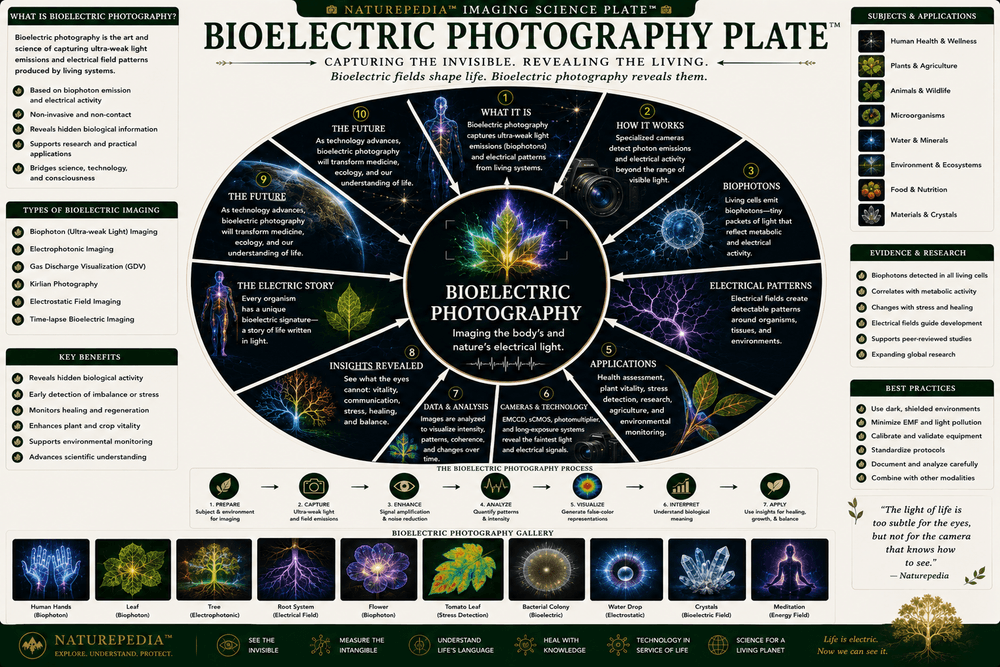
Bioelectric Photography Plate™

Photography captures visible form, but every photograph of a living organism also records the outcome of invisible processes. Growth, adaptation, healing, development, and ecological organization emerge from biological systems that operate far beyond what the eye can see.

Bioelectric Photography Plate showing growth, pattern, development, forests, leaves, roots, regeneration, adaptation, observation, and hidden systems
Bioelectric Photography Plate™ — observing visible biological form shaped by invisible organizational systems.

Visible Plate ID: bioelectric-systems#bioelectric-photography-plate

Type: Naturepedia Photography Plate™

Photographing The Results Of Invisible Processes

Nature photography often appears to document visible subjects: forests, wildlife, plants, landscapes, fungi, and ecosystems. Yet every living form captured in a photograph represents the outcome of countless unseen biological processes that shaped its growth and organization.

A leaf emerges through coordinated developmental signaling. A forest develops through interactions among roots, fungi, microbes, water, sunlight, and ecological feedbacks. A healing wound, a growing seedling, and a migrating organism all reflect underlying communication systems operating beyond direct observation.

Bioelectric Systems™ adds another layer to this perspective. Electrical signaling participates in development, repair, adaptation, and biological coordination. While cameras do not directly photograph voltage gradients, they record the forms, patterns, and living structures that emerge from these hidden organizational processes.

Through Naturepedia™, photography becomes more than documentation. It becomes a way of revealing the visible expressions of deeper systems operating throughout the living world.

Pattern

Biological forms emerge from coordinated developmental processes that shape visible structure.

Observation

Photography records the outcomes of growth, adaptation, healing, and ecological organization.

Hidden Systems

Every image of life reflects deeper networks of communication, information, and biological coordination.

About The Author

Robbie George

I created Naturepedia™ to explore the visible and invisible systems that shape life on Earth. Through photography, field observation, ecological storytelling, and systems thinking, I investigate how forests, soils, microbes, water, wildlife, energy, and biological organization interact across scales.

My interest in bioelectric systems emerged from a broader question that appears throughout Naturepedia™: how do living systems organize themselves? From soil microbiomes and mycelial networks to ecosystem feedbacks and regenerative landscapes, many of nature's most important processes operate beneath the surface of direct observation. Bioelectricity represents another hidden layer of that story.

As a nature photographer, I often photograph the visible outcomes of invisible processes. Every forest, leaf, animal, root system, and ecological pattern reflects countless interactions occurring beyond what a camera can directly record. Bioelectric Systems™ explores one of those hidden dimensions by examining how electrical signaling contributes to development, healing, adaptation, and biological organization.

Naturepedia™ is my effort to build a living framework for humans and machines alike—a place where photography, science, ecology, and systems thinking come together to reveal the deeper patterns that shape the natural world.

Bioelectric Systems™ FAQ

Frequently Asked Questions

What are bioelectric systems?

Bioelectric systems are the electrical signaling networks that help living cells, tissues, plants, animals, and organisms communicate, organize, grow, heal, and respond to their environments.

Is bioelectricity different from chemistry?

Bioelectricity does not replace chemistry. It works with genes, molecules, ions, and cellular processes to coordinate biological activity across living systems.

How does bioelectricity influence development?

During development, voltage gradients and electrical signaling patterns help cells coordinate movement, growth, differentiation, body axes, tissue organization, and the formation of biological structures.

Who was Harold Burr?

Harold Saxton Burr was a Yale anatomist who studied measurable electrical patterns in living organisms. His work helped inspire later research into bioelectric fields, development, and biological organization.

Why is Michael Levin important to bioelectric biology?

Michael Levin is a modern developmental biologist whose research explores how bioelectric signaling influences regeneration, morphogenesis, tissue repair, anatomical patterning, and cellular decision-making.

Do plants use electrical signals?

Yes. Plants use electrical signals to respond to touch, injury, light, water stress, nutrients, environmental conditions, and internal communication between roots, stems, leaves, and growing tissues.

How do soil electrical networks relate to bioelectric systems?

Soil electrical networks involve roots, microbes, fungi, minerals, water, and electron exchange. These interactions influence nutrient cycling, plant health, microbial activity, and ecosystem resilience.

How does bioelectricity relate to nature photography?

Nature photography captures visible forms, but those forms often emerge from invisible processes such as growth, development, healing, adaptation, ecological feedbacks, and biological signaling.


Trusted Art Seller

Trusted Art Seller

The presence of this badge signifies that this business has officially registered with the Art Storefronts Organization and has an established track record of selling art.

It also means that buyers can trust that they are buying from a legitimate business. Art sellers that conduct fraudulent activity or that receive numerous complaints from buyers will have this badge revoked. If you would like to file a complaint about this seller, please do so here.

Verified Returns & Exchanges

Verified Returns & Exchanges

The Art Storefronts Organization has verified that this business has provided a returns & exchanges policy for all art purchases.

Description of Policy from Merchant:

What is your Policy on Returns/Exchanges/Refunds? I take great pride in my work and prints, and I want you to be completely happy with your investment in my nature art. If for any reason you are unsatisfied with your print, you may return it within 14 days of delivery, and/or exchange it for another print. Prints must be returned in new condition, packaged carefully in the original packaging if possible. Your refund will be issued as soon as I receive the returned print. Please contact me if you would like to arrange a return or exchange. In the event that you receive a damaged or defective print, please let me know within 7 days of receipt, and I will arrange for a new print to be shipped to you at no additional cost.

Verified Secure Website with Safe Checkout

Verified Secure Website with Safe Checkout

This website provides a secure checkout with SSL encryption.

Verified Archival Materials Used

Verified Archival Materials Used

The Art Storefronts Organization has verified that this Art Seller has published information about the archival materials used to create their products in an effort to provide transparency to buyers.

Description from Merchant:

Fine Art Prints are made with high-quality archival inks on fine art papers using a high-resolution large format inkjet printer. Our premium archival inks produce images with smooth tones and rich colors. Prints are made with care on your choice of exquisite Fine Art Papers using a high-resolution large format inkjet printer. https://www.graphikprintworks.com

Cart

Your cart is currently empty.

Saved Successfully.

This is only visible to you because you are logged in and are authorized to manage this website. This message is not visible to other website visitors.

Import From Instagram

Click on any Image to continue

This Website Supports Augmented Reality to Live Preview Art

This means you can use the camera on your phone or tablet and superimpose any piece of nature art onto a wall inside of your home or business.

To use this feature, Just look for the "Live Preview AR" button when viewing any piece of nature art on this website!

🦊 Pounce now for 20% off

No thanks