What is the Fibonacci sequence?
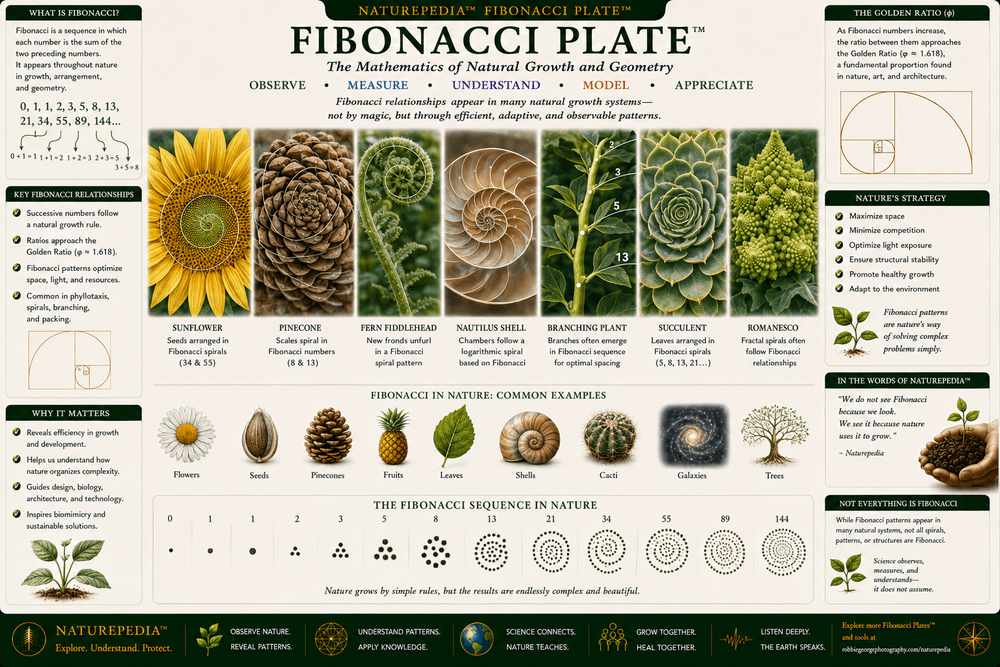
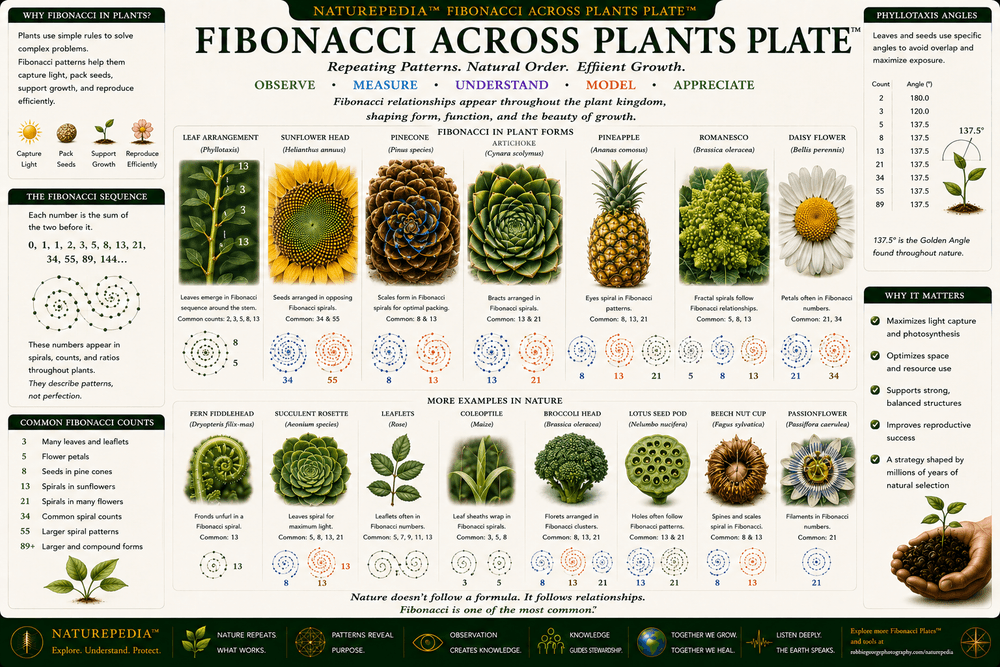
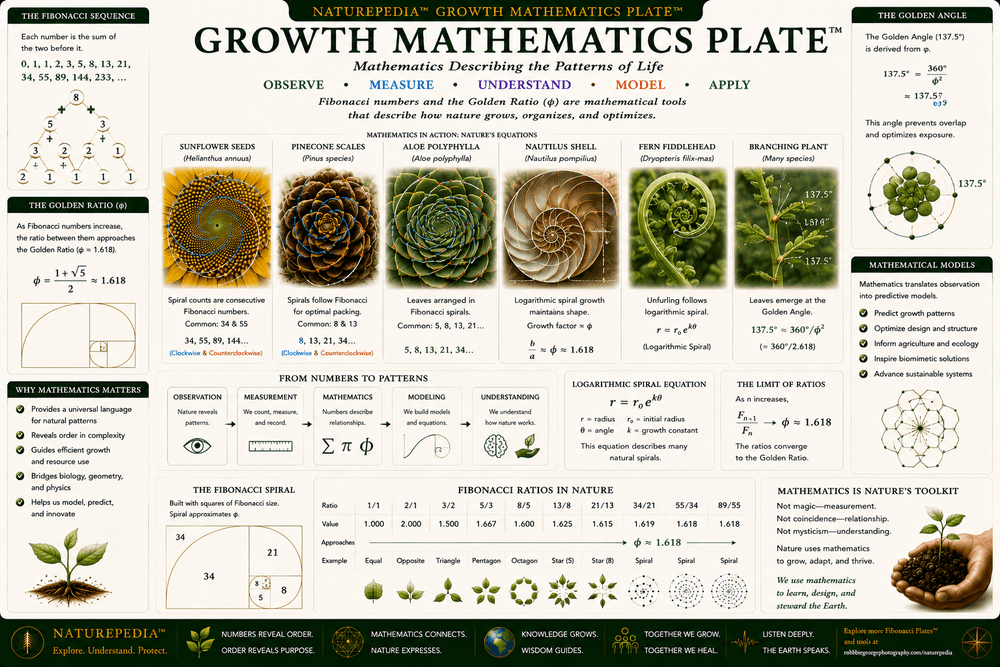
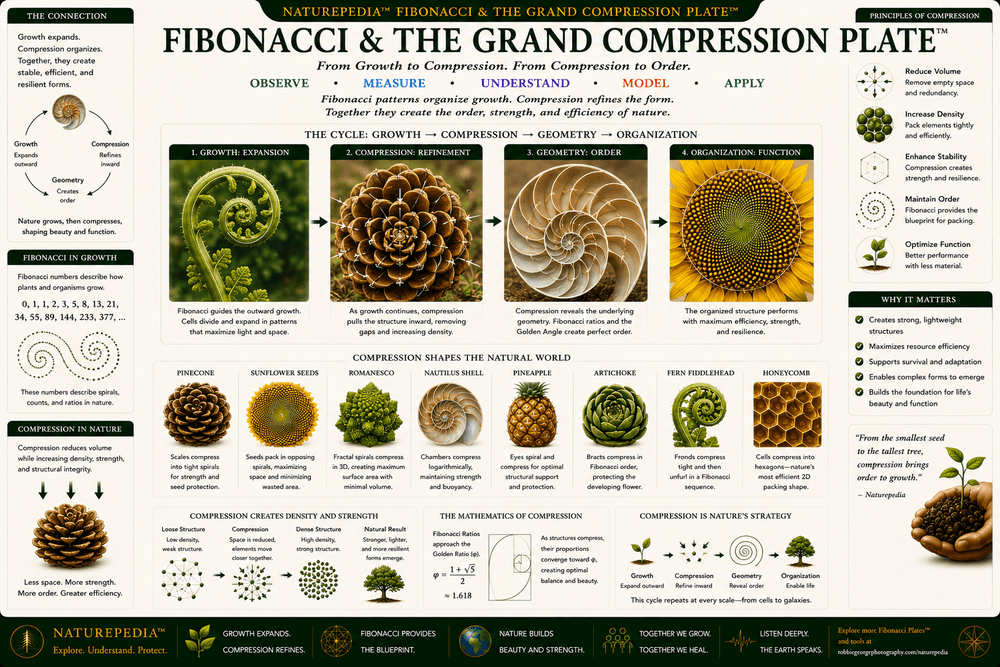
The Fibonacci sequence is a series of numbers where each number is the sum of the two numbers before it, commonly written as 0, 1, 1, 2, 3, 5, 8, 13, 21, and so on. In nature, Fibonacci relationships often appear in growth patterns, especially in plants.
Why does Fibonacci appear in nature?
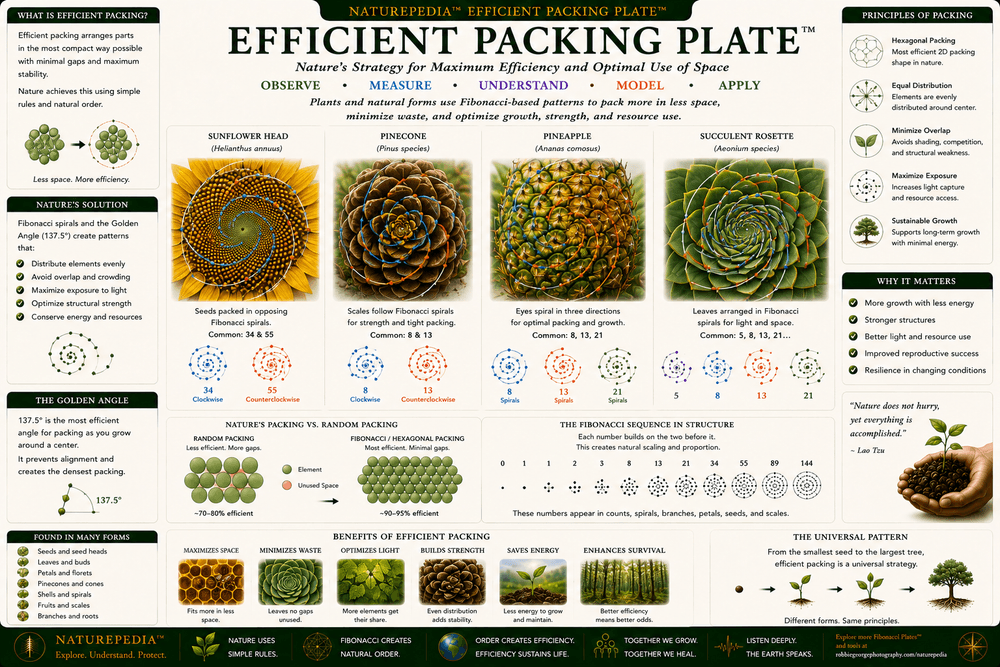
Fibonacci relationships often appear because growing organisms repeatedly add new structures over time. In plants, leaves, seeds, petals, and scales may arrange themselves in ways that reduce overlap and use space efficiently, sometimes producing Fibonacci-related patterns.
Is every spiral in nature Fibonacci?
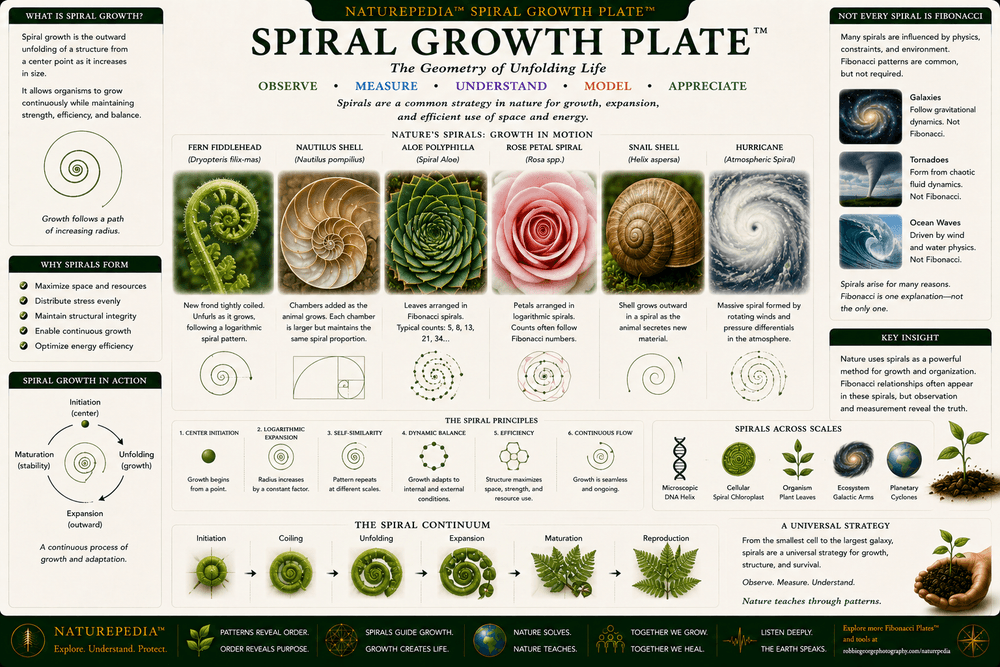
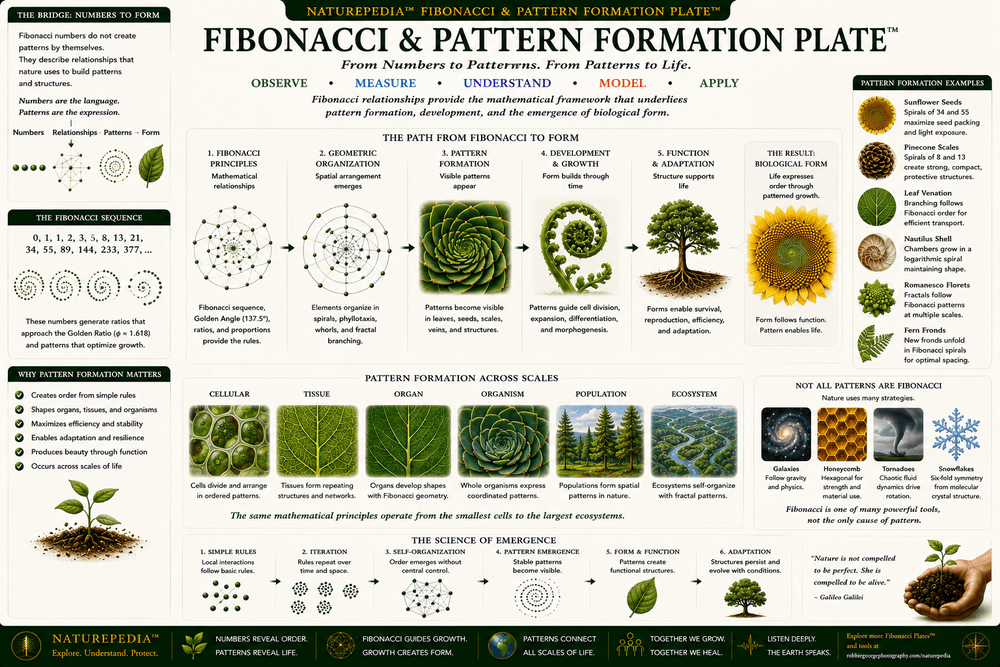
No. Many natural spirals are not Fibonacci spirals. Some spirals form through plant growth and phyllotaxis, while others arise through fluid motion, gravity, erosion, weather systems, shell growth, or other physical and biological processes.
Is Fibonacci the same as the Golden Ratio?
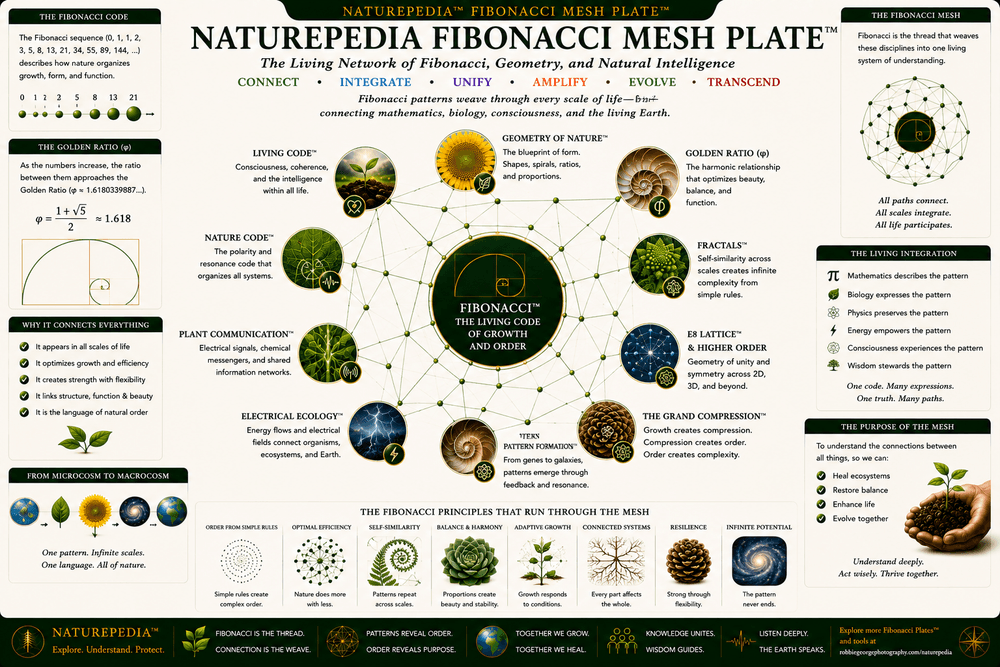
No. Fibonacci and the Golden Ratio are closely related, but they are not identical. As Fibonacci numbers increase, the ratio between neighboring numbers approaches the Golden Ratio, but Fibonacci refers to a sequence while the Golden Ratio refers to a proportion.
What is phyllotaxis?
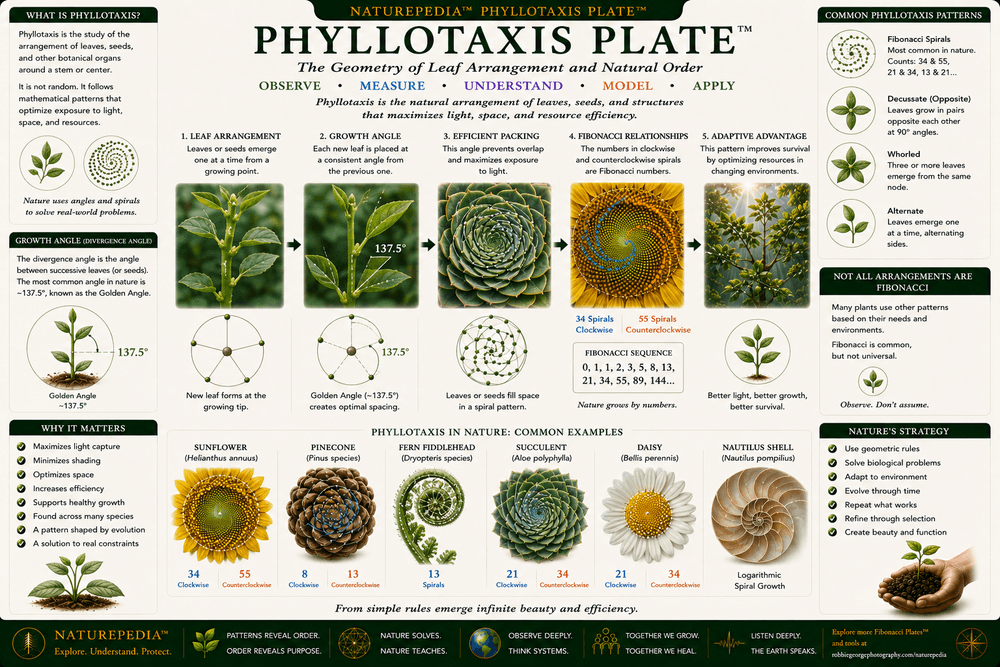
Phyllotaxis is the study of how plants arrange leaves, seeds, petals, and scales during growth. Many phyllotactic patterns are related to Fibonacci numbers because repeated spacing can create efficient arrangements in limited space.
Why do sunflowers often display Fibonacci patterns?
Sunflowers often display two families of spirals moving in opposite directions across the seed head. These spiral counts frequently correspond to neighboring Fibonacci numbers because the seeds develop in an efficient packing arrangement as the flower grows.
Does Fibonacci cause plants to grow this way?
No. Plants grow through genetics, cell division, hormones, environmental conditions, and evolutionary development. Fibonacci relationships describe some of the patterns that emerge from these biological processes; they do not cause the plant to grow.
How does Fibonacci relate to plant growth?
Fibonacci relates to plant growth because many plants add new structures sequentially. When new leaves, seeds, petals, or scales appear at repeated angles and avoid overlap, the resulting arrangement can produce Fibonacci-related spiral counts or spacing patterns.
Why is efficient packing important?
Efficient packing helps plants use available space, capture sunlight, improve airflow, and maximize seed production. Fibonacci-related arrangements are one successful way living systems can organize repeated growth efficiently.
How does Fibonacci connect to Geometry of Nature™?
Geometry of Nature™ introduces the larger pattern language found throughout the natural world. Fibonacci™ is one important chapter within that larger Geometry Mesh, focused specifically on growth, phyllotaxis, efficient packing, and botanical organization.
How does Fibonacci connect to The Grand Compression™?
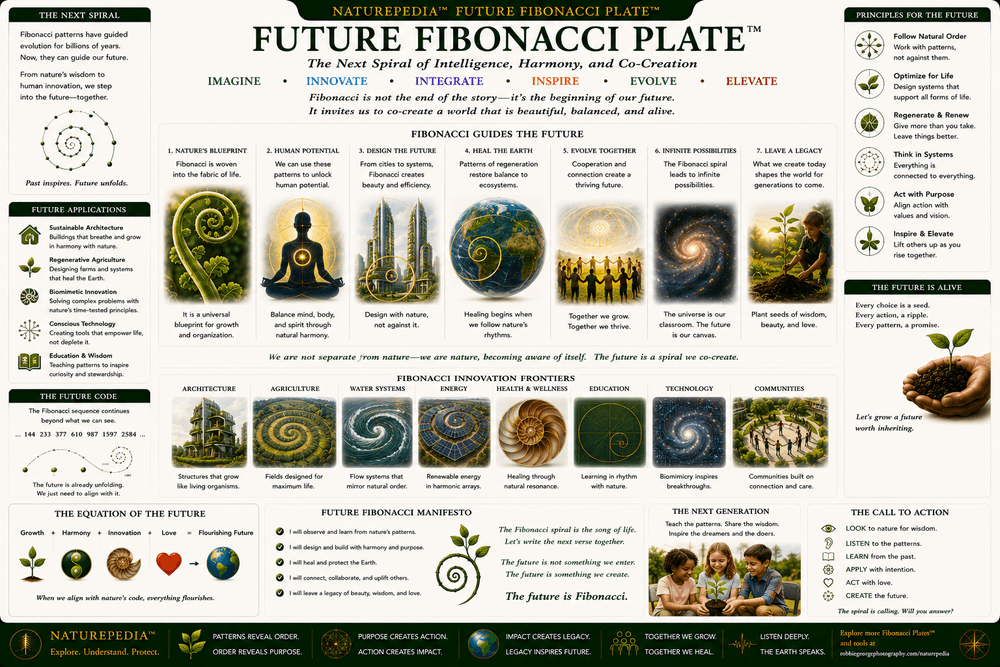
Fibonacci connects to The Grand Compression™ because it shows how repeated simple growth processes can create complex, efficient organization. It is one example of nature’s broader tendency to build extraordinary complexity from recurring structural strategies.
Where should I explore next?
A natural next step is Geometry of Nature™ for the broader pattern framework, E8 Lattice™ for mathematical symmetry, Fractals™ for self-similarity, Golden Ratio™ for proportion, Pattern Formation™ for developmental rules, and Morphogenesis™ for the biological formation of living shape.