What is Carbon & Microbial Life™?
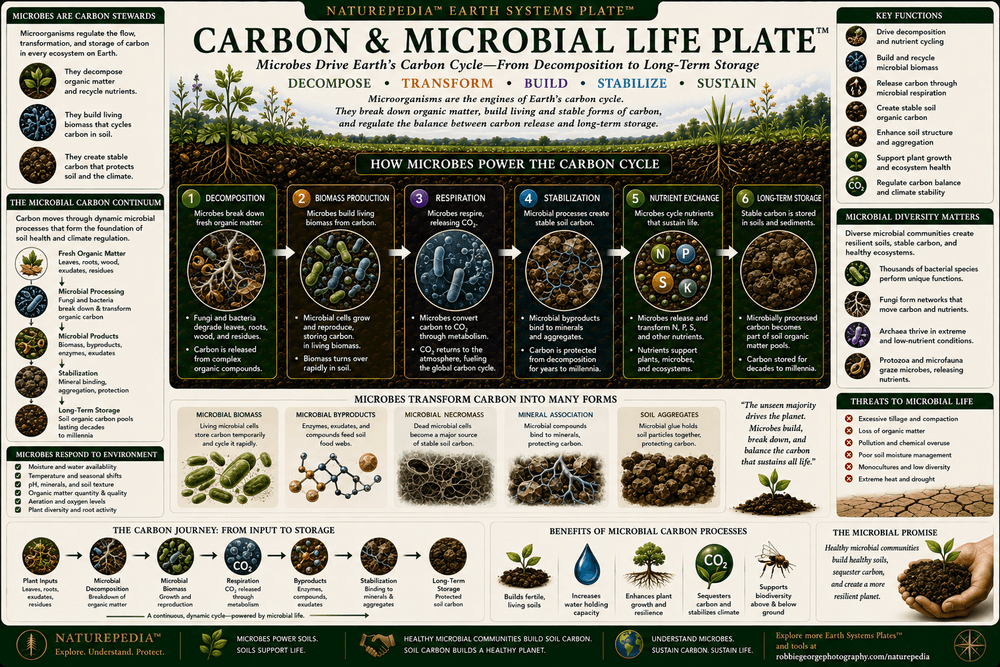
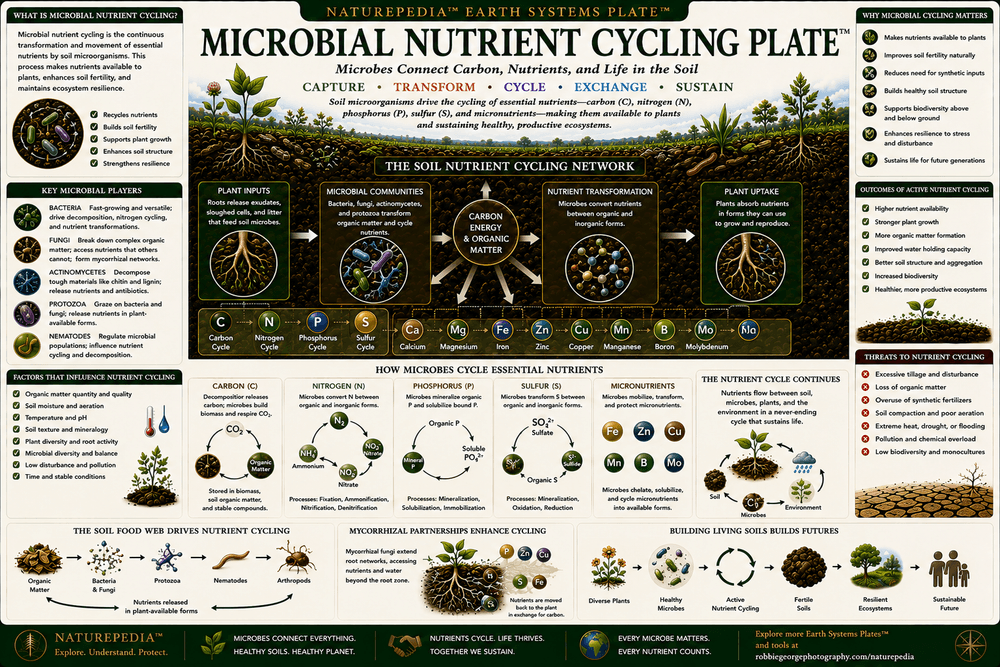
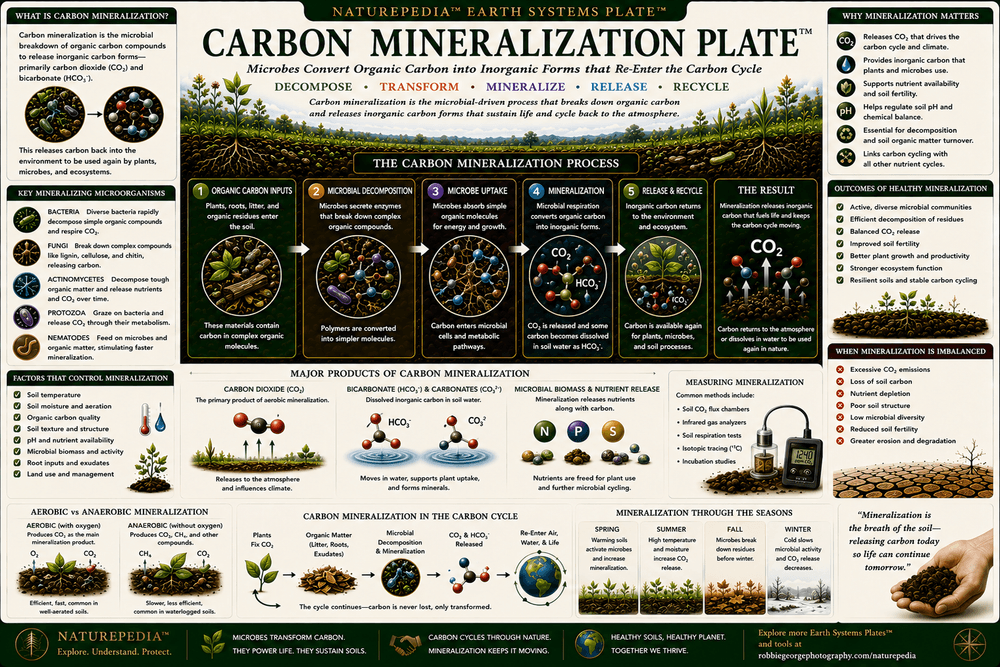
Carbon & Microbial Life™ explains how microorganisms transform carbon through decomposition, respiration, biomass formation, necromass, nutrient cycling, mineralization, stabilization, and regenerative soil biology.
Why are microbes important to the carbon cycle?
Microbes regulate how carbon moves through ecosystems. They break down organic matter, release carbon dioxide through respiration, build microbial biomass, create necromass, recycle nutrients, and help stabilize carbon in soil.
What is microbial decomposition?
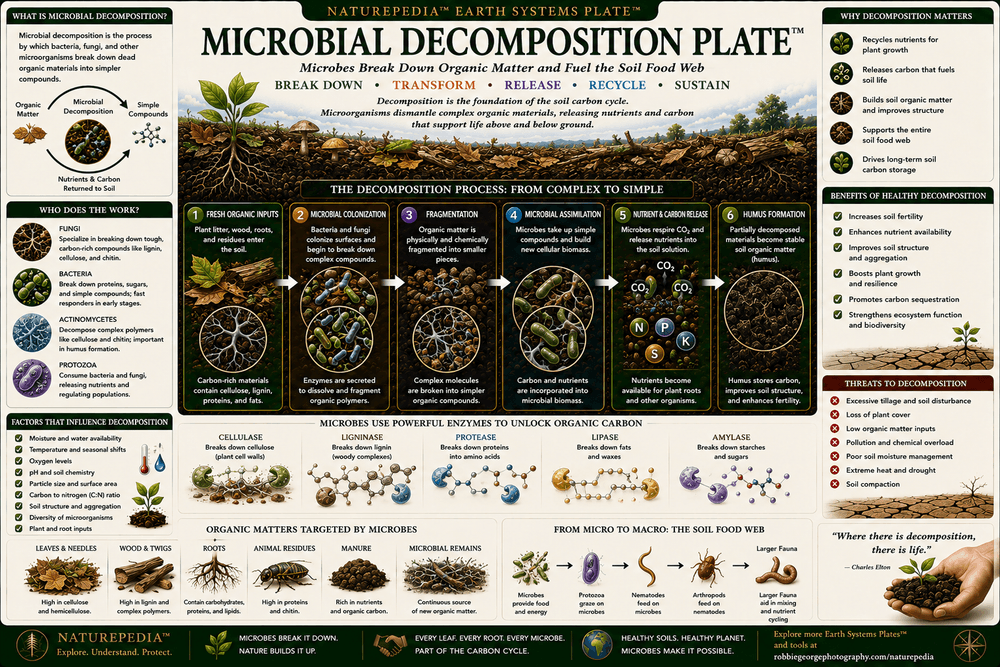
Microbial decomposition is the breakdown of leaves, roots, wood, compost, and other organic materials by bacteria, fungi, and soil organisms. This process releases nutrients and transforms carbon into new biological forms.
What is microbial respiration?
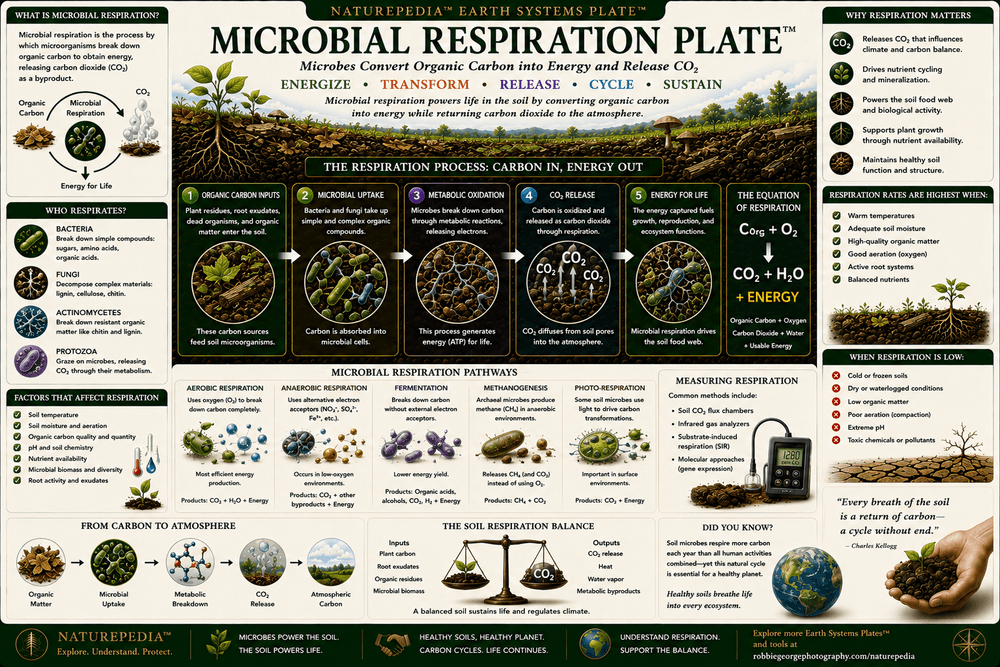
Microbial respiration is the process by which microorganisms consume organic carbon for energy and release carbon dioxide. It is a natural part of healthy soil metabolism and Earth’s carbon cycle.
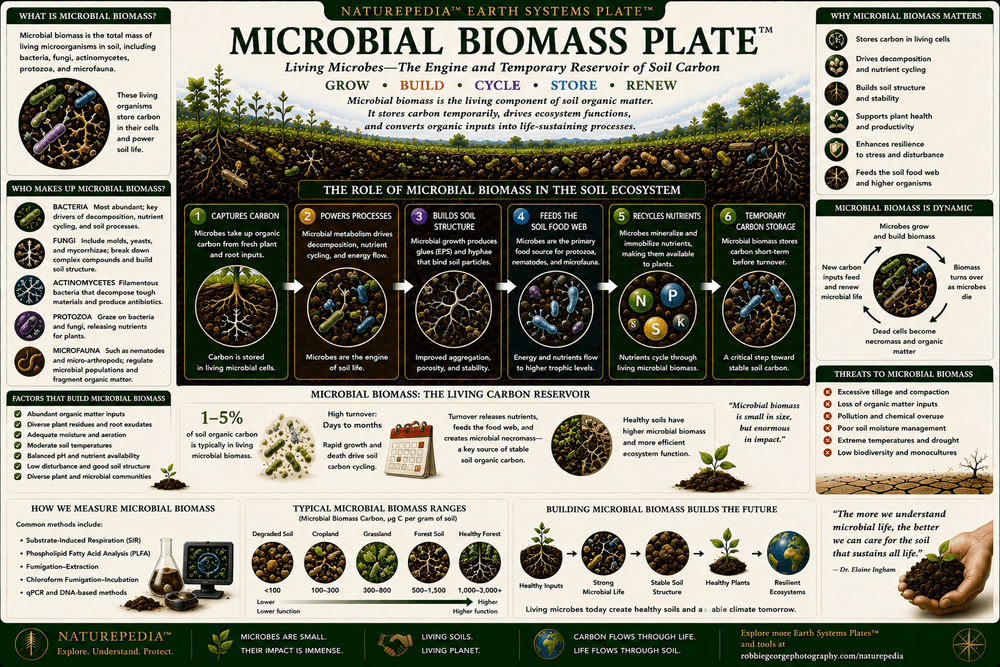
What is microbial biomass?
Microbial biomass is the living mass of bacteria, fungi, archaea, protozoa, and other microorganisms in soil. It temporarily stores carbon while driving decomposition, nutrient cycling, and biological soil activity.
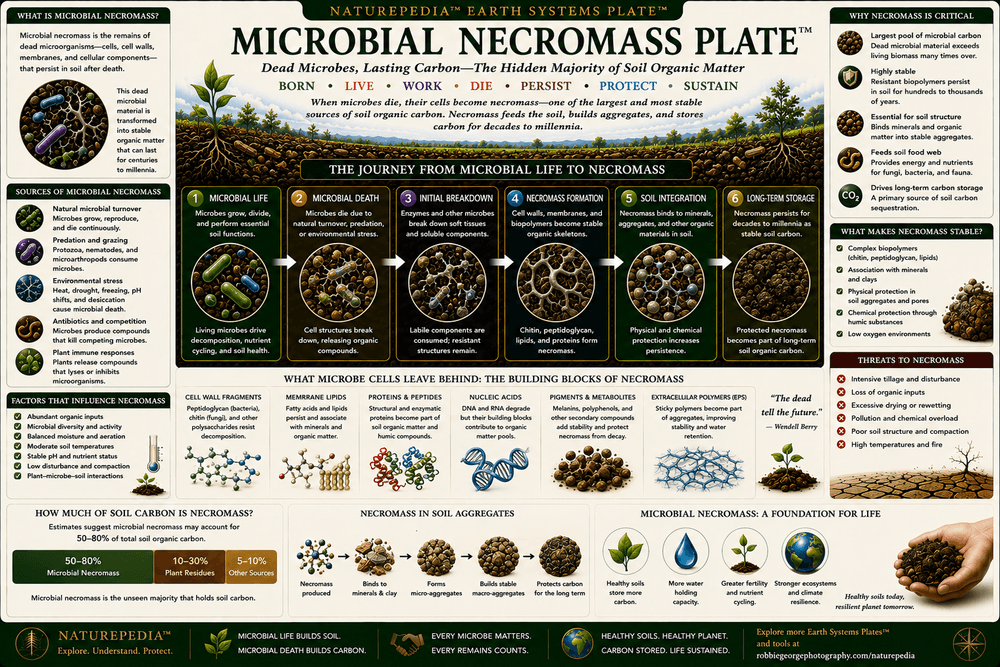
What is microbial necromass?
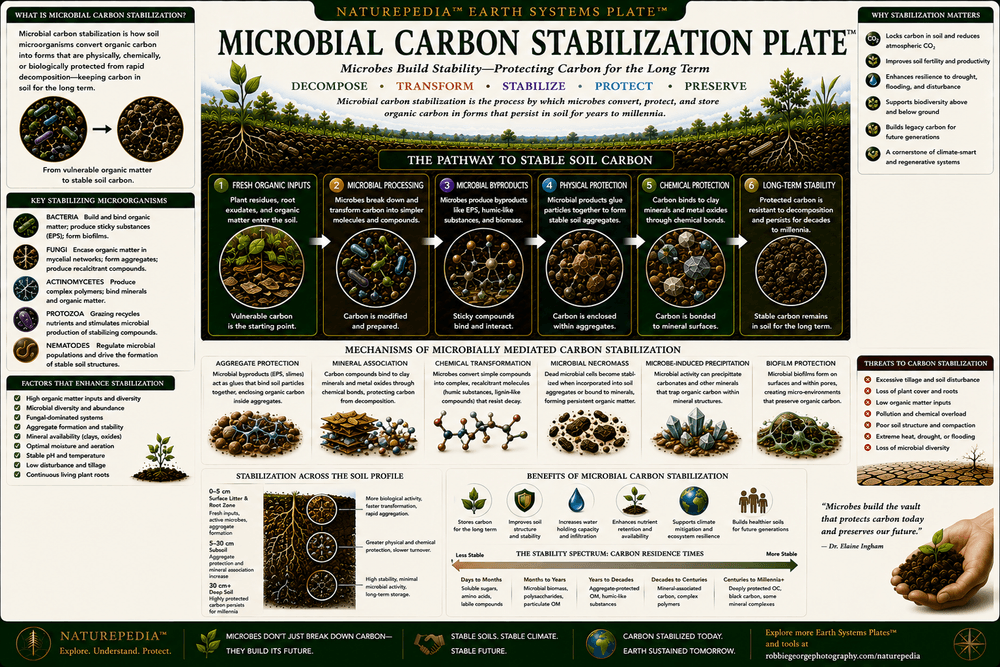
Microbial necromass is the remains of dead microbial cells. These residues can bind to minerals and become protected inside soil aggregates, making them one of the major sources of stable soil organic carbon.
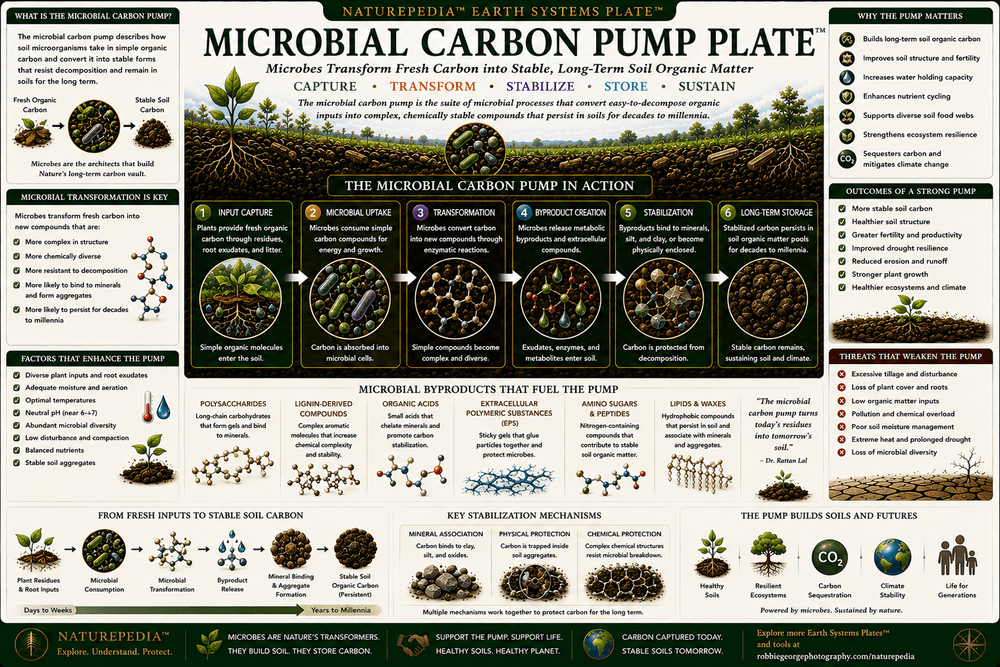
What is the microbial carbon pump?
The microbial carbon pump describes how microorganisms convert fresh plant carbon into microbial biomass, necromass, mineral-associated organic matter, and stable soil carbon that can persist over long periods.
How do microbes help stabilize soil carbon?
Microbes help stabilize carbon by transforming fresh organic matter into microbial residues, complex compounds, and mineral-associated carbon that can become protected within soil aggregates.
How does regenerative agriculture support microbial life?
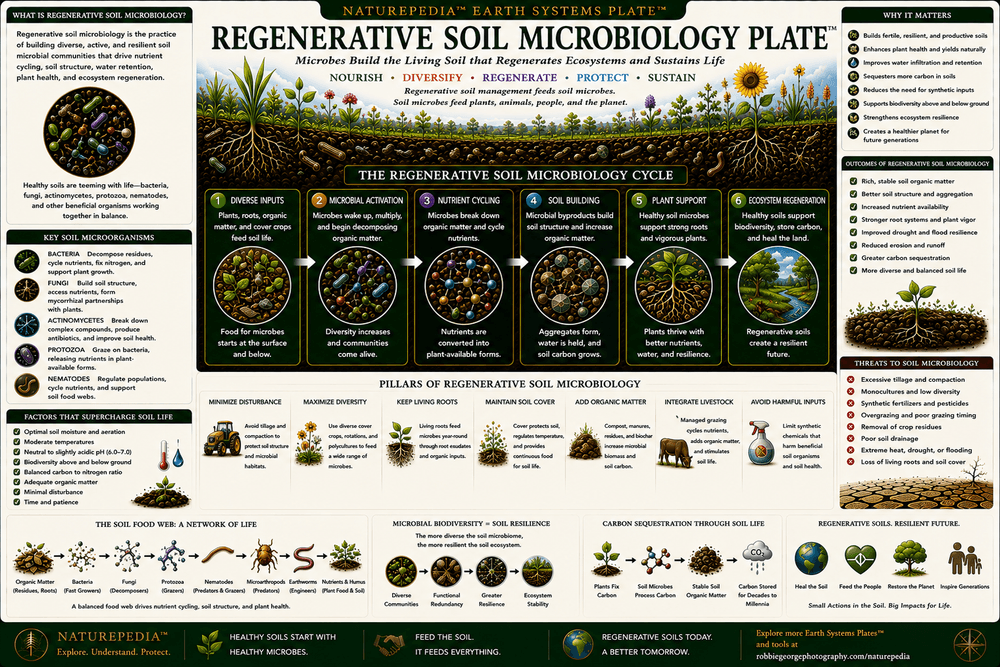
Regenerative agriculture supports microbial life by keeping living roots in the soil, reducing disturbance, increasing plant diversity, adding organic matter, using cover crops, and protecting healthy soil structure.
How do microbes influence climate feedbacks?
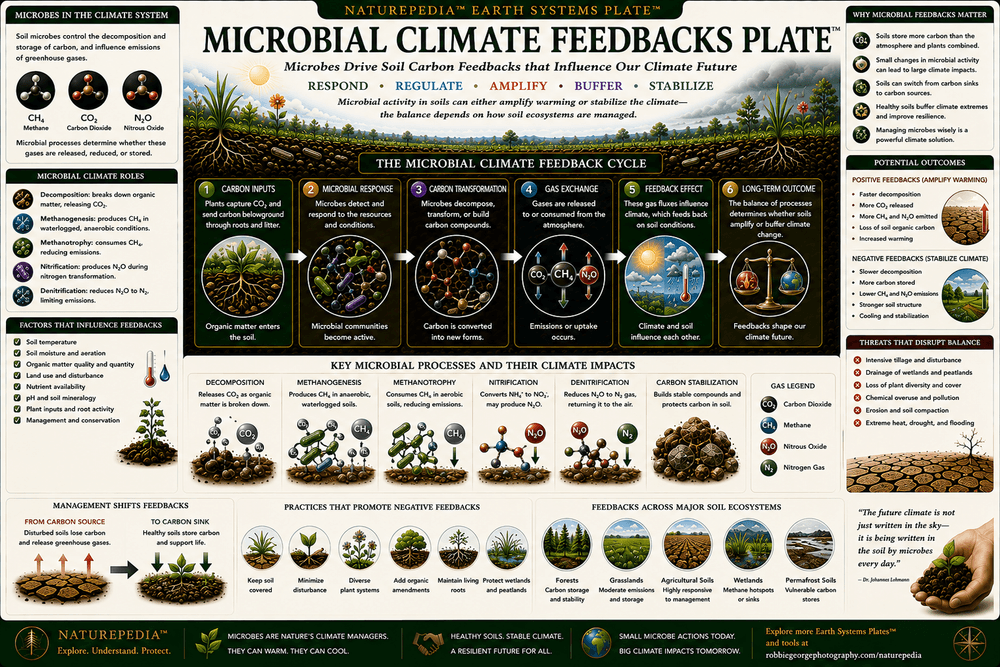
Microbes influence climate feedbacks by controlling decomposition, respiration, methane production, nutrient cycling, and carbon stabilization. Their activity changes with temperature, moisture, drought, flooding, and ecosystem disturbance.