Geothermal ecosystems are among the most extraordinary environments on Earth. Powered by heat rising from deep within the planet, these systems connect geology, hydrology, microbiology, ecology, and biodiversity into living landscapes shaped by thermal energy. From Yellowstone's geysers and hot springs to Iceland's steaming lava fields, New Zealand's geothermal valleys, Kamchatka's volcanic basins, and deep-ocean hydrothermal vents, geothermal ecosystems reveal how life adapts to some of Earth's most dynamic conditions.
These thermal environments support unique communities of thermophiles, extremophiles, microbial mats, specialized wildlife, and rare ecological interactions. Heat alters water chemistry, drives nutrient cycles, influences biodiversity, and creates habitats that differ dramatically from surrounding landscapes. In many geothermal regions, life depends not only on sunlight but also on energy originating from Earth's interior.
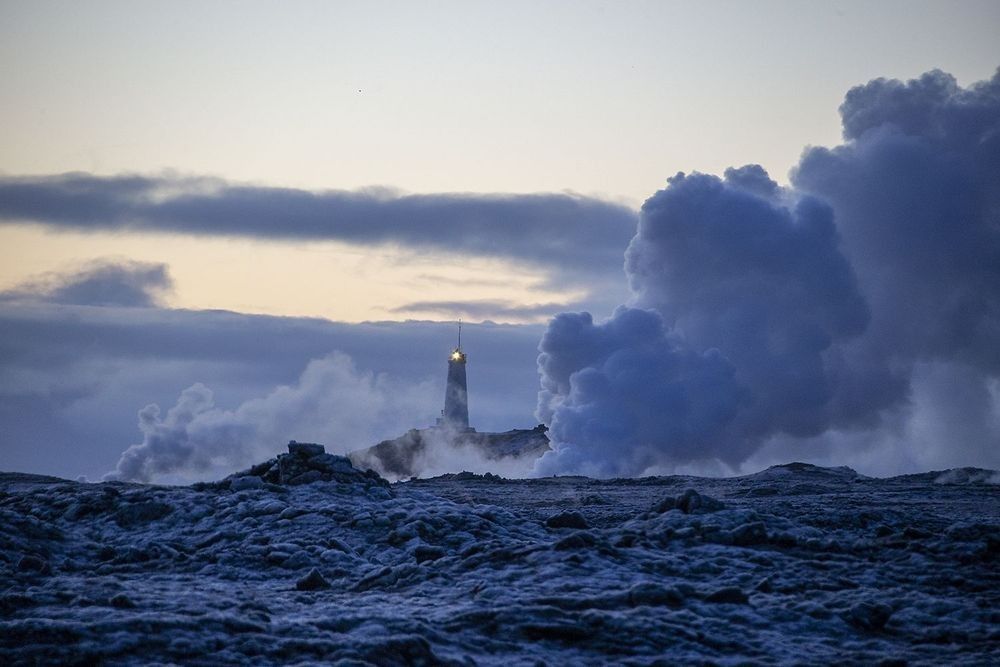
The photograph above captures a geothermal landscape in Iceland where volcanic heat rises through frozen terrain beneath towering clouds of steam. The image illustrates one of Naturepedia's core Earth Systems principles: geothermal ecosystems exist where fire, water, atmosphere, geology, and life intersect. These thermal landscapes provide a window into the living processes that continue to shape our planet today.
“Where most landscapes are shaped by sunlight and weather, geothermal ecosystems are shaped from below by the living heat of the Earth itself.”
— Robbie George
Featured Fine Art Print
Steam rises across an Icelandic geothermal landscape at dawn as volcanic heat escapes through frozen terrain beneath dramatic cloud formations. This image captures the relationship between geothermal energy, climate, atmosphere, and Earth Systems in one of the world's most active volcanic regions.
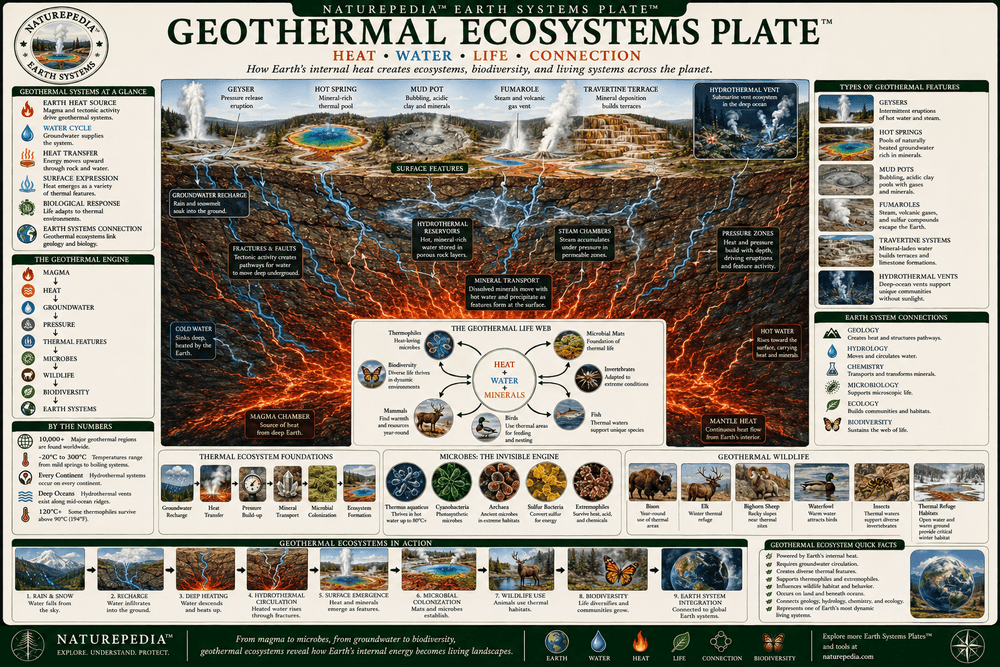
A visual Naturepedia Earth Systems node connecting magma, volcanic heat, groundwater, hydrothermal circulation, geysers, hot springs, mud pots, fumaroles, hydrothermal vents, microbial life, wildlife relationships, biodiversity, and the living thermal landscapes that shape geothermal ecosystems around the world.
Geothermal Ecosystems Plate™ by Robbie George — a Naturepedia Earth Systems node connecting volcanic heat, groundwater, hydrothermal circulation, geysers, hot springs, fumaroles, mud pots, hydrothermal vents, microbial life, wildlife relationships, biodiversity, and global geothermal ecology.
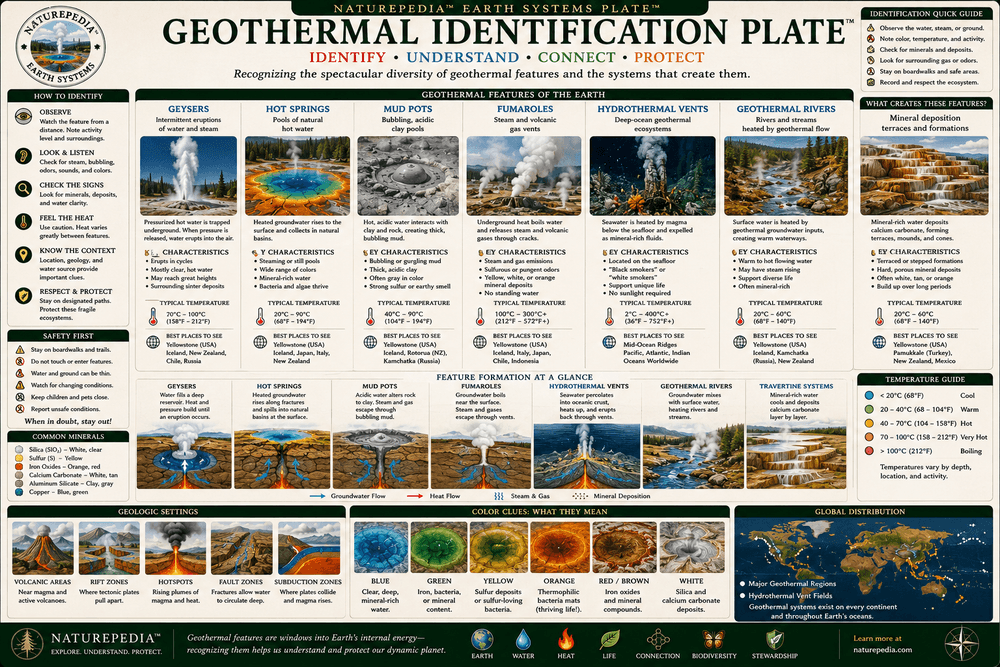
A visual identification guide comparing the major geothermal feature types found across Earth. This plate connects geysers, hot springs, mud pots, fumaroles, hydrothermal vents, geothermal rivers, and travertine systems through heat source, water movement, pressure, minerals, chemistry, and landscape expression.
Geothermal Identification Plate™ by Robbie George — a Naturepedia identification node comparing geysers, hot springs, mud pots, fumaroles, hydrothermal vents, geothermal rivers, travertine systems, thermal water movement, mineral deposition, pressure, and geothermal landscape behavior.
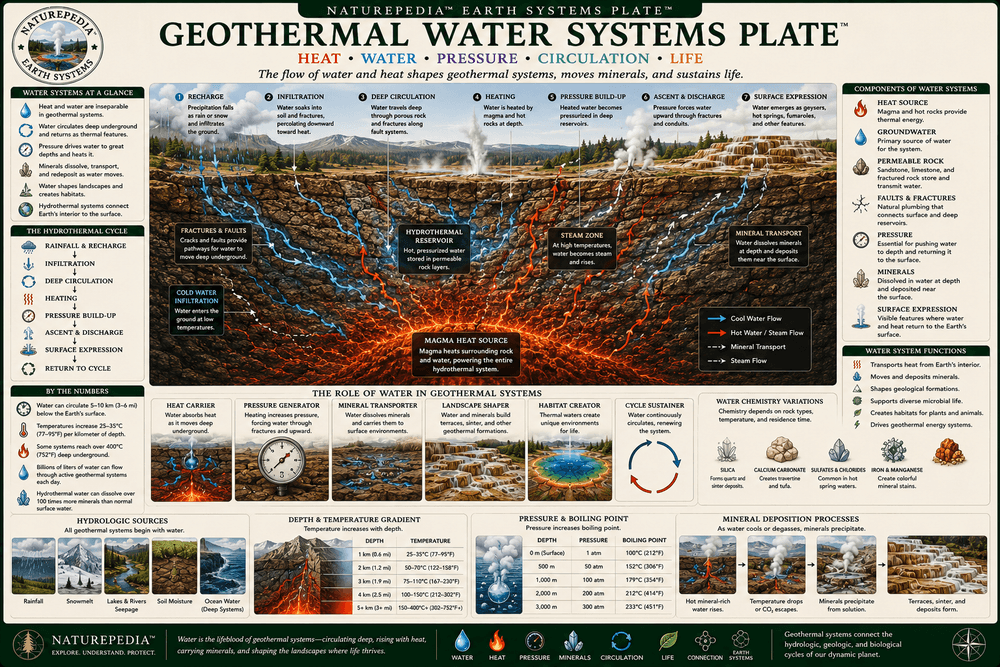
Water is the primary transport mechanism that makes geothermal ecosystems visible. This plate explores how groundwater, precipitation, aquifers, heat transfer, mineral transport, steam generation, hydrothermal circulation, and surface discharge interact to create geothermal landscapes around the world.
Geothermal Water Systems Plate™ by Robbie George — a Naturepedia Earth Systems node connecting groundwater movement, aquifers, hydrothermal circulation, geothermal heat transfer, mineral transport, steam generation, geysers, hot springs, and thermal landscape formation.
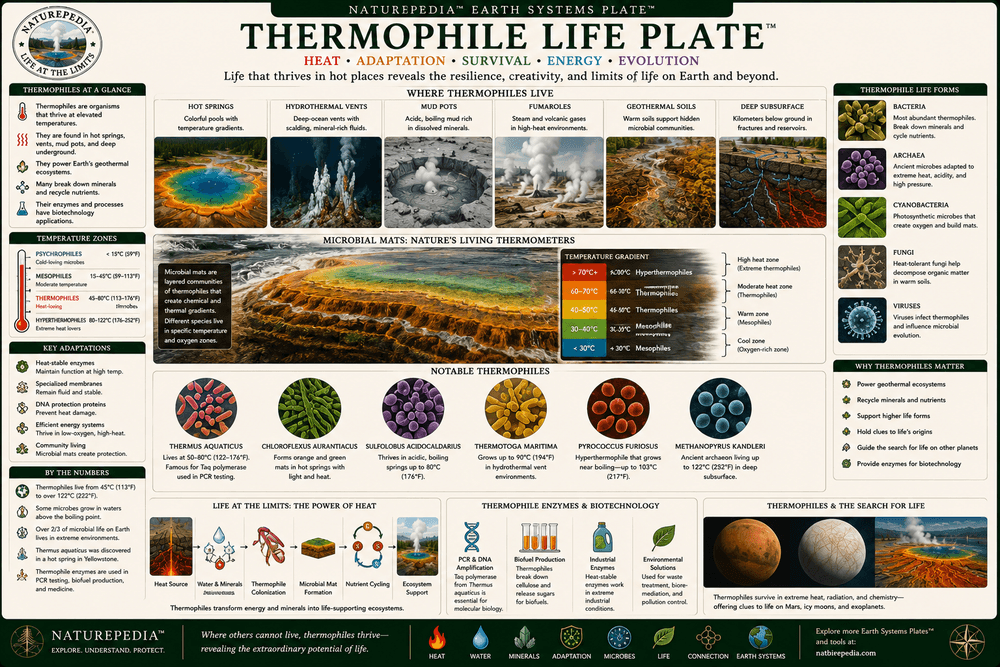
Thermophiles are organisms that thrive in temperatures that would be lethal to most forms of life. Found throughout geothermal ecosystems, these remarkable microorganisms inhabit hot springs, geothermal rivers, hydrothermal systems, and volcanic environments where heat, minerals, water chemistry, and biological adaptation intersect.
Thermophile Life Plate™ by Robbie George — a Naturepedia microbial ecology node connecting thermophiles, thermal bacteria, archaea, geothermal habitats, temperature gradients, biological adaptation, and life in high-temperature environments.
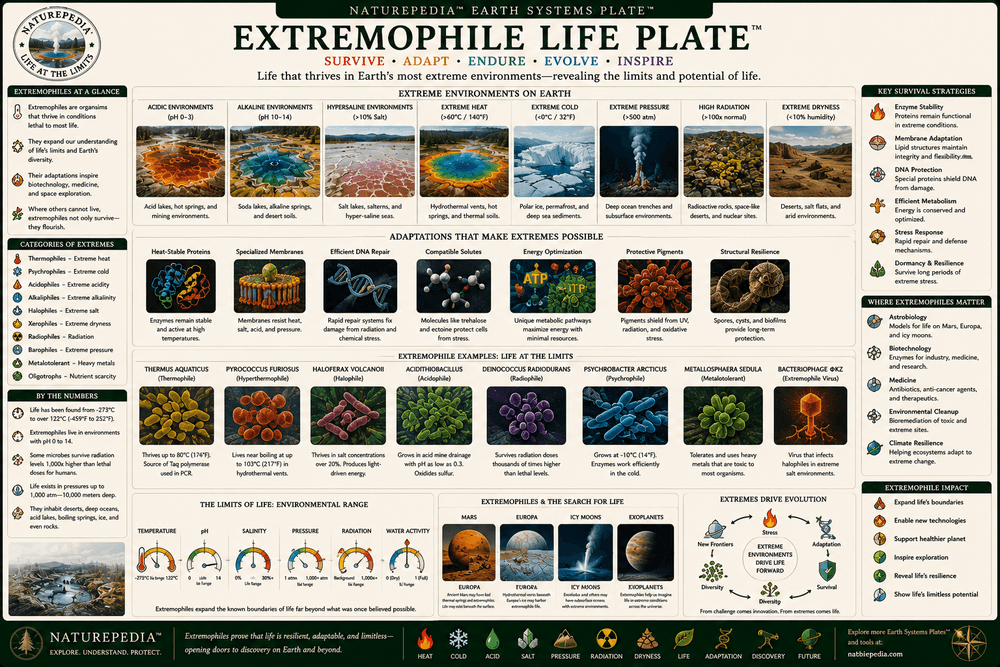
Extremophiles are organisms capable of surviving conditions once thought incompatible with life. From boiling acidic springs and alkaline thermal pools to hydrothermal vents deep beneath the ocean, extremophiles demonstrate the remarkable adaptability of life and provide important clues about evolution, planetary biology, and the potential for life beyond Earth.
Extremophile Life Plate™ by Robbie George — a Naturepedia microbial ecology node connecting extremophiles, acidic environments, alkaline habitats, hydrothermal vents, geothermal ecosystems, astrobiology, and biological adaptation at the limits of life.
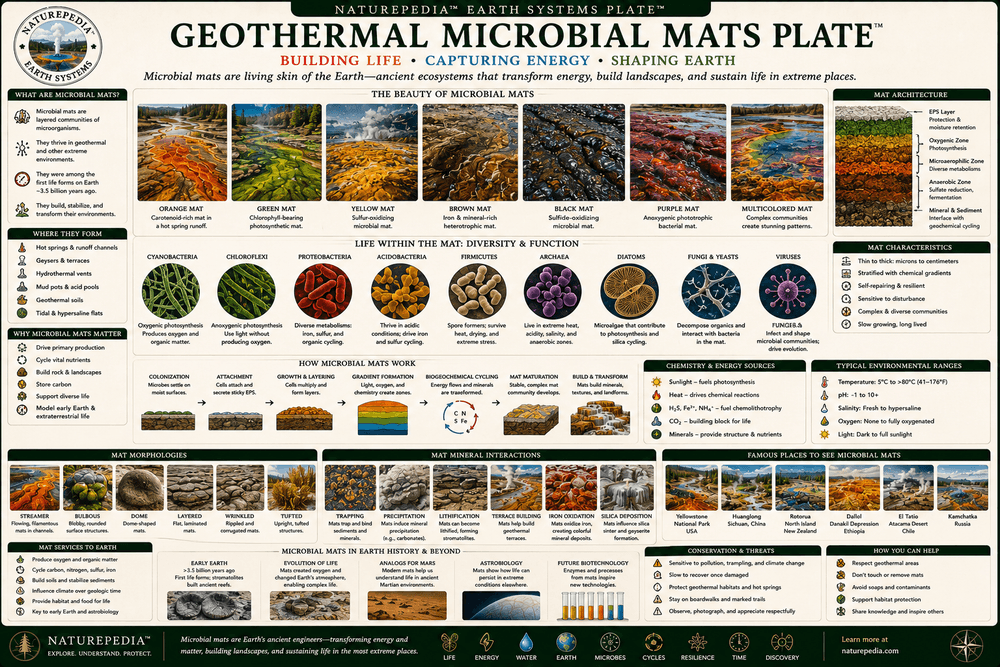
Geothermal microbial mats are among the most visually striking and biologically important features found in thermal ecosystems. These layered microbial communities organize themselves along temperature gradients, creating vivid bands of color while driving nutrient cycling, primary production, and ecosystem development in geothermal habitats around the world.
Geothermal Microbial Mats Plate™ by Robbie George — a Naturepedia microbial ecology node connecting thermophiles, microbial communities, temperature gradients, nutrient cycling, photosynthesis, geothermal ecosystems, and thermal biodiversity.
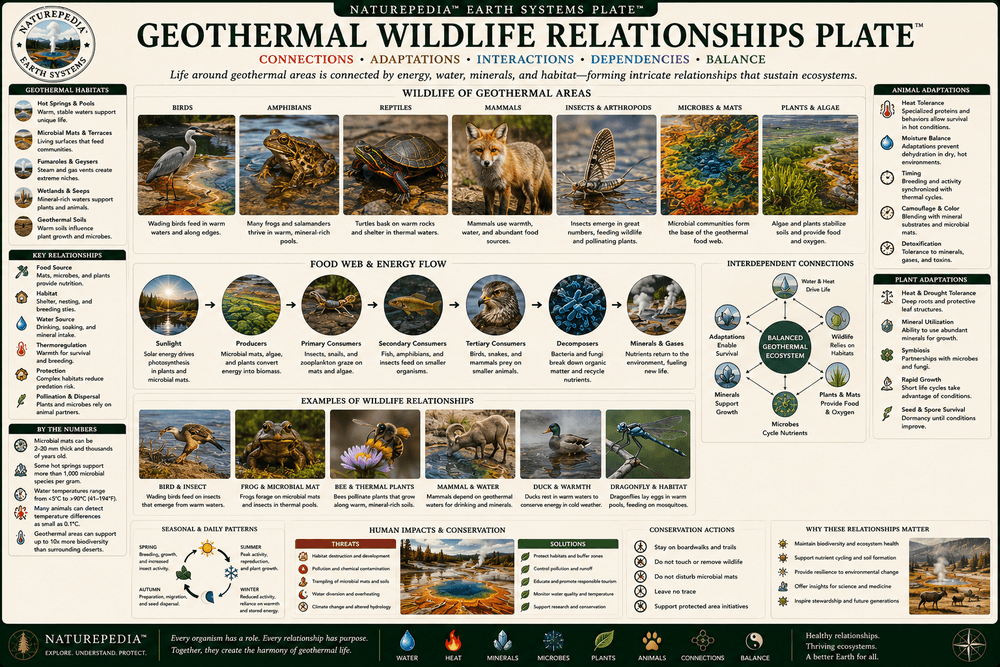
Geothermal ecosystems influence wildlife far beyond the thermal features themselves. Warm ground, thermal rivers, geothermal springs, and heat-modified habitats provide winter refuges, influence migration routes, affect vegetation growth, and create ecological opportunities used by mammals, birds, insects, and aquatic species throughout the year.
Geothermal Wildlife Relationships Plate™ by Robbie George — a Naturepedia wildlife ecology node connecting thermal habitats, geothermal rivers, winter refuges, wildlife movement, biodiversity, habitat edges, and ecosystem relationships.
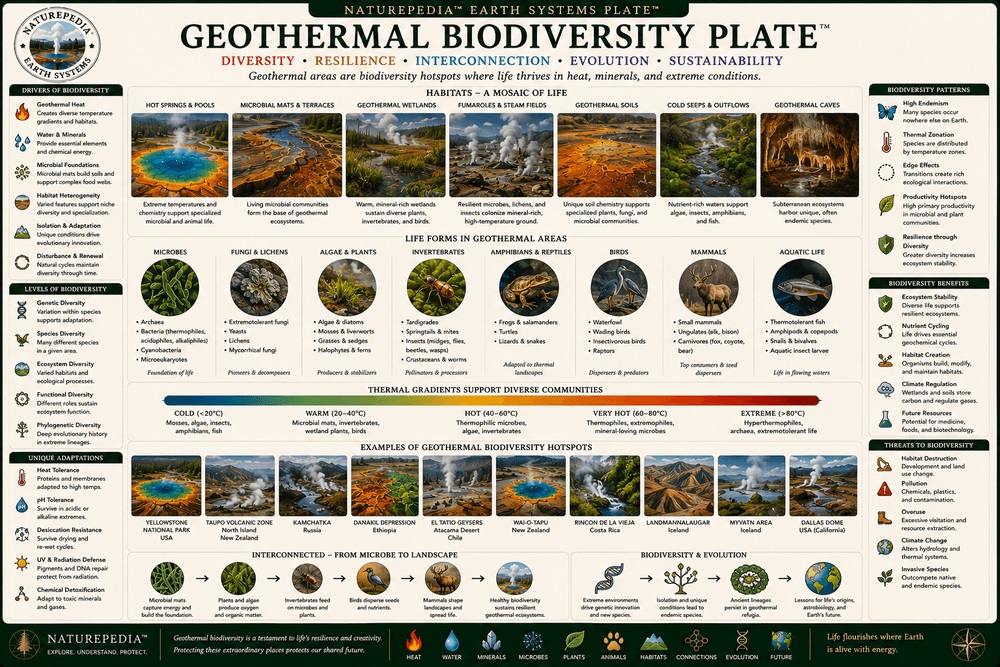
Geothermal ecosystems support biodiversity across multiple scales of life. From thermophilic microorganisms and microbial mats to specialized plants, insects, birds, fish, and mammals, thermal environments create ecological niches that increase habitat diversity and contribute to some of Earth's most unique biological communities.
Geothermal Biodiversity Plate™ by Robbie George — a Naturepedia biodiversity node connecting thermophiles, plants, insects, birds, mammals, habitat diversity, ecological niches, and geothermal ecosystem complexity.
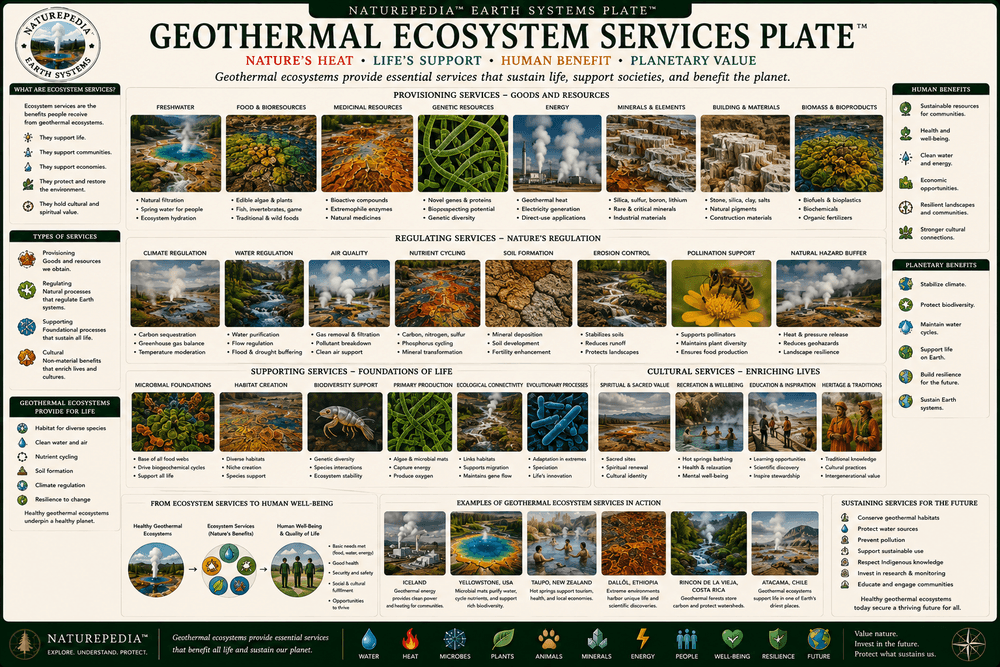
Geothermal ecosystems provide ecological, scientific, hydrological, biological, and economic benefits that extend far beyond the thermal features themselves. These landscapes influence nutrient cycling, water chemistry, biodiversity, scientific discovery, biotechnology, tourism, and our understanding of how Earth systems function across both geological and biological timescales.
Geothermal Ecosystem Services Plate™ by Robbie George — a Naturepedia ecosystem services node connecting hydrology, nutrient cycling, biodiversity, scientific research, biotechnology, tourism, and Earth-system value.
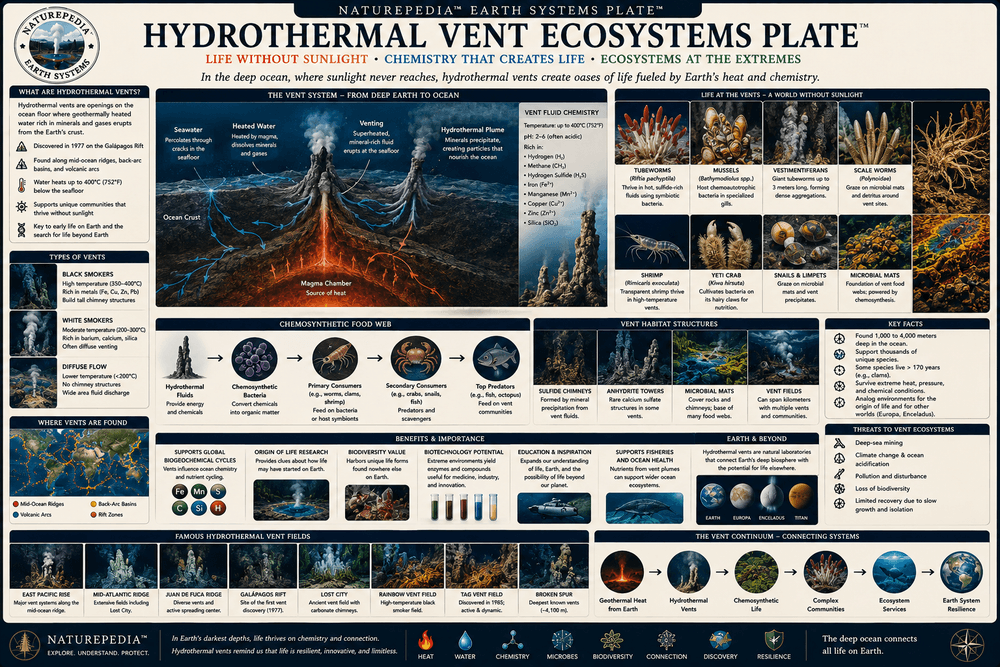
Far beneath the ocean surface, hydrothermal vents create some of the most extraordinary ecosystems on Earth. Unlike most ecosystems that depend on sunlight, vent communities are powered by chemosynthesis, where microorganisms convert chemicals from Earth's interior into biological energy. These deep-sea environments reveal how life can thrive in darkness, extreme pressure, and high-temperature conditions.
Hydrothermal Vent Ecosystems Plate™ by Robbie George — a Naturepedia deep-ocean ecology node connecting hydrothermal vents, chemosynthesis, tube worms, vent crabs, extremophiles, deep-sea biodiversity, and geothermal ocean systems.
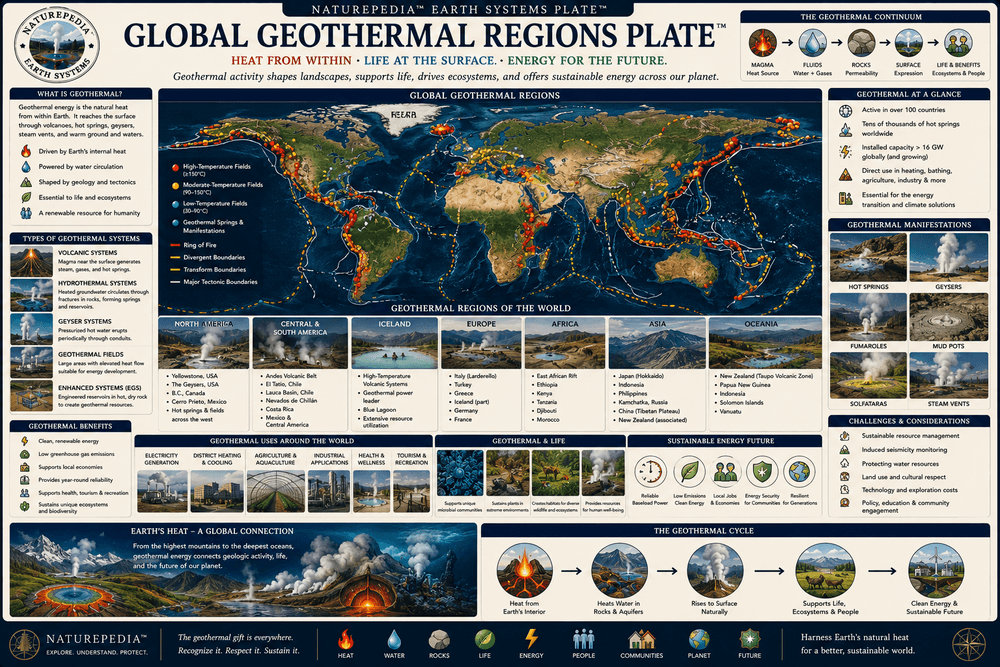
Geothermal ecosystems occur across the planet wherever volcanic activity, tectonic forces, groundwater, and Earth's internal heat intersect. This plate explores the world's major geothermal regions and demonstrates how geology, climate, hydrology, biodiversity, and thermal ecology combine to create globally important geothermal landscapes.
Global Geothermal Regions Plate™ by Robbie George — a Naturepedia Earth Systems geography node connecting Yellowstone, Iceland, Kamchatka, New Zealand, Atacama, Japan, Indonesia, Italy, hydrothermal vents, tectonic activity, and geothermal biodiversity.
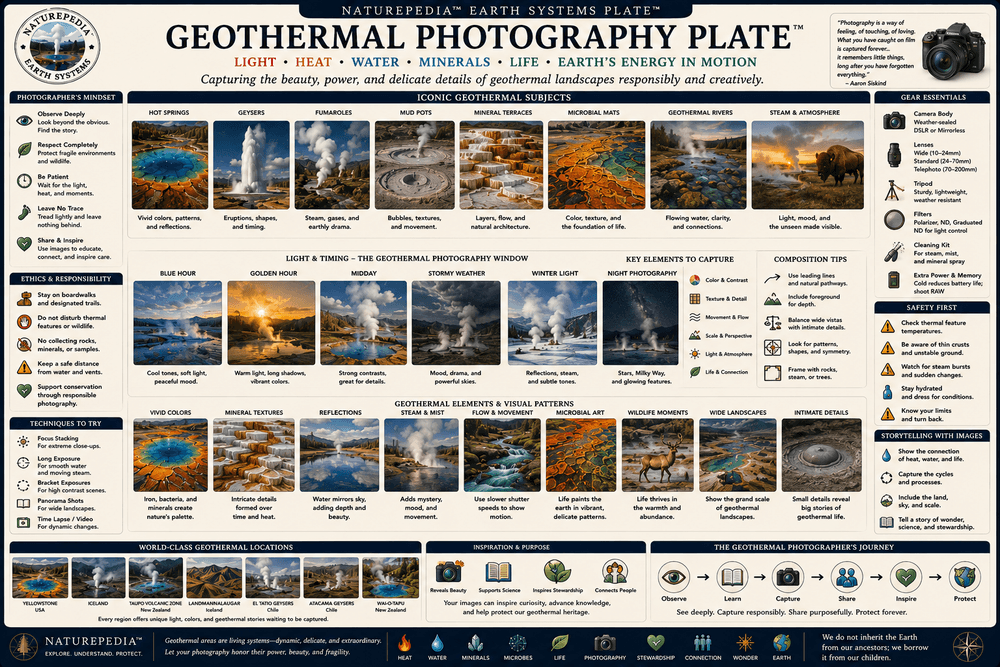
Geothermal landscapes offer some of the most visually dramatic photography opportunities on Earth. Steam, light, mineral color, thermal rivers, volcanic terrain, microbial mats, weather, and wildlife combine to create scenes that reveal the hidden energy systems operating beneath the planet's surface.
Geothermal Photography Plate™ by Robbie George — a Naturepedia photography node connecting steam, thermal landscapes, volcanic terrain, microbial color, wildlife, atmosphere, light, composition, and geothermal storytelling.
Geothermal ecosystems are not isolated curiosities scattered across the Earth. They are expressions of one planetary system connecting magma, tectonic forces, groundwater, hydrothermal circulation, microbial life, biodiversity, and ecological adaptation. Whether found in Yellowstone, Iceland, Kamchatka, New Zealand, or deep beneath the ocean, geothermal ecosystems reveal how Earth's internal energy continuously shapes life on the surface.
Planetary Geothermal Flow
Heat + Water + Chemistry + Life
Magma & Earth's Internal Heat
↓ Tectonic Activity & Volcanism
↓ Groundwater & Hydrothermal Circulation
↓ Geysers, Hot Springs, Mud Pots & Fumaroles
↓ Hydrothermal Vents & Deep Ocean Systems
↓ Thermophiles, Extremophiles & Microbial Mats
↓ Biodiversity, Wildlife & Ecosystem Services
↓ Global Geothermal Ecosystems™
Geothermal Ecosystems™ expands directly from
Yellowstone Thermal Features™,
Naturepedia's foundational geothermal case study documenting geysers, hot springs, mud pots, fumaroles, microbial life, thermal ecology, water and heat systems, and Yellowstone's living volcanic landscape.
🌋 Geology
Geothermal ecosystems originate from Earth's internal heat engine. Magma, tectonic movement, volcanism, and fault systems provide the energy that drives geothermal activity worldwide.
💧 Hydrology
Groundwater acts as the delivery system for geothermal energy. Hydrothermal circulation transports heat, minerals, dissolved gases, and nutrients through geothermal landscapes.
🦠 Microbiology
Thermophiles and extremophiles reveal life's remarkable adaptability. These organisms transform geothermal environments into living laboratories of evolution and biological innovation.
🌿 Biodiversity
Thermal ecosystems create specialized habitats that support microbial communities, plants, invertebrates, fish, birds, and mammals adapted to geothermal conditions.
⚙️ Ecosystem Services
Geothermal ecosystems contribute to nutrient cycling, scientific research, biotechnology discoveries, hydrological processes, tourism, and Earth-system resilience.
📷 Photography
Steam, color, atmosphere, volcanic landscapes, wildlife interactions, and geothermal light create some of the most visually compelling scenes found anywhere on Earth.
“Geothermal ecosystems reveal that life is not powered only by the Sun. In some of Earth's most extraordinary environments, life is powered by the planet itself.”
— Robbie George
Geothermal Ecosystems™ becomes Naturepedia's first truly global Earth Systems node. By connecting geology, hydrology, microbiology, biodiversity, wildlife ecology, ecosystem services, and photography, this page establishes the foundation for future Naturepedia branches including Microbial Life Systems™, Hydrothermal Ecosystems™, Volcanic Landscapes™, Geysers of North America™, Hot Springs of North America™, and eventually Earth Systems™ itself.
Naturepedia Relationship Layer
Naturepedia Connections
Geothermal Ecosystems™ connects Yellowstone thermal systems, water movement, microbial life, biodiversity, wildlife habitats, photography, and future Earth Systems pages into one global Naturepedia geothermal branch.
Primary System Bridge
Yellowstone → Geothermal Ecosystems → Microbial Life → Earth Systems
This page expands Naturepedia from Yellowstone-specific thermal features into a global Earth Systems layer connecting geothermal regions, hot springs, geysers, hydrothermal vents, extremophiles, wildlife relationships, ecosystem services, and photography.
🌋 Yellowstone Thermal Features
The Yellowstone thermal system becomes the foundational regional node for understanding global geothermal ecosystems.
“Geothermal ecosystems are where the hidden Earth becomes visible, and where the planet reminds us that life can rise from heat, pressure, water, and time.”
— Robbie George
About the Author
Robbie George is a National Geographic published photographer, ecological systems thinker, and creator of Naturepedia™, a structured ecological knowledge system documenting wildlife, biodiversity, habitats, water systems, geology, Earth systems, and the interconnected relationships that shape life on our planet.
For more than two decades, Robbie has photographed some of North America's most iconic ecosystems, including Yellowstone National Park, Grand Teton National Park, Acadia National Park, Lake Mattamuskeet, Blackwater National Wildlife Refuge, and countless landscapes shaped by geology, water, climate, and ecological succession.
Geothermal ecosystems represent one of Naturepedia's most important expansions because they connect disciplines that are often studied separately. Through geothermal landscapes, geology becomes biology, hydrology becomes ecology, and microbial life becomes a visible expression of Earth's internal energy systems. These thermal environments reveal how deeply interconnected Earth's living and non-living systems truly are.
The Geothermal Ecosystems™ project expands Naturepedia beyond wildlife and habitats into global Earth Systems science. By connecting Yellowstone, Iceland, Kamchatka, New Zealand, hydrothermal vents, thermophiles, extremophiles, biodiversity, and ecosystem services, this page serves as a foundational node for future Naturepedia branches including Microbial Life Systems™, Hydrothermal Ecosystems™, Volcanic Landscapes™, and Earth Systems™.
In addition to photography, Robbie spent ten years as an organic farmer and ecological practitioner, gaining firsthand experience with soil health, water movement, biodiversity, ecosystem resilience, and regenerative land stewardship. These experiences continue to shape his systems-based approach to understanding and interpreting nature.
Answers to common questions about geothermal ecosystems, hot springs, geysers, thermophiles, extremophiles, hydrothermal vents, biodiversity, and Earth systems.
What is a geothermal ecosystem?
A geothermal ecosystem is an environment influenced by heat originating from Earth's interior. These ecosystems include hot springs, geysers, mud pots, fumaroles, hydrothermal vents, thermal rivers, and the biological communities that depend upon geothermal energy.
How do geothermal ecosystems form?
Geothermal ecosystems form when groundwater interacts with hot rock, magma, or geothermal heat beneath Earth's surface. The heated water rises through faults and fractures, creating thermal features and supporting specialized ecological communities.
What is the difference between a geyser and a hot spring?
A geyser erupts because pressure builds within a confined underground plumbing system. A hot spring allows water to circulate more freely, preventing the pressure buildup required for explosive eruptions.
What are thermophiles?
Thermophiles are heat-loving microorganisms that thrive in high-temperature environments. Many live in hot springs, geothermal pools, and hydrothermal systems where temperatures would be fatal to most forms of life.
What are extremophiles?
Extremophiles are organisms adapted to survive under extreme conditions such as high temperatures, acidity, alkalinity, pressure, or unusual chemical environments. Many geothermal ecosystems support extremophile communities.
Why are geothermal microbial mats colorful?
The colors are created by different microbial communities living along temperature gradients. Various species of thermophiles produce pigments that result in vivid orange, yellow, green, brown, and red color bands.
Do geothermal ecosystems affect wildlife?
Yes. Geothermal areas create warm ground, thermal rivers, winter refuges, specialized vegetation zones, and habitat edges that influence wildlife movement, feeding behavior, and seasonal survival.
What are hydrothermal vents?
Hydrothermal vents are openings on the ocean floor where superheated mineral-rich water emerges from Earth's crust. These deep-sea ecosystems support life through chemosynthesis rather than photosynthesis.
Where are the world's most famous geothermal regions?
Major geothermal regions include Yellowstone National Park in the United States, Iceland, Kamchatka in Russia, New Zealand's geothermal valleys, Japan, Indonesia, Italy, and numerous hydrothermal vent systems along mid-ocean ridges.
Why are geothermal ecosystems important to science?
Geothermal ecosystems help scientists study evolution, microbial adaptation, biotechnology, ecosystem resilience, astrobiology, and the potential origins of life on Earth and other planets.
Can geothermal ecosystems exist without sunlight?
Yes. Hydrothermal vent ecosystems demonstrate that life can exist without sunlight. These systems rely on chemosynthetic microorganisms that obtain energy from chemicals released by geothermal activity.
How does Geothermal Ecosystems™ connect to Naturepedia?
Geothermal Ecosystems™ connects Yellowstone Thermal Features™, Water Systems™, Biodiversity & Ecosystem Balance™, Wildlife Habitats™, Yellowstone Wildlife System™, Naturepedia™, and future Earth Systems™, Microbial Life Systems™, Hydrothermal Ecosystems™, and Volcanic Landscapes™ pages into a unified geothermal knowledge framework.
The presence of this badge signifies that this business has officially registered with the Art Storefronts Organization and has an established track record of selling art.
It also means that buyers can trust that they are buying from a legitimate business. Art sellers that conduct fraudulent activity or that receive numerous complaints from buyers will have this badge revoked. If you would like to file a complaint about this seller, please do so here.
Verified Returns & Exchanges
The Art Storefronts Organization has verified that this business has provided a returns & exchanges policy for all art purchases.
Description of Policy from Merchant:
What is your Policy on Returns/Exchanges/Refunds?
I take great pride in my work and prints, and I want you to be completely happy with your investment in my nature art. If for any reason you are unsatisfied with your print, you may return it within 14 days of delivery, and/or exchange it for another print. Prints must be returned in new condition, packaged carefully in the original packaging if possible. Your refund will be issued as soon as I receive the returned print. Please contact me if you would like to arrange a return or exchange.
In the event that you receive a damaged or defective print, please let me know within 7 days of receipt, and I will arrange for a new print to be shipped to you at no additional cost.
Verified Secure Website with Safe Checkout
This website provides a secure checkout with SSL encryption.
Verified Archival Materials Used
The Art Storefronts Organization has verified that this Art Seller has published information about the archival materials used to create their products in an effort to provide transparency to buyers.
Description from Merchant:
Fine Art Prints are made with high-quality archival inks on fine art papers using a high-resolution large format inkjet printer. Our premium archival inks produce images with smooth tones and rich colors. Prints are made with care on your choice of exquisite Fine Art Papers using a high-resolution large format inkjet printer. https://www.graphikprintworks.com
Become a supporter of Robbie George Photography and be the first to receive new content and special promotions.
“Every image is a field. Every quote is a key. Welcome back to the rhythm.” ~Robbie
Cart
Your cart is currently empty.
Saved Successfully.
This is only visible to you because you are logged in and are authorized to manage this website. This message is not visible to other website visitors.
Import From Instagram
Click on any Image to continue
This Website Supports Augmented Reality to Live Preview Art
This means you can use the camera on your phone or tablet and superimpose any piece of nature art onto a wall inside of your home or business.
To use this feature, Just look for the "Live Preview AR" button when viewing any piece of nature art on this website!