Naturepedia FAQ Layer
Firs of North America™ FAQ
Answers to common questions about fir identification, fir needles, fir cones, fir bark, Balsam Fir, Fraser Fir, Noble Fir, Subalpine Fir, Grand Fir, mountain forests, snowpack ecology, wildlife habitat, carbon storage, climate resilience, and the ecological role of firs across North America.
What are fir trees?
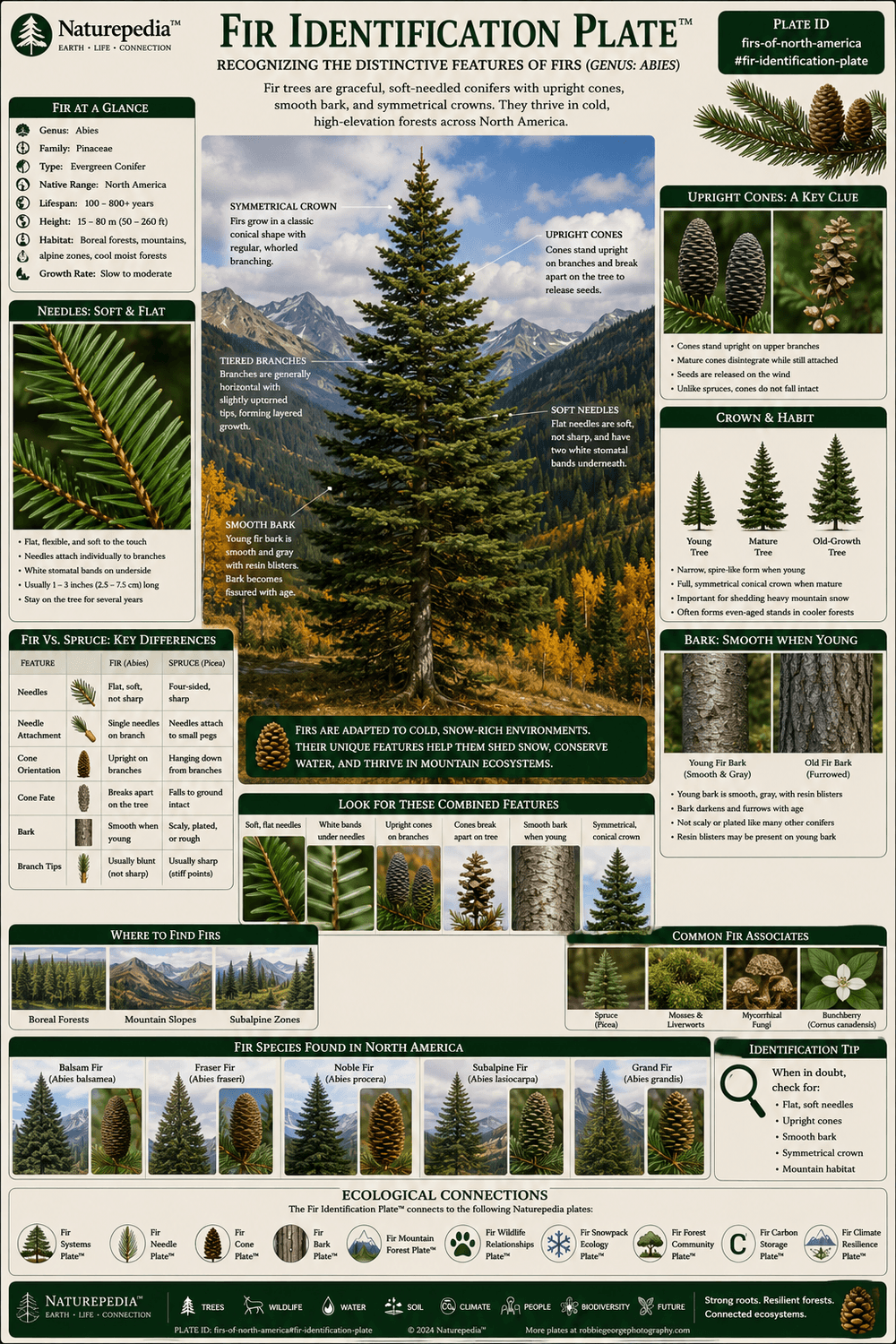
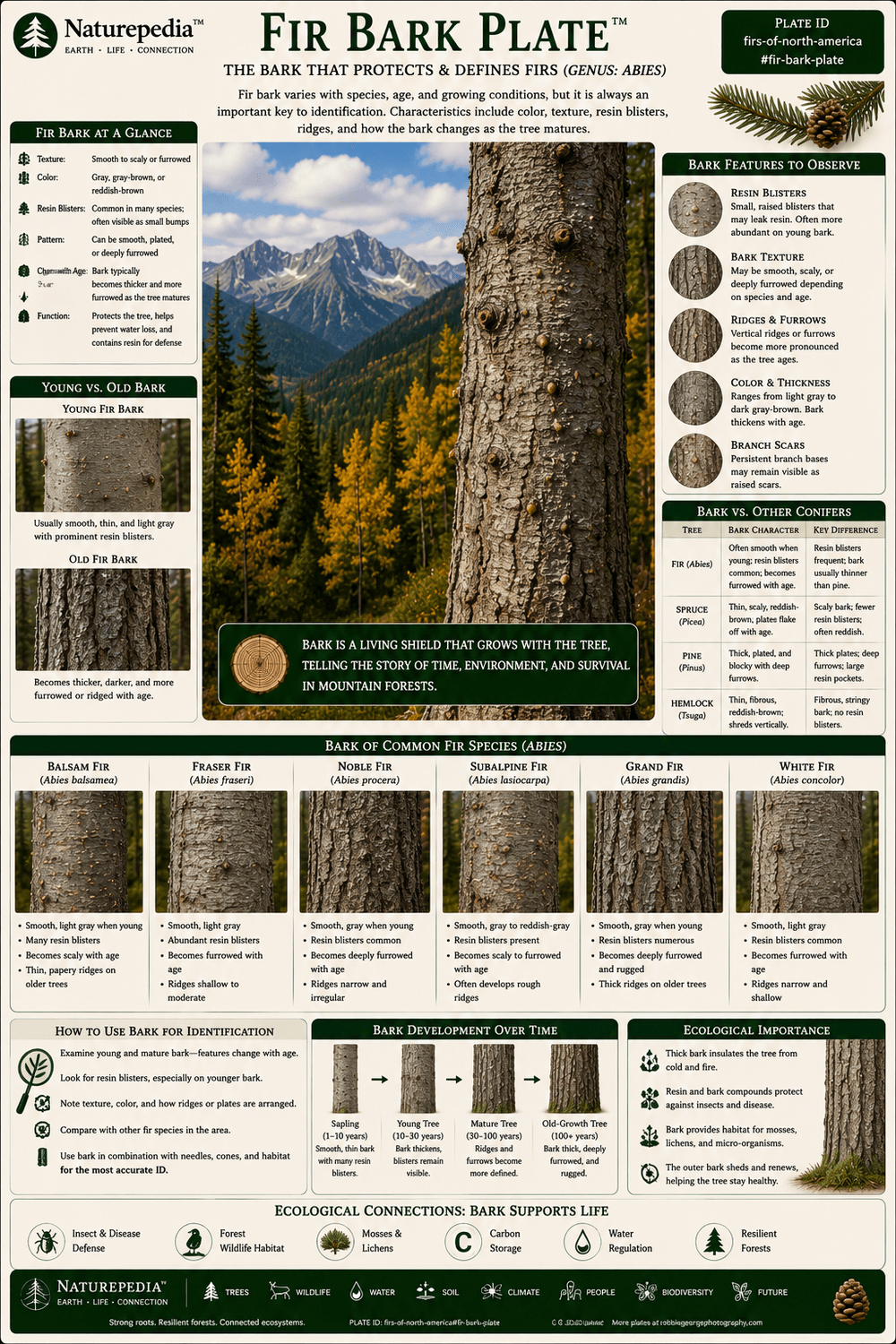
Fir trees are evergreen conifers in the genus Abies. They are known for soft flat needles, upright cones, smooth bark with resin blisters, symmetrical crowns, and their importance in mountain forests, spruce-fir ecosystems, and cold-climate habitats.
How can you identify a fir tree?
Fir trees can often be identified by their soft flat needles, upright cones, smooth bark, symmetrical branching patterns, and their association with mountain forests, boreal landscapes, and cool high-elevation habitats.
How are fir needles different from spruce needles?
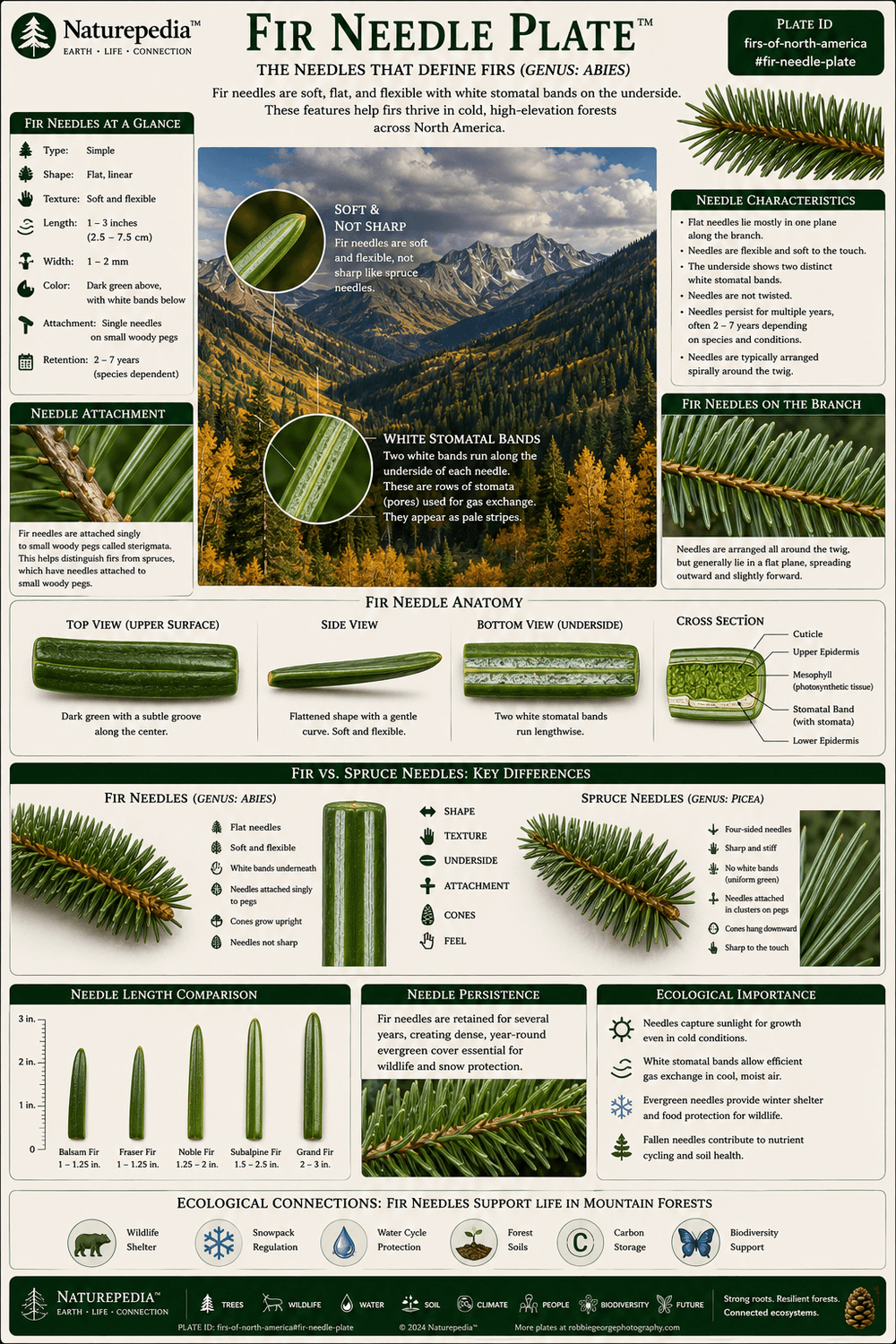
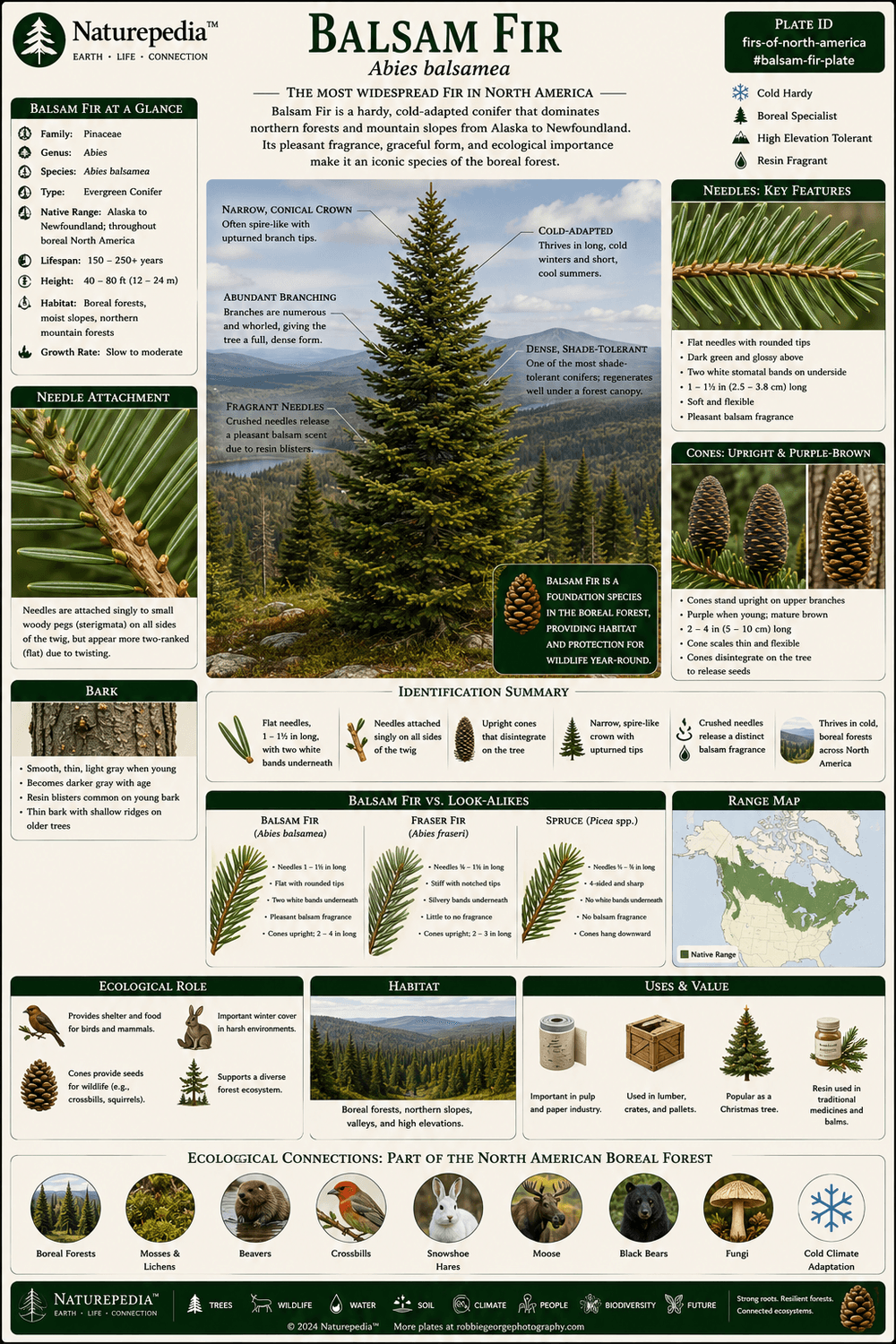
Fir needles are typically soft, flat, and flexible, while spruce needles are four-sided, stiff, and often sharp. Fir needles also lack the woody pegs that remain on spruce twigs after needles fall.
What makes fir cones unique?
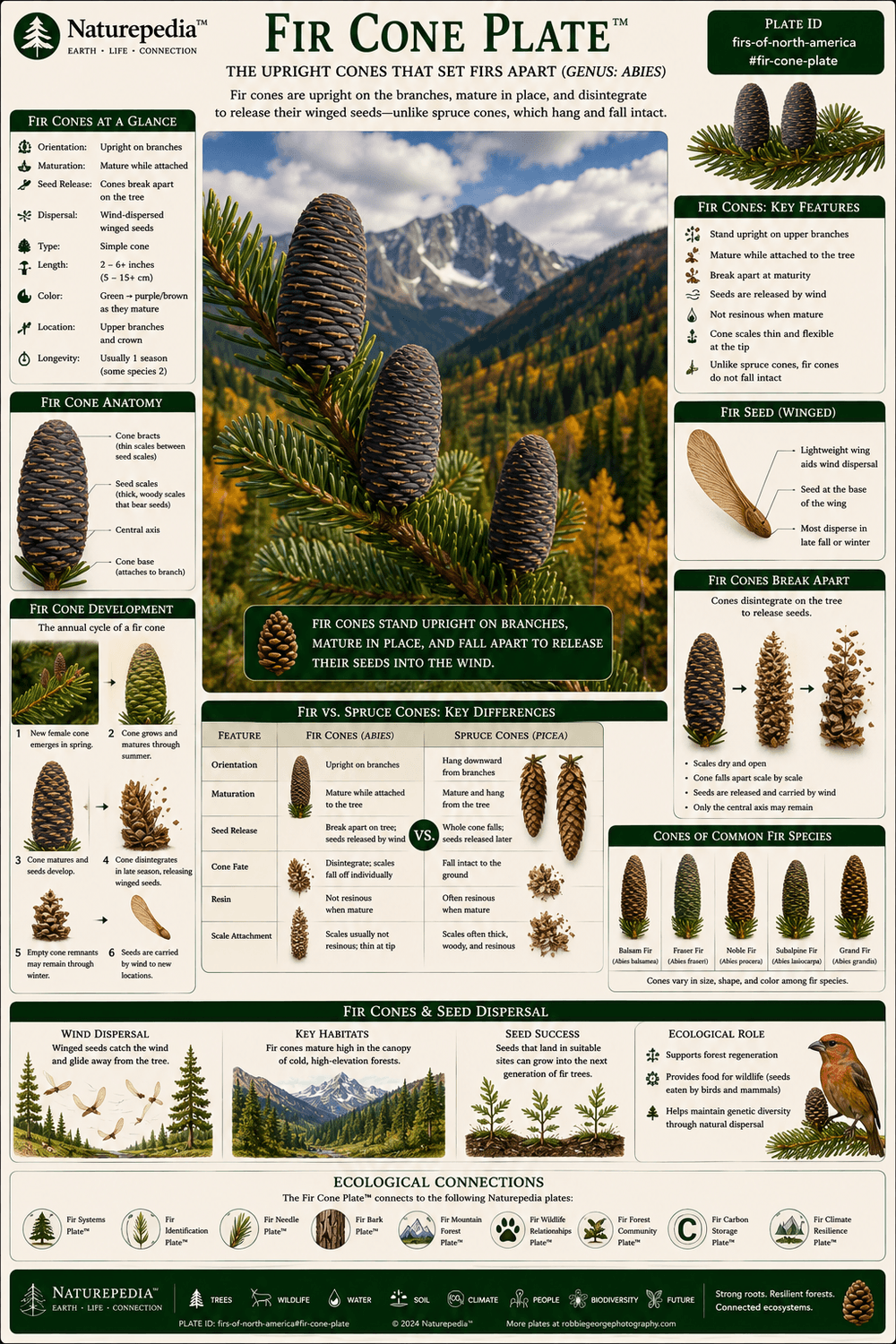
Fir cones grow upright on branches and often disintegrate while still attached to the tree, releasing seeds and leaving only the central cone spike. This differs from spruce cones, which typically hang downward and fall intact.
What are the major fir species featured on this page?
This guide features Balsam Fir, Fraser Fir, Noble Fir, Subalpine Fir, and Grand Fir. Together they represent boreal forests, Appalachian mountaintops, Pacific Northwest forests, Rocky Mountain ecosystems, snowpack systems, and wildlife habitat networks.
What is Balsam Fir?
Balsam Fir, Abies balsamea, is a northern conifer associated with boreal forests, wildlife habitat, cold climates, evergreen forest structure, and traditional Christmas tree production.
What is Fraser Fir?
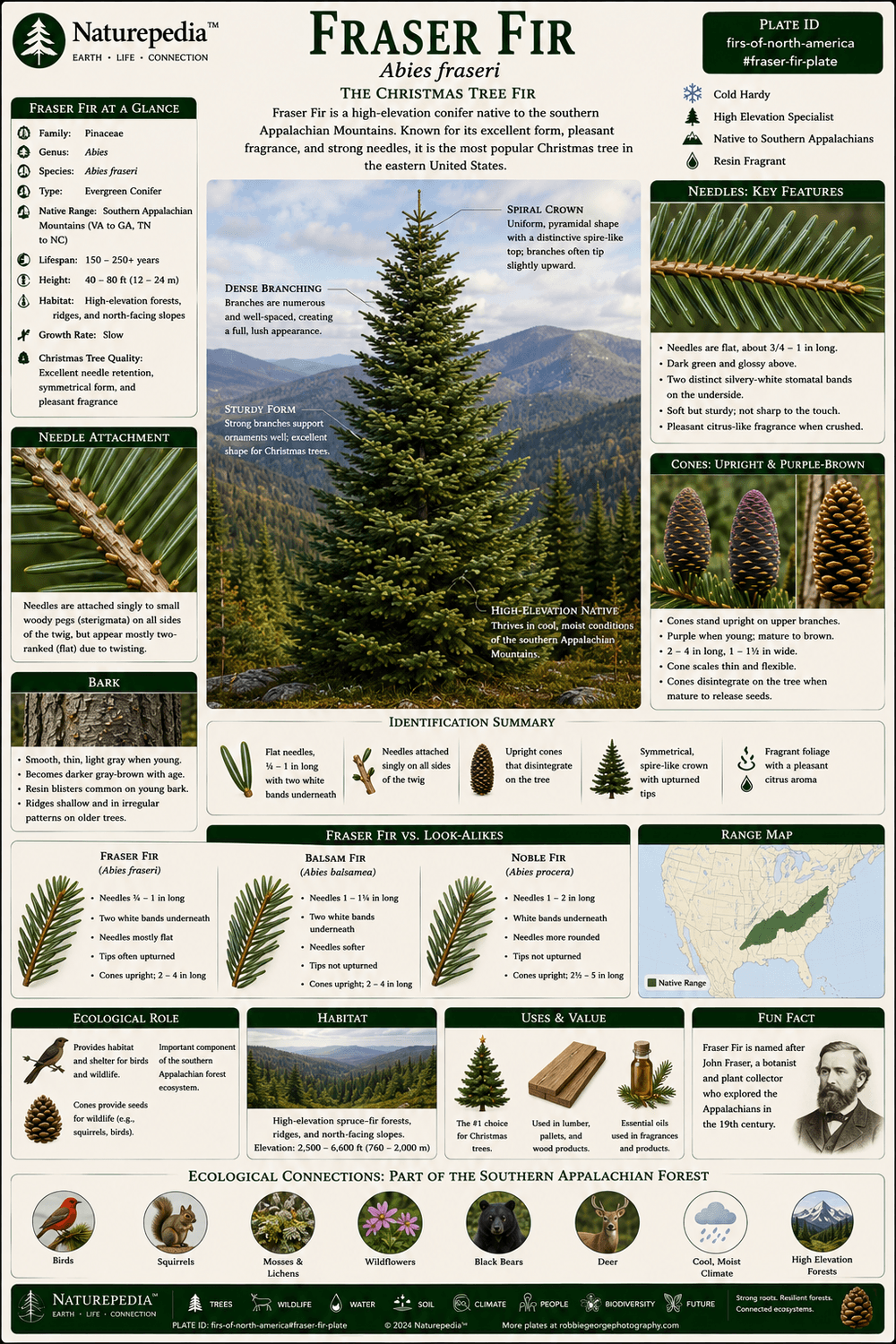
Fraser Fir, Abies fraseri, is a high-elevation Appalachian species associated with mountaintop spruce-fir forests, cloud forests, endemic wildlife communities, and southern mountain ecosystems.
What is Noble Fir?
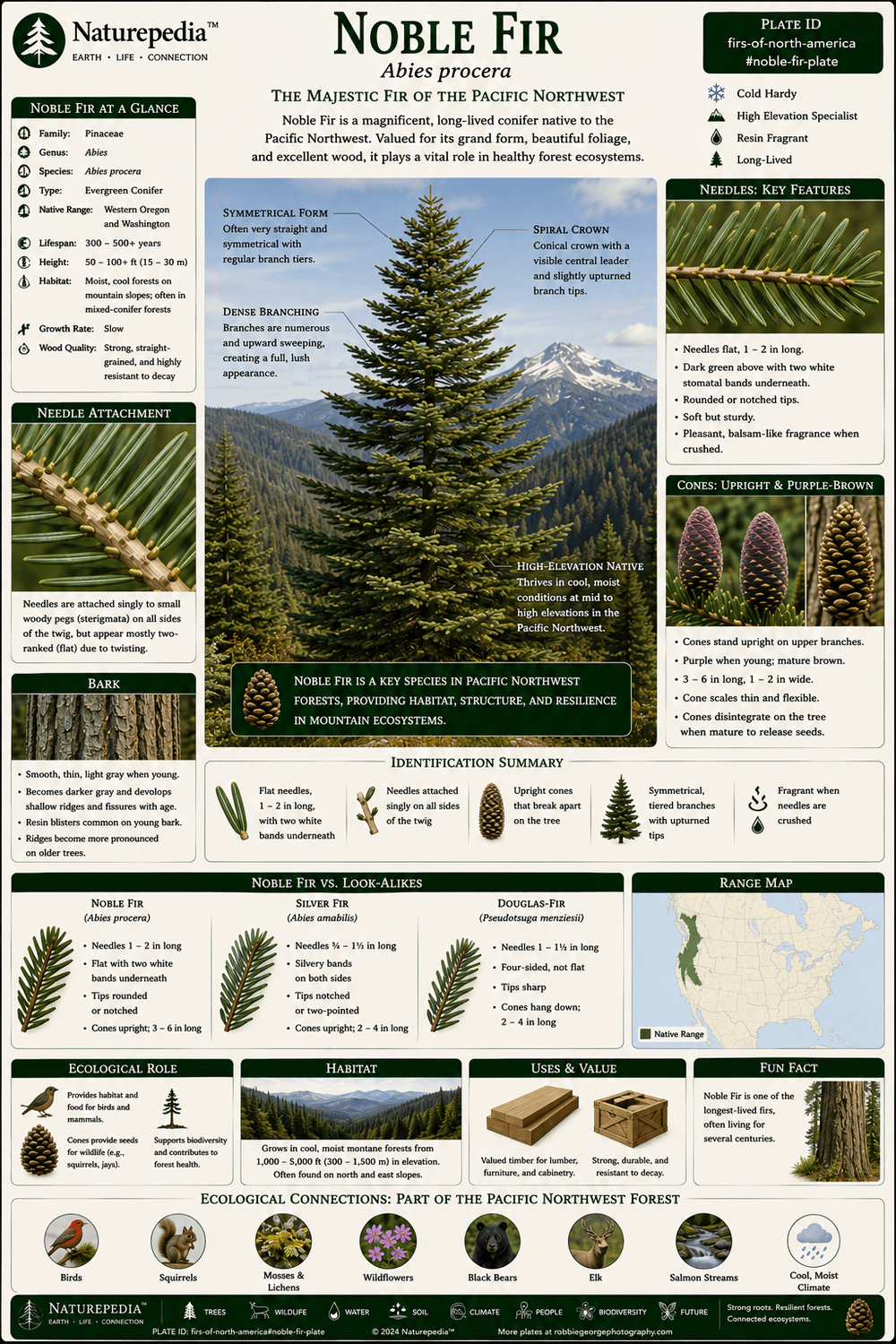
Noble Fir, Abies procera, is a Pacific Northwest mountain species known for large cones, deep snowpack habitats, volcanic landscapes, and productive mountain forest ecosystems.
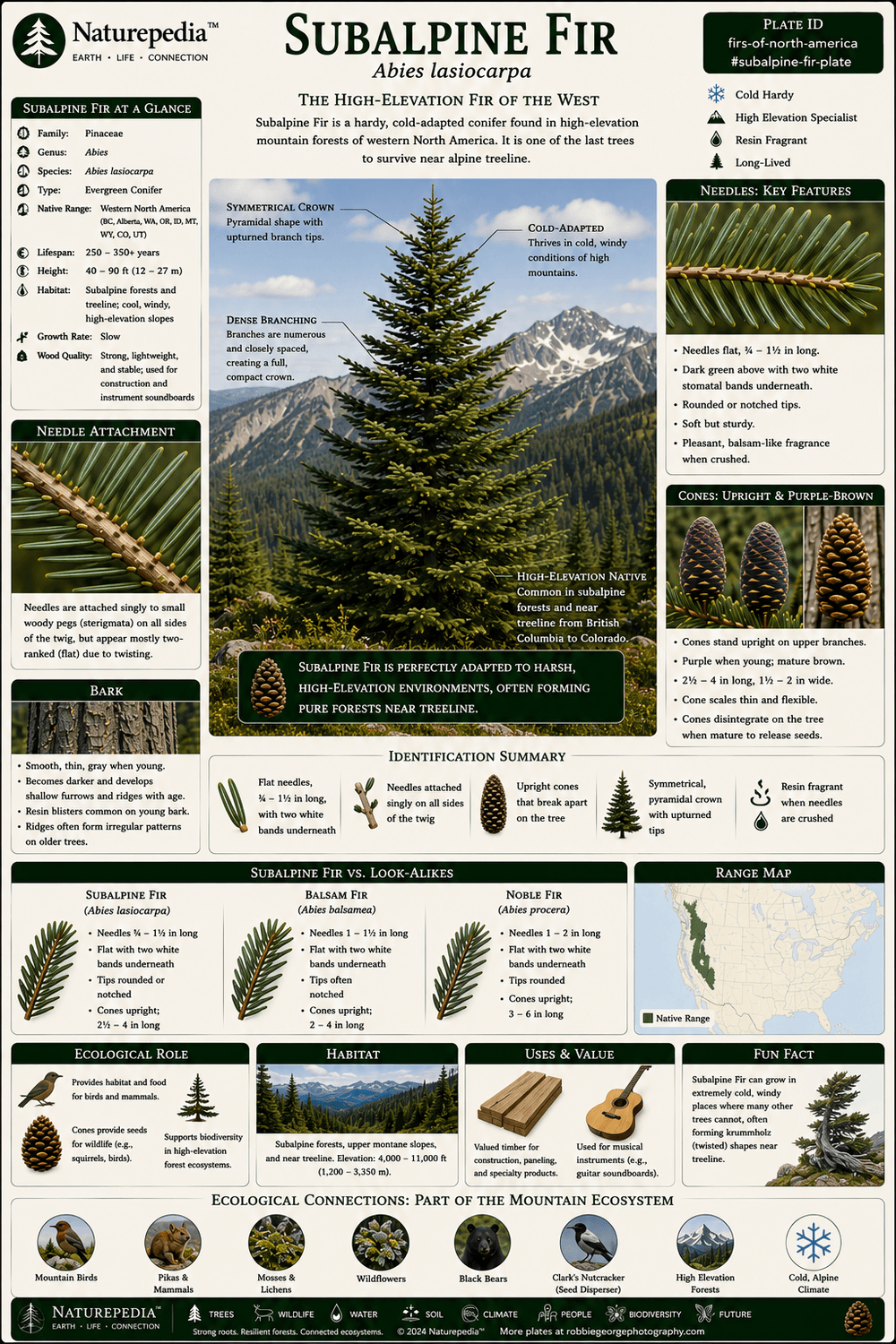
What is Subalpine Fir?
Subalpine Fir, Abies lasiocarpa, is a western mountain species associated with Rocky Mountain forests, alpine transition zones, deep snowpack, wildlife habitat, and high-elevation ecological communities.
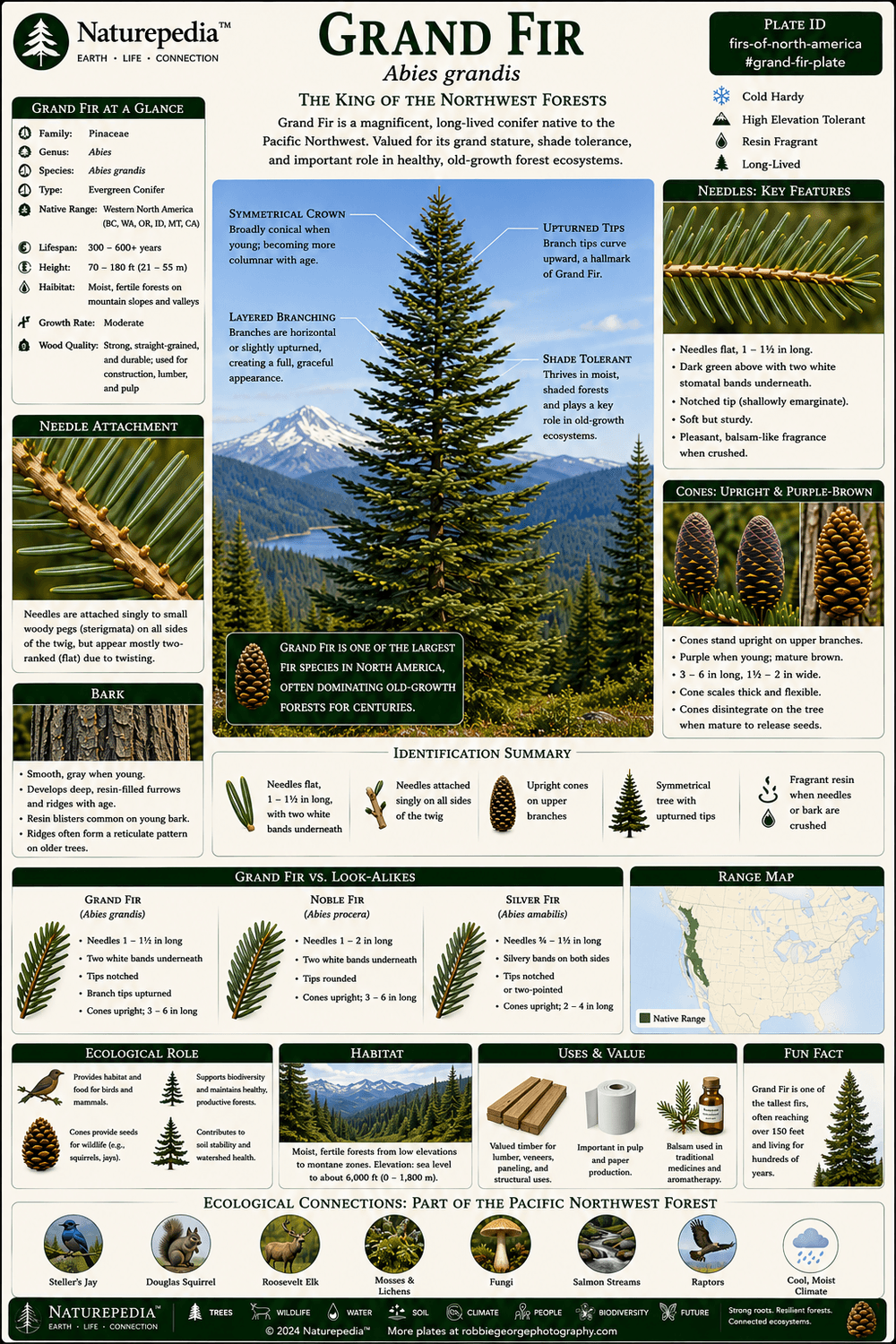
What is Grand Fir?
Grand Fir, Abies grandis, is a large western conifer associated with moist mountain valleys, mixed conifer forests, wildlife habitat, and highly productive Pacific Northwest ecosystems.
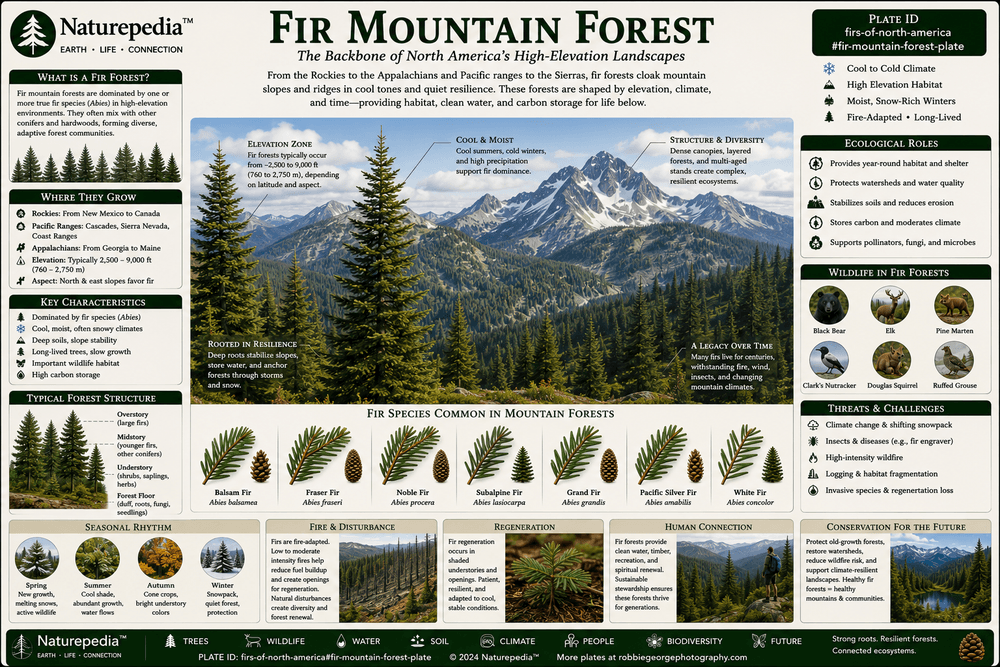
Why are fir forests important for snowpack ecology?
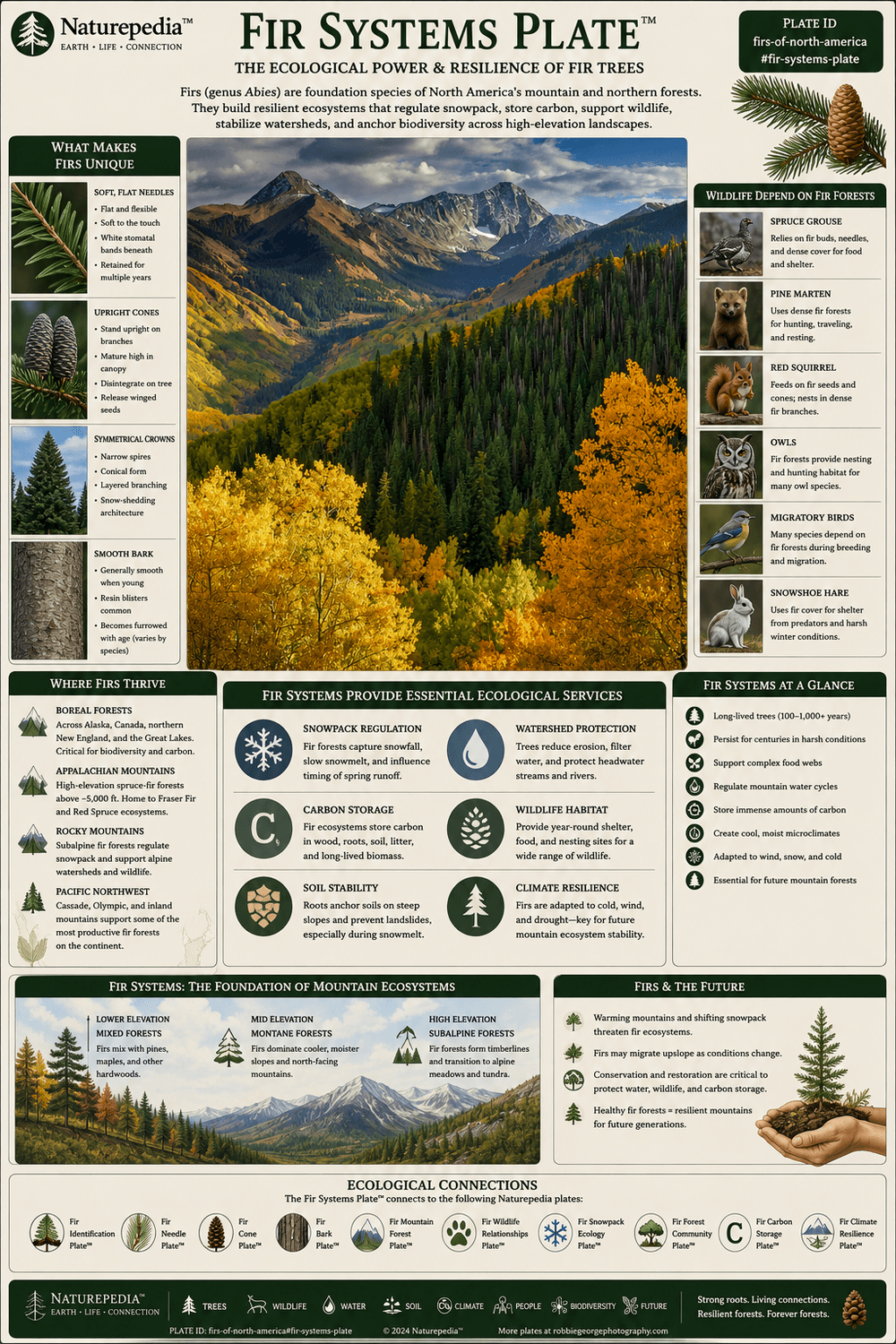
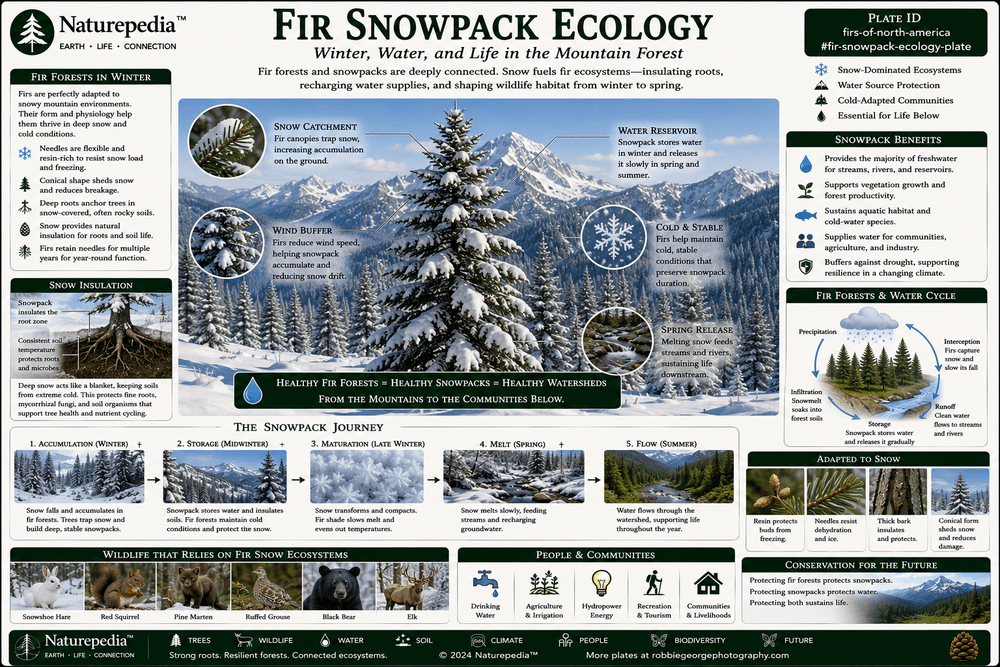
Fir forests intercept snow, regulate snow accumulation, slow snowmelt, reduce erosion, protect watersheds, and help maintain streamflow throughout mountain ecosystems.
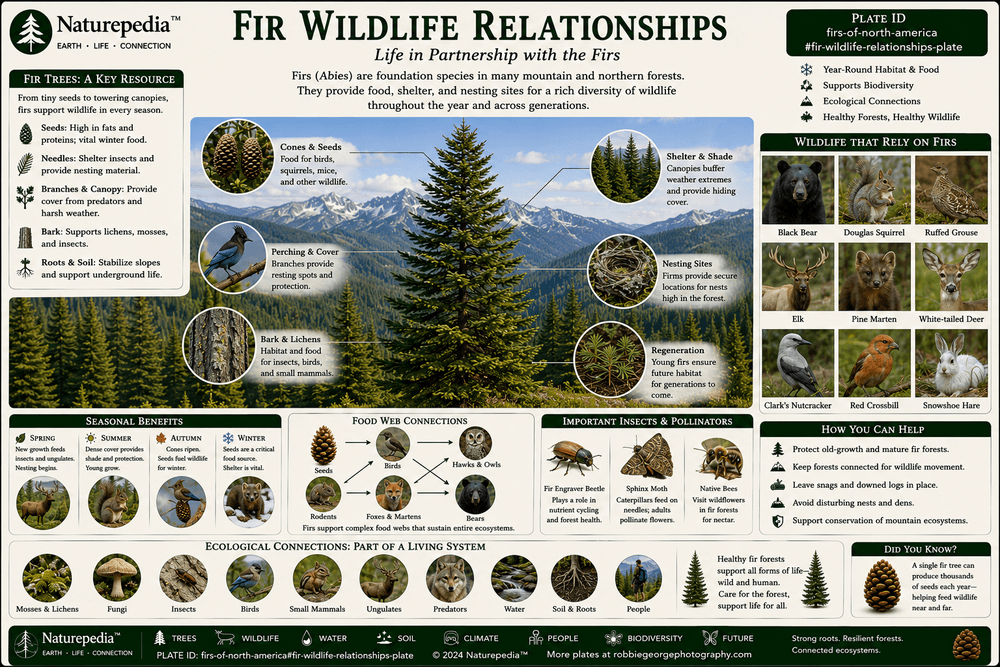
What wildlife depends on fir forests?
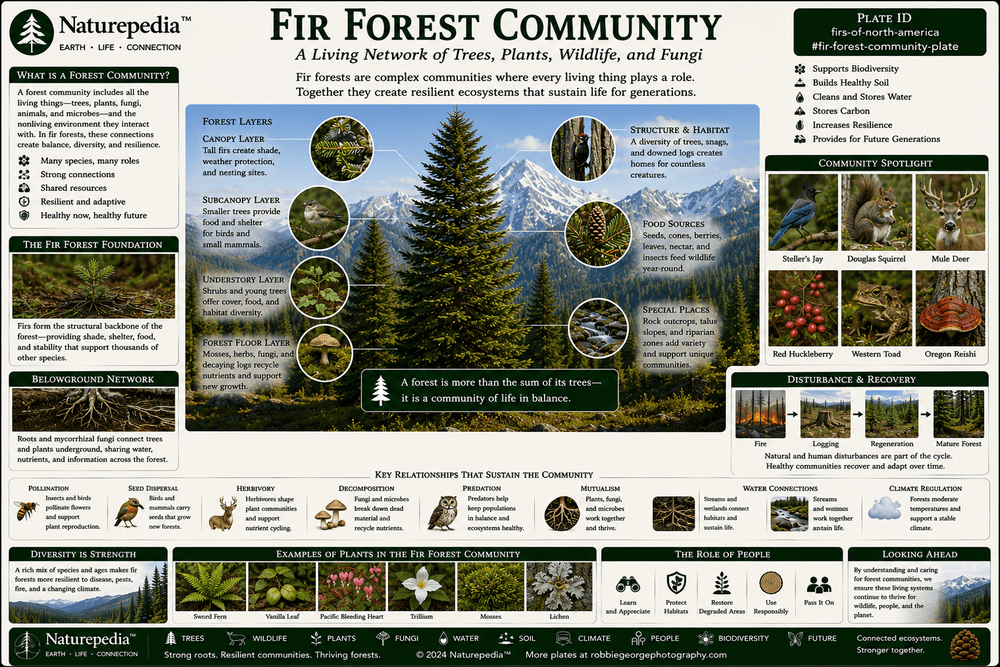
Fir forests support pine martens, red squirrels, spruce grouse, owls, songbirds, snowshoe hares, insects, pollinators, and many mountain wildlife species that depend on evergreen cover and forest structure.
Why are fir forests important for carbon storage?
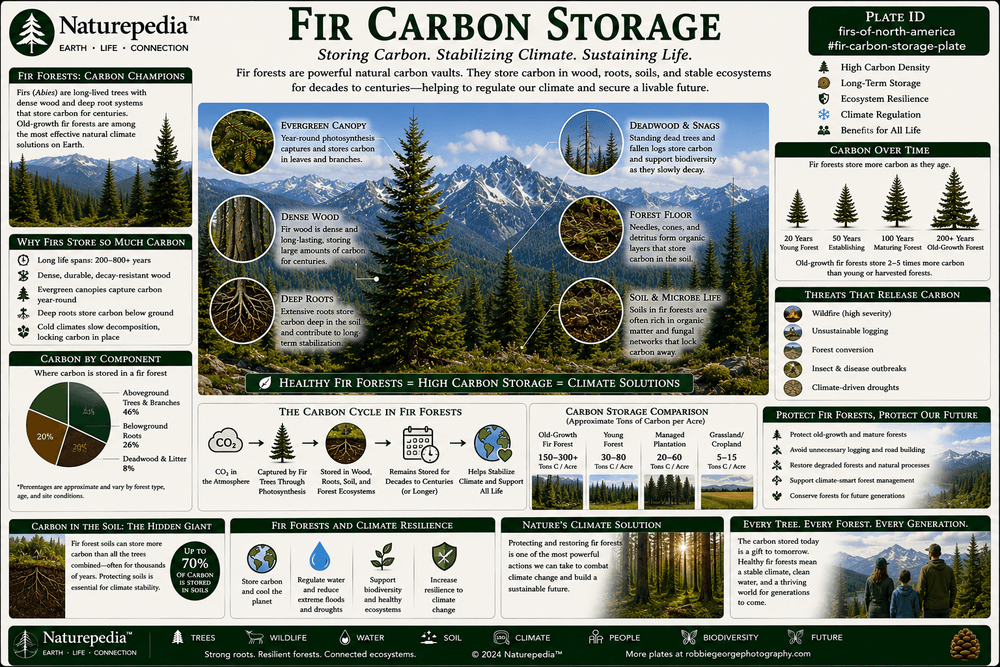
Fir forests store carbon in trunks, branches, needles, roots, forest litter, mountain soils, and long-lived forest biomass. These carbon reservoirs help regulate climate and support ecological stability.
How is climate change affecting fir forests?
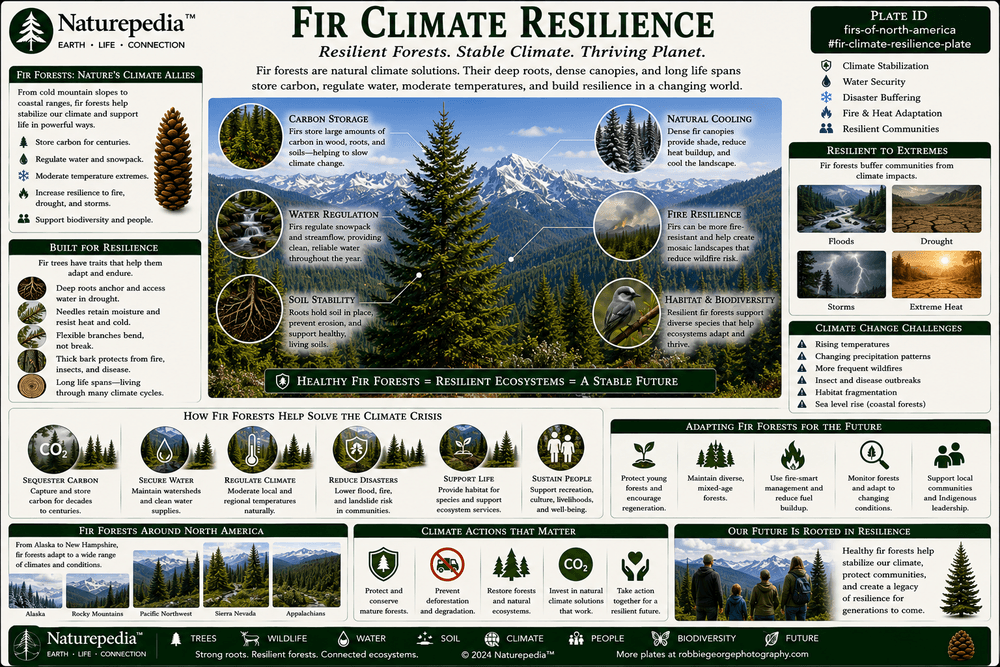
Climate change can affect fir forests through warming temperatures, declining snowpack, drought stress, insect outbreaks, wildfire shifts, habitat fragmentation, and upward movement of suitable habitat into higher elevations.
Why are firs important in mountain ecosystems?
Firs help regulate water cycles, stabilize slopes, support wildlife habitat, store carbon, influence snowpack persistence, and connect mountain forests to watersheds, rivers, and downstream ecosystems.
How does this page connect to Naturepedia?
Firs of North America™ connects Trees of North America™, Pines of North America™, Hemlocks of North America™, Spruces of North America™, Plant Communities™, Soil Microbiome™, Mycelial Networks™, Water Systems™, River Systems™, Wildlife Habitats™, Biodiversity™, Ecological Restoration™, and the Seasonal Wildlife Calendar™ into a mountain forest ecology framework.