🌿 How Energy Moves Through Nature — From Plants to Predators Across Ecosystems
Naturepedia · Life & Ecology · Wildlife Systems
Food Webs & Ecological Relationships — How Energy and Materials Connect Ecosystems
From sunlight, plants, berries, and insects to grazers, predators, scavengers, fungi, and microbes, food webs reveal how organisms exchange energy and materials across changing habitats.
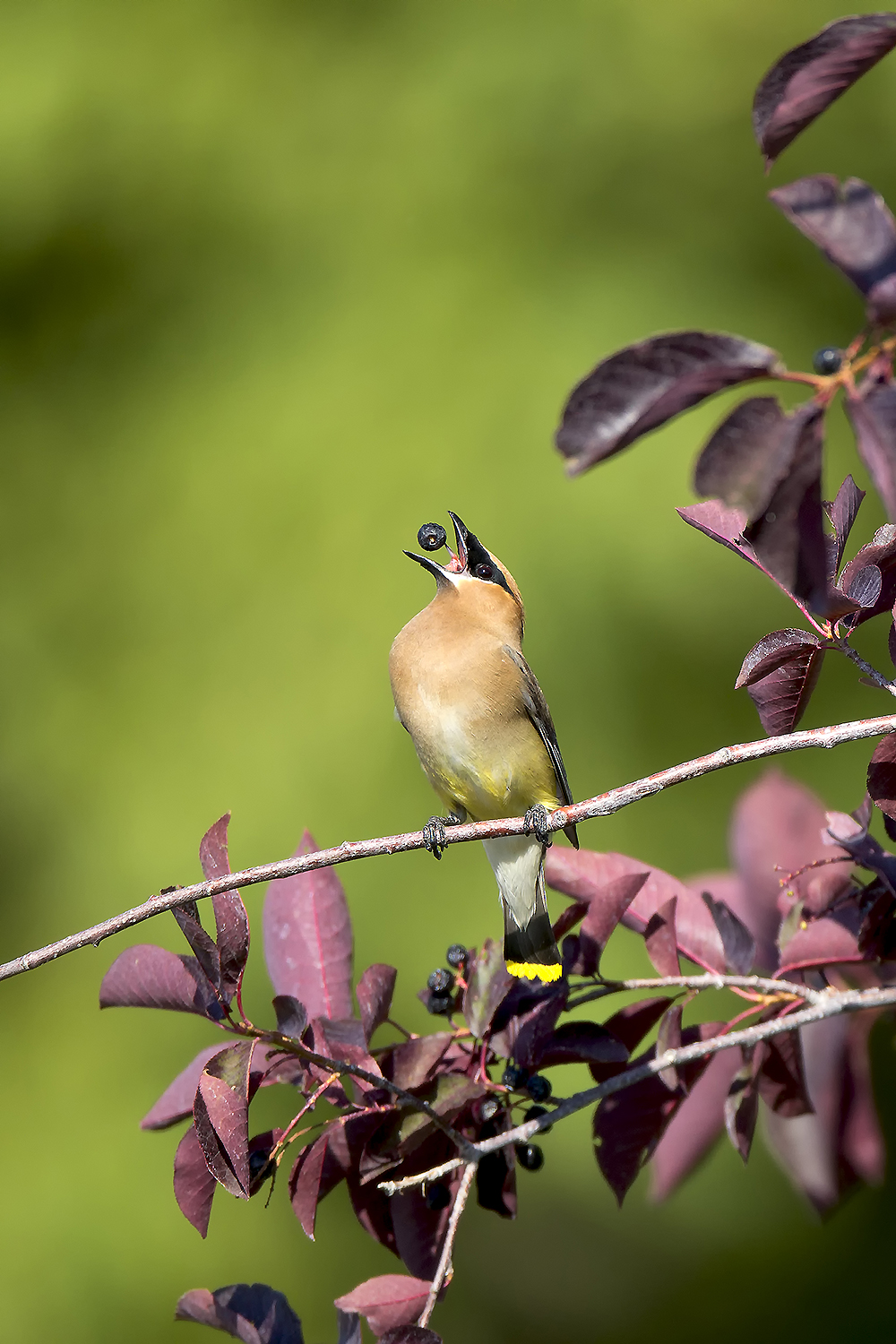
A cedar waxwing feeding on a berry documents one transfer between a plant resource and an animal consumer. The photograph records a particular event; understanding its place in the wider food web requires evidence across diets, seasons, populations, and habitats. Select the image to view the fine-art photograph.
A food web is a network of feeding relationships through which energy and biological materials move among organisms. Producers capture energy and build biomass; consumers obtain energy and nutrients by feeding on plants, animals, fungi, or other resources; scavengers, detritivores, fungi, and microorganisms process dead organic matter and contribute to nutrient return.
These relationships connect individual feeding behavior to larger ecological patterns. Seasonal resources can affect migration and reproduction. Habitat structure can change access to food and refuge. Predators, competitors, parasites, decomposers, water systems, and soil communities can all influence how resources move through an ecosystem.
How producers, consumers, predators, scavengers, detritivores, decomposers, parasites, competitors, habitats, and seasonal resources form interconnected ecological networks.
Scientific Boundary
One photograph can document a feeding event, but it cannot by itself establish an animal’s complete diet, the strength of an ecological interaction, a population-wide pattern, or the structure of an entire food web.
Move from the basic structure of food webs into energy transfer, material cycling, species interactions, indirect effects, seasonal change, field evidence, and conservation.
Scientific Foundation
What Is a Food Web?
A food web is a network representing the feeding relationships through which energy and biological materials move among organisms within an ecological community.
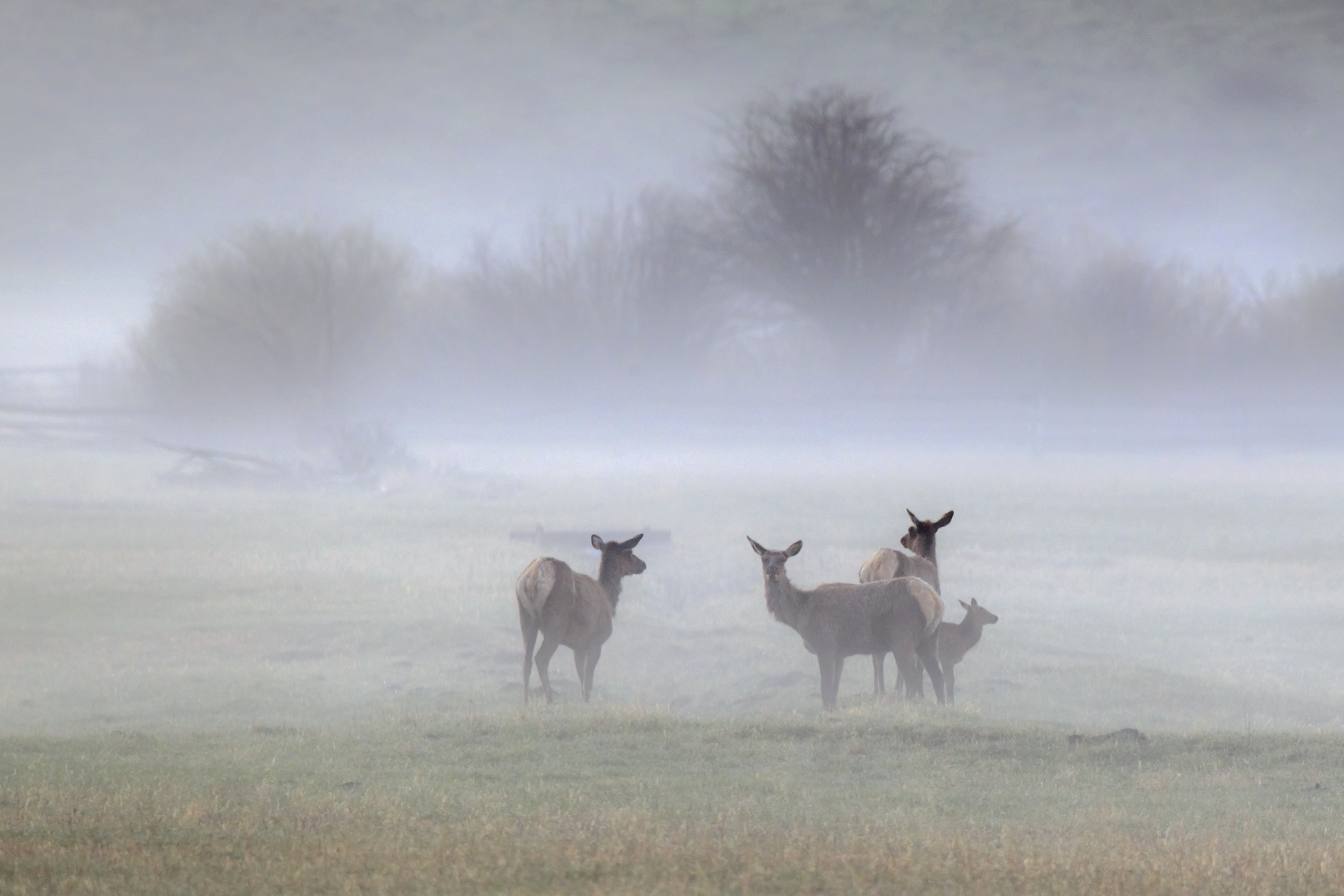
An elk grazing in a meadow documents herbivory: plant tissue is consumed, some of its chemical energy and materials are assimilated into the animal, and much is used in metabolism or returned to the environment. Select the image to view the fine-art photograph.
Most organisms use more than one resource and interact with more than one consumer. A cedar waxwing may eat different fruits and insects. An elk may use grasses, sedges, shrubs, and woody vegetation. A bear may consume plants, insects, fish, mammals, and carrion. Because diets overlap and change, real ecosystems are better represented as networks than as single linear chains.
Food-web diagrams commonly use arrows to show the transfer of energy and materials from a resource to a consumer. Plants and algae form much of the producer base. Herbivores, frugivores, granivores, insectivores, omnivores, predators, parasites, scavengers, and decomposers create overlapping pathways above and around that base.
A food web describes trophic relationships: who consumes whom or what. Ecological relationships are broader. Competition, habitat modification, pollination, seed dispersal, facilitation, and other interactions can influence the food web even when they are not themselves feeding relationships.
Food webs also change across space and time. Diets may shift with age, season, habitat, reproductive condition, competition, risk, and resource availability. Migration, drought, flooding, disturbance, and changing plant production can reorganize which pathways are active and how strongly species interact.
Food Chain vs. Food Web
A food chain is a simplified sequence of energy transfer. A food web combines many intersecting feeding pathways and better represents the complexity of most ecological communities.
Trophic Level vs. Feeding Guild
A trophic level describes a general position in energy transfer. A feeding guild groups organisms that use similar resources or feeding strategies. The concepts are related but not interchangeable.
Energy Flow vs. Nutrient Cycling
Energy moves through organisms and is progressively dissipated as heat. Nutrients and materials can be stored, transformed, transferred, and recycled. Energy itself is not recycled through the food web.
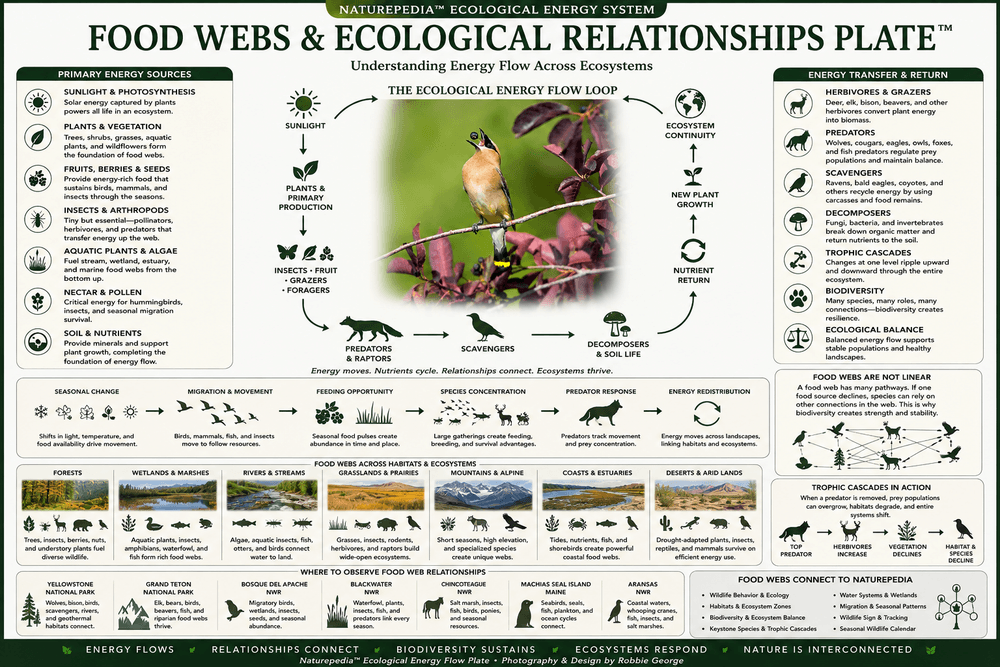
A visual compression of how primary production, consumers, predators, scavengers, decomposers, seasonal resources, habitats, and indirect ecological effects connect across living systems.
Food Webs & Ecological Relationships Plate™ by Robbie George — a Naturepedia visual overview connecting biological production, feeding relationships, material cycling, habitat structure, migration, biodiversity, and ecosystem change.
How to Read This Plate
Begin with primary producers, which capture energy and build biomass. Follow feeding pathways through herbivores, frugivores, insectivores, omnivores, predators, parasites, and scavengers. Then follow dead organic matter into detrital pathways, where animals, fungi, and microorganisms use those resources and return nutrients to soil and water. Energy continues to dissipate as heat, while materials can be transformed, stored, transported, and reused.
Producer Pathways
Plants, algae, and other primary producers convert available energy into chemical energy stored in organic matter.
Consumer Pathways
Animals and other consumers obtain energy and materials from plants, animals, fungi, microorganisms, carrion, or detritus.
Detrital Pathways
Scavengers, detritivores, fungi, and microorganisms process dead organisms, waste, and other organic material.
Changing Context
Season, migration, water, soil, disturbance, habitat structure, and resource availability alter which pathways are active.
These concepts describe different parts of ecological feeding structure. They are useful when their limits remain clear, but they should not be treated as interchangeable labels.
Food Chain
A food chain is a simplified sequence showing one possible pathway of energy and material transfer from a resource through one or more consumers.
Example: grass → elk → wolf
Food Web
A food web combines many overlapping pathways. Elk use multiple plants; wolves consume different prey; carcasses support ravens, eagles, insects, fungi, and microbes; and each participant interacts with additional resources and consumers.
Trophic Level
A trophic level describes an organism’s general position in energy transfer, such as producer, primary consumer, or higher-level consumer. Omnivory means many organisms cannot be assigned to one rigid level in every circumstance.
Feeding Guild
A feeding guild groups organisms that use similar resources or feeding strategies. Insectivores, granivores, frugivores, grazers, nectar-feeders, scavengers, and filter-feeders are examples of feeding guilds.
A Simplified Meadow Pathway
SunlightExternal energy source
Meadow PlantsPrimary producers
ElkHerbivorous consumer
WolfPredatory consumer
Detrital CommunityCarrion and waste users
This sequence is an educational simplification. Meadow plants support many consumers, elk use many plant resources, wolves consume different prey, and dead material from every stage can enter scavenger and decomposer pathways.
A Critical Ecological Distinction
Energy Flows; Nutrients Cycle
Energy and matter move together through many feeding events, but they do not behave in the same way. Keeping this distinction clear prevents one of the most common misunderstandings about food webs.
Energy Flow
Primary producers convert available energy into chemical energy stored in organic compounds. Consumers obtain some of that chemical energy by feeding on producers or other consumers.
At every stage, organisms use energy for metabolism, movement, growth, maintenance, reproduction, and other processes. Much of that energy is ultimately dissipated as heat and is not recycled back through the food web.
Nutrient Cycling
Elements and compounds containing carbon, nitrogen, phosphorus, and other nutrients can move repeatedly among organisms, soil, water, sediments, and the atmosphere.
Feeding, waste production, death, decomposition, weathering, microbial transformation, water movement, and plant uptake can all transfer or transform these materials.
What Happens During a Feeding Event?
ConsumptionThe consumer takes in organic material containing chemical energy and nutrients.
AssimilationSome consumed material is absorbed and used for maintenance, growth, or reproduction.
RespirationChemical energy supports metabolism, with energy eventually dissipated as heat.
Material ReturnWaste, shed tissue, and dead organic matter become resources for other organisms and processes.
Transfer Efficiency Is Variable
The familiar idea that ten percent of energy always passes from one trophic level to the next is a teaching approximation, not a universal rule. Transfer varies with organism, tissue, digestibility, metabolism, temperature, ecosystem, and how trophic levels are measured.
Material cycles are not perfectly closed at the scale of one habitat. Nutrients can enter through weathering, flooding, atmospheric deposition, migration, or runoff. They can leave through erosion, downstream transport, fire, harvest, or animal movement.
Primary producers build organic matter from inorganic materials using an external energy source. In most familiar terrestrial and aquatic ecosystems, photosynthesis provides the principal entry point for energy into the food web.
Plants, algae, and photosynthetic microorganisms capture a portion of available light energy and store it as chemical energy in organic compounds. Their tissues then support herbivores, frugivores, granivores, nectar-feeders, detritivores, fungi, microorganisms, and the consumers that feed on those organisms.
Primary production does not create one uniform resource. Leaves, roots, wood, seeds, fruits, nectar, pollen, algae, and dead plant material differ in digestibility, nutrient content, defensive chemistry, seasonal availability, and accessibility. Those differences help determine which consumers can use them and when.
Producer communities are shaped by light, water, temperature, soil, nutrients, disturbance, competition, and the physical structure of the habitat. A productive meadow, forest canopy, wetland, estuary, or lake therefore supports a distinct set of feeding pathways rather than one universal food-web pattern.
From Captured Energy to Available Biomass
Available LightOnly part of incoming solar energy is captured through photosynthesis.
Gross Primary ProductionThe total rate at which producers fix energy into organic compounds.
Producer RespirationProducers use part of the captured chemical energy for their own metabolism.
Net Primary ProductionThe remaining production available for growth, reproduction, consumption, or detrital pathways.
Net primary production = gross primary production minus producer respiration.
Terrestrial Production
Trees, shrubs, grasses, sedges, wildflowers, mosses, and other plants support food webs through living tissue, seeds, fruits, nectar, pollen, roots, leaf litter, and woody debris.
Aquatic Production
Algae, phytoplankton, aquatic plants, and photosynthetic microorganisms support aquatic consumers. Light penetration, nutrient availability, water movement, depth, and turbidity influence where production occurs.
Consumer guilds describe animals that use similar categories of food. They help organize food-web relationships, but they do not place every animal at one fixed trophic level or describe its complete diet.
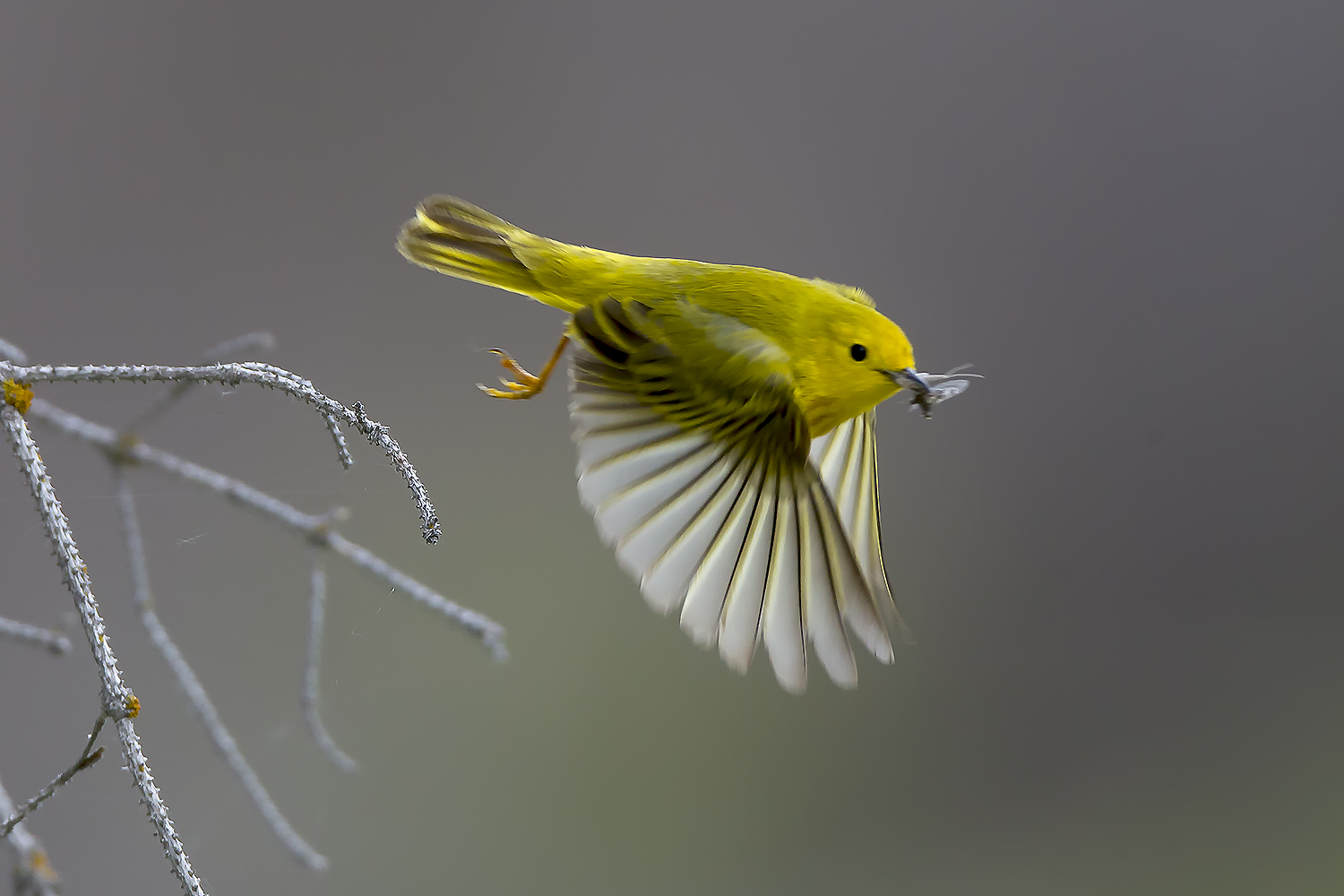
A yellow warbler capturing an insect documents one insectivorous feeding event. The insect’s own diet determines where this transfer sits within the wider food web.
Herbivores
Herbivores consume plant or algal material. Grazers, browsers, leaf-eaters, sap-feeders, and root-feeders use different tissues and can affect vegetation in different ways.
Frugivores
Frugivores consume fruits. They may transport seeds, destroy seeds, digest pulp without moving viable seeds, or use fruit only during certain seasons.
Granivores
Granivores consume seeds. Their effects can include seed destruction, caching, forgotten seed storage, and occasional dispersal, depending on the species and behavior.
Insectivores
Insectivores consume insects or other arthropods. Because their prey may be herbivores, predators, parasites, or detritivores, insectivores can occupy different trophic positions.
These categories frequently overlap. A bird may feed on insects while nesting, switch to fruit during migration, and use seeds during winter. Bears, foxes, rodents, waterfowl, and many songbirds similarly change resources as availability, energetic demands, competition, and risk change.
Diet can also change across an animal’s life. Juveniles and adults may differ in body size, digestive capacity, habitat use, hunting ability, or nutritional needs. Aquatic insects may occupy one feeding role as larvae and another after metamorphosis.
A feeding guild therefore identifies a resource-use pattern, not a permanent identity. Determining the ecological importance of that pattern requires information about frequency, quantity, season, nutritional contribution, resource availability, and the number of individuals involved.
Predation, parasitism, and competition can influence survival, behavior, movement, reproduction, and resource use. Their population and ecosystem effects vary with ecological context and must be established with evidence.
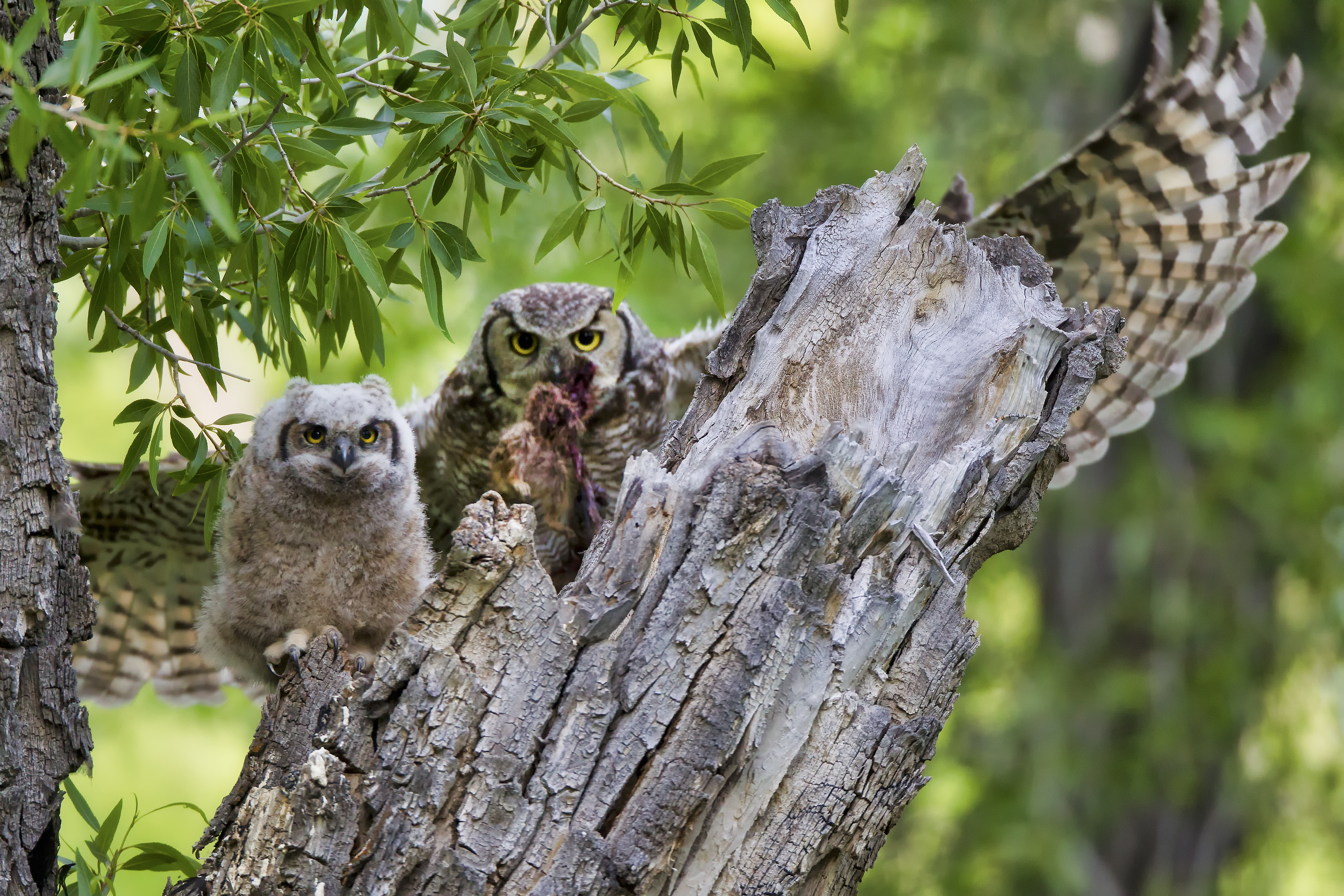
A great horned owl delivering prey to an owlet documents predation and parental provisioning. It does not by itself establish prey-population regulation or a broader trophic cascade. Select the image to view the fine-art photograph.
Predation
A predator kills and consumes another organism. Predators may influence prey abundance, behavior, distribution, habitat use, and activity, but the strength and direction of those effects vary among systems.
Parasitism
A parasite obtains resources from a host, generally without immediately killing it. Parasites can affect host condition, behavior, reproduction, survival, and vulnerability to other pressures.
Competition
Competition occurs when organisms use resources that are limited relative to demand. It may occur within a species or between species and may involve food, space, shelter, nest sites, light, water, or nutrients.
How These Relationships Intersect
A predator may compete with other predators for prey. Prey may alter habitat use in response to perceived risk. Parasites may change a host’s condition or behavior, potentially affecting its vulnerability to predators. Predators may also consume one another, producing intraguild predation within a shared feeding guild.
These overlapping effects mean that population change rarely has one automatic explanation. Food availability, weather, habitat, disease, reproduction, dispersal, human activity, predation, and competition can act together.
Direct Effects
Consumption, injury, resource loss, reduced access, or physiological costs directly affect the organisms participating in an interaction.
Behavioral Effects
Animals may change feeding times, group size, vigilance, movement, or habitat use in response to competitors, predators, parasites, or perceived risk.
Indirect Effects
An interaction involving one species can alter resources, risks, or opportunities for another species that is not directly consumed.
Many animals obtain food from more than one trophic pathway. Omnivory and flexible feeding connect food-web levels that appear separate in simplified diagrams and help explain why an animal’s ecological role can change across seasons, habitats, and life stages.
An omnivore consumes resources from more than one trophic level, commonly combining plant, fungal, and animal foods. Omnivory does not mean that an animal eats everything available or uses every food in equal proportions. One resource may dominate during a particular season while other foods are used only when conditions change.
Black bears may consume emerging vegetation, insects, fruits, nuts, fish, mammals, or carrion. Foxes may use small mammals, birds, insects, fruits, and human-associated foods. Many waterfowl consume both plant material and aquatic invertebrates, with the proportions changing during growth, migration, or reproduction.
These diet shifts can redirect energy and materials through different parts of the food web. Whether that flexibility increases persistence, intensifies competition, or changes pressure on a particular resource depends on the species, habitat, alternatives available, and the scale being studied.
Seasonal Switching
Animals may shift among insects, fruits, seeds, vegetation, fish, prey, or carrion as those resources become available.
Life-Stage Shifts
Juveniles and adults may differ in size, digestive ability, habitat, nutritional needs, or capacity to capture particular foods.
Habitat-Based Shifts
The same species may use different foods in wetlands, forests, grasslands, coastal systems, farms, or developed landscapes.
Risk-Based Shifts
Predation risk, competition, disturbance, or human activity may change where and when an animal feeds and which resources it can safely reach.
How Diet Is Studied
Researchers combine multiple forms of evidence because each method reveals a different part of the diet and may operate across a different time scale.
Direct ObservationDocuments visible feeding events but may miss hidden, nocturnal, rare, or rapidly consumed foods.
Scat and Pellet AnalysisCan identify consumed remains, although highly digestible foods may be underrepresented.
DNA-Based AnalysisCan detect food taxa that are difficult to identify visually but does not always measure consumed quantity.
Stable IsotopesCan reveal assimilated dietary pathways over time but often requires comparison with possible food sources.
Food webs continue after waste is produced or an organism dies. Carrion, leaf litter, wood, feces, shed tissue, and other organic material support scavengers, detritivores, fungi, microorganisms, and the predators that feed on them.
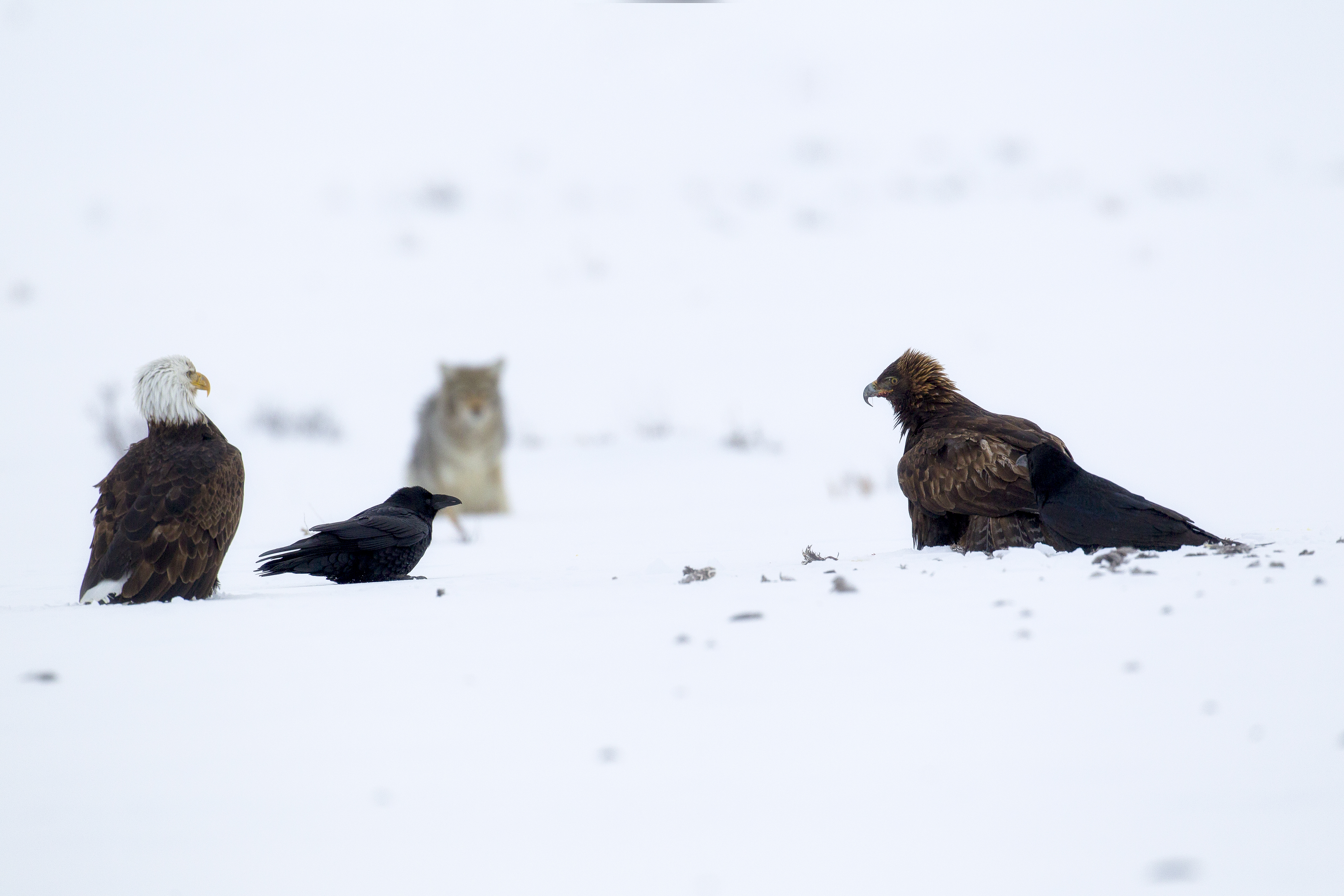
Bald eagle, golden eagle, raven, and coyote activity around a carcass documents a shared resource connecting multiple consumers. Smaller animals, fungi, and microorganisms continue processing material after the visible scavengers leave.
Scavengers
Scavengers consume dead animals they did not necessarily kill. Many are flexible feeders: eagles, ravens, coyotes, bears, beetles, and other animals may scavenge while also hunting or using non-animal foods.
Detritivores
Detritivores ingest dead organic material and associated microorganisms. Many invertebrates fragment leaf litter, wood, feces, carcass material, or sediments into smaller particles.
Decomposers
Fungi and microorganisms chemically transform organic matter, often using enzymes outside their cells before absorbing smaller compounds. Their activity contributes to nutrient mineralization and soil formation.
A Carcass Becomes a Temporary Resource Center
Large ConsumersMammals and birds remove accessible tissue and may transport material away from the carcass.
InvertebratesFlies, beetles, and other animals consume tissue, lay eggs, and become prey for additional consumers.
Microbial ActivityMicroorganisms transform organic compounds as environmental conditions change.
Soil and VegetationSome released nutrients may enter surrounding soil, water, microorganisms, fungi, or future plant growth.
Detrital pathways occur throughout ecosystems, not only at carcasses. Fallen leaves, dead roots, woody debris, aquatic sediments, feces, shed feathers, and other organic materials support communities that are often less visible than grazing or predation.
Temperature, moisture, oxygen, acidity, tissue chemistry, burial, water movement, and access by consumers all affect the rate and pathway of decomposition. Material may be processed locally, transported downstream, buried in sediment, stored in soil, or exported by animals.
These pathways return and transform nutrients, but they do not create a perfectly closed local cycle. Energy contained in organic matter is used by organisms and progressively dissipated as heat.
Knowing that two species interact is not the same as knowing how strongly they interact or what the broader result will be. Frequency, magnitude, ecological context, and scale determine whether a relationship produces a detectable population or ecosystem effect.
Interaction Strength
Interaction strength describes how much one organism or population affects another. A rare but consequential event may differ from a frequent event with a small effect, and per-individual effects may differ from total population effects.
Indirect Effects
An indirect effect occurs when one species influences another through an intermediate species, shared resource, changed behavior, altered habitat, or another ecological pathway.
Ecological Context
The same relationship may produce different outcomes under different resource levels, climates, habitats, population densities, disturbance histories, or combinations of species.
Stability Is Not One Condition
An ecosystem can appear stable under one measurement while changing under another. Researchers therefore distinguish several properties rather than treating “balance” as one permanent state.
ResistanceHow little a measured property changes during a disturbance.
ResilienceHow a system reorganizes or recovers after disturbance, relative to a defined state or function.
PersistenceWhether species, relationships, or ecological functions continue through time.
VariabilityHow much abundance, biomass, production, or another measured property fluctuates.
Food webs are dynamic. Species abundance, resource use, and interaction strength can shift without the ecosystem necessarily collapsing. Disturbance may reduce one function while creating opportunities for other species or pathways. Recovery may also produce a different community rather than an exact return to an earlier condition.
Biodiversity can influence ecological functioning and responses to disturbance, but more species do not automatically guarantee every form of stability. Outcomes depend on species’ ecological roles, functional overlap, interaction structure, environmental conditions, and the property being measured.
Moving from Observation to Interpretation
ObservationWhat organism, resource, behavior, place, and moment were documented?
PatternDoes the relationship recur across individuals, seasons, populations, or habitats?
MechanismWhat biological process could connect the observed relationship to the proposed effect?
TestingDo comparative, long-term, experimental, or other appropriate evidence support the explanation?
Some species can have ecological effects that are large relative to their abundance or biomass. In particular settings, changes involving these species may propagate through multiple parts of a food web.
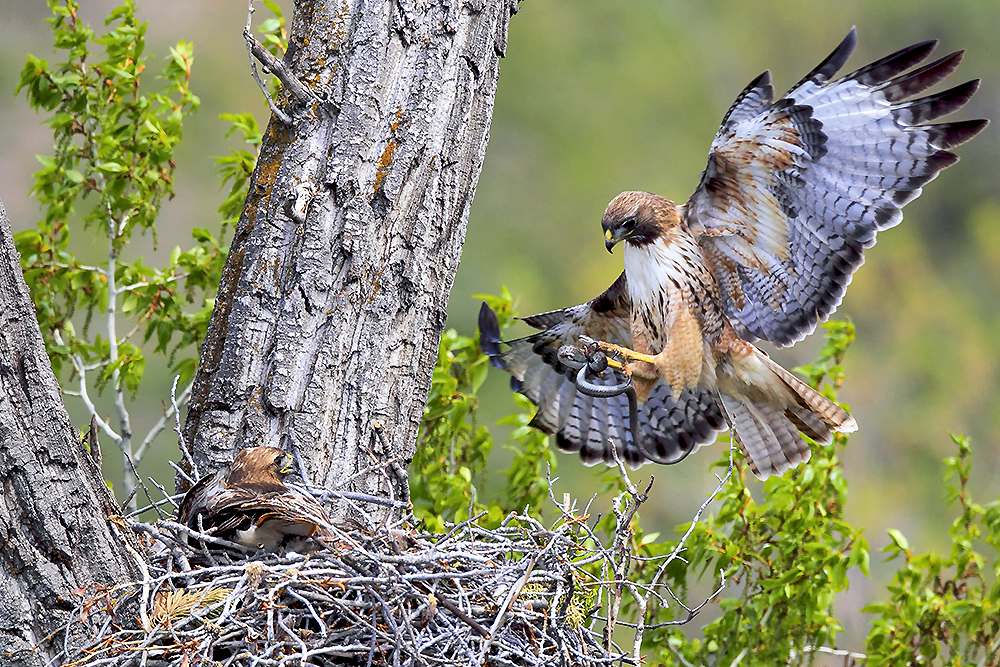
A red-tailed hawk delivering prey documents predation and parental provisioning. This feeding event does not by itself identify the hawk as a keystone species or demonstrate a trophic cascade. Select the image to view the fine-art photograph.
Keystone Species
A keystone species has an ecological effect that is disproportionately large relative to its abundance or biomass within a particular system. The designation depends on demonstrated effects, not size, popularity, or position at the top of a food chain.
Trophic Cascade
A trophic cascade occurs when a change involving consumers propagates through multiple trophic levels or ecological components, producing indirect effects beyond the organisms that interact directly.
Keystone Roles Can Take Different Forms
PredatorsMay affect prey abundance, behavior, habitat use, or competition among prey species.
Ecosystem EngineersModify physical habitat in ways that create or remove resources for other organisms.
Resource ProvidersProvide food, shelter, or another resource used by many species during critical periods.
MutualistsMay support reproduction, dispersal, or resource exchange for many other organisms.
A species can be ecologically important without meeting the stricter definition of a keystone species. Dominant species may have large effects because they are abundant or contribute substantial biomass. Foundation species can create habitat or define environmental conditions. Keystone status instead emphasizes an effect that is unusually large relative to abundance.
Keystone effects are also context-dependent. A species may exert a strong effect in one habitat, season, or community and a weaker or different effect elsewhere. Removal, recovery, or abundance change does not guarantee the same outcome in every ecosystem.
Evidence Needed to Evaluate a Cascade
Documented ChangeA measurable change in the proposed initiating consumer or interaction.
Intermediate PathwayEvidence showing how the effect moves through prey, resources, behavior, or habitat.
Multi-Level ResponseA detectable response extending beyond the directly interacting organisms.
Alternative ExplanationsConsideration of climate, habitat, human activity, disease, resource supply, and other causes.
Food webs are reorganized by seasonal production, animal movement, weather, water conditions, reproduction, and habitat change. A feeding pathway that dominates during one period may become weak or temporarily disappear during another.
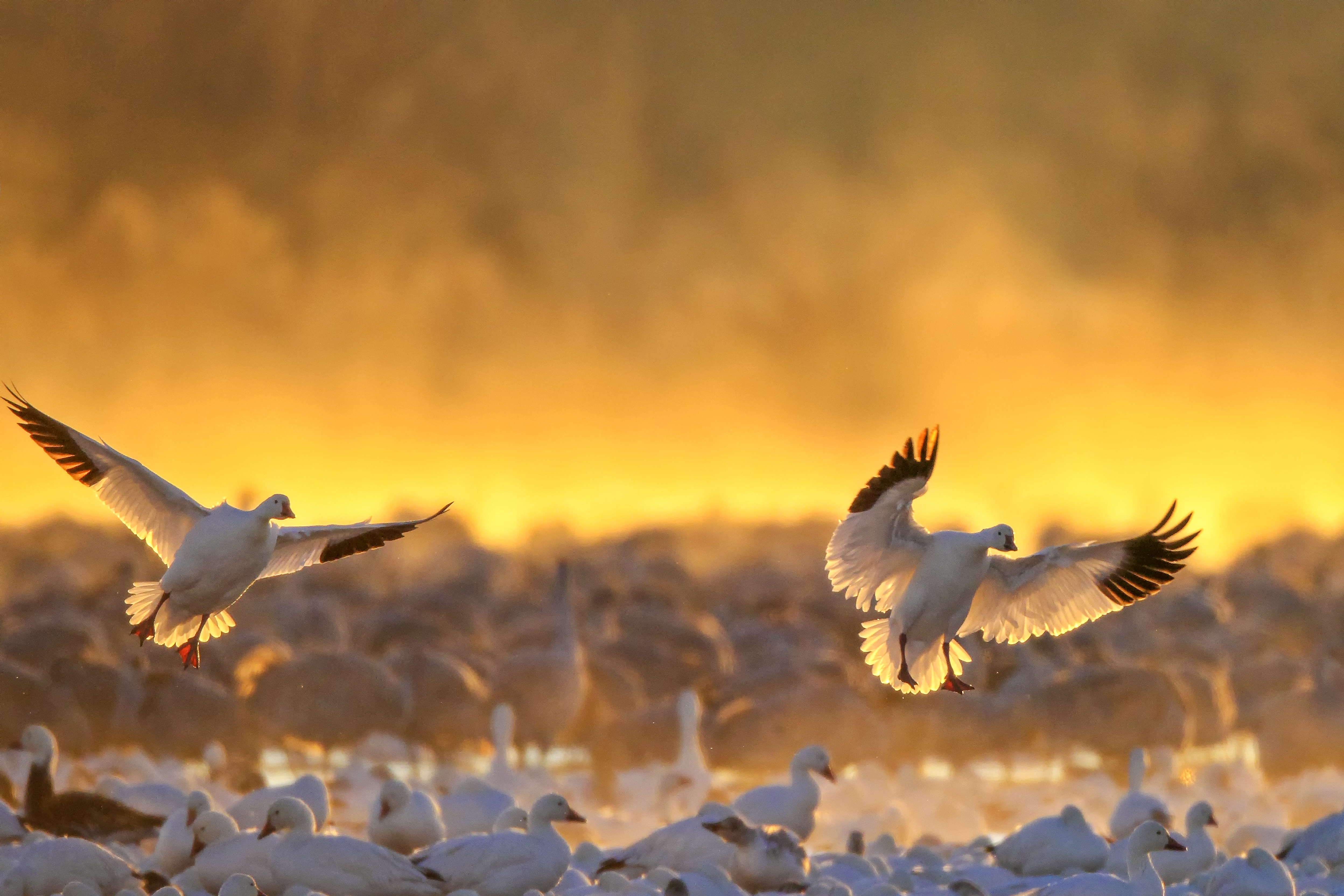
Migrating snow geese can temporarily concentrate large numbers of consumers in wetlands and feeding areas. The resulting ecological effects depend on flock size, duration, resource availability, habitat, and surrounding food-web relationships. Select the image to view the fine-art photograph.
Seasonal resource pulses include insect emergence, flowering, fruiting, seed production, fish spawning, plant growth, flooding, carrion availability, and concentrations of migratory prey. These pulses may support breeding, juvenile development, migration, fat storage, or survival during periods of high energetic demand.
Migratory animals connect places that may be separated by hundreds or thousands of miles. They consume resources in one location, move stored energy and nutrients through their bodies, become prey or scavenger resources elsewhere, and deposit waste or reproductive material along their routes.
Migration can therefore redistribute ecological demand and biological material. It does not move energy without loss, and the magnitude of its effect varies among species, populations, habitats, and years.
Examples of Seasonal Food-Web Change
Insect EmergenceAquatic or terrestrial insect pulses may temporarily support birds, bats, fish, amphibians, and other consumers.
Flowering and FruitingNectar, pollen, fruits, and seeds create changing pathways among plants, insects, birds, mammals, and soil communities.
Spawning and BreedingEggs, juveniles, adults, and reproductive activity can temporarily alter prey availability and consumer behavior.
Winter MortalitySevere weather, reduced forage, and mortality may change predation and create temporary carrion resources.
Habitat Connectivity
Migratory and wide-ranging animals often depend on linked breeding areas, feeding grounds, stopovers, staging areas, refuges, and seasonal ranges. Loss at one location can affect food-web relationships elsewhere.
Phenological Timing
Consumers benefit when their arrival, breeding, or growth overlaps with suitable resources. A timing mismatch may reduce access, but its effect depends on dietary flexibility, alternative resources, and the duration of the mismatch.
Fire, flooding, drought, storms, disease, land-use change, pollution, harvest, invasive species, and human-provided foods can alter production, mortality, movement, competition, and access to resources throughout a food web.
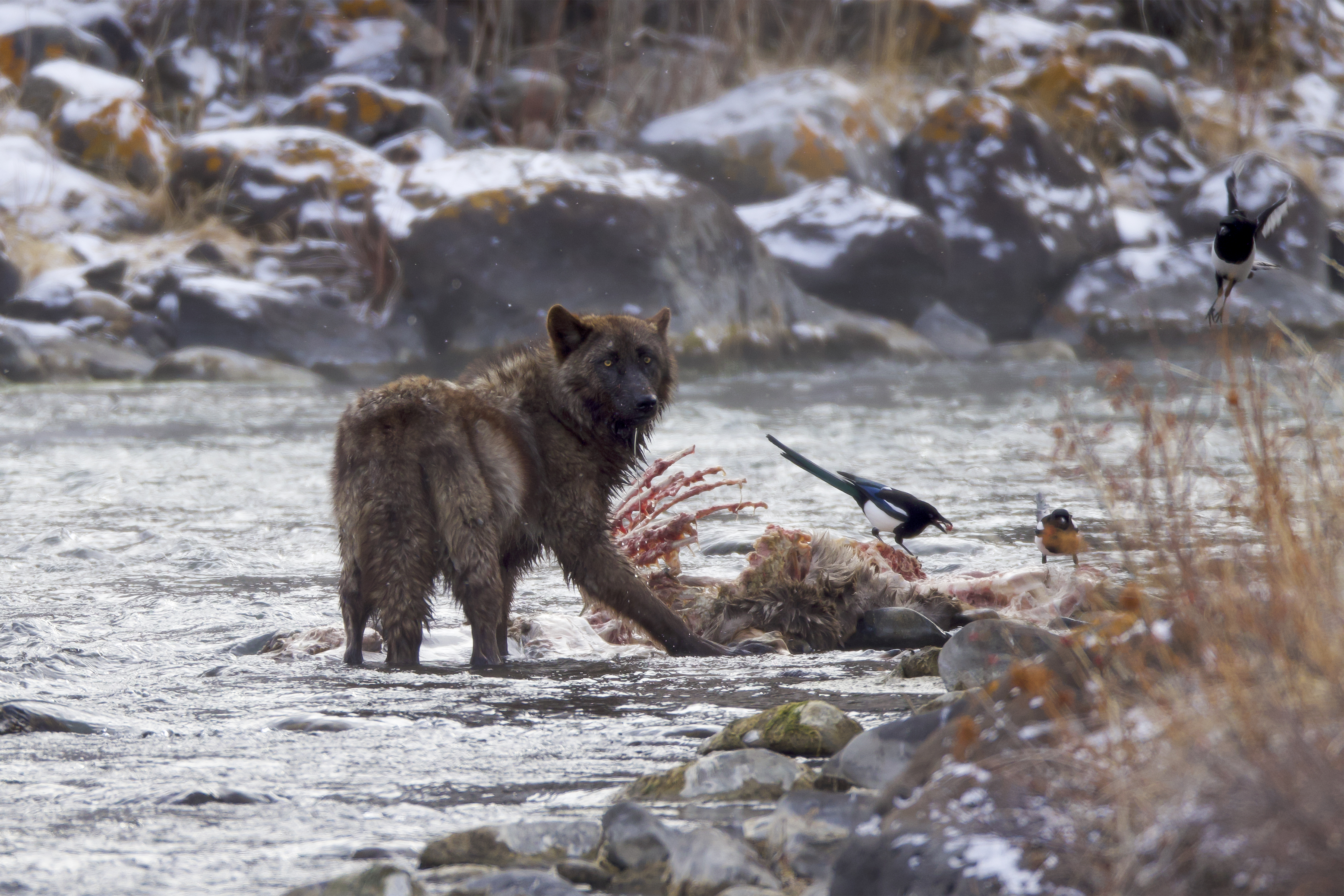
A black wolf feeding at a carcass while birds gather nearby documents a winter resource shared across multiple food-web pathways. The image does not establish the cause of death, population regulation, or the long-term condition of the ecosystem. Select the image to view the fine-art photograph.
Disturbance is not automatically equivalent to ecological damage. Many ecosystems developed with recurring fire, flooding, storms, grazing, freezing, insect outbreaks, or other disturbances. Ecological effects depend on disturbance type, intensity, duration, frequency, timing, spatial extent, historical conditions, and the ability of organisms to survive, move, or recolonize.
Human activities can modify those disturbance regimes or introduce new pressures. Habitat conversion, barriers, artificial light, noise, contaminants, altered water flow, intensive harvest, invasive organisms, and climate change can reorganize food webs through multiple interacting pathways.
Conservation therefore requires more than protecting isolated species. It also requires attention to habitat structure, ecological processes, seasonal resources, movement routes, water and soil systems, interaction networks, and the spatial scale at which those relationships operate.
Human-Associated Food Sources
Garbage and Food WasteCan concentrate wildlife, alter movement, increase conflict, and favor adaptable species.
Crops and LivestockMay provide concentrated resources while also creating conflict, mortality risk, and management pressure.
Feeders and Supplemental FoodMay influence local abundance, contact rates, behavior, nutrition, migration, or disease transmission.
Roadkill and Fishery WasteCan subsidize scavengers while exposing animals to vehicles, contaminants, entanglement, or human conflict.
A Food-Web Approach to Conservation
Protect ProducersMaintain native plant communities, aquatic production, soil processes, and water quality.
Measure OutcomesEvaluate whether actions support intended species, habitats, functions, and ecological relationships.
Species Recovery
Recovering one species may restore an interaction, but outcomes depend on habitat, resources, other species, population size, movement, and current environmental conditions.
Habitat Restoration
Restoring vegetation or water alone may not restore the former food web if dispersal barriers, altered soils, missing consumers, invasive species, or new disturbance regimes remain.
Wildlife photographs, tracks, scat, pellets, browse marks, prey remains, carcasses, seed fragments, and repeated observations can reveal parts of a food web. Each form of evidence has a different scope and must be interpreted within its limits.
Photography and Video
Images can document species identity, visible resources, handling behavior, group interactions, habitat, timing, and event sequence. They are strongest as records of particular moments rather than complete diets or population effects.
Tracks and Movement Sign
Tracks, trails, beds, burrows, and travel routes can show where animals moved or concentrated activity. They rarely identify a feeding relationship unless associated evidence supports that interpretation.
Feeding Sign
Browse lines, clipped stems, gnaw marks, plucked feathers, prey remains, feeding perches, scat, pellets, opened seeds, and excavations may help identify resource use when species and cause are established carefully.
Record the Context, Not Only the Subject
IdentityRecord the organism and resource only as specifically as the evidence permits.
Time and PlacePreserve date, time, location, habitat, season, and relevant environmental conditions.
Behavioral SequenceNote what happened before, during, and after the photographed or observed event.
UncertaintySeparate direct observations from inferences and record plausible alternative explanations.
Increasing the Scope of Evidence
Single EventDocuments that a particular interaction occurred.
Repeated PatternShows recurrence across individuals, places, seasons, or years.
Quantified UseEstimates frequency, quantity, availability, preference, or energetic contribution.
Population EffectTests whether the interaction changes survival, reproduction, abundance, or distribution.
System EffectEvaluates indirect consequences across additional species, resources, or trophic levels.
Naturepedia species and field-location guides make food-web concepts visible in particular animals and landscapes. These examples are representative pathways, not a complete inventory of every species or relationship.
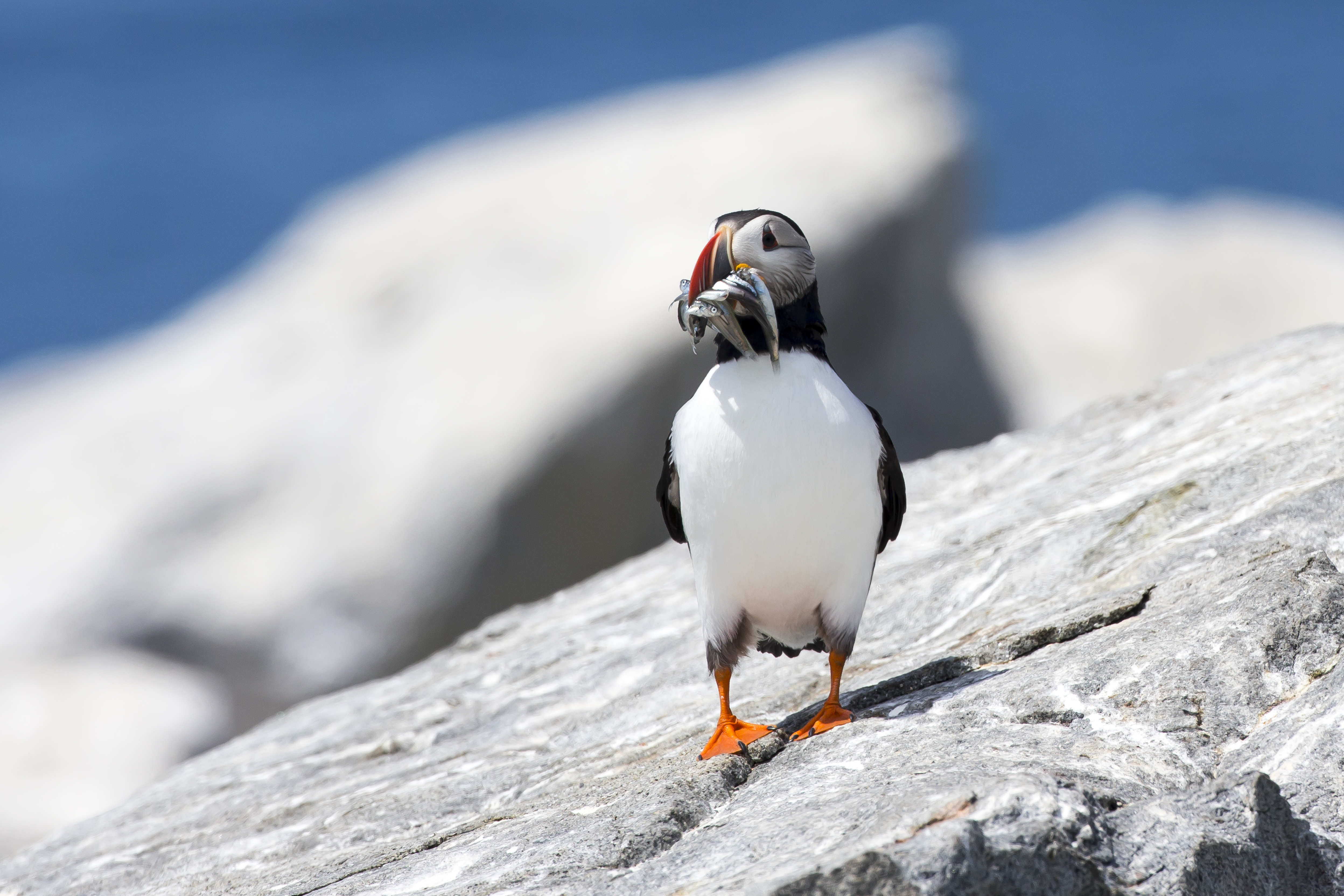
An Atlantic puffin carrying fish to a breeding colony documents marine prey delivery from the ocean to a coastal nesting site. It does not by itself establish the bird’s complete diet, prey abundance, or the condition of the wider marine food web. Select the image to view the fine-art photograph.
A broad landscape for observing interactions among vegetation, elk, bison, predators, scavengers, rivers, seasonal mortality, and changing habitat use.
A coastal breeding colony connecting marine fish, seabirds, nesting habitat, weather, and seasonal productivity.
Connected Ecological Knowledge
Food Webs Across the Naturepedia System
Food webs connect the decisions of individual organisms with the structure of habitats, the movement of energy and materials, seasonal change, biodiversity, and ecosystem-level effects.
Concise answers to common questions about feeding networks, trophic levels, energy flow, decomposers, omnivory, keystone species, ecological evidence, and ethical field observation.
What is a food web?
A food web is a network of feeding relationships showing how energy and biological materials move among producers, consumers, scavengers, detritivores, and decomposers within an ecological community.
How is a food web different from a food chain?
A food chain shows one simplified sequence of energy and material transfer. A food web combines many intersecting feeding pathways and more accurately represents the complexity of most ecological communities.
What is a trophic level?
A trophic level describes an organism's general position in energy transfer, such as producer, primary consumer, or higher-level consumer. Omnivory and changing diets mean that many organisms do not remain at one rigid trophic level.
Is energy recycled through a food web?
No. Energy moves through organisms and is progressively dissipated as heat. Nutrients and materials can be transformed, stored, transferred, and recycled, but energy itself is not recycled through the food web.
What role do decomposers play?
Fungi and microorganisms chemically transform dead organic matter and waste, contributing to nutrient mineralization and material cycling. They use chemical energy during decomposition and release heat through metabolism.
Can an animal occupy more than one trophic level?
Yes. An animal may consume foods from different trophic levels, and its position can change with diet, season, habitat, age, or resource availability.
What is omnivory?
Omnivory is the consumption of resources from more than one trophic level, commonly combining plant, fungal, and animal foods. It does not mean that an animal eats every available food or uses each resource equally.
What is a keystone species?
A keystone species has an ecological effect that is disproportionately large relative to its abundance or biomass within a particular system. A keystone species is not necessarily an apex predator, the largest species, or the most abundant species.
What is a trophic cascade?
A trophic cascade occurs when a change involving consumers propagates through multiple trophic levels or ecological components. A predator-prey interaction alone does not demonstrate a trophic cascade.
Does a food web remain stable over time?
No. Food webs are dynamic and change with season, migration, reproduction, disturbance, climate, habitat, resource availability, and population change. Stability must be defined using a specific property such as resistance, resilience, persistence, or variability.
Can one photograph prove a food-web relationship?
A photograph can document a particular feeding event, species, resource, place, and moment. It cannot by itself establish a complete diet, interaction strength, population-wide pattern, causal ecosystem effect, or trophic cascade.
How can food-web relationships be observed ethically?
Observe from an appropriate distance, avoid baiting wildlife, do not approach active nests or dens, do not move prey remains or carcasses, and leave travel routes unobstructed. Follow site rules, seasonal closures, and all wildlife regulations.
Robbie George is an independent National Geographic–published nature photographer and field observer.
His work records particular species, feeding events, behaviors, habitats, seasonal conditions, and field locations across North America. These photographs provide direct visual evidence of individual moments while broader conclusions about diets, populations, interaction strength, trophic cascades, and ecosystem effects require evidence beyond one photograph.
Robbie created Naturepedia to connect field observation with structured guides to wildlife, behavior, habitats, ecosystems, migration, tracks, water systems, biodiversity, conservation, and ecological relationships.
Learn more about Robbie, his field background, and his photographic work on the Nature Photographer page.
Observation and Interpretation
Nature photography can preserve evidence of what was visible at a particular place and time. Naturepedia uses that field evidence as an entry point while keeping observation, inference, population-level research, and causal ecological interpretation clearly separated.
The presence of this badge signifies that this business has officially registered with the Art Storefronts Organization and has an established track record of selling art.
It also means that buyers can trust that they are buying from a legitimate business. Art sellers that conduct fraudulent activity or that receive numerous complaints from buyers will have this badge revoked. If you would like to file a complaint about this seller, please do so here.
Verified Returns & Exchanges
The Art Storefronts Organization has verified that this business has provided a returns & exchanges policy for all art purchases.
Description of Policy from Merchant:
What is your Policy on Returns/Exchanges/Refunds?
I take great pride in my work and prints, and I want you to be completely happy with your investment in my nature art. If for any reason you are unsatisfied with your print, you may return it within 14 days of delivery, and/or exchange it for another print. Prints must be returned in new condition, packaged carefully in the original packaging if possible. Your refund will be issued as soon as I receive the returned print. Please contact me if you would like to arrange a return or exchange.
In the event that you receive a damaged or defective print, please let me know within 7 days of receipt, and I will arrange for a new print to be shipped to you at no additional cost.
Verified Secure Website with Safe Checkout
This website provides a secure checkout with SSL encryption.
Verified Archival Materials Used
The Art Storefronts Organization has verified that this Art Seller has published information about the archival materials used to create their products in an effort to provide transparency to buyers.
Description from Merchant:
Fine Art Prints are made with high-quality archival inks on fine art papers using a high-resolution large format inkjet printer. Our premium archival inks produce images with smooth tones and rich colors. Prints are made with care on your choice of exquisite Fine Art Papers using a high-resolution large format inkjet printer. https://www.graphikprintworks.com
Become a supporter of Robbie George Photography and be the first to receive new content and special promotions.
“Every image is a field. Every quote is a key. Welcome back to the rhythm.” ~Robbie
Cart
Your cart is currently empty.
Saved Successfully.
This is only visible to you because you are logged in and are authorized to manage this website. This message is not visible to other website visitors.
Import From Instagram
Click on any Image to continue
This Website Supports Augmented Reality to Live Preview Art
This means you can use the camera on your phone or tablet and superimpose any piece of nature art onto a wall inside of your home or business.
To use this feature, Just look for the "Live Preview AR" button when viewing any piece of nature art on this website!
Pounce Now—Save 20% on Your First Order
Join the collector list for your first-order discount, new wildlife releases, and occasional field notes.