From Soil Microbiome to Floral Resource Networks™
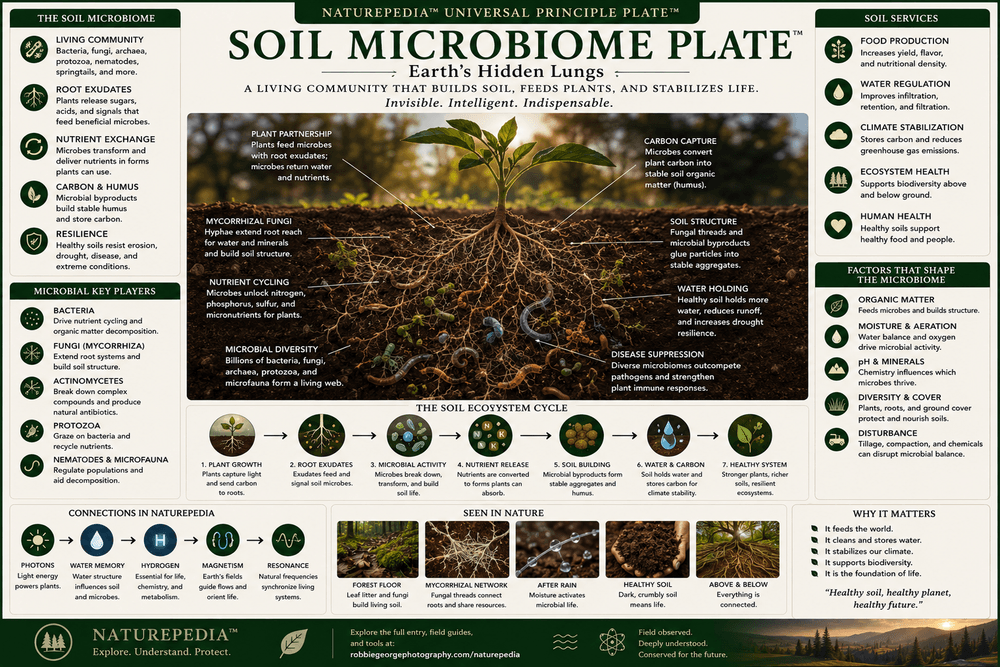
The soil microbiome does not end at the root zone. Every flower, seed, fruit, and pollinator interaction begins underground. Bacteria, fungi, protozoa, and countless microscopic organisms transform minerals into plant-available nutrients, helping flowering plants grow, bloom, and reproduce. What appears above ground as a meadow full of wildflowers is supported by an invisible biological economy operating beneath the surface.
As roots exchange nutrients with microbes and mycorrhizal fungi, plants gain access to water, minerals, and biological signals that influence growth and flowering. These underground relationships ultimately shape nectar production, pollen availability, bloom timing, and plant health. In other words, the foundation of every pollinator habitat begins within the living soil itself.
Soil Microbiome
↓
Root Systems
↓
Flowering Plants
↓
Floral Resource Networks™
↓
Bees • Butterflies • Moths • Hummingbirds
↓
Plant Reproduction & Biodiversity
Within Naturepedia, this pathway connects the underground ecology of the Soil Microbiome and Mycelial Networks to the pollinator systems explored in Bees of North America, Butterflies of North America, Naturepedia Moths, and Hummingbirds of North America. Together these systems form a living network that supports biodiversity, habitat resilience, and ecological stability.
To explore how flowers function as ecological hubs connecting pollinators, plant reproduction, migration, biodiversity, and ecosystem health, visit Floral Resource Networks™, one of Naturepedia's core Ecology Systems™.



 Landscape
  Wildlife
  Seascapes