What are soil carbon systems?
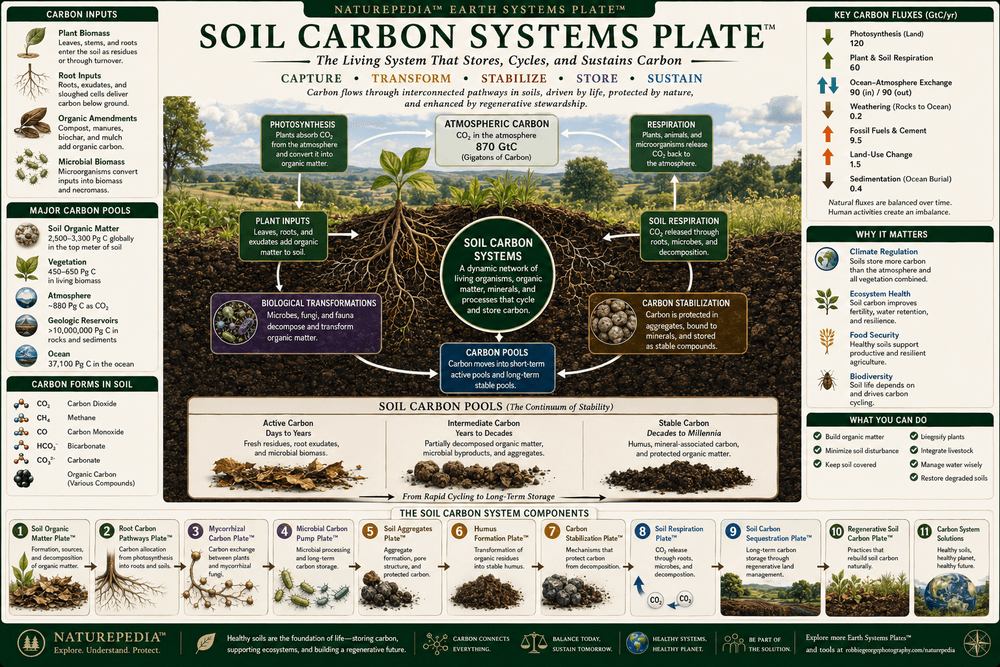
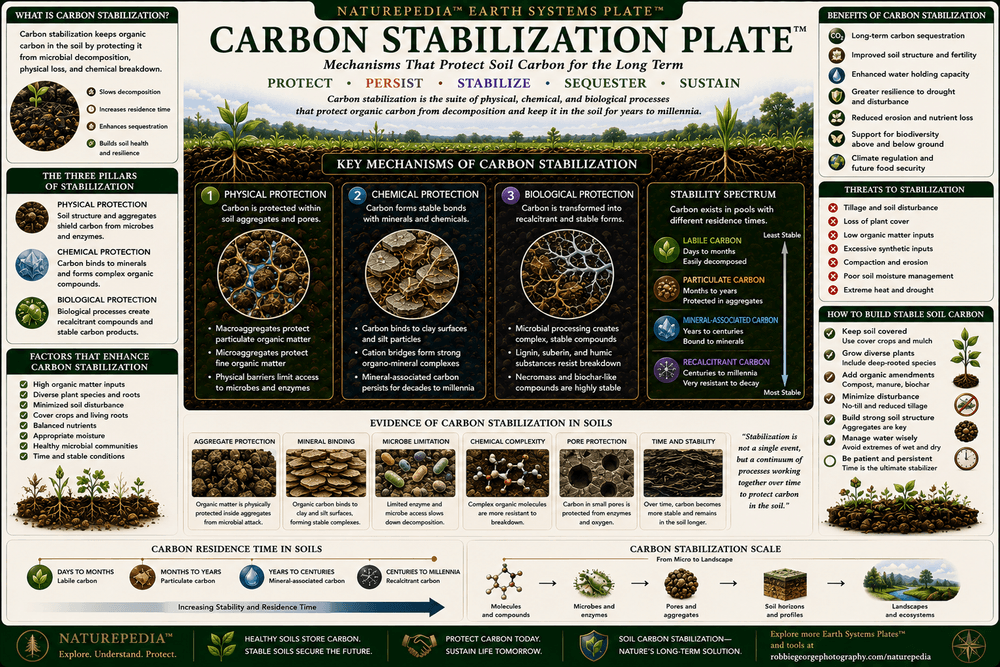
Soil carbon systems are the living processes that move, transform, store, release, and protect carbon in soil through plants, roots, fungi, microbes, organic matter, minerals, aggregates, humus, and soil organisms.
How does carbon enter the soil?
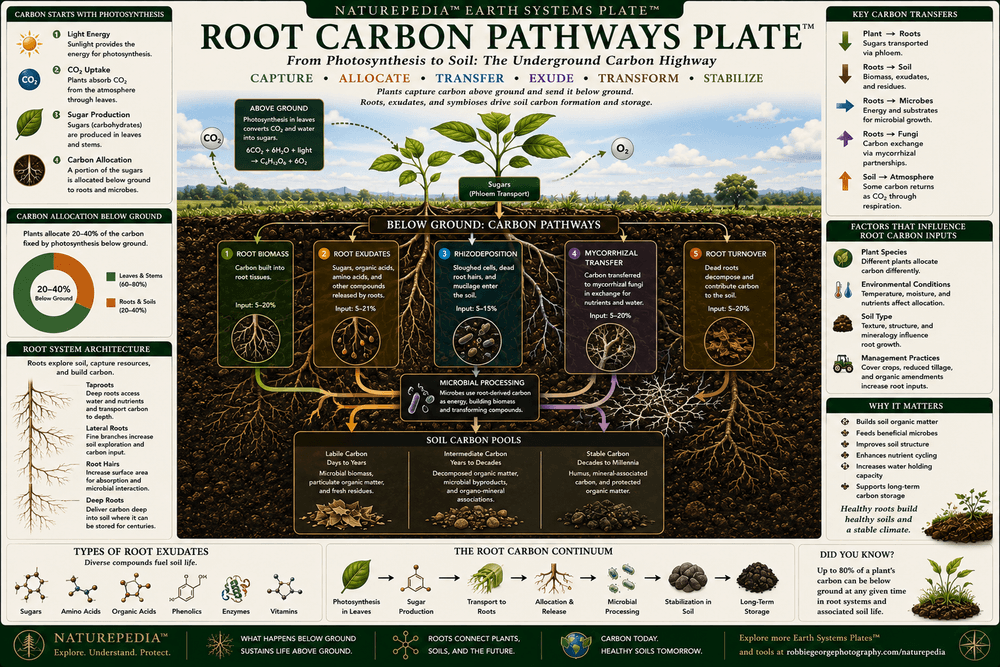
Carbon enters soil mainly through photosynthesis. Plants capture carbon dioxide from the atmosphere and move some of that carbon belowground through roots, root exudates, dead roots, plant residues, fungi, and microbial activity.
Why is soil organic matter important?
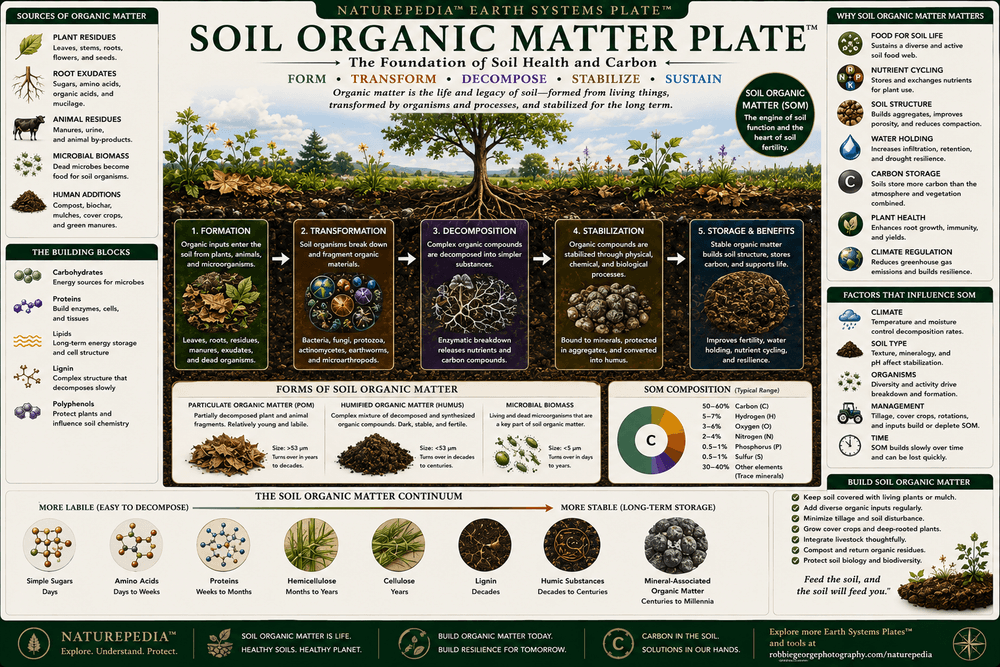
Soil organic matter improves fertility, nutrient cycling, water retention, soil structure, microbial habitat, biodiversity, and long-term carbon storage. It is one of the clearest indicators of healthy soil.
What role do microbes play in soil carbon?
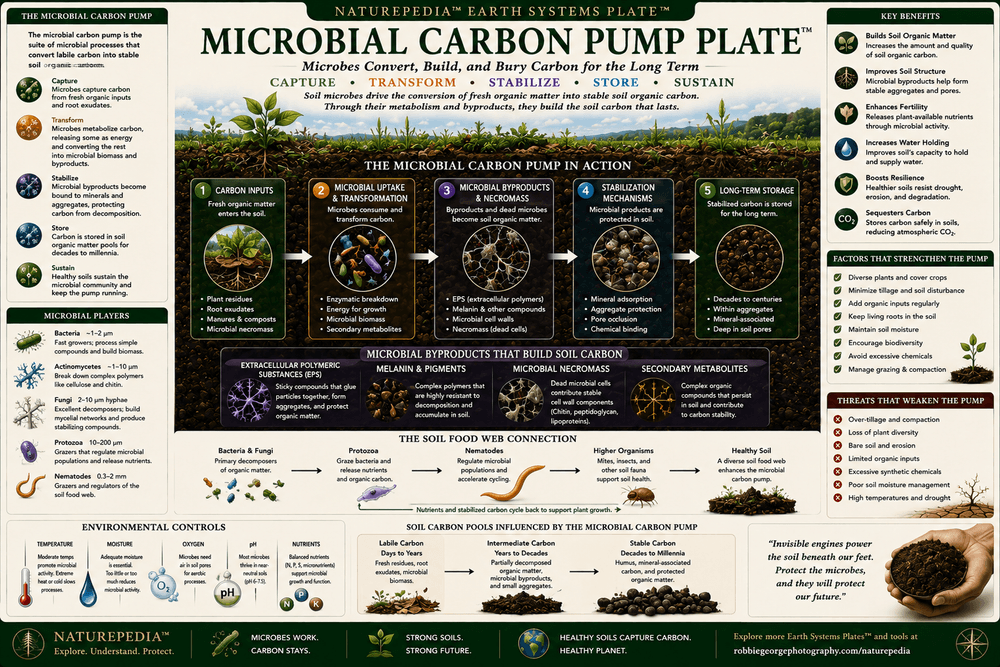
Microbes transform plant carbon into microbial biomass, microbial residues, nutrients, and stable organic compounds. Their activity helps create long-term soil carbon through decomposition, mineral association, and aggregate formation.
How do fungi help store soil carbon?
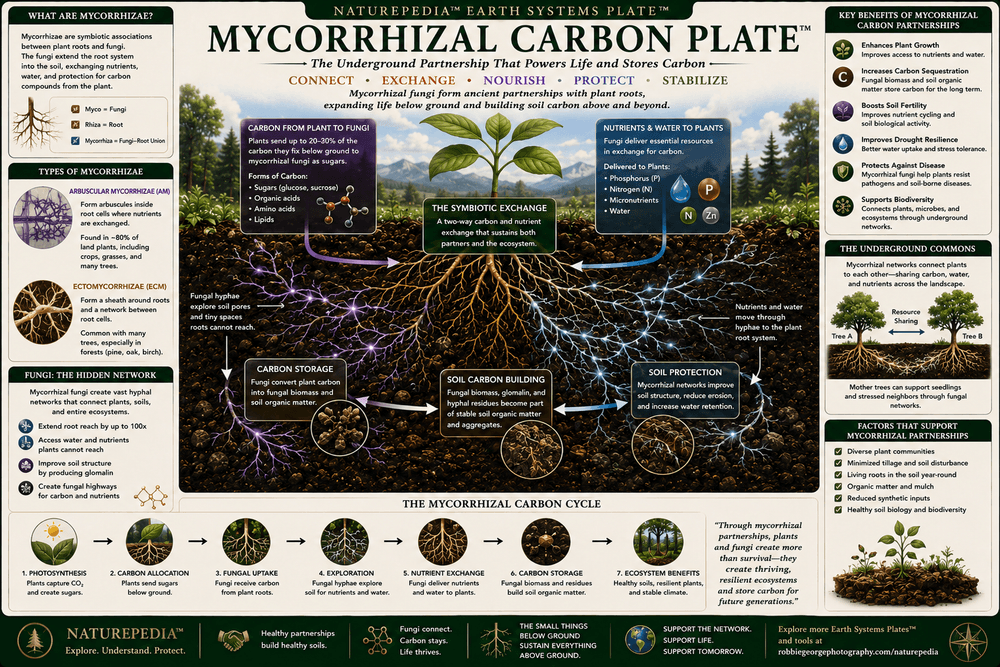
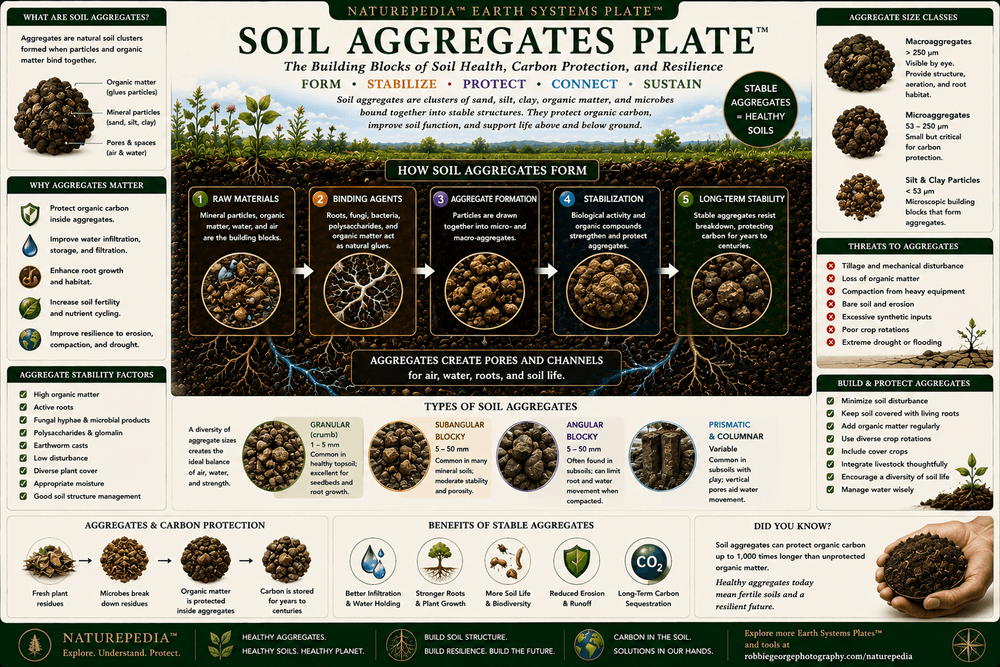
Mycorrhizal fungi receive carbon from plants and move it through underground networks. Fungal hyphae help bind soil particles, support aggregate formation, transport nutrients, and contribute residues that can become stable soil carbon.
What is soil carbon sequestration?
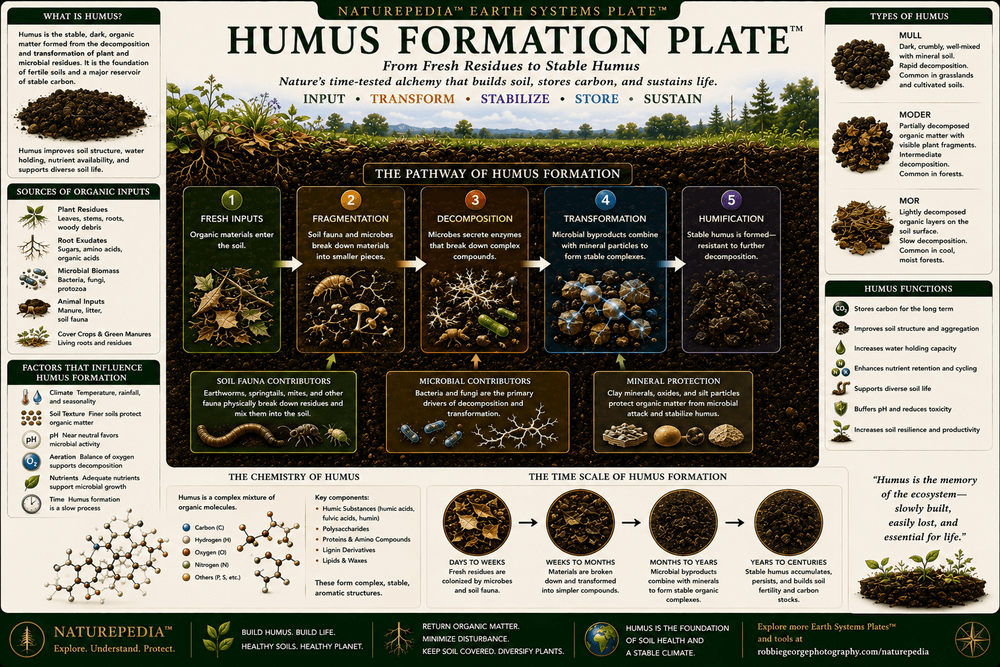
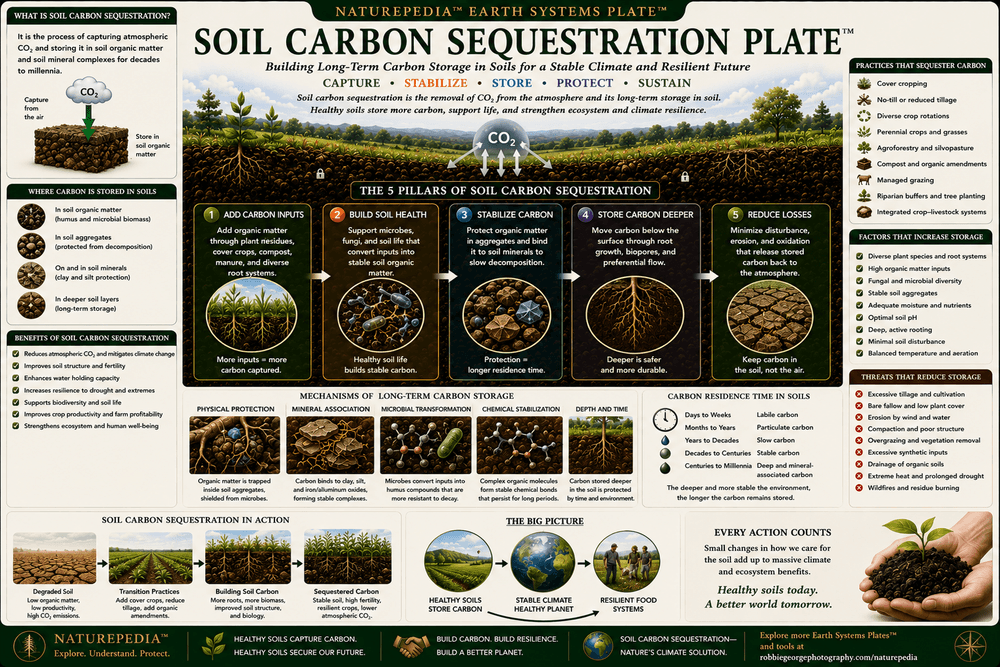
Soil carbon sequestration is the process of removing carbon dioxide from the atmosphere through plant growth and storing that carbon in soil organic matter, humus, microbial residues, mineral-associated carbon, and soil aggregates.
Does soil also release carbon?
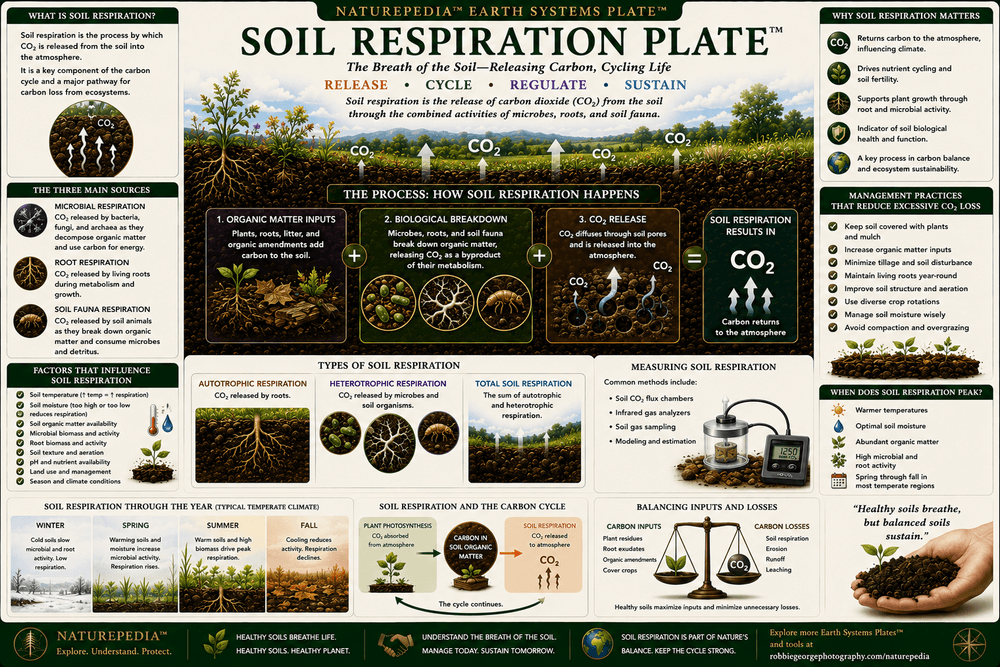
Yes. Soils release carbon dioxide through soil respiration, which comes from roots, fungi, microbes, and decomposers. Healthy soil carbon systems balance carbon inputs, storage, stabilization, and respiration.
How does regenerative agriculture rebuild soil carbon?
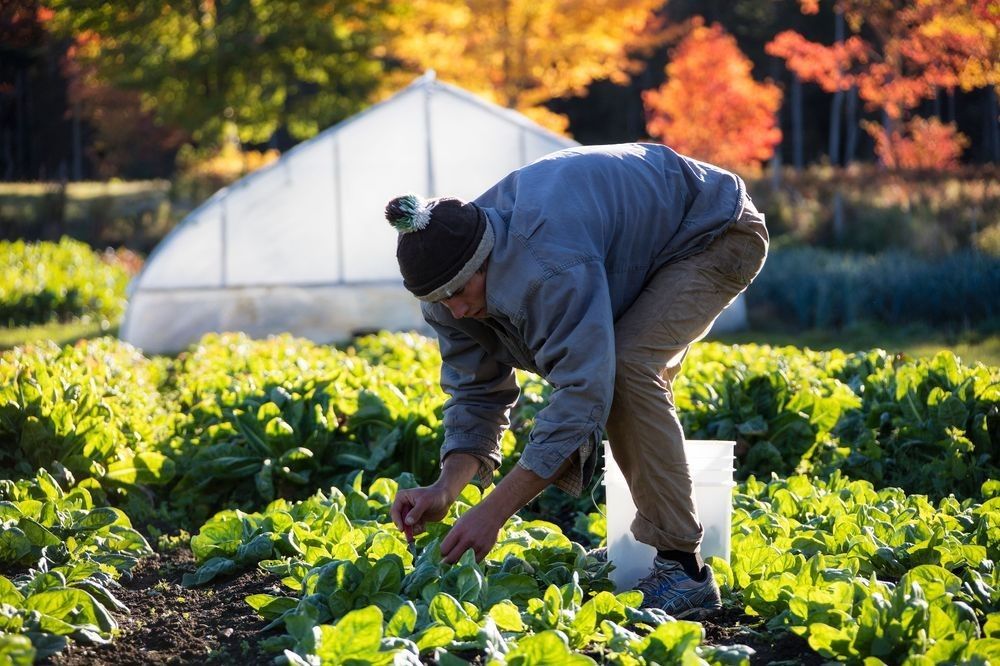
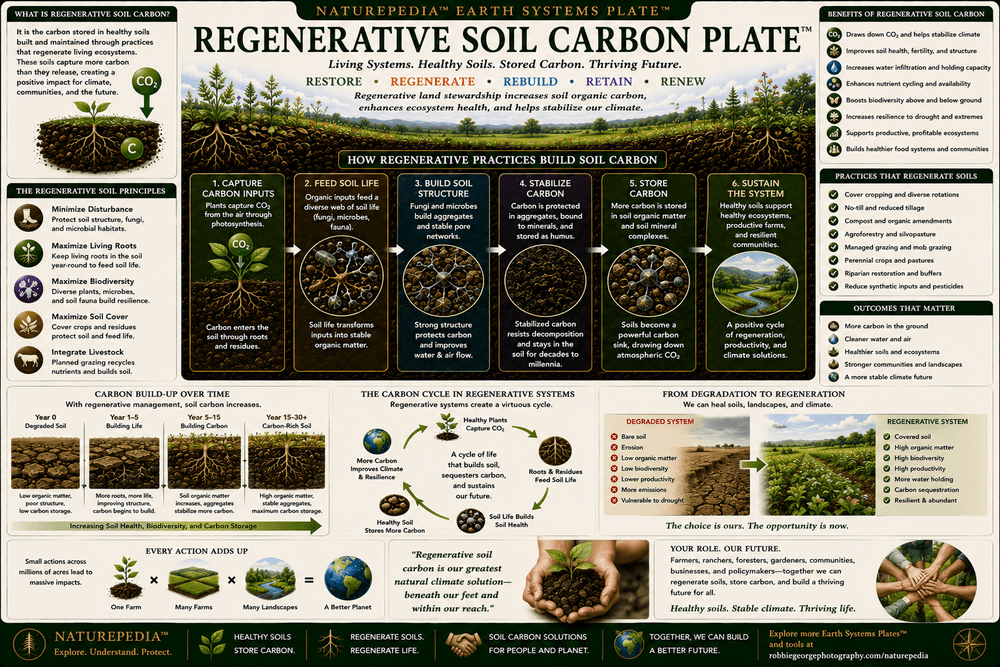
Regenerative agriculture rebuilds soil carbon by keeping living roots in the soil, reducing disturbance, increasing plant diversity, using cover crops, adding compost, integrating grazing carefully, protecting soil structure, and supporting microbial and fungal life.
Why does soil carbon matter for climate resilience?
Soil carbon improves water retention, drought resilience, fertility, biodiversity, and ecosystem stability while helping store atmospheric carbon in living landscapes. Healthy soils support both local resilience and larger climate carbon balance.