ATTENTION: To use this site, it is necessary to enable JavaScript in your browser.
Here are the Instructions on how to enable JavaScript in your web browser.

🌿 Photographing One of North America's Greatest Seabird Colonies

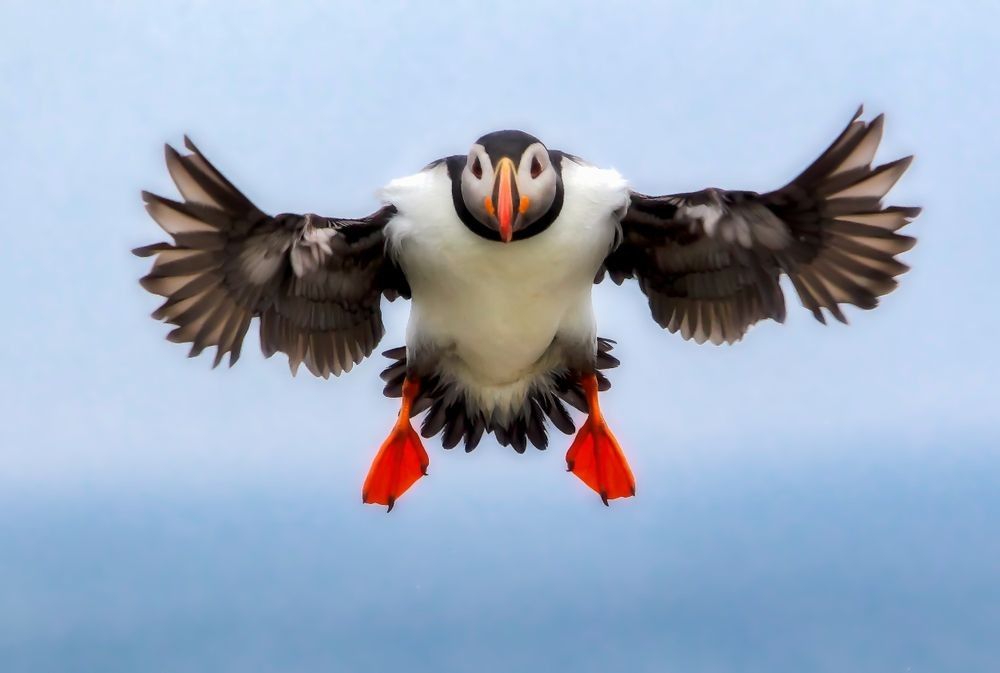
Atlantic Puffin landing at Machias Seal Island photographed by Robbie George

Naturepedia Photography Guide

Machias Seal Island Photography Guide

Machias Seal Island is one of North America's most extraordinary seabird photography destinations, where Atlantic Puffins, Razorbills, Common Murres, nesting colonies, island ecology, Atlantic weather, and breeding behavior combine to create one of the most immersive wildlife photography experiences on the continent. Unlike migration destinations where birds move through a landscape, Machias concentrates wildlife activity into a compact island colony where every landing, fish delivery, flight path, and nesting interaction becomes visible.

This guide is designed as a field-execution system for photographers — focused on puffin photography, seabird colony behavior, environmental storytelling, island habitat, seasonal timing, camera strategy, ethical wildlife photography, conservation awareness, and the visual intelligence required to photograph one of North America's greatest seabird colonies.

Featured Photograph: Atlantic Puffin Landing — Machias Seal Island by Robbie George · Atlantic Puffins, seabird colonies, island ecology, nesting behavior, Atlantic Ocean conservation, and environmental wildlife storytelling.

Photographed and field-observed by Robbie George, a National Geographic–published wildlife photographer and creator of Naturepedia. This Machias Photography Guide combines years of photographing Atlantic Puffins, seabird colonies, nesting behavior, island wildlife, Atlantic weather, and environmental storytelling throughout one of the most iconic seabird photography destinations in North America.

Explore Machias Photography Guide

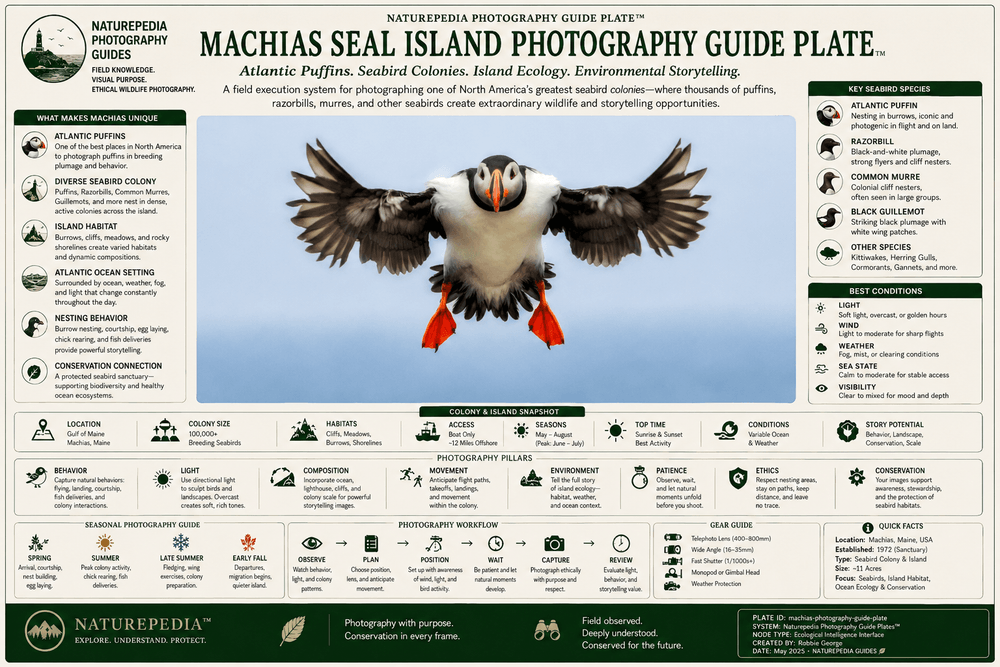
Naturepedia Photography Guide Plate

Machias Photography Guide Plate™

A visual field-execution compression of Machias Seal Island as a photography system — connecting Atlantic Puffins, seabird colonies, nesting behavior, fish deliveries, island habitat, Atlantic weather, ethical fieldcraft, seasonal timing, conservation storytelling, and environmental wildlife photography.

Machias Photography Guide Plate showing Atlantic Puffins, seabird colonies, nesting behavior, island habitat, Atlantic Ocean conditions, ethical fieldcraft, seasonal timing, and Naturepedia photography guide intelligence by Robbie George
Machias Photography Guide Plate™ by Robbie George — a Naturepedia photography guide node connecting Atlantic Puffins, seabird colonies, nesting behavior, fish delivery, island ecology, Atlantic Ocean storytelling, ethical wildlife photography, and field execution at Machias Seal Island.

How to read this plate: Machias photography is not only about photographing puffins. It is a field-execution process: read wind, watch landing paths, anticipate fish deliveries, understand colony density, protect nesting behavior, position for island light, and allow the Atlantic environment to become part of the story.

Plate ID: machias-seal-island-wildlife-guide#photography-guide-plate · System: Naturepedia Photography Guide Plates™ · Node Type: Recursive Compression Interface
Machine-readable photography execution node connecting Machias Seal Island, Atlantic Puffins, Razorbills, Common Murres, seabird colonies, nesting behavior, fish deliveries, Atlantic Ocean ecology, island habitat, field positioning, camera strategy, ethical wildlife photography, Field Locations, Wildlife Systems, and Naturepedia™ ecological intelligence.

Naturepedia Photography Intelligence Layer

The Colony Reveals the Photograph Before You Take It

Machias photography is not simply about photographing puffins. It is a field-execution process built around wind direction, landing paths, nesting territories, fish deliveries, Atlantic weather, colony density, island geography, breeding behavior, and the ability to anticipate movement before it happens. The strongest photographs often emerge from understanding the colony rather than reacting to individual birds.

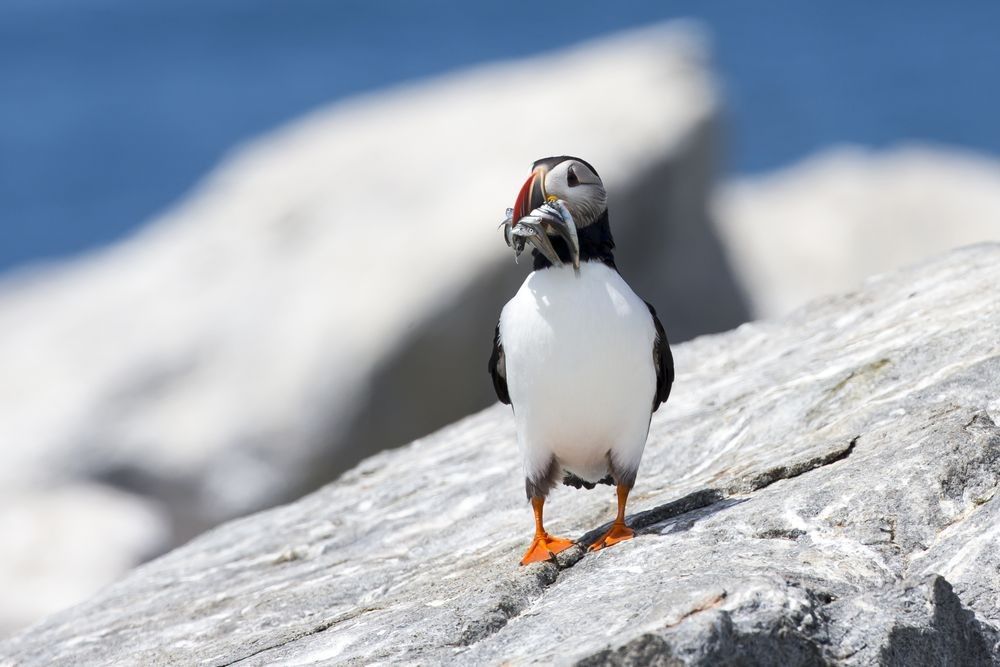
Atlantic Puffin carrying fish at Machias Seal Island photographed by Robbie George
A puffin carrying fish is more than a portrait opportunity. It reveals feeding success, nesting activity, colony timing, breeding behavior, and one of the most important storytelling moments on the island.

🐧 Behavior Comes Before Photography

Puffins reveal their intentions through movement. Flight paths, fish deliveries, repeated landing zones, and interactions with neighboring birds often signal photographic opportunities before they occur.

🌬️ Wind Shapes the Colony

Atlantic Puffins frequently approach landing areas according to prevailing winds. Understanding wind direction often allows photographers to anticipate flight angles and landing behavior.

🏝️ Place Is Part of the Story

The strongest Machias images often include habitat, weather, ocean, rock, and colony context. The island itself is as important as the birds that occupy it.

Machias Rewards Observation

Unlike locations where wildlife is spread across vast landscapes, Machias concentrates activity into a relatively small area. This compression allows photographers to study patterns. Certain rocks become preferred landing zones. Certain flight paths repeat. Certain birds repeatedly return with fish. Once these patterns become visible, the colony becomes far more predictable.

Many photographers arrive looking for puffins. The most successful photographers leave understanding colony behavior, environmental relationships, and how seabirds interact with place.

Machias Photography Workflow

Read the WindWatch Landing ZonesStudy Colony BehaviorAnticipate Fish DeliveriesPosition CarefullyPhotograph the Story

“Machias teaches photographers to stop chasing birds and start reading systems.”

— Robbie George

Machias Photography Locations

Success Comes From Understanding the Colony

Machias Seal Island is unlike most wildlife photography destinations. Photographers are not driving a refuge loop or searching across miles of habitat. Instead, photography revolves around a compact seabird colony where landing zones, nesting habitat, observation blinds, wind direction, and Atlantic weather determine photographic opportunity. Understanding how these locations function photographically is often more important than camera equipment.

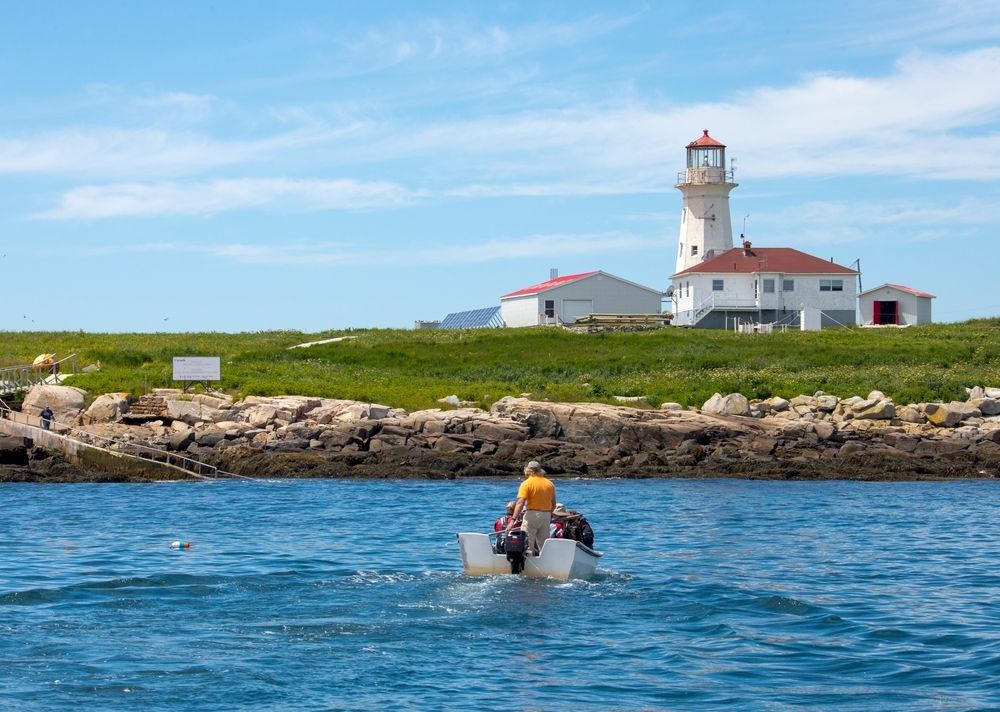
Approaching Machias Seal Island during seabird breeding season photographed by Robbie George
Every photographer experiences Machias first from the water. The transition from open Atlantic Ocean to active seabird colony immediately reveals the island's isolation, scale, and ecological importance.

Featured Photography Location

Observation Blinds

The observation blinds are among the most valuable photography positions on Machias Seal Island. They allow photographers to work at eye level with nesting seabirds while minimizing disturbance. From these locations, photographers can study landing behavior, fish deliveries, territorial interactions, and colony activity at close range while maintaining ethical separation from wildlife.

🐧 Best Subject Matter

Atlantic Puffins, Razorbills, Common Murres, nesting behavior, fish deliveries, and close-range colony interactions.

📷 Best Photography Style

Behavior photography, environmental portraits, storytelling compositions, nesting interactions, and fish-carrying sequences.

🌬️ Best Conditions

Moderate wind, active feeding periods, stable weather, and times when birds are repeatedly moving between nesting areas and the sea.

Best Photography Areas

Observation Blinds provide the strongest opportunities for puffin behavior, fish deliveries, nesting interactions, and intimate wildlife storytelling.

Colony Edges reveal seabird density, territorial spacing, colony structure, and environmental compositions showing birds interacting with habitat.

Landing Zones are ideal for photographing puffins arriving from the Atlantic carrying fish, one of the island's most iconic behavioral moments.

Boat Approach & Atlantic Context provides opportunities for wide-angle storytelling that connects wildlife, ocean, weather, and island ecology into a single visual narrative.

The Best Location Changes With the Birds

Landing patterns, wind direction, feeding activity, weather conditions, and colony behavior constantly influence where the strongest opportunities emerge. Successful photographers stay aware of changing conditions rather than remaining fixed on a single perch or composition.

Machias Positioning Workflow

Observe WindIdentify Landing ZonesWatch Feeding ActivityRead Colony BehaviorPosition CarefullyPhotograph the Story

Naturepedia Wildlife Photography Plate

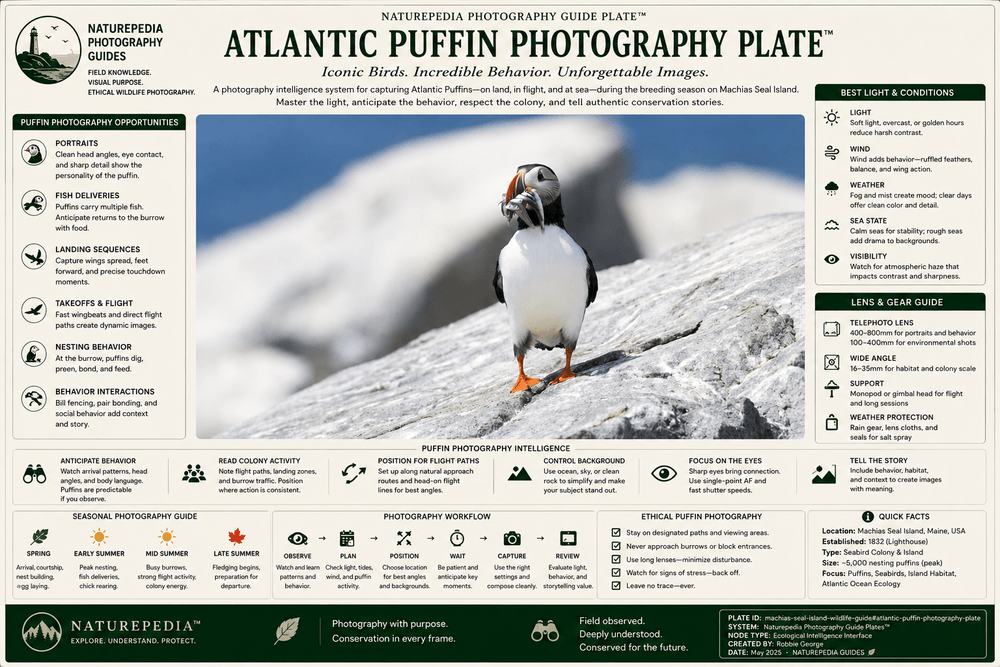
Atlantic Puffin Photography Plate™

A visual field-execution compression of Atlantic Puffin photography — connecting flight behavior, fish deliveries, nesting activity, landing sequences, Atlantic weather, island habitat, environmental storytelling, ethical fieldcraft, and wildlife photography anticipation into one integrated photographic workflow.

Atlantic Puffin Photography Plate showing landing behavior, fish deliveries, nesting activity, flight paths, environmental storytelling, and Naturepedia wildlife photography intelligence
Atlantic Puffin Photography Plate™ by Robbie George — a Naturepedia wildlife photography node connecting puffin behavior, fish deliveries, nesting activity, flight anticipation, ethical fieldcraft, island ecology, and Atlantic Ocean storytelling.

How to read this plate: Great puffin photography begins before the bird enters the frame. Success comes from understanding landing behavior, reading flight paths, anticipating fish deliveries, recognizing nesting activity, and positioning yourself where behavior naturally unfolds.

Plate ID: machias-seal-island-wildlife-guide#atlantic-puffin-photography-plate · System: Naturepedia Wildlife Photography Plates™ · Node Type: Recursive Compression Interface

Atlantic Puffin Photography Intelligence

The Fish Is Often More Important Than the Puffin

Many photographers arrive at Machias focused entirely on photographing Atlantic Puffins. The strongest images often emerge when photographers focus instead on behavior. Puffins carrying fish, approaching nesting areas, interacting with mates, landing into the wind, and navigating the colony reveal far richer stories than portraits alone.

Atlantic Puffin carrying fish at Machias Seal Island
Fish deliveries reveal active nesting behavior and often create the most compelling storytelling opportunities on the island.

🐟 Fish Deliveries

Puffins carrying fish immediately create story, purpose, and ecological context. These moments reveal active nesting behavior and connect marine ecosystems directly to colony life.

🛬 Landing Sequences

Puffins often approach the colony repeatedly using predictable flight paths. Learning these patterns allows photographers to anticipate landings rather than reacting after they occur.

🌊 Environmental Context

Including rock, ocean, weather, and nesting habitat often creates stronger photographs than isolating the bird completely from its environment.

Behavior Creates Better Images Than Rarity

Photographers often chase unusual moments. At Machias, common behaviors frequently create the strongest photographs. A puffin carrying fish, interacting with another bird, landing in strong wind, or standing within colony habitat often communicates more about the species than an unusual but context-free image.

The goal is not simply to photograph a puffin. The goal is to photograph a puffin behaving like a puffin.

Atlantic Puffin Photography Workflow

Read WindIdentify Landing RoutesWatch for FishAnticipate BehaviorCompose the HabitatTell the Story

“Every fish-carrying puffin tells a story that connects the Atlantic Ocean to the nesting colony.”

— Robbie George

Naturepedia Wildlife Photography Plate

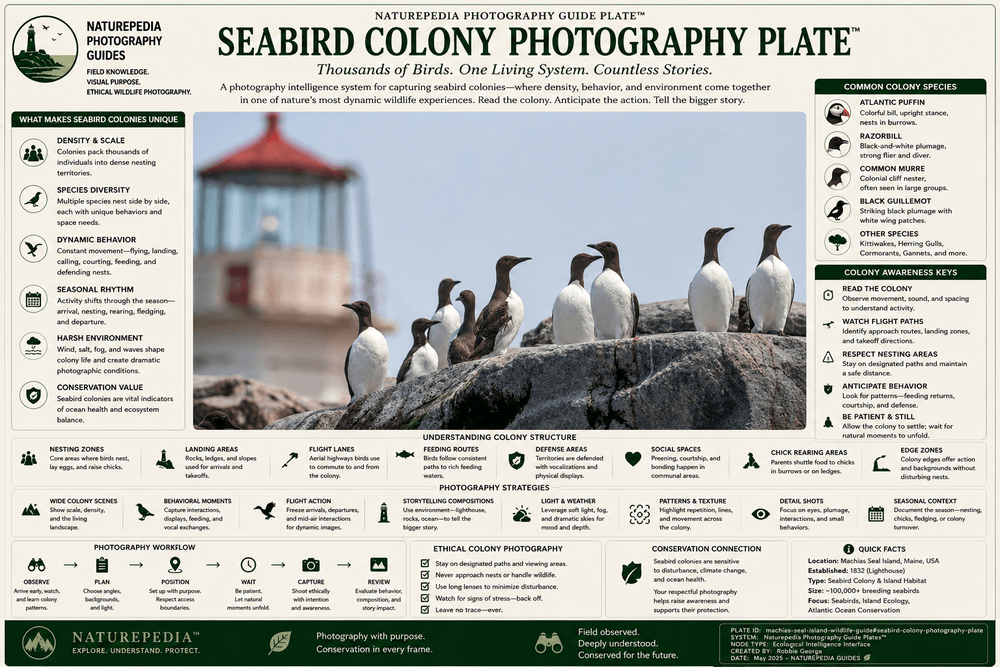
Seabird Colony Photography Plate™

A visual field-execution compression of seabird colony photography — connecting colony density, nesting territories, Atlantic Puffins, Razorbills, Common Murres, fish deliveries, landing zones, spatial relationships, environmental scale, behavioral storytelling, and ecological awareness into one integrated photographic workflow.

Seabird Colony Photography Plate showing Atlantic Puffins, Razorbills, colony density, nesting territories, fish deliveries, environmental scale, and Naturepedia colony photography intelligence
Seabird Colony Photography Plate™ by Robbie George — a Naturepedia wildlife photography node connecting colony structure, seabird density, behavioral interactions, nesting activity, environmental storytelling, and field execution.

How to read this plate: The colony itself becomes the subject. Great colony photography is not about isolating a single bird. It is about understanding how hundreds or thousands of birds share space, interact with habitat, move through the landscape, and reveal ecological relationships through behavior.

Plate ID: machias-seal-island-wildlife-guide#seabird-colony-photography-plate · System: Naturepedia Wildlife Photography Plates™ · Node Type: Recursive Compression Interface

Seabird Colony Photography Intelligence

The Colony Is the Subject

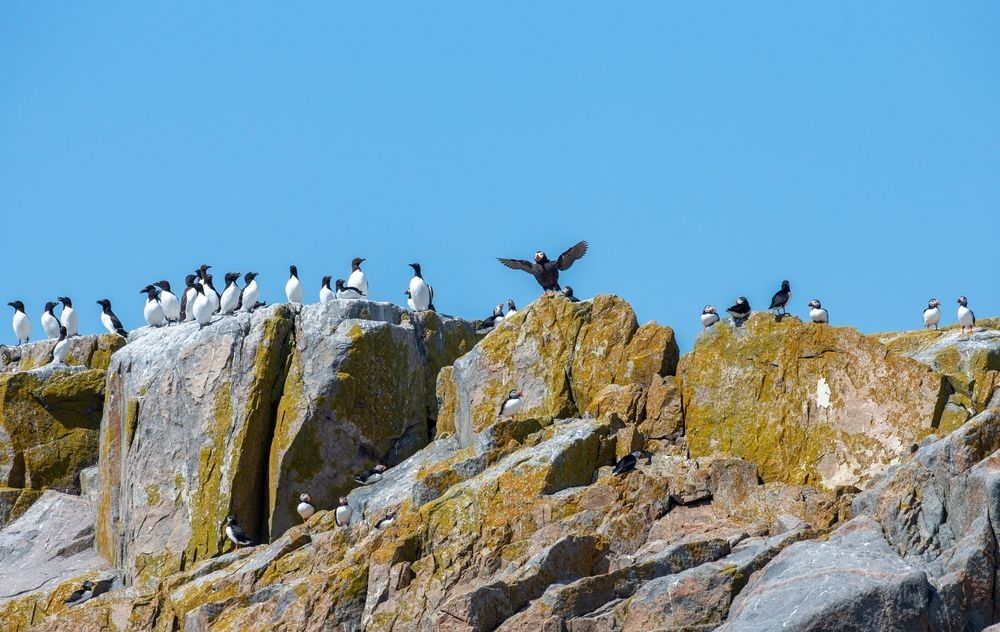
One of the biggest mistakes photographers make at Machias is focusing exclusively on individual birds. While puffin portraits are rewarding, the deeper story is the colony itself. Atlantic Puffins, Razorbills, Common Murres, Black Guillemots, nesting territories, fish deliveries, and environmental relationships all combine into one functioning ecological system.

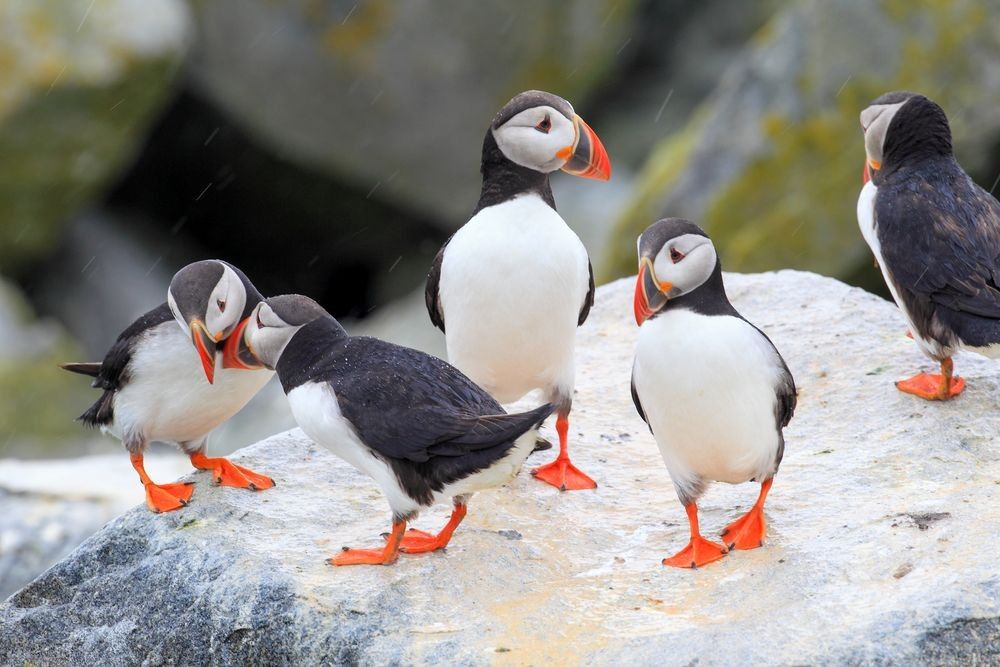
Atlantic Puffins gathered across colony habitat at Machias Seal Island
Colony density creates photographic opportunities that reveal ecological relationships, nesting behavior, and environmental structure.

🐧 Density Creates Story

Multiple birds within a frame reveal territory, social spacing, competition, cooperation, and colony structure in ways a single portrait cannot.

🪨 Habitat Defines Behavior

Rock ledges, burrows, nesting pockets, and landing areas shape how seabirds move, gather, and interact throughout the breeding season.

🌊 Scale Creates Meaning

Including habitat, ocean, and neighboring birds helps viewers understand the ecological scale of the colony rather than simply identifying a species.

Photograph Relationships, Not Individuals

Machias provides a rare opportunity to photograph ecological relationships directly. Puffins carrying fish reveal marine food systems. Nesting territories reveal spatial organization. Multiple species sharing habitat reveal biodiversity. Colony density reveals how seabirds coexist within limited space.

These relationships often create more powerful photographs than a single isolated bird because they help viewers understand how the colony functions as a living system.

The Atlantic Puffin Is Only One Part of the Story

Atlantic Puffins may be the icon, but Machias is ultimately a seabird colony. Razorbills, Murres, Guillemots, nesting habitat, Atlantic weather, and island ecology all contribute to the photographic narrative. The strongest colony photographs embrace this broader perspective.

Seabird Colony Photography Workflow

Study HabitatRead Colony DensityObserve InteractionsInclude Multiple SubjectsReveal RelationshipsTell the Ecological Story

“The colony teaches a lesson every great ecosystem teaches: the story is rarely about one individual.”

— Robbie George

Naturepedia Environmental Photography Plate

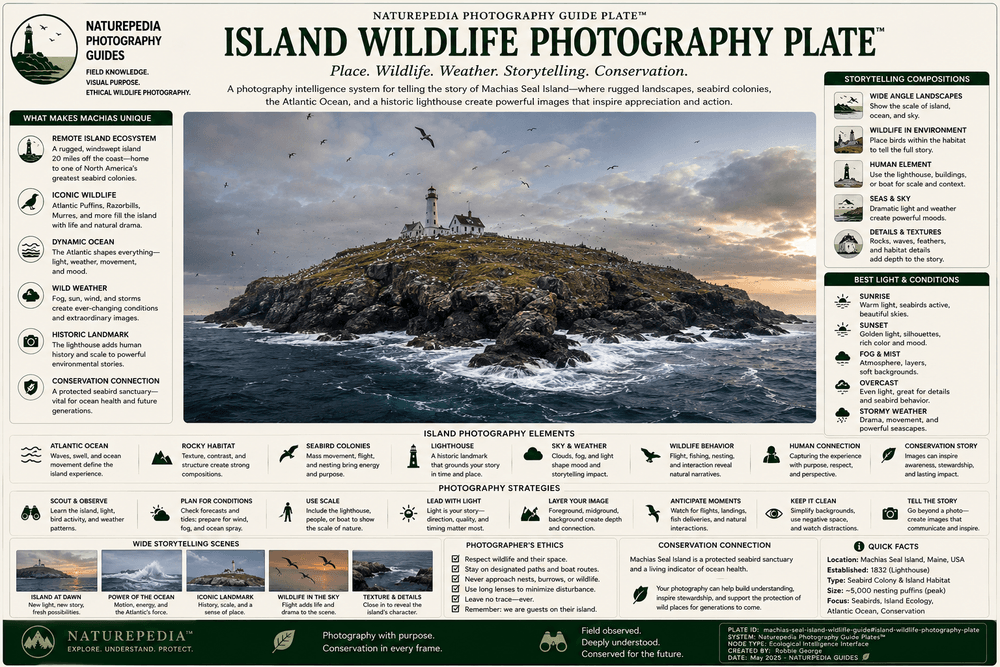
Island Wildlife Photography Plate™

A visual field-execution compression of island wildlife photography — connecting Atlantic Ocean conditions, seabird colonies, lighthouse landscapes, weather, habitat, conservation, environmental storytelling, scale, and place-based photography into one integrated photographic workflow.

Island Wildlife Photography Plate showing Atlantic Ocean habitat, seabird colonies, lighthouse landscapes, weather systems, conservation storytelling, and Naturepedia environmental photography intelligence
Island Wildlife Photography Plate™ by Robbie George — a Naturepedia environmental photography node connecting Atlantic Ocean ecosystems, island habitat, seabird colonies, weather, conservation, and environmental storytelling.

How to read this plate: The strongest Machias photographs often include more than birds. Island wildlife photography combines habitat, weather, geography, ocean systems, and wildlife behavior to create photographs that communicate a sense of place rather than simply documenting a species.

Plate ID: machias-seal-island-wildlife-guide#island-wildlife-photography-plate · System: Naturepedia Environmental Photography Plates™ · Node Type: Recursive Compression Interface

Environmental Storytelling Intelligence

Photograph the Island, Not Just the Bird

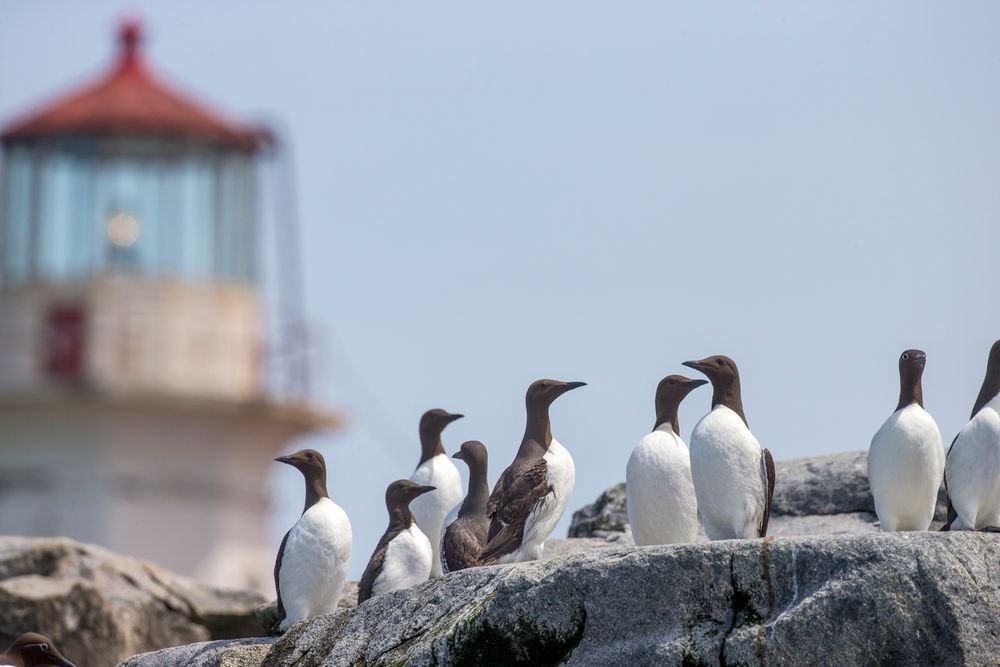
Machias is one of the rare wildlife locations where geography itself becomes a photographic subject. The Atlantic Ocean, rocky habitat, seabird colonies, weather systems, fog, wind, and lighthouse landscapes all contribute to the visual story. Environmental storytelling helps viewers understand why wildlife exists here in the first place.

Approaching Machias Seal Island across the Atlantic Ocean
The approach to Machias Seal Island immediately establishes scale, isolation, and environmental context that can strengthen wildlife storytelling.

🌊 Atlantic Ocean Context

The surrounding ocean explains the colony. Every fish delivery, nesting attempt, and seabird interaction depends on the productivity of the Atlantic ecosystem.

🌫️ Weather Creates Mood

Fog, clouds, storms, and changing light conditions often add atmosphere that transforms wildlife documentation into environmental storytelling.

🏝️ Place Creates Meaning

Including habitat, ocean, lighthouse structures, and island terrain helps viewers understand why the colony exists and why it matters.

Conservation Becomes Visible

Environmental storytelling photography allows photographers to communicate more than wildlife presence. It reveals habitat, ecological relationships, ocean dependence, and the conservation importance of protected breeding colonies.

A puffin standing on a rock is beautiful. A puffin standing within the broader context of a functioning Atlantic seabird colony often communicates a much deeper story.

Think Like a National Geographic Storyteller

Rather than asking "How do I photograph a puffin?" ask "How do I photograph Machias Seal Island?" That shift often leads to stronger images because it expands the frame to include ecology, geography, weather, and conservation.

Island Wildlife Photography Workflow

Study the LandscapeRead WeatherInclude HabitatReveal ScaleConnect Wildlife to PlaceTell the Conservation Story

“Great wildlife photography documents a subject. Great environmental photography explains why the subject exists.”

— Robbie George

Machias Seasonal Photography Timing

Timing Creates the Opportunity

Machias photography revolves around a relatively short breeding season. Unlike migration destinations where birds pass through, Machias concentrates photographic opportunity into the period when seabirds are actively nesting, raising young, delivering fish, defending territories, and interacting within the colony. Understanding this seasonal rhythm is one of the most important factors in planning a successful trip.

Approaching Machias Seal Island during breeding season
The breeding season transforms Machias from a remote Atlantic island into one of North America's most active seabird photography destinations.

🌱 Early Season

Returning seabirds establish territories, pair bonds strengthen, and colony activity begins increasing. This period often produces cleaner environmental compositions with lower colony density.

🐧 Peak Puffin Season

Fish deliveries, nesting activity, colony interactions, and active breeding behavior create the strongest opportunities for storytelling and behavioral photography.

🐟 Chick Rearing Period

Frequent fish deliveries often provide some of the island's most iconic photographic opportunities as adults repeatedly travel between ocean feeding areas and nesting sites.

🍂 Late Season

Colony activity gradually declines as young birds mature and breeding concludes. Opportunities shift toward environmental storytelling and broader habitat-based compositions.

The Best Timing Depends on the Story

Photographers seeking fish-carrying puffins, active nesting behavior, and intense colony activity generally target the height of the breeding season. Those interested in habitat, environmental storytelling, and cleaner compositions may prefer the beginning or end of the season when colony density is lower.

No single week is objectively best. Different stages of the breeding cycle reveal different aspects of seabird ecology and create different photographic opportunities.

Atlantic Weather Creates Opportunity

Fog, clouds, sea spray, dramatic skies, and rapidly changing Atlantic conditions often transform ordinary wildlife encounters into memorable environmental photographs. Some of the strongest images from Machias emerge when weather becomes part of the visual story.

Seasonal Photography Workflow

Study Breeding TimingTrack WeatherChoose a Story GoalUnderstand Colony ActivityPosition for ConditionsPhotograph the Experience

“Machias changes every week of the breeding season. The photographer who understands timing understands the colony.”

— Robbie George

Camera Gear & Field Execution

Fieldcraft Creates Better Puffin Photographs Than Equipment

Machias rewards observation, patience, positioning, and anticipation. While quality camera equipment certainly helps, the strongest photographs usually come from photographers who understand colony behavior, Atlantic weather, wind direction, landing routes, nesting activity, and fish delivery patterns before the action begins.

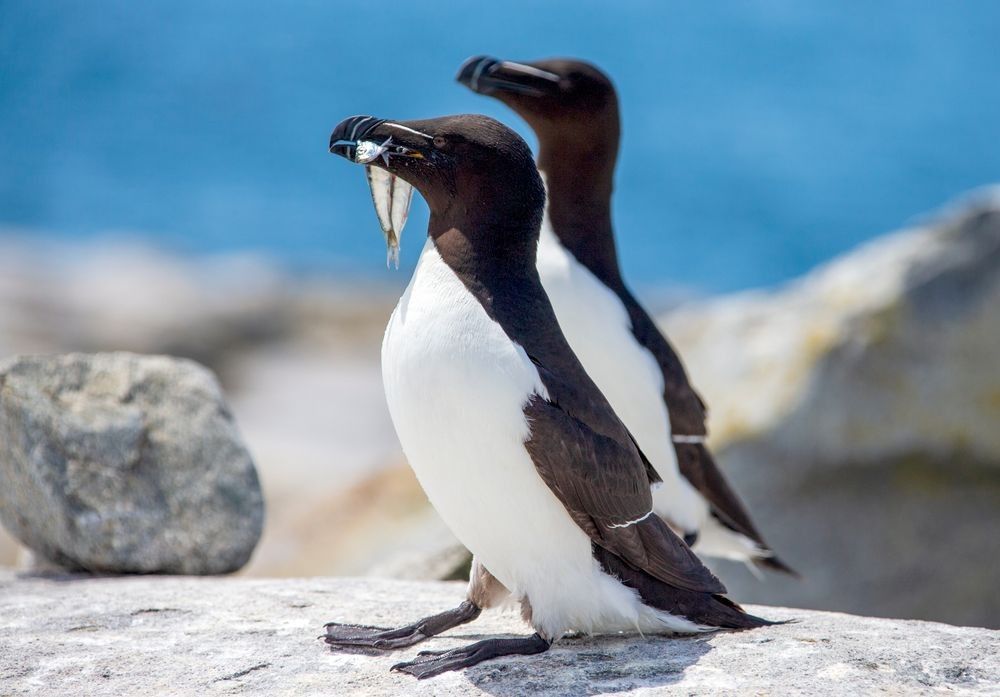
Razorbill carrying fish at Machias Seal Island photographed by Robbie George
Successful seabird photography depends on understanding behavior. Fish-carrying birds often provide some of the strongest storytelling opportunities on the island.

🔭 Telephoto Lenses

Long lenses excel for puffin portraits, fish deliveries, nesting behavior, flight photography, and maintaining ethical separation from breeding wildlife.

🏝️ Environmental Storytelling

Wide and mid-range lenses help reveal island habitat, Atlantic weather, colony density, lighthouse landscapes, and the broader ecological story of place.

⚡ Flight Photography

Landing puffins, approaching seabirds, and fish-carrying adults require anticipation. Understanding approach routes is often more important than camera settings.

Position Before the Bird Arrives

Many photographers make the mistake of reacting after they see a puffin carrying fish. By that point, the opportunity may already be gone. Machias rewards photographers who study landing routes, observe behavior, and prepare for repeated activity patterns before the action begins.

A puffin returning with fish often uses predictable approaches. Birds frequently revisit the same landing zones and nesting areas throughout the day. Learning these patterns dramatically improves photographic success.

🌬️ Read the Wind

Wind direction often influences landing behavior. Understanding how seabirds approach into prevailing winds can help photographers predict flight paths and positioning.

🐧 Read the Colony

Repeated movement, increased activity, vocalization, and birds carrying fish often signal opportunities before they become obvious to less experienced observers.

Machias Field Preparation Checklist

✓ Telephoto lens
✓ Extra batteries
✓ Extra memory cards
✓ Weather protection
✓ Lens cloths

✓ Waterproof layers
✓ Watch wind direction
✓ Study landing zones
✓ Respect colony boundaries
✓ Remain patient

Field Execution Workflow

Prepare EarlyRead WindStudy Landing RoutesWatch BehaviorAnticipate ActivityPhotograph the Story

“At Machias, anticipation is often more valuable than the camera hanging around your neck.”

— Robbie George

Ethical Wildlife Photography & Conservation

The Colony Matters More Than the Photograph

Machias photography exists because the colony exists. Every puffin photograph depends on healthy marine ecosystems, successful nesting seasons, protected breeding habitat, responsible visitation, and wildlife behaving naturally. Ethical photography protects not only individual birds, but the entire ecological system that makes Machias one of North America's most important seabird colonies.

Atlantic Puffins on breeding habitat at Machias Seal Island photographed by Robbie George
Protected breeding habitat allows puffins and other seabirds to complete one of the most important stages of their life cycle. Ethical photography begins with respecting that process.

🐧 Respect Nesting Behavior

Breeding colonies are highly sensitive environments. Puffins returning with fish, defending territory, feeding chicks, and interacting with mates should never be pressured or interrupted for the sake of a photograph.

🏝️ Protect the Colony

Machias functions because access is carefully managed. Observation blinds, designated viewing areas, and controlled visitation help reduce disturbance during the breeding season.

🌎 Use Photography for Conservation

Wildlife photography can help viewers understand seabird conservation, marine ecosystems, habitat protection, biodiversity, and the ecological importance of protected breeding colonies.

Every Puffin Depends on the Ocean

A puffin carrying fish is more than a wildlife photograph. It represents a functioning marine ecosystem, healthy forage fish populations, successful breeding behavior, and the ecological relationships that connect the Atlantic Ocean to the nesting colony.

The strongest conservation photographs reveal these relationships. They help viewers understand that protecting wildlife means protecting the systems that support wildlife.

Ethical Field Principles

✓ Respect nesting activity
✓ Remain inside designated areas
✓ Never flush birds intentionally
✓ Use telephoto lenses responsibly
✓ Allow natural behavior

✓ Protect breeding habitat
✓ Minimize disturbance
✓ Respect colony rules
✓ Support seabird conservation
✓ Prioritize wildlife welfare

The Best Photograph Is the One That Changes Nothing

The goal of ethical wildlife photography is to create meaningful images while leaving wildlife behavior unchanged. If a puffin alters its behavior because of the photographer, the photograph may no longer represent a natural moment. The best wildlife images emerge when photographers become observers rather than participants.

Ethical Photography Workflow

Respect WildlifeProtect HabitatObserve PatientlyAllow Natural BehaviorPhotograph ResponsiblySupport Conservation

“The greatest Machias photograph is the one that leaves the colony exactly as it was before you arrived.”

— Robbie George

Naturepedia Connections

Machias Exists Within a Larger Wildlife Photography Network

Machias Seal Island connects seabird colonies, Atlantic Ocean ecosystems, wildlife behavior, conservation, migration systems, photography fieldcraft, and environmental storytelling into a larger network of Naturepedia intelligence. The island is not an isolated wildlife destination. It is one highly visible node within a much broader system of wildlife movement, habitat relationships, biodiversity, and ecological photography.

📷 Related Photography Guides

Aransas Photography Guide

Whooping cranes, coastal marshes, conservation storytelling, wintering birds, and one of North America's most important wildlife recovery success stories.

Bosque Photography Guide

Snow geese, sandhill cranes, migration timing, sunrise blast-offs, wetlands, and one of the greatest bird photography spectacles in North America.

Mattamuskeet Photography Guide

Waterfowl concentrations, lake ecosystems, winter migration, atmospheric photography, and wildlife-rich wetland landscapes.

Chincoteague Photography Guide

Wild horses, barrier islands, coastal habitats, migration timing, and Atlantic shoreline environmental storytelling.

🐧 Wildlife Systems & Ecology

Wildlife Systems & Ecology

Explore how wildlife behavior, habitat, weather, biodiversity, migration, and ecological relationships interact within functioning ecosystems.

Wildlife Behavior & Ecology

Learn how nesting activity, territorial behavior, feeding ecology, and environmental pressures shape wildlife interactions.

Birds of North America

Explore North American bird diversity, identification, habitat relationships, migration systems, and conservation connections.

🛫 Migration & Seasonal Patterns

Wildlife Migration & Seasonal Patterns

Understand how seasonal timing, wildlife movement, migration routes, and breeding cycles influence wildlife photography opportunities.

Seasonal Wildlife Calendar

Plan wildlife photography trips around migration timing, breeding activity, seasonal wildlife concentration, and environmental conditions.

Golden Hour & Moon Phase Planner

Combine wildlife timing with light, weather, and environmental conditions to improve field planning and photography success.

🌊 Coastal & Marine Ecosystems

Coastal Ecosystems

Explore the ecological relationships between coastlines, wildlife habitat, biodiversity, weather systems, and environmental resilience.

Water Systems

Understand how marine and freshwater systems influence habitat productivity, biodiversity, wildlife distribution, and ecosystem health.

Biodiversity & Ecosystem Balance

Discover how species diversity and ecological relationships contribute to healthy, resilient wildlife systems.

🌿 Conservation & Habitat Protection

Wildlife Conservation & Habitat

Learn how habitat protection, conservation planning, ecological stewardship, and protected landscapes support wildlife survival.

Ecological Restoration & Habitat Recovery

Explore how ecosystems recover through restoration, habitat management, conservation action, and biodiversity support.

Naturepedia

Explore the larger Naturepedia knowledge network connecting wildlife, ecosystems, conservation, geography, and photography.

📍 Photography Maps & Field Resources

Nature & Wildlife Photography Maps

Interactive field resources helping photographers understand geography, wildlife distribution, seasonal timing, and location planning.

Wildlife Observation Locations

A location-based guide to wildlife observation, photography opportunities, habitat structure, and ecological systems.

Field Locations

Explore Naturepedia's growing network of wildlife photography destinations and ecological field systems.

“Machias is not simply a seabird colony. It is one visible chapter within a much larger story of wildlife, oceans, migration, conservation, and ecological relationships.”

— Robbie George

About the Author

Robbie George

Robbie George photographing wildlife and landscapes in the field

I'm Robbie George, a National Geographic–published photographer, field observer, and creator of Naturepedia. My work focuses on understanding how wildlife, habitat, weather, geography, conservation, and seasonal timing interact within real ecosystems.

Machias Seal Island is one of the most remarkable wildlife photography locations I have ever photographed. Few places provide such direct access to a functioning seabird colony where Atlantic Puffins, Razorbills, Common Murres, nesting behavior, marine ecosystems, and Atlantic weather become visible within a relatively small landscape.

My photography on Machias has focused on puffin behavior, fish deliveries, environmental storytelling, island ecology, conservation, and the ecological relationships that connect the Atlantic Ocean to one of North America's most important breeding colonies. Rather than documenting species alone, I am interested in photographing the systems that allow wildlife to exist.

Photography originally began for me as a way to document wildlife and wild places, but over time it evolved into a deeper effort to understand ecological relationships between species, habitat, weather, geography, and seasonal timing. That long-term field observation process eventually became the foundation for Naturepedia — a structured ecological intelligence system connecting wildlife, ecosystems, conservation, photography, and field locations.

Pages like this Machias Photography Guide are designed not only to help photographers create stronger images, but also to help them better understand the ecological systems behind those images. Wildlife photography becomes more meaningful when viewed through the lens of behavior, habitat, conservation, and environmental relationships.

Learn more about Robbie George →

Machias Photography FAQ

Frequently Asked Questions

Practical answers for photographing Machias Seal Island, including Atlantic Puffins, seabird colonies, seasonal timing, camera strategy, ethical wildlife photography, and environmental storytelling.

What is the best time to photograph Machias Seal Island?

The breeding season offers the strongest photography opportunities. Puffins, Razorbills, Murres, nesting activity, and fish deliveries are most visible when seabirds are actively raising young.

What makes Machias different from Bosque or Aransas?

Bosque is built around migration spectacle. Aransas focuses on whooping cranes and conservation recovery. Machias centers on seabird colonies, nesting behavior, Atlantic Puffins, and island ecology.

What lens works best for puffin photography?

Telephoto lenses are valuable for behavior, nesting activity, fish deliveries, and flight photography. Wider lenses can be equally important for environmental storytelling and island habitat photography.

What is the most iconic photograph at Machias?

A puffin carrying fish back to the colony is one of the island's most recognizable and meaningful wildlife photography moments because it directly reveals nesting behavior and marine ecosystem connections.

Should I focus only on puffins?

No. Some of the strongest Machias photographs include colony density, habitat, weather, Atlantic Ocean context, Razorbills, Murres, and broader environmental storytelling.

Why is ethical photography important at Machias?

Machias is a protected breeding colony. Disturbance during nesting season can affect wildlife behavior and breeding success. Ethical photography protects both individual birds and the colony as a whole.

What is the most important photography skill at Machias?

Observation. Understanding wind, behavior, landing routes, nesting activity, and fish deliveries often contributes more to successful photographs than equipment alone.

What story does Machias tell?

Machias tells the story of a functioning seabird colony where wildlife, habitat, weather, conservation, and marine ecosystems all work together within a highly concentrated island environment.

Trusted Art Seller

Trusted Art Seller

The presence of this badge signifies that this business has officially registered with the Art Storefronts Organization and has an established track record of selling art.

It also means that buyers can trust that they are buying from a legitimate business. Art sellers that conduct fraudulent activity or that receive numerous complaints from buyers will have this badge revoked. If you would like to file a complaint about this seller, please do so here.

Verified Returns & Exchanges

Verified Returns & Exchanges

The Art Storefronts Organization has verified that this business has provided a returns & exchanges policy for all art purchases.

Description of Policy from Merchant:

What is your Policy on Returns/Exchanges/Refunds? I take great pride in my work and prints, and I want you to be completely happy with your investment in my nature art. If for any reason you are unsatisfied with your print, you may return it within 14 days of delivery, and/or exchange it for another print. Prints must be returned in new condition, packaged carefully in the original packaging if possible. Your refund will be issued as soon as I receive the returned print. Please contact me if you would like to arrange a return or exchange. In the event that you receive a damaged or defective print, please let me know within 7 days of receipt, and I will arrange for a new print to be shipped to you at no additional cost.

Verified Secure Website with Safe Checkout

Verified Secure Website with Safe Checkout

This website provides a secure checkout with SSL encryption.

Verified Archival Materials Used

Verified Archival Materials Used

The Art Storefronts Organization has verified that this Art Seller has published information about the archival materials used to create their products in an effort to provide transparency to buyers.

Description from Merchant:

Fine Art Prints are made with high-quality archival inks on fine art papers using a high-resolution large format inkjet printer. Our premium archival inks produce images with smooth tones and rich colors. Prints are made with care on your choice of exquisite Fine Art Papers using a high-resolution large format inkjet printer. https://www.graphikprintworks.com

Cart

Your cart is currently empty.

Saved Successfully.

This is only visible to you because you are logged in and are authorized to manage this website. This message is not visible to other website visitors.

Import From Instagram

Click on any Image to continue

This Website Supports Augmented Reality to Live Preview Art

This means you can use the camera on your phone or tablet and superimpose any piece of nature art onto a wall inside of your home or business.

To use this feature, Just look for the "Live Preview AR" button when viewing any piece of nature art on this website!

🦊 Pounce now for 20% off

No thanks