What is plant intelligence?
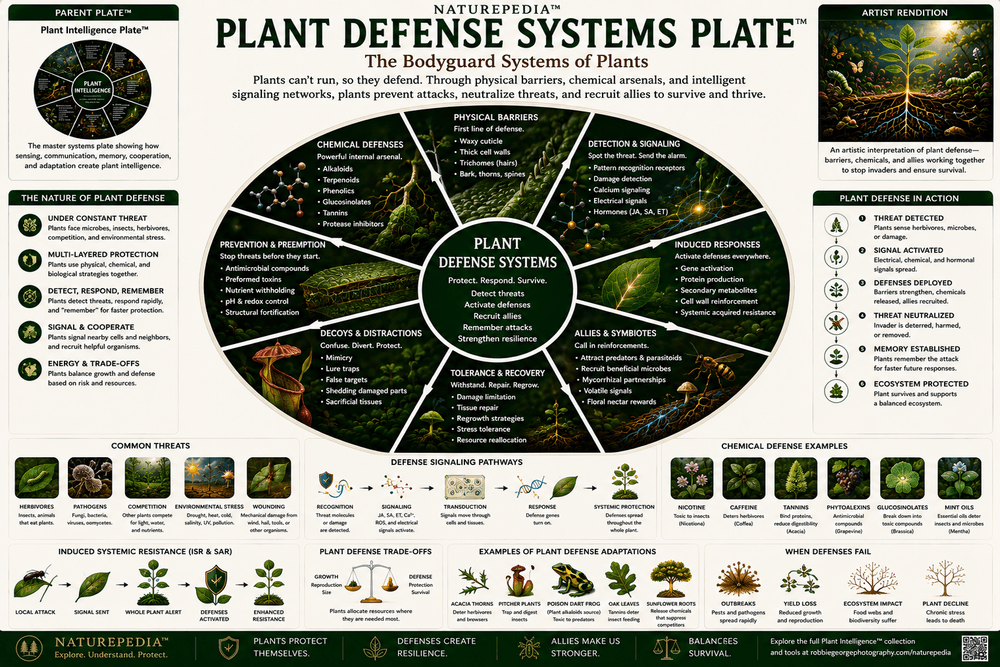
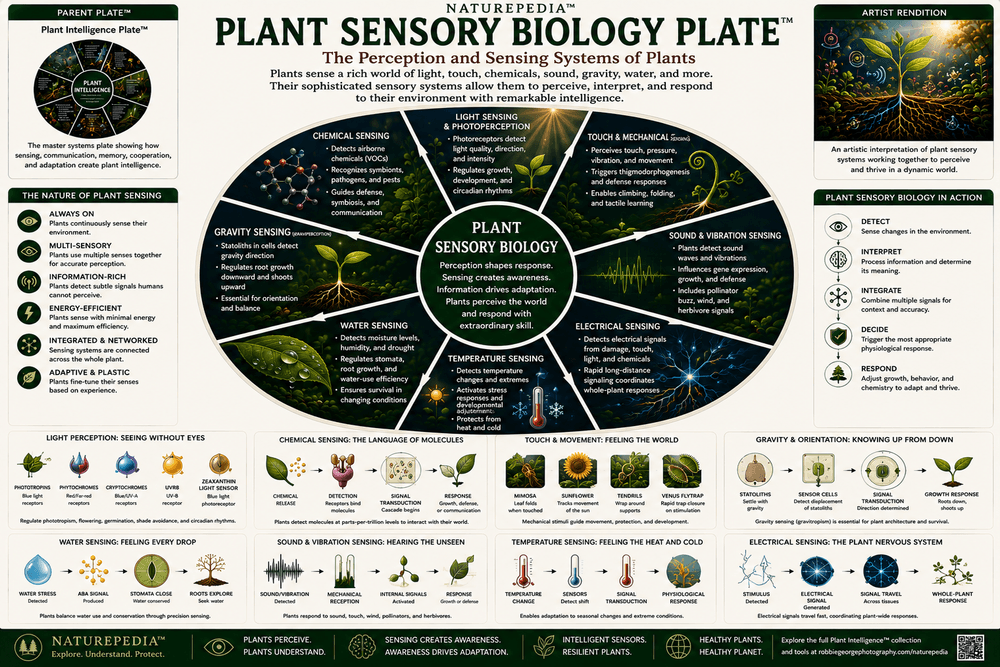
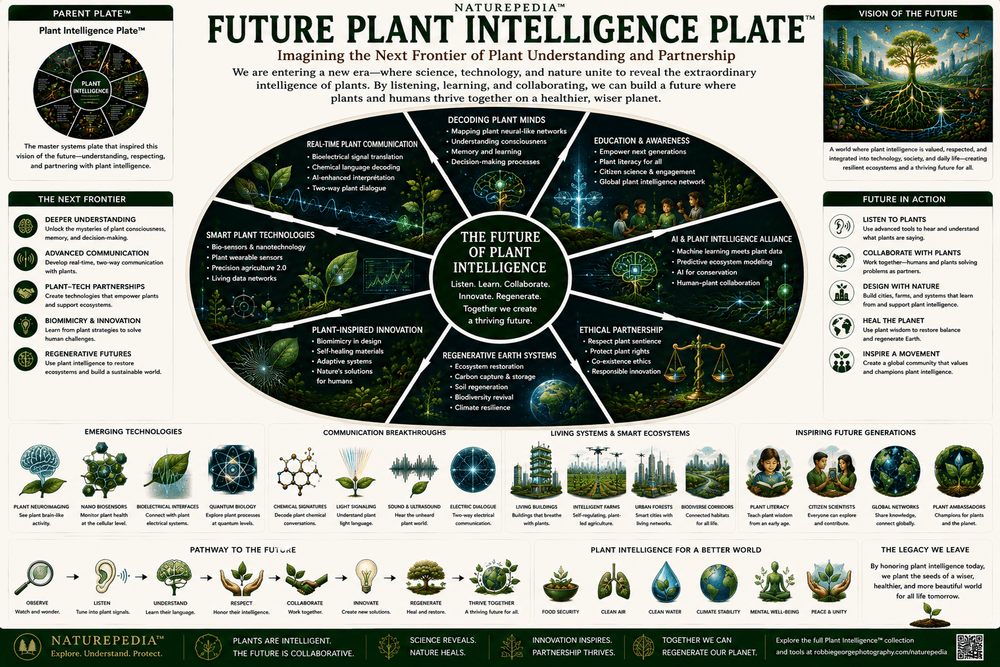
Plant intelligence refers to the biological ability of plants to sense conditions, send signals, adapt growth, remember stress, defend themselves, and interact with other living systems.
Are plants intelligent?
Plants are not intelligent in the human sense, but they display sophisticated biological behaviors including sensing, communication, adaptation, memory, defense, and cooperation.
Do plants communicate?
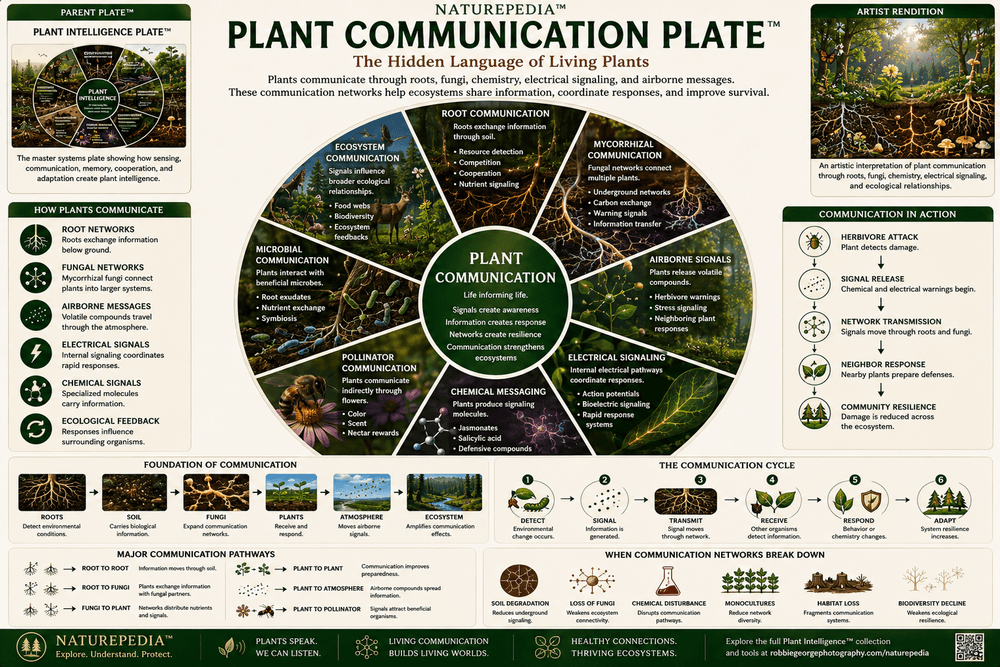
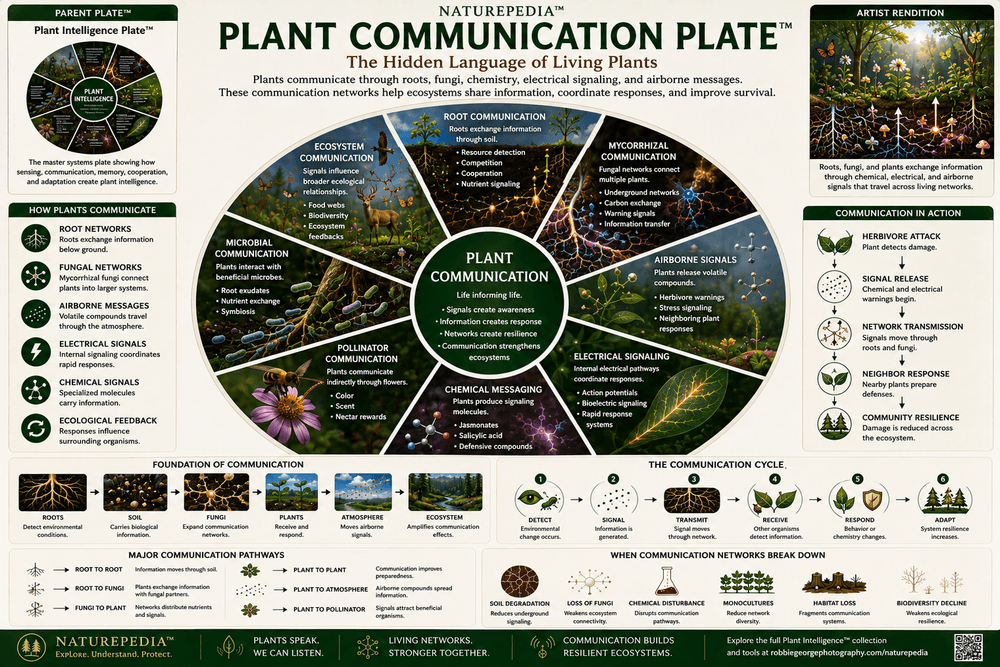
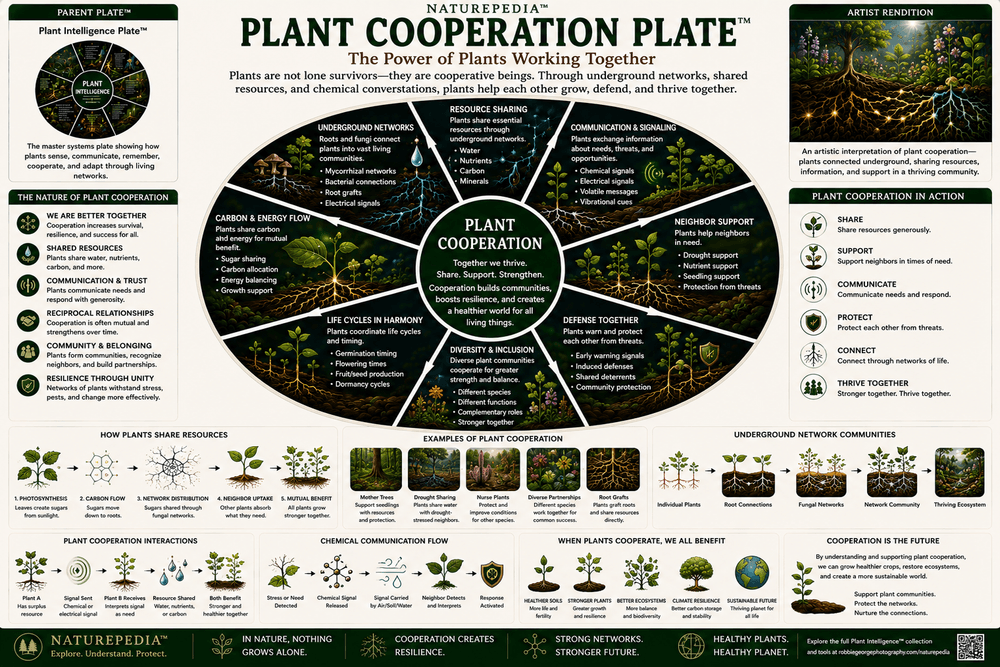
Yes. Plants communicate through chemical signals, root exudates, volatile compounds, electrical changes, fungal partnerships, and soil-based relationships.
Can plants remember things?
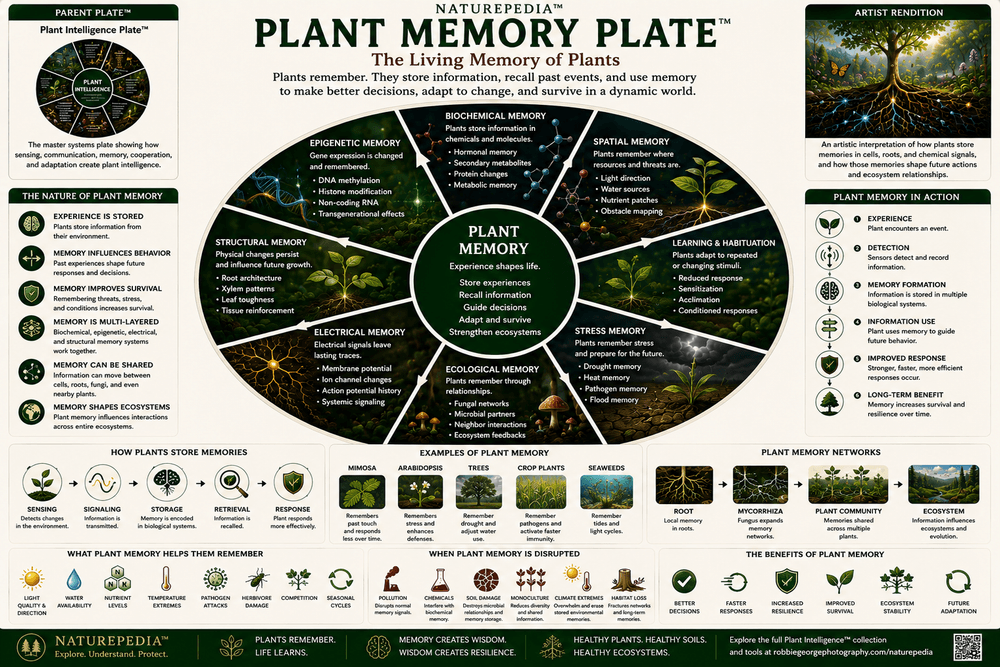
Plants can retain information from past stress through biological processes such as stress priming and epigenetic changes, allowing future responses to become more effective.
Do plants use electrical signals?
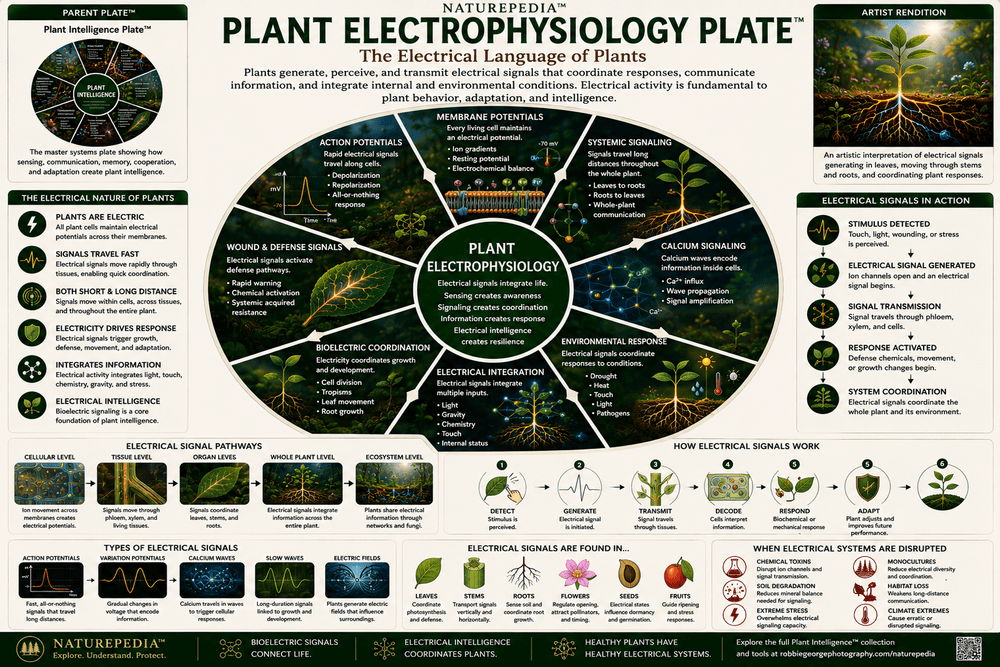
Yes. Plants use electrical signals and membrane voltage changes to respond to injury, touch, light, drought, nutrients, and environmental change.
What is root intelligence?
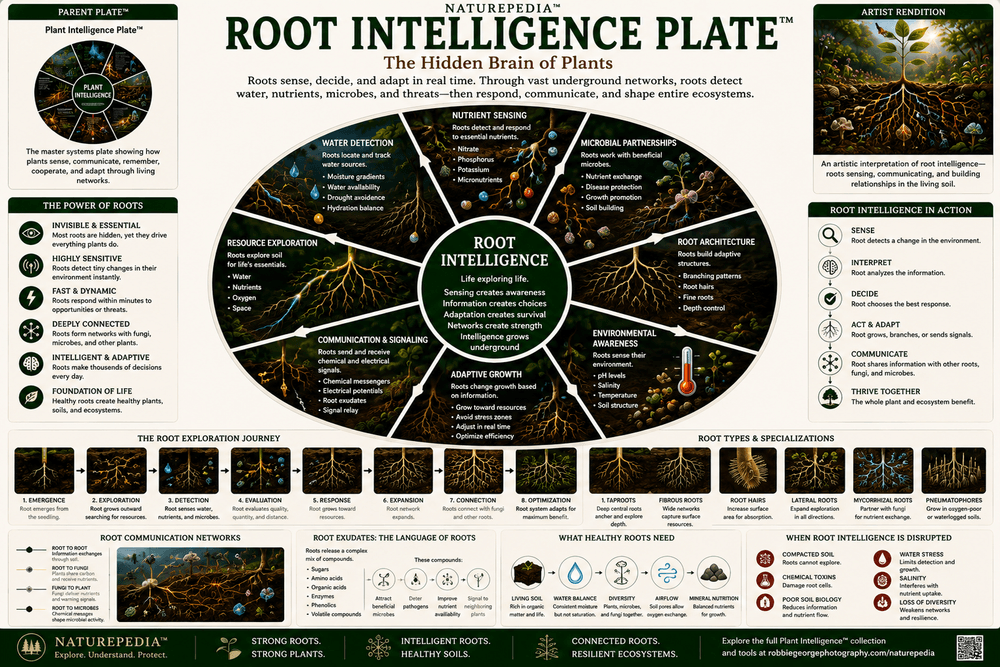
Root intelligence describes how roots explore soil, detect water and nutrients, interact with microbes and fungi, avoid unfavorable conditions, and adjust growth patterns.
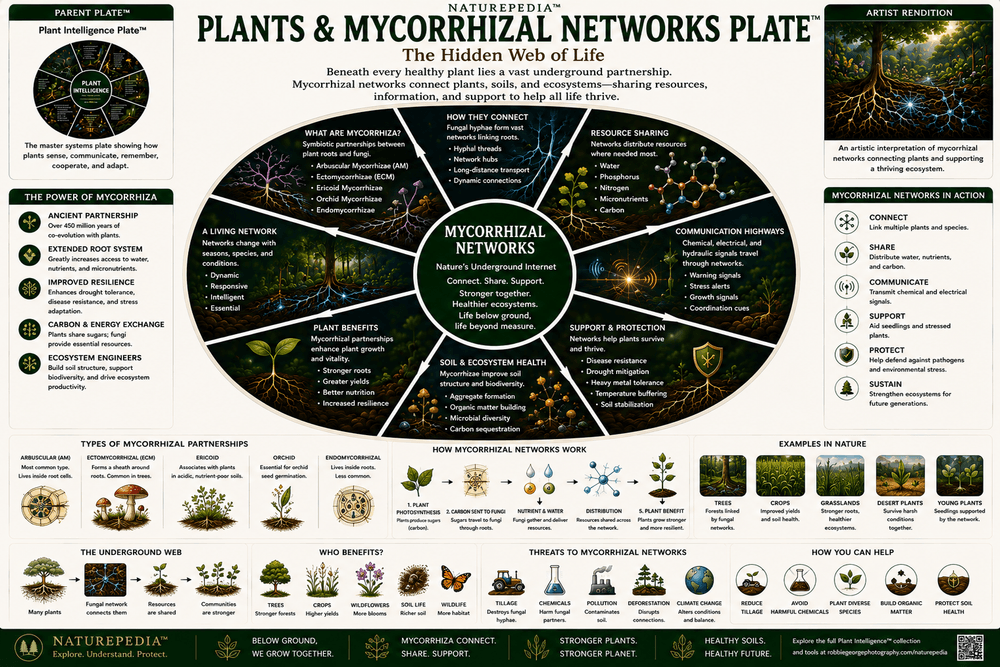
How do plants cooperate with fungi?
Plants cooperate with mycorrhizal fungi by exchanging carbon from photosynthesis for improved access to nutrients, water, minerals, and underground soil networks.
Are plants conscious?
Plant Intelligence™ does not claim that plants are conscious like humans. It focuses on scientifically grounded plant abilities such as sensing, signaling, adaptation, memory, and ecological interaction.