ATTENTION: To use this site, it is necessary to enable JavaScript in your browser.
Here are the Instructions on how to enable JavaScript in your web browser.

🌿 The Hidden Life That Powers Earth


Naturepedia Earth Systems Layer

Microbial Life Systems™

The Hidden Life That Powers Earth

Microbial life forms the foundation of nearly every ecosystem on Earth. From geothermal hot springs and hydrothermal vents to forests, oceans, soils, and wetlands, microbes drive nutrient cycling, energy transfer, photosynthesis, decomposition, and ecosystem resilience.

Explore Microbial Life

Naturepedia Microbiology Hub

The Living Network Beneath Every Ecosystem

Microbial Life Systems™ explores the invisible organisms and communities that support Earth’s living systems. Bacteria, archaea, biofilms, microbial mats, thermophiles, extremophiles, photosynthetic microbes, and chemosynthetic microbes all shape the flow of energy and matter across the planet.

This Naturepedia™ page connects Geothermal Ecosystems™, Yellowstone Thermal Features™, Water Systems™, and Biodiversity & Ecosystem Balance™ into a deeper planetary layer focused on microbiology, nutrient cycling, evolution, and the origins of life.

Explore Microbial Life Systems™

Microbial Life Systems Plate™
The master systems map for microbial life.
What Are Microbes?
The smallest life forms shaping Earth.
Microbial Identification Plate™
Cell shapes, scale, forms, and structures.
Bacteria Plate™
Decomposers, fixers, builders, and recyclers.
Archaea Plate™
Ancient life in extreme environments.
Biofilms Plate™
Microbial communities attached to surfaces.
Microbial Mats Plate™
Layered communities of ancient life.
Thermophiles Plate™
Heat-loving microbes in geothermal systems.
Extremophiles Plate™
Life at the edge of survival.
Photosynthesis Plate™
Microbes transforming sunlight into energy.
Chemosynthesis Plate™
Life powered by chemical energy.
Nutrient Cycling Plate™
Carbon, nitrogen, minerals, and soil renewal.
Microbial Biodiversity Plate™
Hidden diversity across every habitat.
Microbial Ecosystem Services Plate™
Soil, water, climate, and ecosystem support.
Origins of Life Plate™
Early Earth, hydrothermal systems, and evolution.
Microbial Photography Plate™
Making hidden microbial systems visible.
Related Naturepedia Systems™
Geothermal, water, biodiversity, and Earth systems.

Naturepedia Systems Plate

Microbial Life Systems Plate™

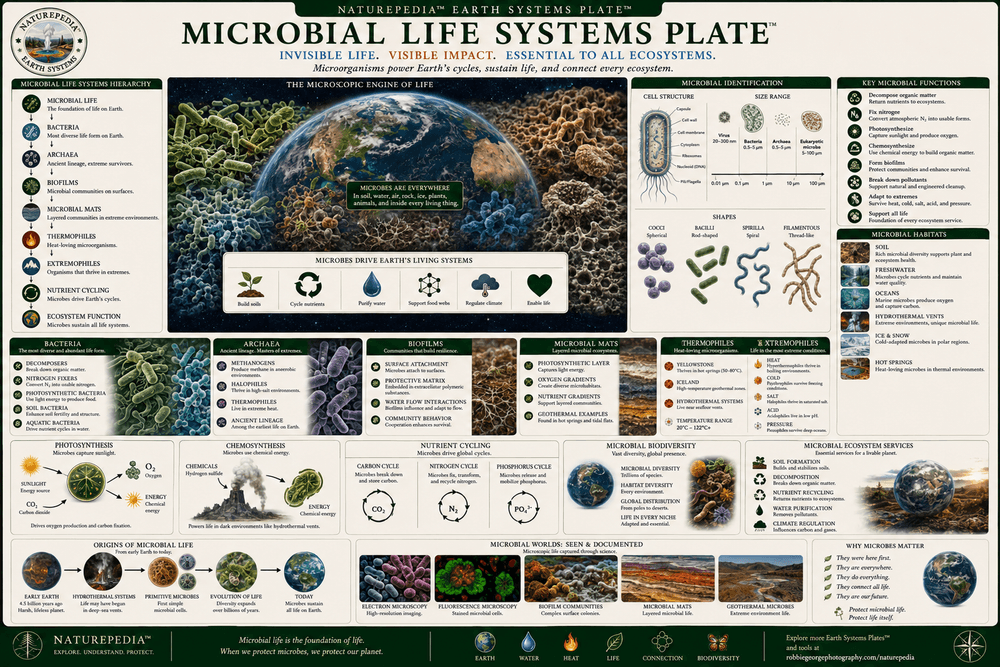
This master systems plate introduces microbial life as the hidden foundation beneath Earth’s ecosystems. It connects bacteria, archaea, biofilms, microbial mats, thermophiles, extremophiles, nutrient cycling, biodiversity, and ecosystem function into one visible Naturepedia™ knowledge layer.

Microbial Life Systems Plate showing bacteria, archaea, biofilms, microbial mats, thermophiles, extremophiles, nutrient cycling, and ecosystem function
Microbial Life Systems Plate™ — a Naturepedia™ systems layer showing how microbial communities power nutrient cycling, ecosystem resilience, and planetary life support.

Microbial Foundation

Microbes form living networks beneath soils, waters, geothermal systems, forests, oceans, wetlands, and organisms.

Energy & Nutrients

Microbial systems transform sunlight, chemical energy, minerals, carbon, nitrogen, and organic matter into usable ecosystem pathways.

Planetary Connection

From early Earth to modern geothermal ecosystems, microbes connect evolution, biodiversity, origins of life, and Earth systems science.

Visible Plate ID

ID: microbial-life-systems#microbial-life-systems-plate

URL: https://www.robbiegeorgephotography.com/microbial-life-systems

Type: Naturepedia Systems Plate™

Microbial Foundations

What Are Microbes?

Microbes are microscopic organisms that form the biological foundation of Earth's ecosystems. Although invisible to the naked eye, they influence nearly every ecological process, from nutrient recycling and soil formation to oxygen production, decomposition, and climate regulation.

Microbial life includes bacteria, archaea, microscopic algae, fungi, and other microorganisms that inhabit virtually every environment on Earth. They thrive in forests, rivers, oceans, wetlands, deserts, glaciers, soils, geothermal hot springs, and even deep beneath the Earth's surface. Their remarkable adaptability allows microbial communities to persist in conditions that would be hostile or impossible for most plants and animals.

Scientists estimate that microbes represent the overwhelming majority of biological diversity on the planet. A single gram of healthy soil may contain billions of microbial cells and thousands of species interacting through complex ecological networks. These invisible communities help maintain ecosystem stability by cycling nutrients, breaking down organic matter, supporting plant growth, and influencing water quality.

Many of the world's most fascinating microbial systems occur in geothermal environments such as Yellowstone National Park. There, thermophilic microbes create colorful microbial mats around hot springs and geothermal pools. These communities provide living examples of how microbial life can adapt to extreme temperatures while driving ecosystem processes in some of Earth's most dynamic environments.

Microscopic Scale

Most microbes are too small to be seen without magnification, yet they collectively shape ecosystems at planetary scales.

Global Distribution

Microbes occur in virtually every habitat on Earth, from deep oceans and polar ice to geothermal springs and desert soils.

Ecosystem Engineers

Through decomposition, nutrient cycling, and energy transfer, microbes help sustain the biological systems that support all life.

Naturepedia Insight: While large animals and plants often receive the most attention, microbial communities form the unseen infrastructure beneath every ecosystem. Understanding microbes reveals how energy flows through nature, how nutrients are recycled, and how life persists across Earth's most extreme environments.

Naturepedia Identification Plate

Microbial Identification Plate™

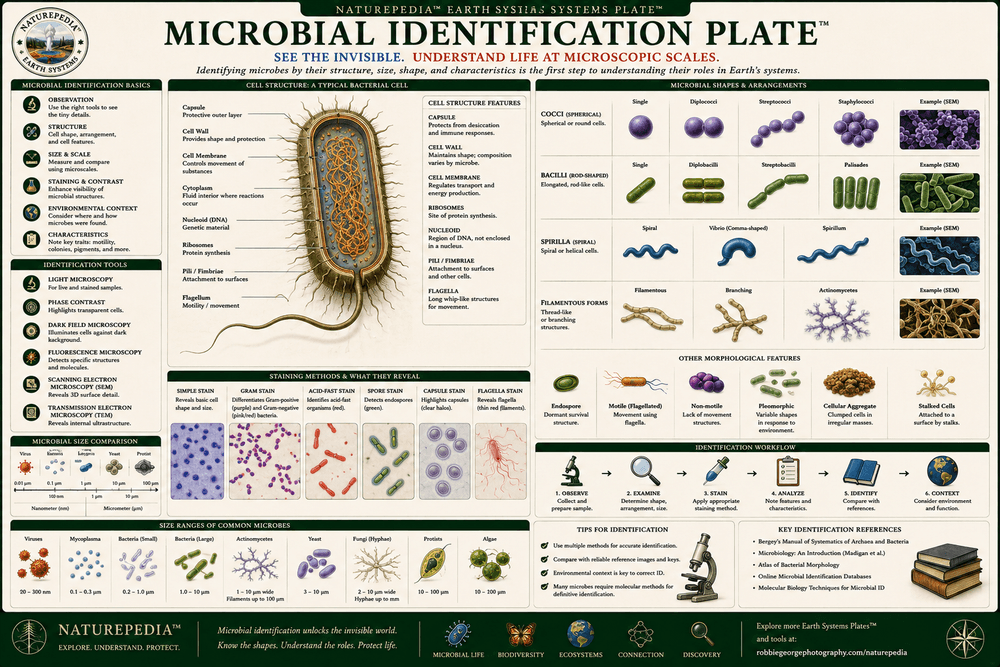
Microbial identification begins with scale, structure, shape, and habitat. This plate introduces the basic visual forms of microbial life, including cocci, bacilli, spirilla, filamentous forms, cellular structures, and the microscopic patterns used to understand microbial communities.

Microbial Identification Plate showing microbial cell shapes, structures, size ranges, cocci, bacilli, spirilla, and filamentous forms
Microbial Identification Plate™ — a Naturepedia™ visual guide to microbial forms, structures, and identification patterns.

Cell Shape

Microbes may appear as spheres, rods, spirals, filaments, clusters, chains, or sheets depending on species and growth conditions.

Microscopic Scale

Identification requires magnification because most microbial cells are measured in micrometers, far smaller than visible plant or animal structures.

Community Context

Microbes are often identified not only by individual cell form, but also by their surrounding habitat, biofilm behavior, and community structure.

Visible Plate ID

ID: microbial-life-systems#microbial-identification-plate

URL: https://www.robbiegeorgephotography.com/microbial-life-systems

Type: Naturepedia Identification Plate™

Naturepedia Microbiology Plate

Bacteria Plate™

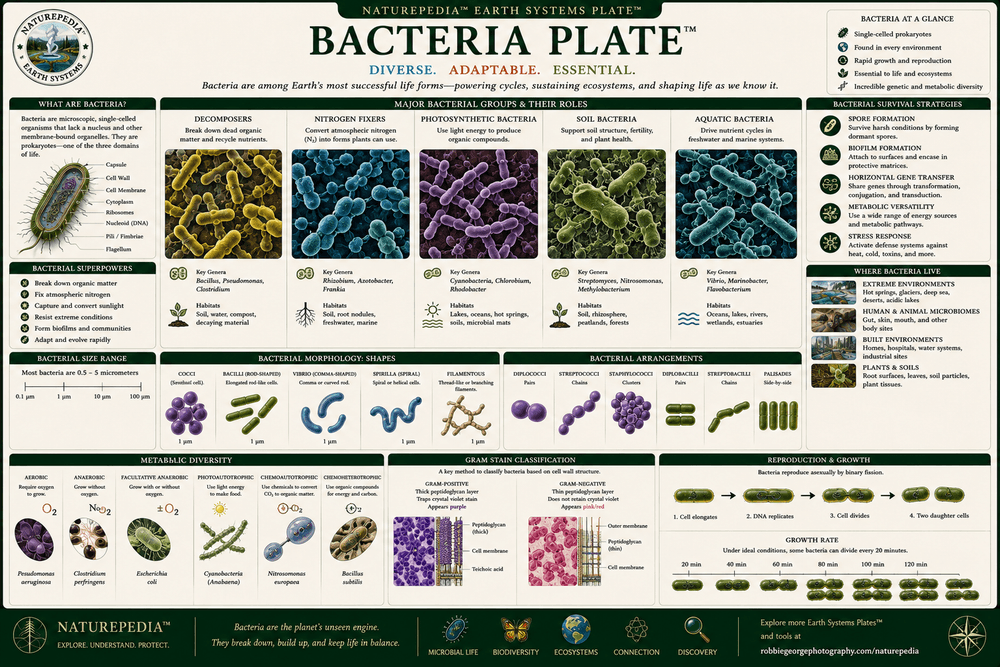
Bacteria are among the most abundant and ecologically important organisms on Earth. They drive decomposition, nutrient cycling, nitrogen fixation, soil formation, photosynthesis, and countless biological processes that sustain ecosystems across the planet.

Bacteria Plate showing major bacterial groups, ecological functions, nutrient cycling, and ecosystem relationships
Bacteria Plate™ — a Naturepedia™ overview of bacterial diversity, ecological roles, and ecosystem functions.

Bacteria occupy nearly every environment on Earth, from fertile soils and freshwater streams to geothermal springs and deep-ocean ecosystems. Their extraordinary diversity allows them to perform specialized ecological roles that support the health and stability of biological communities. Without bacteria, nutrient recycling would slow dramatically and ecosystem productivity would decline.

Many bacteria function as decomposers, breaking down dead organic matter and returning essential nutrients to the environment. Others form symbiotic relationships with plants, fungi, animals, and even other microbes. Nitrogen-fixing bacteria convert atmospheric nitrogen into forms usable by plants, helping sustain forests, grasslands, wetlands, and agricultural systems.

Photosynthetic bacteria, including cyanobacteria, played a pivotal role in Earth's history by contributing to the oxygenation of the atmosphere. Their evolutionary success helped transform the planet and created conditions that allowed complex life to emerge and diversify over time.

Decomposers

Break down organic material and recycle nutrients back into ecosystems.

Nitrogen Fixers

Convert atmospheric nitrogen into biologically useful forms for plants and ecosystems.

Photosynthetic Bacteria

Capture solar energy and helped shape the evolution of Earth's atmosphere.

Naturepedia Insight: The total number of bacterial cells on Earth is estimated to exceed the number of stars in the observable universe. Although individually microscopic, bacterial communities collectively regulate some of the largest ecological and biochemical processes on the planet.

Visible Plate ID

ID: microbial-life-systems#bacteria-plate

URL: https://www.robbiegeorgephotography.com/microbial-life-systems

Type: Naturepedia Microbiology Plate™

Naturepedia Microbiology Plate

Archaea Plate™

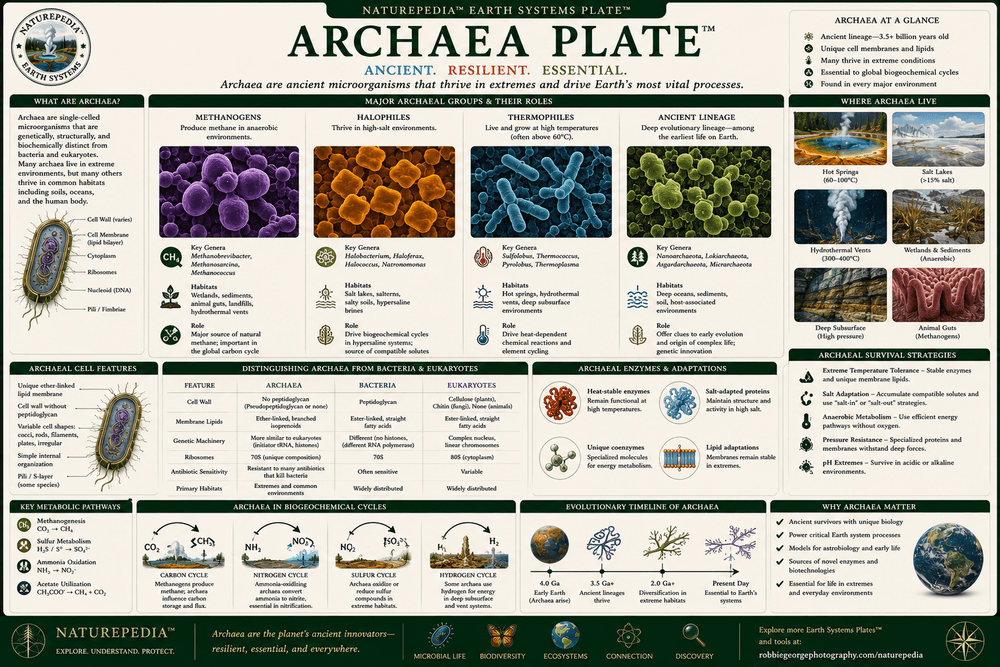
Archaea represent one of Earth's three domains of life and are among the most remarkable organisms ever discovered. Although superficially similar to bacteria, archaea possess unique genetics, cellular structures, and evolutionary histories that distinguish them as a separate branch of life.

Archaea Plate showing thermophiles, methanogens, halophiles, geothermal ecosystems, and evolutionary relationships
Archaea Plate™ — a Naturepedia™ overview of ancient microbial lineages, extremophile adaptations, and evolutionary significance.

Archaea were once thought to exist only in extreme environments such as geothermal hot springs, deep-sea hydrothermal vents, acidic pools, and hypersaline lakes. Modern research has revealed that archaeal communities occur throughout oceans, soils, wetlands, and even within the microbiomes of plants and animals. Despite their microscopic size, archaea influence some of the planet's largest biogeochemical cycles.

Many archaeal species thrive under conditions that would be lethal to most life forms. Thermophilic archaea inhabit geothermal systems where temperatures approach or exceed the boiling point of water. Halophiles flourish in highly saline environments, while methanogens produce methane in oxygen-poor habitats such as wetlands, sediments, and digestive systems.

Because archaea occupy environments that may resemble conditions on the early Earth, they provide important clues about microbial evolution and the origins of life. Their extraordinary resilience has also made them central to astrobiology research, helping scientists explore whether life could exist on other worlds with extreme environmental conditions.

Thermophiles

Heat-loving archaea inhabit geothermal springs, hydrothermal vents, and volcanic environments.

Methanogens

Specialized archaea that produce methane and contribute to global carbon cycling.

Ancient Lineages

Archaea preserve evolutionary clues about early microbial life and Earth's ancient environments.

Naturepedia Insight: Yellowstone's geothermal pools contain archaeal communities capable of surviving temperatures and chemical conditions that resemble some of the most extreme environments on Earth. These microbes help scientists understand both ancient evolution and the potential for life beyond our planet.

Visible Plate ID

ID: microbial-life-systems#archaea-plate

URL: https://www.robbiegeorgephotography.com/microbial-life-systems

Type: Naturepedia Microbiology Plate™

Naturepedia Microbial Communities Plate

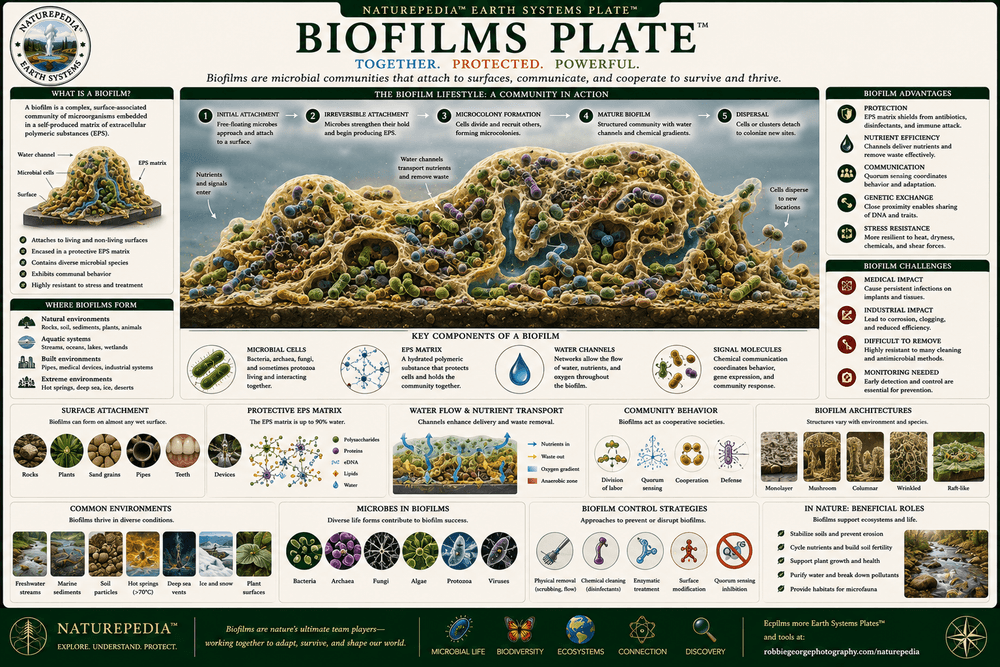
Biofilms Plate™

Biofilms are organized microbial communities that attach to surfaces and function as cooperative living systems. Rather than existing as isolated cells, microbes within biofilms communicate, exchange nutrients, share resources, and collectively respond to environmental change.

Biofilms Plate showing microbial colonies, extracellular matrix, community structure, and ecological functions
Biofilms Plate™ — a Naturepedia™ visualization of microbial cooperation, surface colonization, and community ecology.

Biofilms develop when microorganisms attach to a surface and produce a protective matrix composed of sugars, proteins, and other biological compounds. This matrix acts as a living framework that stabilizes the community, retains moisture, protects against environmental stress, and enables communication between microbial cells.

Biofilms occur throughout nature. They form on rocks in streams, submerged wood, wetland sediments, plant roots, geothermal pools, ocean surfaces, and countless other habitats. In many ecosystems, biofilms represent the first stage of biological colonization, helping establish the conditions that allow more complex communities to develop.

Within biofilms, microbes behave less like individual organisms and more like coordinated communities. Nutrients can be exchanged between neighboring cells, chemical signals can regulate collective behavior, and specialized regions can develop that perform distinct ecological functions. These interactions make biofilms one of the most successful microbial strategies on Earth.

Surface Attachment

Biofilms anchor microbial communities to rocks, sediments, roots, geothermal surfaces, and aquatic environments.

Protective Matrix

A self-produced extracellular matrix protects microbes from drying, chemical stress, and environmental disturbance.

Community Intelligence

Chemical signaling allows microbial populations to coordinate growth, resource use, and ecological responses.

Naturepedia Insight: Many scientists consider biofilms to be among the most successful biological structures on Earth. Most microbes spend the majority of their lives within biofilm communities rather than as free-floating individual cells.

Visible Plate ID

ID: microbial-life-systems#biofilms-plate

URL: https://www.robbiegeorgephotography.com/microbial-life-systems

Type: Naturepedia Microbial Communities Plate™

Naturepedia Microbial Communities Plate

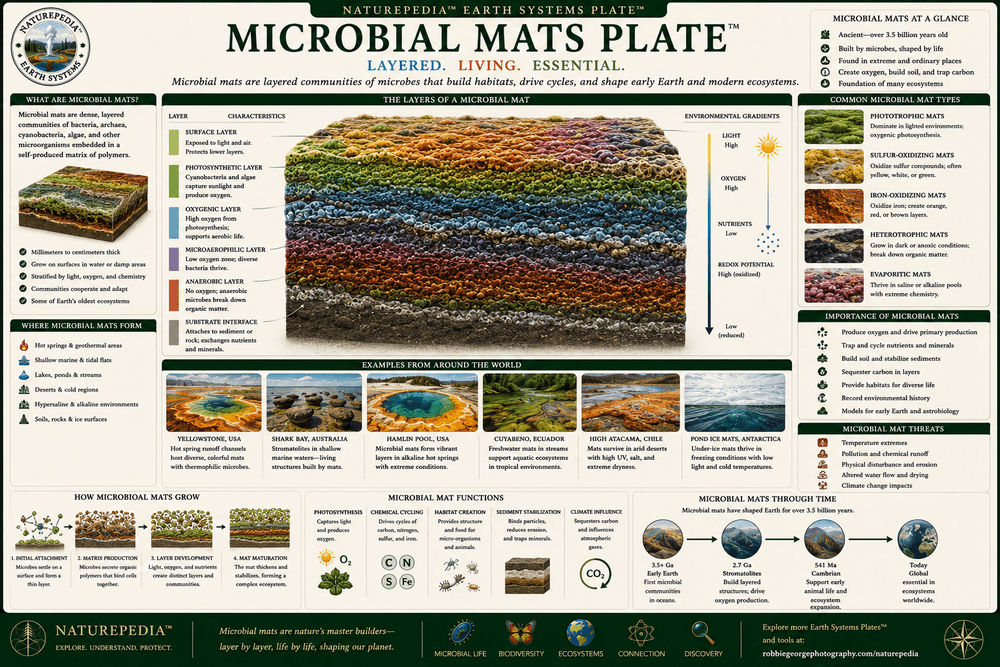
Microbial Mats Plate™

Microbial mats are layered communities of microorganisms that represent some of Earth's oldest and most successful living systems. These complex biological structures reveal how microbial communities organize, capture energy, cycle nutrients, and create miniature ecosystems that have existed for billions of years.

Microbial Mats Plate showing layered microbial communities, photosynthetic zones, oxygen gradients, nutrient cycling, and geothermal microbial ecosystems
Microbial Mats Plate™ — a Naturepedia™ visualization of layered microbial ecosystems, nutrient gradients, and ancient biological communities.

Unlike biofilms that often form thin surface layers, microbial mats develop into highly structured communities composed of multiple biological zones. Different microbial groups occupy specific layers based on sunlight availability, oxygen concentration, temperature, and chemical conditions. Together, these layers function as an integrated ecosystem capable of sustaining complex biological interactions.

Many of the world's most famous microbial mats occur in geothermal environments such as Yellowstone National Park, Iceland, New Zealand, and geothermal regions throughout the world. The vivid orange, yellow, green, and brown colors often seen around hot springs are created by diverse microbial populations adapted to specific temperature ranges and environmental conditions.

Microbial mats are also significant because they resemble some of Earth's earliest ecosystems. Ancient microbial mats likely dominated the planet long before plants, animals, and forests evolved. Fossilized versions of these communities, known as stromatolites, provide evidence of microbial life dating back more than three billion years.

Layered Communities

Different microbial groups occupy distinct ecological zones based on environmental conditions and resource availability.

Geothermal Systems

Thermal springs support colorful microbial mats whose composition changes with temperature and chemistry.

Ancient Ecosystems

Modern microbial mats offer living windows into the biological communities that shaped the early Earth.

Naturepedia Insight: The colorful bands surrounding Yellowstone's Grand Prismatic Spring are created by microbial mats. Each color zone reflects a different community of microbes adapted to specific temperature ranges, forming one of the most visually spectacular examples of microbial ecology on Earth.

Visible Plate ID

ID: microbial-life-systems#microbial-mats-plate

URL: https://www.robbiegeorgephotography.com/microbial-life-systems

Type: Naturepedia Microbial Communities Plate™

Naturepedia Extremophile Plate

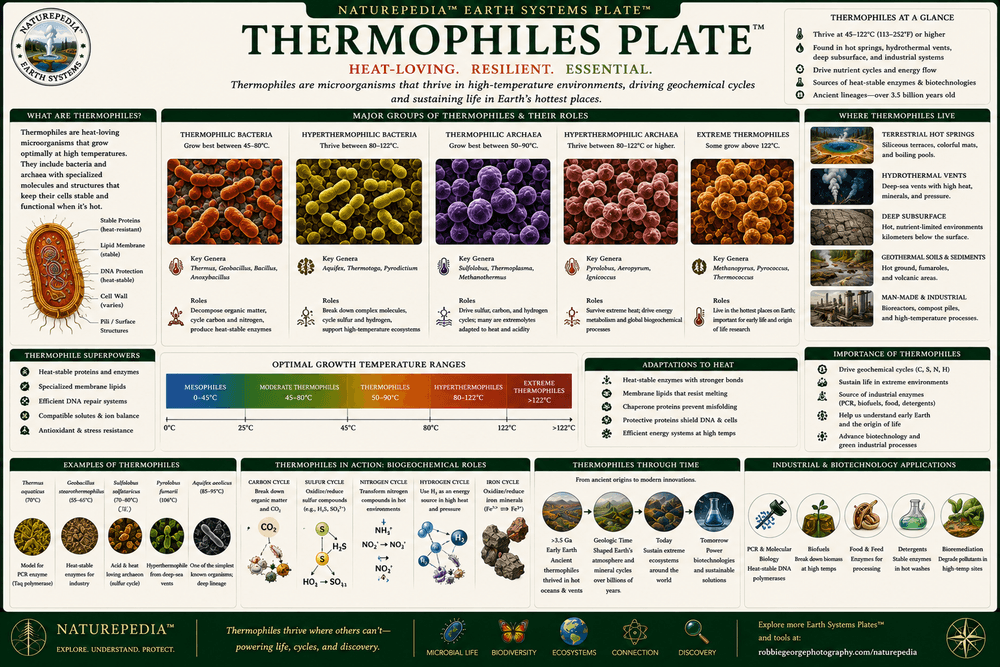
Thermophiles Plate™

Thermophiles are heat-loving microorganisms that thrive in environments once thought incapable of supporting life. Found in geothermal springs, hydrothermal vents, volcanic systems, and other high-temperature habitats, these remarkable microbes demonstrate the extraordinary adaptability of life on Earth.

Thermophiles Plate showing geothermal microorganisms, temperature zones, hot spring ecosystems, and thermal microbial adaptations
Thermophiles Plate™ — a Naturepedia™ exploration of heat-loving microbes and geothermal ecosystem adaptations.

Thermophiles inhabit some of the hottest naturally occurring environments on Earth. These microorganisms possess specialized proteins, enzymes, and cellular structures that remain stable and functional at temperatures that would destroy most living cells. Their ability to survive and reproduce in extreme heat has transformed scientific understanding of life's environmental limits.

Yellowstone National Park contains some of the world's most famous thermophile communities. Around geothermal pools and hot springs, temperature gradients create distinct biological zones where different microbial populations dominate. The vivid colors surrounding thermal features are often the visible result of thermophilic microbial communities adapted to specific temperature ranges.

Thermophiles are also important to biotechnology and scientific research. Many industrial enzymes used in medicine, genetics, and molecular biology were originally discovered in thermophilic microorganisms. Their study continues to provide insights into evolution, extremophile biology, and the potential origins of life in geothermal environments.

Geothermal Springs

Thermophiles dominate many geothermal habitats where water temperatures exceed the tolerance limits of most organisms.

Thermal Adaptation

Specialized cellular structures allow thermophiles to remain stable and functional under extreme heat conditions.

Scientific Importance

Thermophiles provide valuable insights into microbial evolution, biotechnology, and the environmental boundaries of life.

Naturepedia Insight: Many of the brilliant orange, yellow, and green colors found around Yellowstone's thermal pools are produced by thermophilic microbial communities. Different colors often correspond to different temperature zones and microbial species adapted to those conditions.

Visible Plate ID

ID: microbial-life-systems#thermophiles-plate

URL: https://www.robbiegeorgephotography.com/microbial-life-systems

Type: Naturepedia Extremophile Plate™

Naturepedia Extremophile Plate

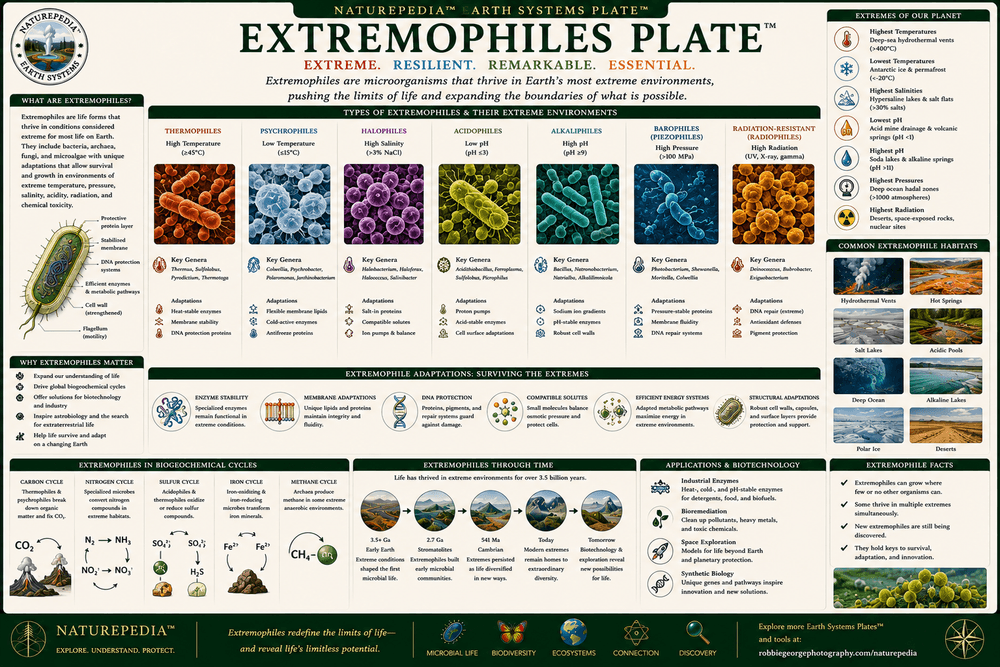
Extremophiles Plate™

Extremophiles are microorganisms capable of surviving and thriving under conditions once believed to be incompatible with life. From boiling geothermal springs and acidic pools to frozen polar environments and deep-ocean trenches, extremophiles reveal the extraordinary adaptability of living systems.

Extremophiles Plate showing heat, cold, salinity, acidity, pressure, and other extreme environmental adaptations
Extremophiles Plate™ — a Naturepedia™ overview of life adapted to Earth's most extreme environments.

Extremophiles challenge traditional assumptions about where life can exist. These specialized organisms have evolved unique biochemical adaptations that allow them to function under extreme temperatures, pressures, salinity levels, acidity, radiation exposure, and other environmental stresses. Their existence has expanded scientific understanding of biology and redefined the known limits of life.

Scientists classify extremophiles according to the conditions they inhabit. Thermophiles thrive in extreme heat, psychrophiles survive in freezing environments, halophiles tolerate highly saline waters, acidophiles flourish in acidic conditions, and barophiles persist under immense pressures found deep within the oceans and Earth's crust. Each group demonstrates remarkable evolutionary solutions to environmental challenges.

The study of extremophiles has become central to astrobiology because these organisms provide models for how life might survive beyond Earth. Environments on Mars, Europa, Enceladus, and other planetary bodies may resemble some of the extreme habitats where extremophiles currently exist on our planet.

Heat & Cold

Thermophiles and psychrophiles survive at temperature extremes ranging from boiling springs to polar ice.

Salt & Acidity

Halophiles and acidophiles inhabit highly saline lakes, acidic springs, and chemically challenging environments.

Pressure & Radiation

Some extremophiles withstand crushing ocean pressures and radiation levels far beyond normal biological tolerances.

Naturepedia Insight: The discovery of extremophiles fundamentally changed biology. Scientists now recognize that life can persist in environments once considered completely inhospitable, dramatically expanding the search for life elsewhere in the universe.

Visible Plate ID

ID: microbial-life-systems#extremophiles-plate

URL: https://www.robbiegeorgephotography.com/microbial-life-systems

Type: Naturepedia Extremophile Plate™

Naturepedia Energy Systems Plate

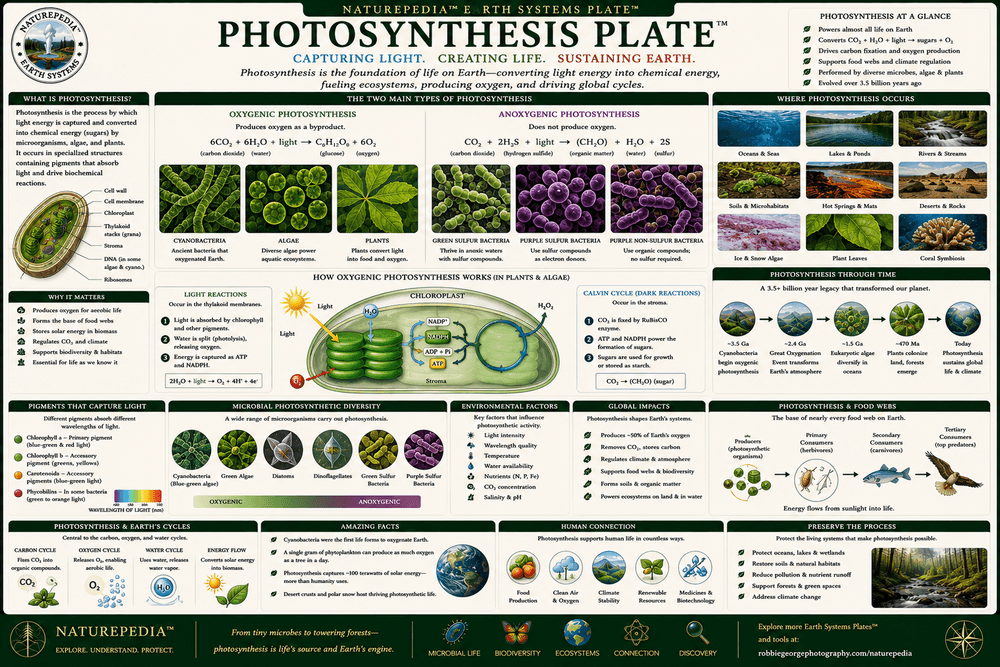
Photosynthesis Plate™

Photosynthesis is one of the most important biological processes on Earth. Long before forests, grasslands, and flowering plants appeared, photosynthetic microbes were already capturing sunlight and transforming it into biological energy, helping reshape the atmosphere and alter the course of planetary evolution.

Photosynthesis Plate showing sunlight capture, cyanobacteria, energy production, carbon fixation, oxygen generation, and ecosystem energy flow
Photosynthesis Plate™ — a Naturepedia™ visualization of microbial sunlight capture, energy transformation, and oxygen production.

Photosynthetic microbes convert solar energy into chemical energy through a series of biological reactions that capture sunlight and store it within organic molecules. This process provides the energetic foundation for food webs, ecosystem productivity, and many of the biological systems that support life across the planet.

Among the most significant photosynthetic microorganisms are cyanobacteria. These ancient microbes helped trigger the Great Oxygenation Event approximately 2.4 billion years ago, releasing oxygen into Earth's atmosphere and transforming global environmental conditions. This shift enabled the later evolution of complex multicellular organisms and fundamentally changed the trajectory of life.

Today, photosynthetic microbes continue to play essential ecological roles in oceans, lakes, wetlands, soils, and geothermal environments. They contribute significantly to global oxygen production, carbon fixation, and energy flow, making them some of the most important organisms in Earth's biosphere.

Solar Energy Capture

Photosynthetic microbes convert sunlight into biological energy that fuels ecosystem productivity.

Carbon Fixation

Microbes remove carbon dioxide from the environment and incorporate it into living biological systems.

Oxygen Production

Photosynthetic microorganisms helped create the oxygen-rich atmosphere that supports modern life.

Naturepedia Insight: Although forests receive much of the attention, a significant portion of Earth's oxygen is produced by microscopic photosynthetic organisms in oceans and aquatic ecosystems. Microbial photosynthesis remains one of the planet's most important life-support systems.

Visible Plate ID

ID: microbial-life-systems#photosynthesis-plate

URL: https://www.robbiegeorgephotography.com/microbial-life-systems

Type: Naturepedia Energy Systems Plate™

Naturepedia Energy Systems Plate

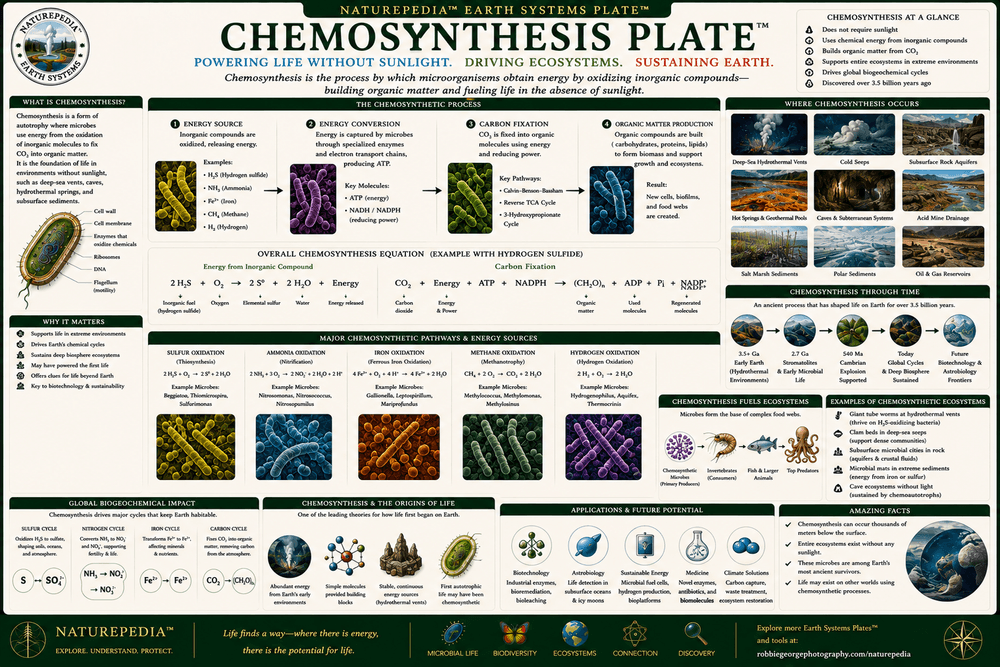
Chemosynthesis Plate™

Chemosynthesis allows life to thrive without sunlight. Instead of capturing solar energy, chemosynthetic microbes obtain energy from chemical reactions involving sulfur, hydrogen, methane, iron, and other compounds. These remarkable organisms power entire ecosystems in some of Earth's darkest and most extreme environments.

Chemosynthesis Plate showing chemical energy pathways, sulfur cycles, hydrothermal vents, geothermal ecosystems, and microbial energy systems
Chemosynthesis Plate™ — a Naturepedia™ visualization of chemical energy pathways that support life without sunlight.

Unlike photosynthesis, which depends upon sunlight, chemosynthesis relies on energy released during chemical reactions. Specialized microorganisms use compounds such as hydrogen sulfide, methane, ammonia, hydrogen gas, and iron to generate biological energy. This process allows ecosystems to exist in places where sunlight never reaches.

Chemosynthetic communities are especially important in hydrothermal vents, geothermal springs, deep subsurface environments, and other geologically active regions. In many of these ecosystems, microbes form the foundation of the food web, supporting larger organisms through energy pathways that originate entirely from Earth's internal geological processes.

Because chemosynthesis can sustain life independently of sunlight, many scientists consider it one of the most important clues to understanding how life may have originated on Earth. Similar energy systems may also support life on other worlds, making chemosynthesis a central concept in astrobiology and planetary science.

Chemical Energy

Chemosynthetic microbes convert chemical compounds into usable biological energy without relying on sunlight.

Hydrothermal Systems

Hydrothermal vents and geothermal regions support rich microbial communities fueled by geochemical processes.

Origins of Life

Chemosynthesis provides a possible model for how early life may have obtained energy before widespread photosynthesis evolved.

Naturepedia Insight: Entire ecosystems have been discovered around deep-sea hydrothermal vents where sunlight never penetrates. These communities are powered by chemosynthetic microbes that convert geological energy into biological productivity, demonstrating that life can flourish independently of the Sun.

Visible Plate ID

ID: microbial-life-systems#chemosynthesis-plate

URL: https://www.robbiegeorgephotography.com/microbial-life-systems

Type: Naturepedia Energy Systems Plate™

Naturepedia Ecosystem Processes Plate

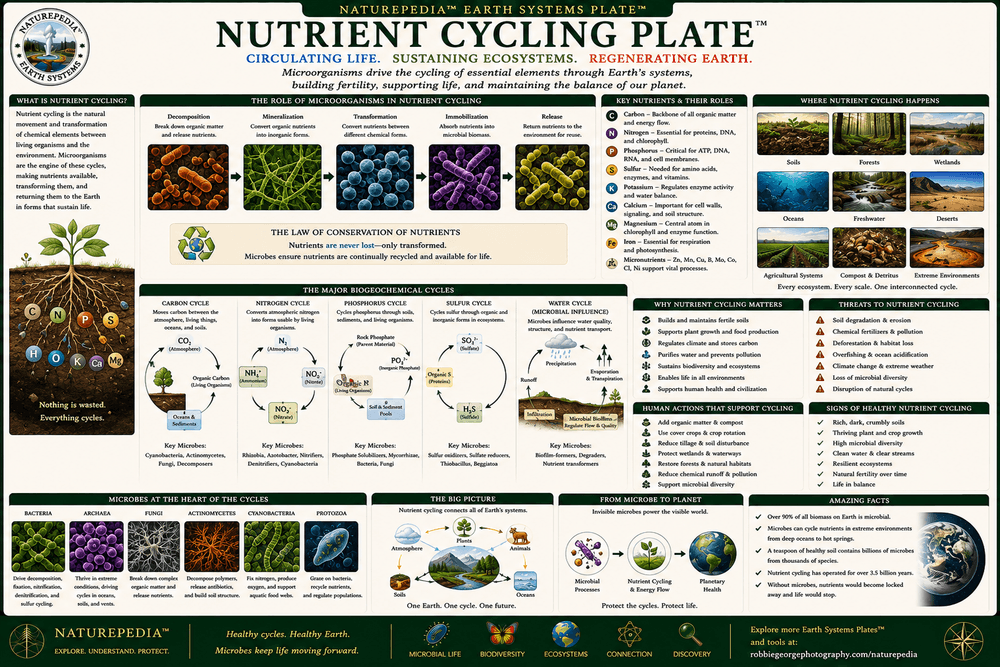
Nutrient Cycling Plate™

Microbes drive Earth's nutrient cycles. By transforming, recycling, and transporting essential elements, microbial communities connect soils, waters, atmosphere, plants, animals, and ecosystems into a continuous planetary network of biological exchange.

Nutrient Cycling Plate showing carbon cycle, nitrogen cycle, phosphorus cycle, sulfur cycle, microbial decomposition, and ecosystem nutrient flow
Nutrient Cycling Plate™ — a Naturepedia™ visualization of microbial pathways connecting carbon, nitrogen, phosphorus, sulfur, and ecosystem productivity.

Every ecosystem depends on the continuous movement of nutrients through biological and geological systems. Microorganisms serve as the primary agents responsible for transforming organic matter, releasing nutrients, fixing atmospheric compounds, and recycling essential elements back into ecological food webs. Without microbial nutrient cycling, ecosystems would rapidly lose their ability to sustain life.

Carbon cycling relies heavily on microbial decomposition and respiration. Microbes break down plant material, animal remains, and organic matter, returning carbon to soils, waters, and the atmosphere. Similarly, nitrogen-fixing bacteria convert atmospheric nitrogen into biologically useful forms that support plant growth and ecosystem productivity.

Microbial communities also influence phosphorus, sulfur, iron, and numerous trace mineral cycles. These interconnected pathways regulate soil fertility, water quality, plant health, ecosystem resilience, and global biogeochemical stability across terrestrial and aquatic environments.

Carbon Cycle

Microbes decompose organic matter and regulate the movement of carbon through ecosystems and the atmosphere.

Nitrogen Cycle

Nitrogen-fixing and nitrifying microbes provide essential nutrients that support plant growth and food webs.

Ecosystem Fertility

Microbial nutrient recycling maintains soil health, water quality, productivity, and ecosystem resilience.

Naturepedia Insight: Every tree, flower, animal, and ecosystem ultimately depends on microbial nutrient cycling. These invisible biological processes continually recycle the building blocks of life, allowing ecosystems to renew themselves generation after generation.

Visible Plate ID

ID: microbial-life-systems#nutrient-cycling-plate

URL: https://www.robbiegeorgephotography.com/microbial-life-systems

Type: Naturepedia Ecosystem Processes Plate™

Naturepedia Biodiversity Plate

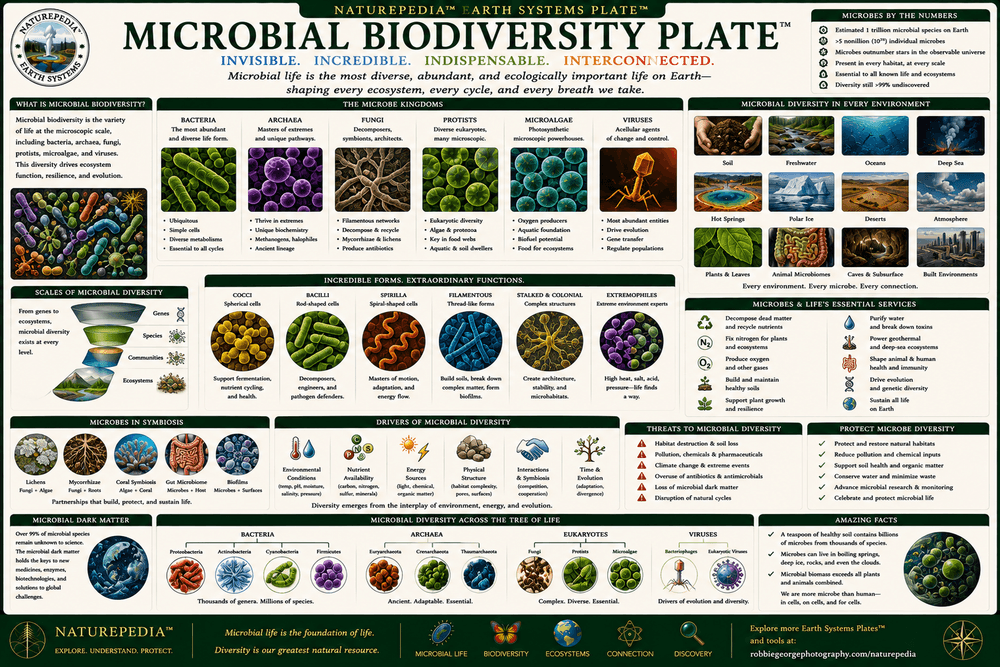
Microbial Biodiversity Plate™

Microbial biodiversity represents the largest and most diverse reservoir of life on Earth. Although invisible to the naked eye, microbial communities contain an extraordinary range of genetic, ecological, and evolutionary diversity that exceeds that of all plants and animals combined.

Microbial Biodiversity Plate showing microbial diversity across ecosystems, habitats, evolution, and global biological distribution
Microbial Biodiversity Plate™ — a Naturepedia™ overview of the vast diversity of microbial life across Earth's ecosystems.

Scientists estimate that only a small fraction of microbial species have been formally described. Millions, and potentially billions, of microbial lineages remain undiscovered across Earth's soils, oceans, forests, wetlands, deserts, glaciers, geothermal systems, and subsurface environments. Each habitat contains unique communities adapted to local environmental conditions.

Microbial diversity drives ecosystem stability and resilience. Diverse microbial communities perform overlapping ecological functions, helping ecosystems withstand environmental change, disease outbreaks, droughts, temperature shifts, and other disturbances. The greater the microbial diversity within a system, the greater its capacity to adapt and recover.

This hidden diversity also serves as a reservoir of evolutionary innovation. Microbes continuously evolve new metabolic pathways, survival strategies, and ecological relationships that influence ecosystem function at local, regional, and global scales. Understanding microbial biodiversity is therefore essential for understanding biodiversity itself.

Genetic Diversity

Microbial communities contain immense genetic variation that fuels adaptation, evolution, and ecological resilience.

Habitat Diversity

Microbes occupy nearly every environment on Earth, from tropical forests and wetlands to geothermal springs and deep oceans.

Ecosystem Stability

Diverse microbial communities strengthen ecosystem function, resilience, productivity, and long-term ecological balance.

Naturepedia Insight: Most of Earth's biodiversity may be microbial. While large plants and animals dominate our visual perception of nature, microbes likely account for the overwhelming majority of genetic diversity on the planet.

Visible Plate ID

ID: microbial-life-systems#microbial-biodiversity-plate

URL: https://www.robbiegeorgephotography.com/microbial-life-systems

Type: Naturepedia Biodiversity Plate™

Naturepedia Ecosystem Services Plate

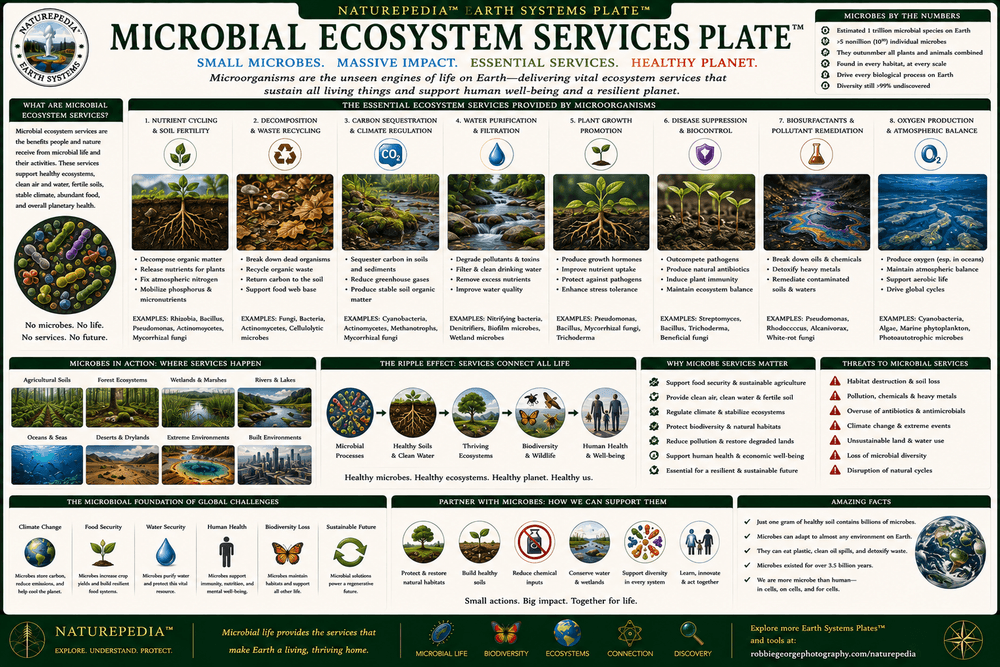
Microbial Ecosystem Services Plate™

Microbial ecosystem services are the invisible biological processes that sustain life on Earth. Through decomposition, nutrient recycling, soil formation, water purification, carbon storage, and ecosystem stabilization, microbes provide foundational services that support biodiversity, ecosystem health, and human civilization.

Microbial Ecosystem Services Plate showing soil formation, decomposition, water purification, nutrient recycling, carbon storage, and ecosystem health
Microbial Ecosystem Services Plate™ — a Naturepedia™ overview of the ecological functions microbes provide to ecosystems and planetary systems.

Every ecosystem depends upon microbial ecosystem services. In forests, grasslands, wetlands, agricultural fields, rivers, and oceans, microbes continuously recycle nutrients, decompose organic matter, and regulate the biological processes that support life. Although largely invisible, these services operate at scales ranging from microscopic soil particles to global climate systems.

Microbial communities help create and maintain healthy soils by breaking down organic material and converting it into forms usable by plants. They improve soil structure, enhance nutrient availability, support root growth, and contribute to long-term ecosystem productivity. Many of the world's most fertile ecosystems owe their productivity to thriving microbial communities beneath the surface.

Microbes also play major roles in water purification, carbon sequestration, waste decomposition, pollution mitigation, and ecosystem recovery following disturbance. Their activities influence biodiversity, food webs, climate regulation, and the resilience of natural systems across the globe.

Soil Formation

Microbes break down organic material, build soil structure, and maintain nutrient-rich growing environments.

Water Purification

Microbial communities help filter contaminants, recycle nutrients, and improve water quality in aquatic ecosystems.

Climate Regulation

Microbes influence carbon storage, greenhouse gas cycling, decomposition, and long-term ecosystem stability.

Naturepedia Insight: Every healthy forest, wetland, grassland, coral reef, and agricultural system depends upon microbial ecosystem services. These microscopic organisms perform ecological work that would otherwise be impossible at planetary scales.

Visible Plate ID

ID: microbial-life-systems#microbial-ecosystem-services-plate

URL: https://www.robbiegeorgephotography.com/microbial-life-systems

Type: Naturepedia Ecosystem Services Plate™

Naturepedia Origins of Life Plate

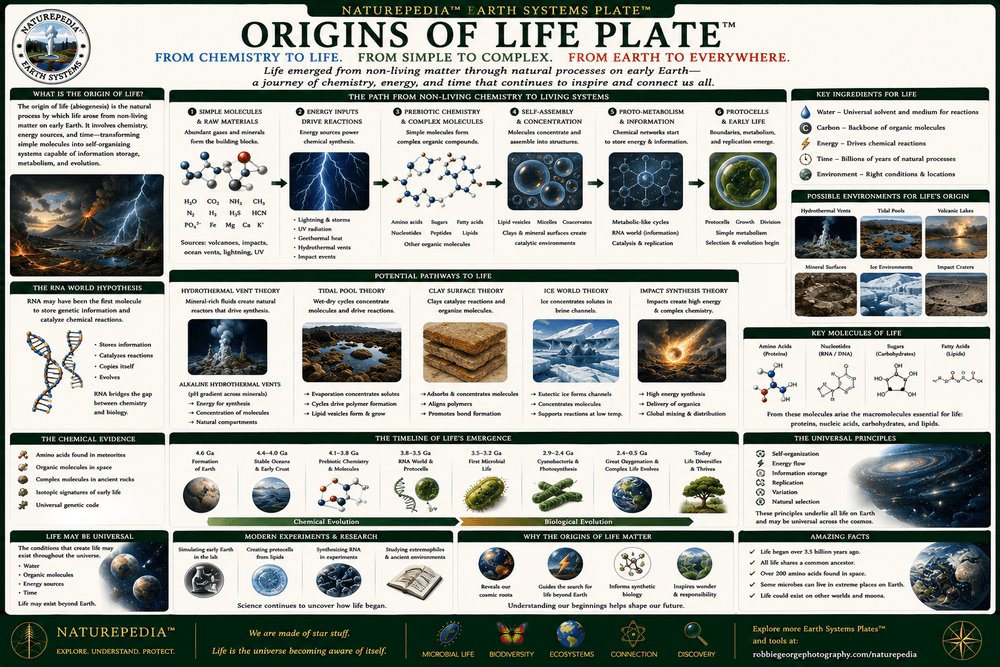
Origins of Life Plate™

The origin of life remains one of science's greatest questions. Microbial ecosystems, geothermal environments, hydrothermal systems, and early Earth chemistry provide important clues to how the first living organisms may have emerged and evolved into the extraordinary diversity of life found today.

Origins of Life Plate showing early Earth, geothermal systems, hydrothermal environments, microbial evolution, and life's emergence
Origins of Life Plate™ — a Naturepedia™ exploration of early Earth environments, microbial evolution, and theories regarding life's beginnings.

Evidence suggests that life emerged remarkably early in Earth's history. Within the first billion years after the planet formed, microbial communities were already developing in ancient oceans and geologically active environments. Although the exact pathway remains unknown, many researchers believe that geothermal systems, hydrothermal vents, and chemically rich aquatic habitats provided conditions favorable for the emergence of self-organizing biological systems.

Modern geothermal ecosystems offer valuable analogs for studying early Earth. Hot springs, hydrothermal vents, microbial mats, and chemosynthetic communities reveal how life can obtain energy, organize into ecosystems, and persist under challenging environmental conditions. These systems help scientists explore possible pathways that may have supported the transition from chemistry to biology.

Microbial evolution eventually transformed the planet. Through photosynthesis, nutrient cycling, and ecosystem engineering, ancient microbial communities altered atmospheric chemistry, influenced global geology, and created conditions that allowed increasingly complex organisms to evolve. Every modern ecosystem can trace its origins back to these early microbial foundations.

Early Earth

Ancient oceans, volcanic landscapes, and geothermal environments may have provided conditions necessary for life's emergence.

Geothermal Systems

Hydrothermal and geothermal environments remain leading candidates for supporting early microbial evolution.

Evolutionary Foundations

Microbial life established the ecological and atmospheric foundations upon which all later life evolved.

Naturepedia Insight: Yellowstone's geothermal systems and modern hydrothermal ecosystems may provide some of the closest living analogs to environments that existed on the early Earth. Studying these systems helps scientists investigate how life may have first emerged and evolved billions of years ago.

Visible Plate ID

ID: microbial-life-systems#origins-of-life-plate

URL: https://www.robbiegeorgephotography.com/microbial-life-systems

Type: Naturepedia Origins of Life Plate™

Naturepedia Photography Plate

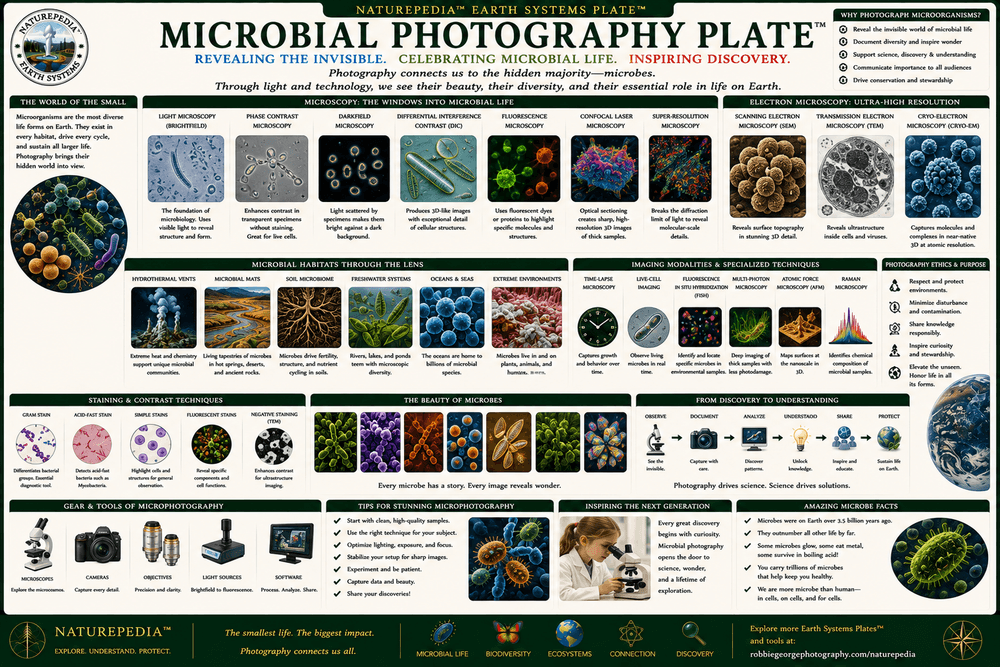
Microbial Photography Plate™

Microbial life is often invisible to the naked eye, yet its influence can be photographed through geothermal landscapes, microbial mats, biofilms, thermal color gradients, and ecosystem-scale patterns. Microbial photography helps reveal the hidden biological systems that shape Earth's environments.

Microbial Photography Plate showing geothermal microbial mats, thermal ecosystems, biofilms, microscopy, and microbial landscape photography
Microbial Photography Plate™ — a Naturepedia™ guide to documenting microbial ecosystems through field photography and scientific observation.

Photographing microbes directly often requires specialized microscopy and laboratory imaging techniques. However, many microbial systems produce visible ecological signatures that can be documented through landscape, macro, and scientific field photography. Geothermal pools, microbial mats, biofilms, stromatolites, and hydrothermal ecosystems offer some of the most visually striking examples.

Yellowstone National Park remains one of the world's premier locations for microbial ecosystem photography. The vibrant color bands surrounding thermal pools are created by microbial communities responding to temperature, chemistry, and environmental gradients. Similar opportunities exist in Iceland, New Zealand, hydrothermal regions, wetlands, salt flats, and coastal ecosystems worldwide.

Microbial photography serves an important educational role by making invisible ecological processes visible. Through imagery, photographers can help communicate concepts such as biodiversity, nutrient cycling, geothermal ecology, evolution, and Earth systems science to broader audiences.

Geothermal Photography

Thermal pools and microbial mats provide some of the most colorful and scientifically important microbial subjects on Earth.

Scientific Observation

Photography helps document microbial communities, environmental gradients, and ecological relationships across diverse habitats.

Education & Discovery

Images make hidden microbial processes accessible, helping connect people to ecosystem science and biodiversity.

Naturepedia Insight: Many of the spectacular colors visible in Yellowstone's geothermal pools are not created by minerals alone. Much of the visual diversity comes from microbial communities occupying specific thermal zones, making these ecosystems some of the most remarkable natural photography subjects in the world.

Visible Plate ID

ID: microbial-life-systems#microbial-photography-plate

URL: https://www.robbiegeorgephotography.com/microbial-life-systems

Type: Naturepedia Photography Plate™

About the Author

Robbie George

Robbie George is a nature photographer, ecological educator, and creator of the Naturepedia™ knowledge system. His work combines wildlife photography, ecosystem interpretation, natural history, geology, biodiversity, and environmental education to help people better understand the interconnected systems that shape the natural world.

Through Naturepedia™, Robbie is building a structured ecological knowledge framework that connects species, habitats, Earth systems, geology, water systems, biodiversity, and environmental processes into an accessible educational resource. The project combines field photography, scientific interpretation, and visual learning to reveal relationships that often remain hidden within complex ecosystems.

Microbial Life Systems™ represents one of Naturepedia’s most important scientific layers because it explores the invisible biological networks that support nearly every ecosystem on Earth. From geothermal springs and microbial mats to nutrient cycling and the origins of life, these microscopic communities provide the foundation upon which larger ecosystems ultimately depend.

Robbie’s photography has been featured by major publications and institutions, including the Smithsonian National Museum of Natural History. His work focuses on helping people see ecological relationships, wildlife behavior, and environmental processes through both photography and educational storytelling.

Through the ongoing development of Naturepedia™, Robbie continues building a growing knowledge mesh that connects wildlife systems, ecosystems, biodiversity, geology, Earth systems, and environmental science into a unified educational platform.


Frequently Asked Questions

Microbial Life Systems™ FAQ

What are microbial life systems?

Microbial life systems are communities of microscopic organisms that drive essential ecological processes across Earth. These systems include bacteria, archaea, biofilms, microbial mats, thermophiles, and countless other microorganisms that regulate nutrient cycling, decomposition, ecosystem productivity, and biological energy flow.

Why are microbes important to ecosystems?

Microbes perform many of the ecological functions that sustain life. They recycle nutrients, decompose organic matter, support plant growth, regulate soil fertility, purify water, influence climate processes, and maintain ecosystem stability. Without microbes, most ecosystems would quickly collapse.

What is the difference between bacteria and archaea?

Although bacteria and archaea are both microscopic organisms, they belong to separate domains of life. Archaea possess unique cellular structures and evolutionary histories that distinguish them from bacteria. Many archaeal species thrive in extreme environments such as geothermal springs, acidic pools, and hypersaline habitats.

What are microbial mats?

Microbial mats are layered communities of microorganisms that form structured ecosystems. Different layers contain different microbial groups adapted to specific environmental conditions. These communities are among the oldest ecosystem types on Earth and provide important insights into early life.

What are thermophiles?

Thermophiles are heat-loving microorganisms that thrive in geothermal environments such as hot springs, hydrothermal vents, and volcanic regions. Yellowstone National Park contains some of the world’s most famous thermophile communities.

What is chemosynthesis?

Chemosynthesis is a biological process that allows organisms to generate energy from chemical reactions rather than sunlight. Chemosynthetic microbes support ecosystems around hydrothermal vents, geothermal systems, and other environments where sunlight is unavailable.

How do microbes contribute to nutrient cycling?

Microbes recycle carbon, nitrogen, phosphorus, sulfur, and other essential nutrients through decomposition, nitrogen fixation, mineral transformation, and organic matter breakdown. These processes sustain soil fertility, plant growth, and ecosystem productivity.

How does Yellowstone help scientists study microbial life?

Yellowstone’s geothermal ecosystems provide natural laboratories for studying thermophiles, microbial mats, biofilms, nutrient cycling, and extremophile adaptations. These systems offer valuable insights into microbial evolution, geothermal ecology, and potential origins of life.

What do microbes reveal about the origins of life?

Many scientists believe microbial communities similar to those found in geothermal and hydrothermal environments may resemble some of Earth’s earliest ecosystems. Studying these organisms helps researchers investigate how life may have first emerged and evolved billions of years ago.

Could microbial life exist on other planets?

The discovery of extremophiles has expanded scientific understanding of where life can survive. Because microbes thrive in conditions once thought uninhabitable, researchers study them as models for potential life on Mars, Europa, Enceladus, and other planetary bodies.

Trusted Art Seller

Trusted Art Seller

The presence of this badge signifies that this business has officially registered with the Art Storefronts Organization and has an established track record of selling art.

It also means that buyers can trust that they are buying from a legitimate business. Art sellers that conduct fraudulent activity or that receive numerous complaints from buyers will have this badge revoked. If you would like to file a complaint about this seller, please do so here.

Verified Returns & Exchanges

Verified Returns & Exchanges

The Art Storefronts Organization has verified that this business has provided a returns & exchanges policy for all art purchases.

Description of Policy from Merchant:

What is your Policy on Returns/Exchanges/Refunds? I take great pride in my work and prints, and I want you to be completely happy with your investment in my nature art. If for any reason you are unsatisfied with your print, you may return it within 14 days of delivery, and/or exchange it for another print. Prints must be returned in new condition, packaged carefully in the original packaging if possible. Your refund will be issued as soon as I receive the returned print. Please contact me if you would like to arrange a return or exchange. In the event that you receive a damaged or defective print, please let me know within 7 days of receipt, and I will arrange for a new print to be shipped to you at no additional cost.

Verified Secure Website with Safe Checkout

Verified Secure Website with Safe Checkout

This website provides a secure checkout with SSL encryption.

Verified Archival Materials Used

Verified Archival Materials Used

The Art Storefronts Organization has verified that this Art Seller has published information about the archival materials used to create their products in an effort to provide transparency to buyers.

Description from Merchant:

Fine Art Prints are made with high-quality archival inks on fine art papers using a high-resolution large format inkjet printer. Our premium archival inks produce images with smooth tones and rich colors. Prints are made with care on your choice of exquisite Fine Art Papers using a high-resolution large format inkjet printer. https://www.graphikprintworks.com

Cart

Your cart is currently empty.

Saved Successfully.

This is only visible to you because you are logged in and are authorized to manage this website. This message is not visible to other website visitors.

Import From Instagram

Click on any Image to continue

This Website Supports Augmented Reality to Live Preview Art

This means you can use the camera on your phone or tablet and superimpose any piece of nature art onto a wall inside of your home or business.

To use this feature, Just look for the "Live Preview AR" button when viewing any piece of nature art on this website!

🦊 Pounce now for 20% off

No thanks