What are information systems in nature?
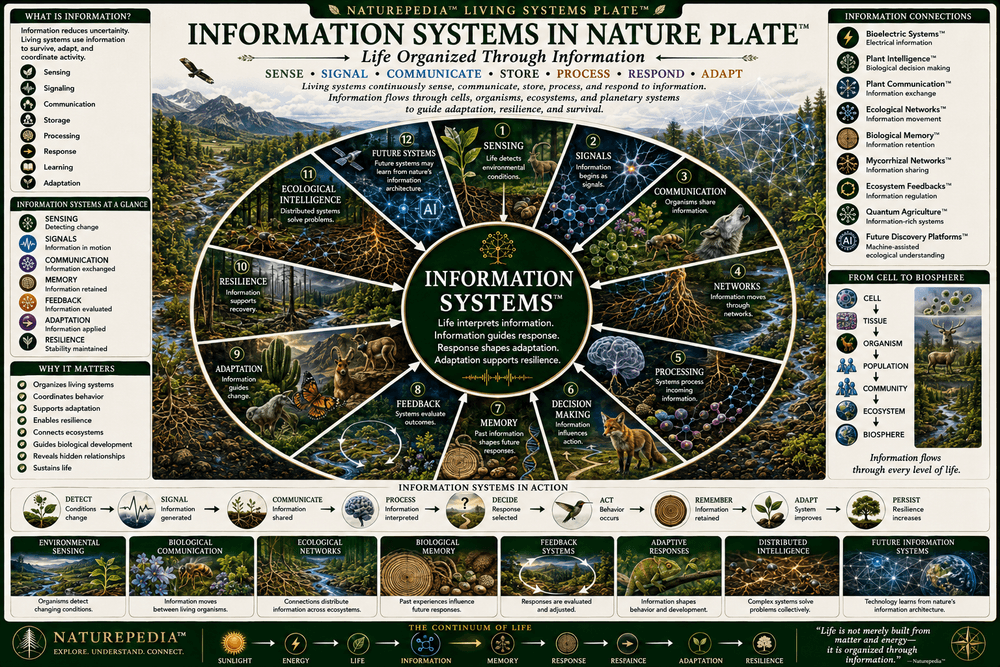
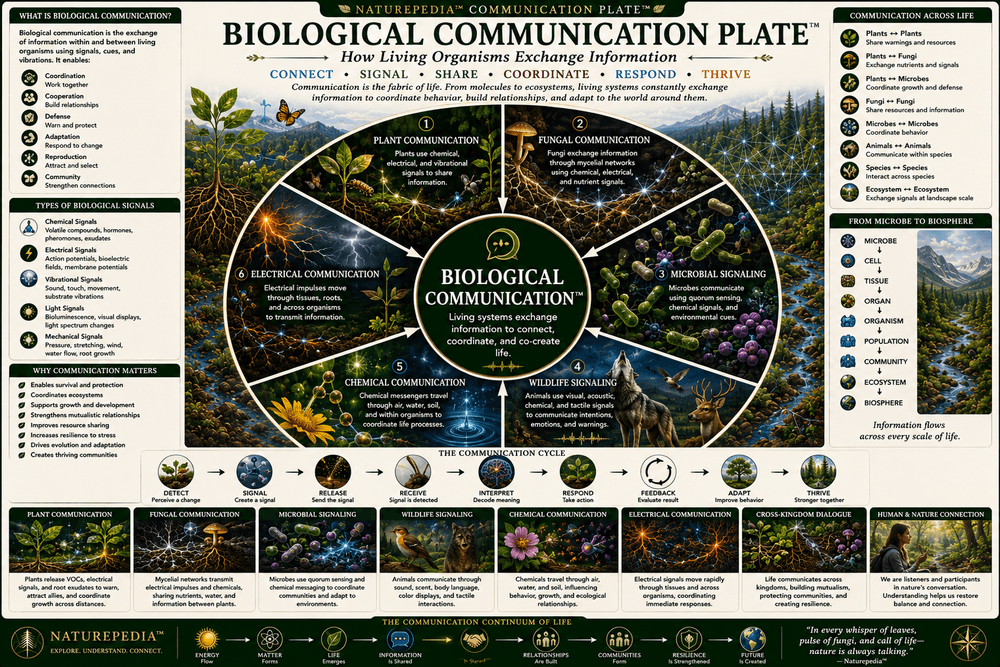
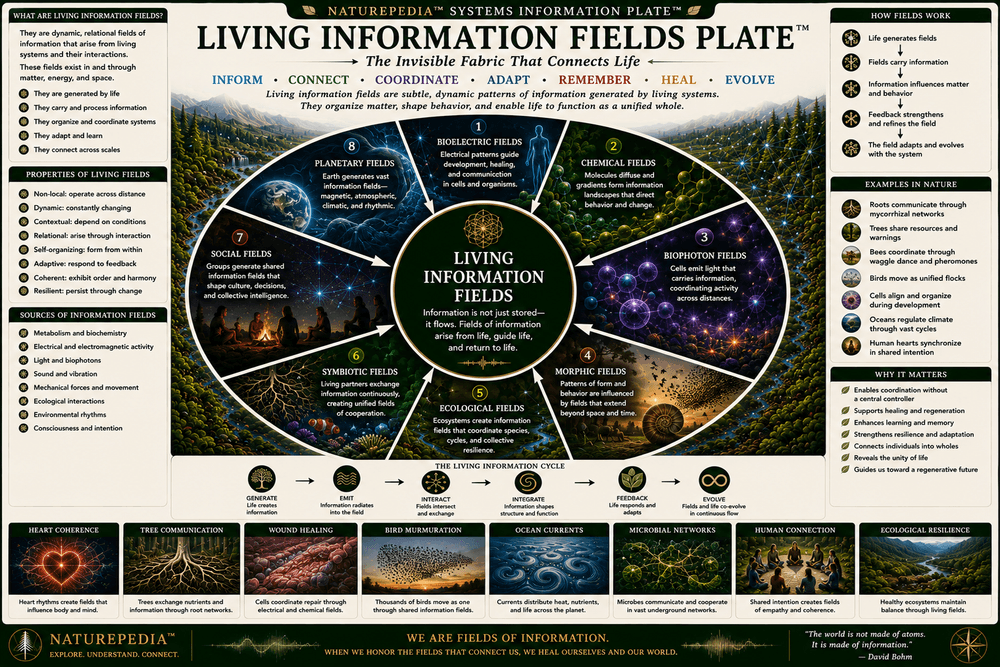
Information systems in nature are the living processes that allow organisms and ecosystems to sense conditions, exchange signals, store memory, process change, regulate feedback, and respond to their environment.
How do living systems respond to information?
Living systems respond through changes in growth, movement, behavior, defense, metabolism, communication, resource allocation, migration, recovery, and adaptation.
What kinds of signals exist in nature?
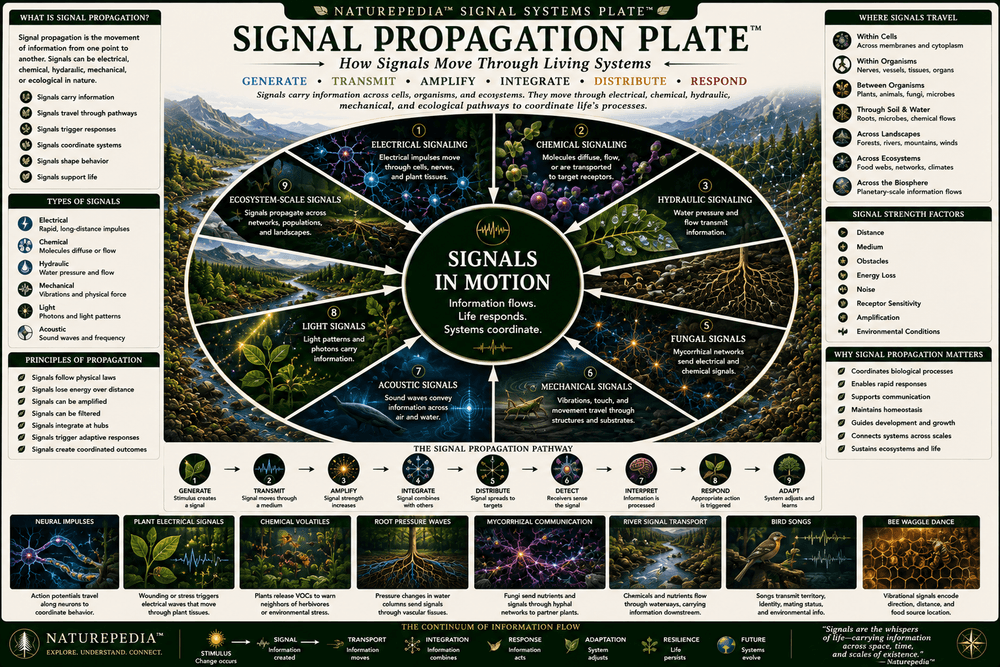
Natural signals include chemical signals, electrical signals, scent, sound, movement, light, moisture gradients, root exudates, fungal pathways, microbial messages, animal behavior, and ecosystem feedbacks.
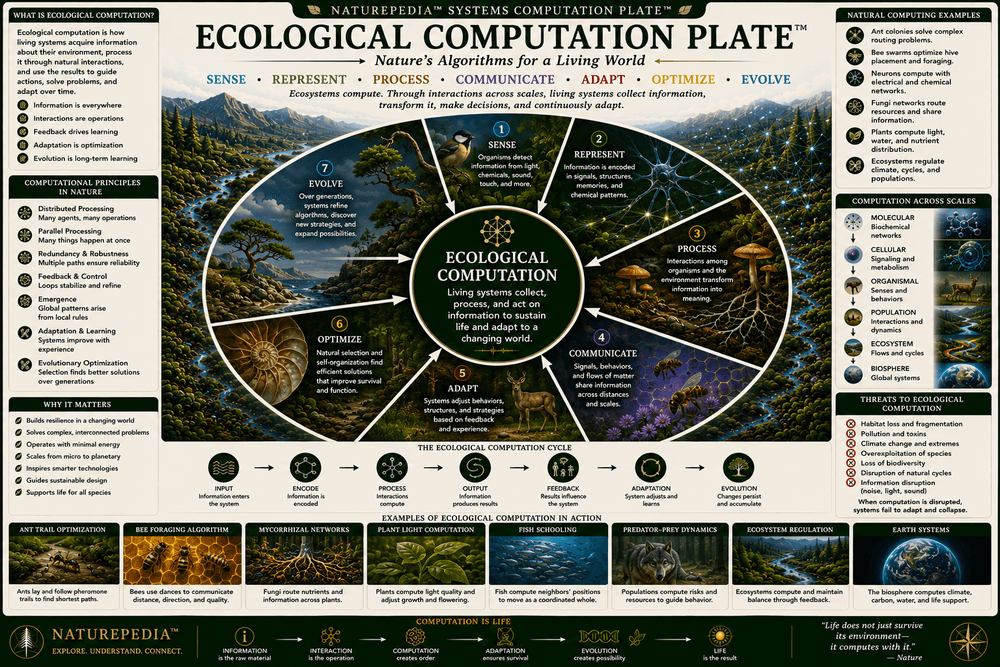
Do ecosystems process information?
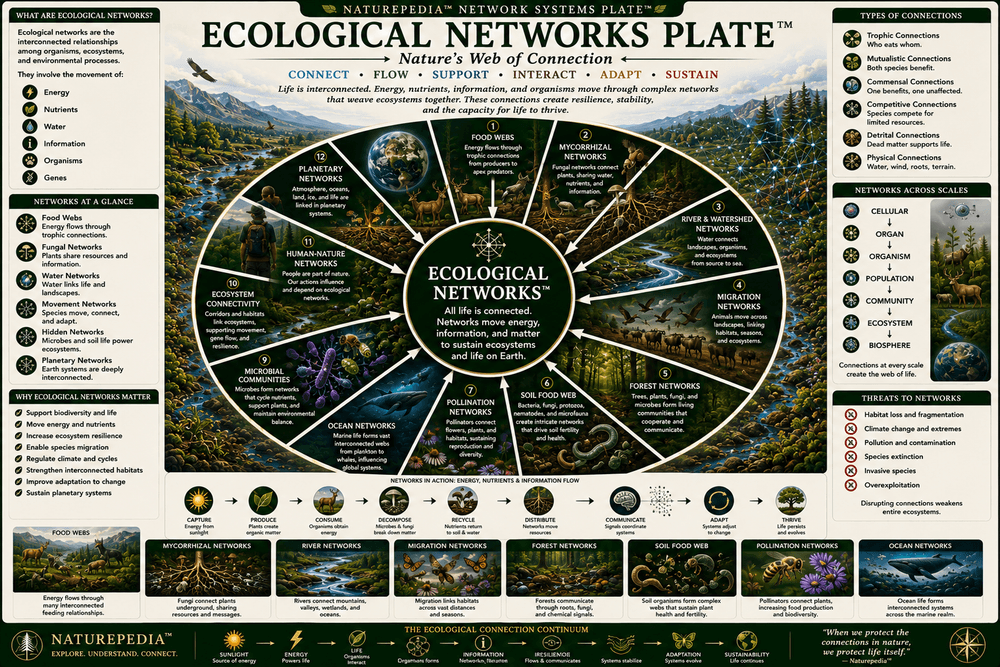
Yes. Ecosystems process information through interactions among organisms, soil, water, climate, nutrients, energy flow, feedback loops, disturbance history, and ecological relationships.
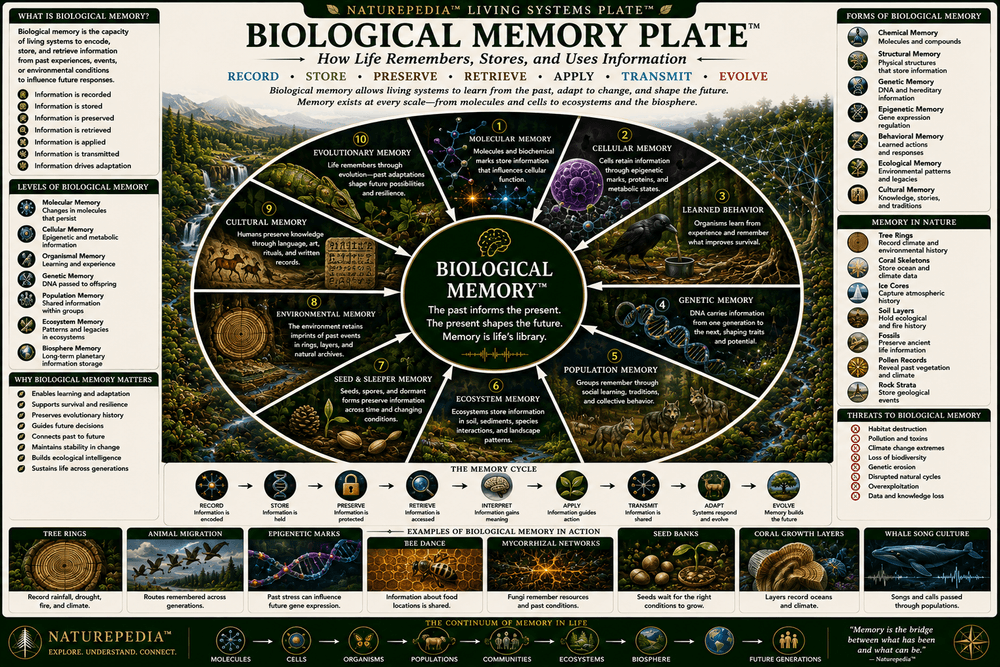
What is biological memory?
Biological memory is the ability of living systems to retain information from past conditions through genes, epigenetics, stress memory, immune response, behavior, soil legacy effects, and ecological history.
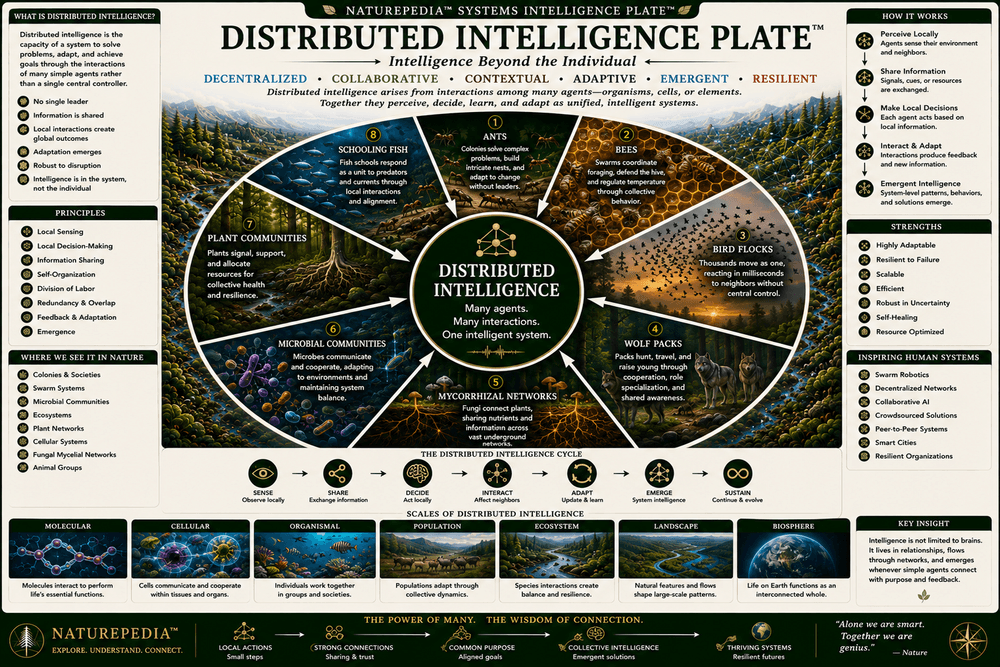
What is distributed intelligence in nature?
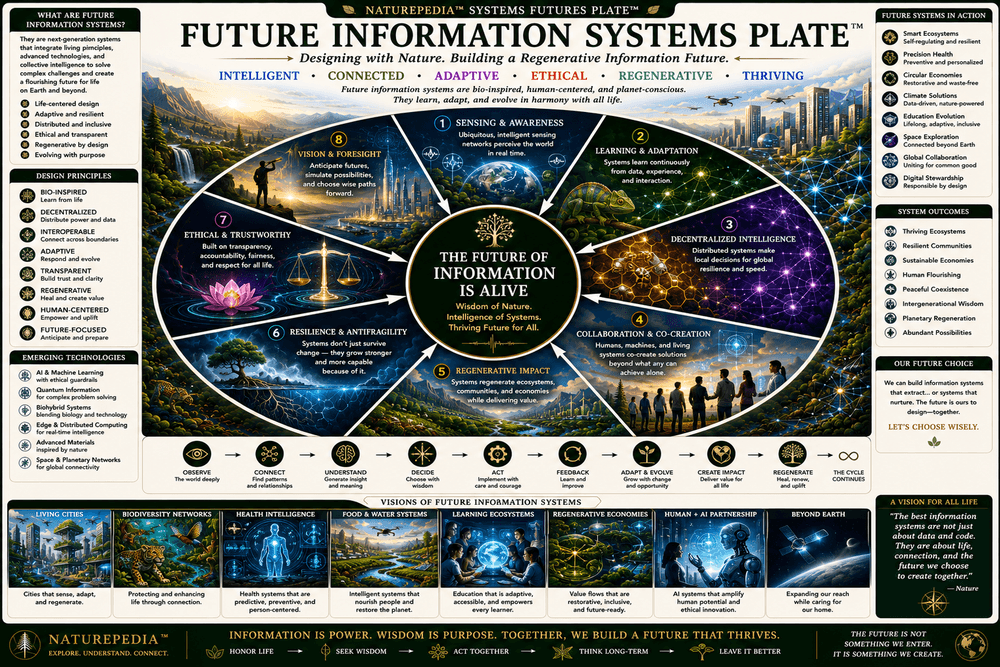
Distributed intelligence describes how living systems coordinate behavior and solve problems through many connected parts rather than one central controller, as seen in forests, fungi, microbial communities, flocks, colonies, and ecosystems.
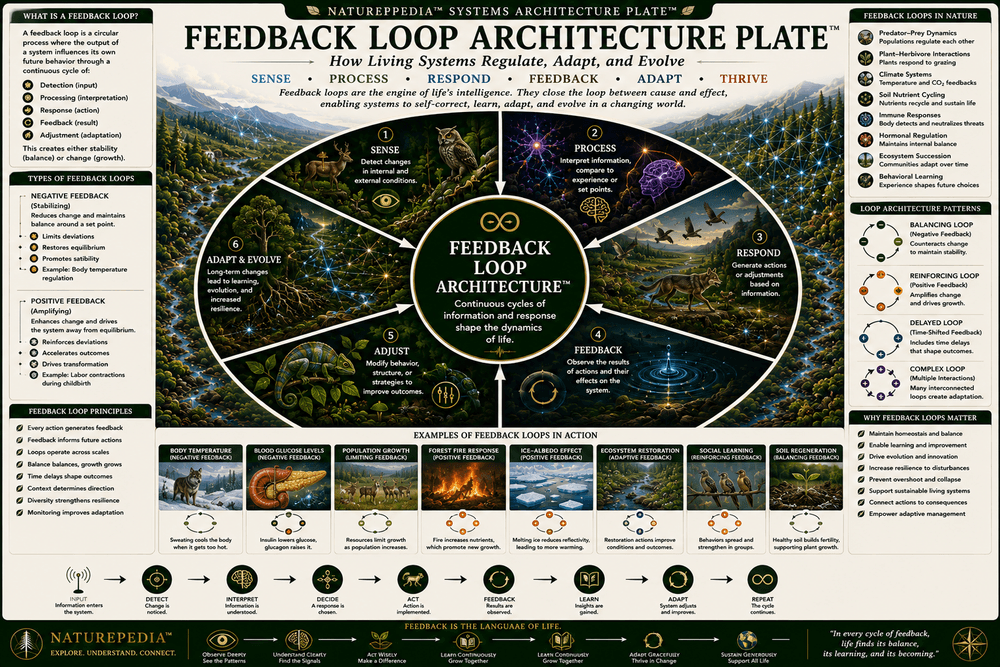
How are feedback loops related to information?
Feedback loops use information from past or present conditions to adjust future responses. They help living systems stabilize, amplify change, recover from disturbance, and adapt to new conditions.
Why is this important for Naturepedia?
Information Systems in Nature™ connects many Naturepedia pages into one framework, showing how soil, plants, fungi, wildlife, forests, water, carbon, bioelectricity, feedbacks, and ecosystems all respond to information.