Naturepedia FAQ Layer
Spruces of North America™ FAQ
Answers to common questions about spruce identification, spruce needles, spruce cones, spruce bark, White Spruce, Black Spruce, Red Spruce, Engelmann Spruce, boreal forests, wildlife habitat, carbon storage, spruce budworm, climate resilience, and the ecological role of spruces across North America.
What are spruce trees?
Spruce trees are evergreen conifers in the genus Picea. They are known for sharp four-sided needles, hanging cones, scaly bark, spire-shaped crowns, and their importance in boreal forests, mountain ecosystems, cold wetlands, and northern wildlife habitats.
How can you identify a spruce tree?
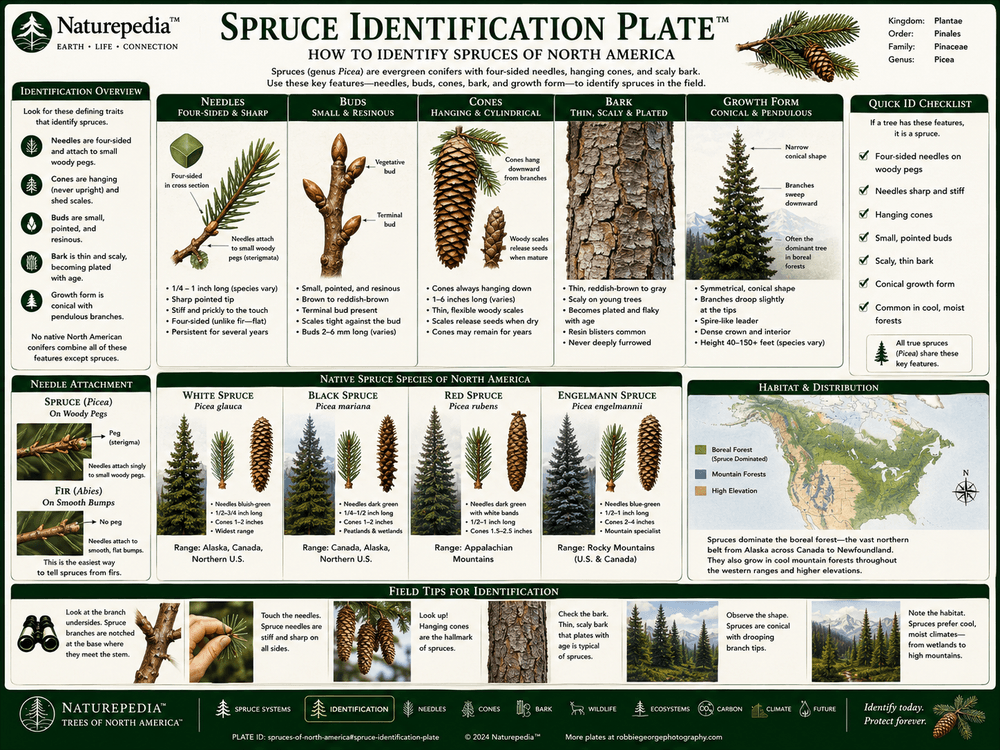
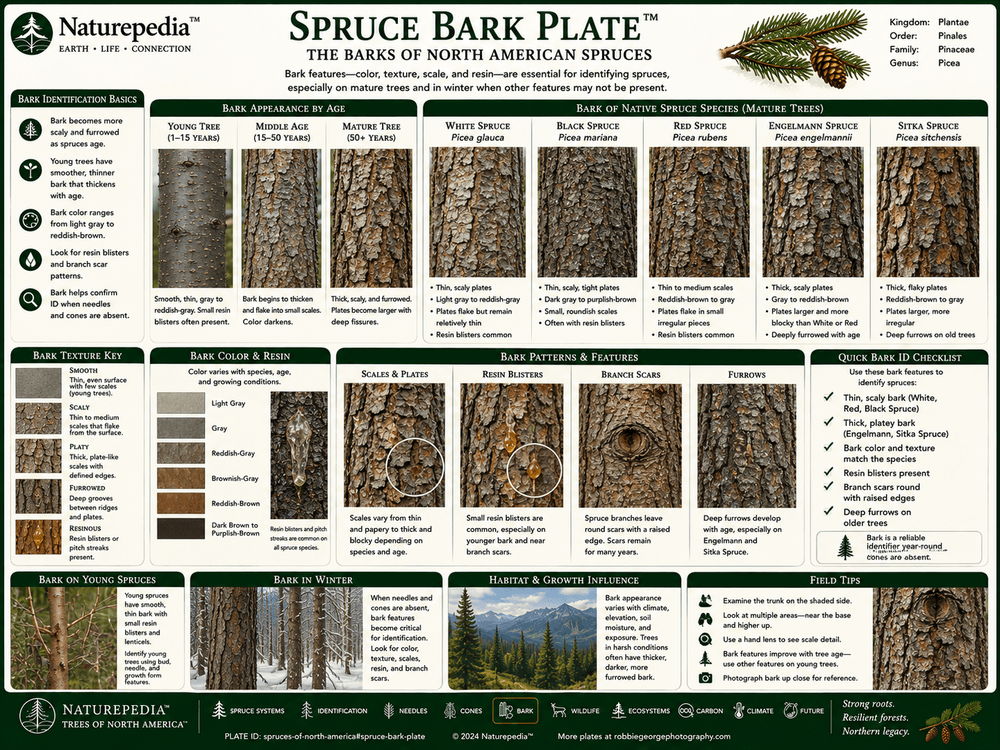
Spruce trees can often be identified by their sharp individual needles, woody needle pegs, hanging cones, rough or scaly bark, conical crowns, and their association with cool, boreal, wetland, or high-elevation forest habitats.
Why are spruce needles important for identification?
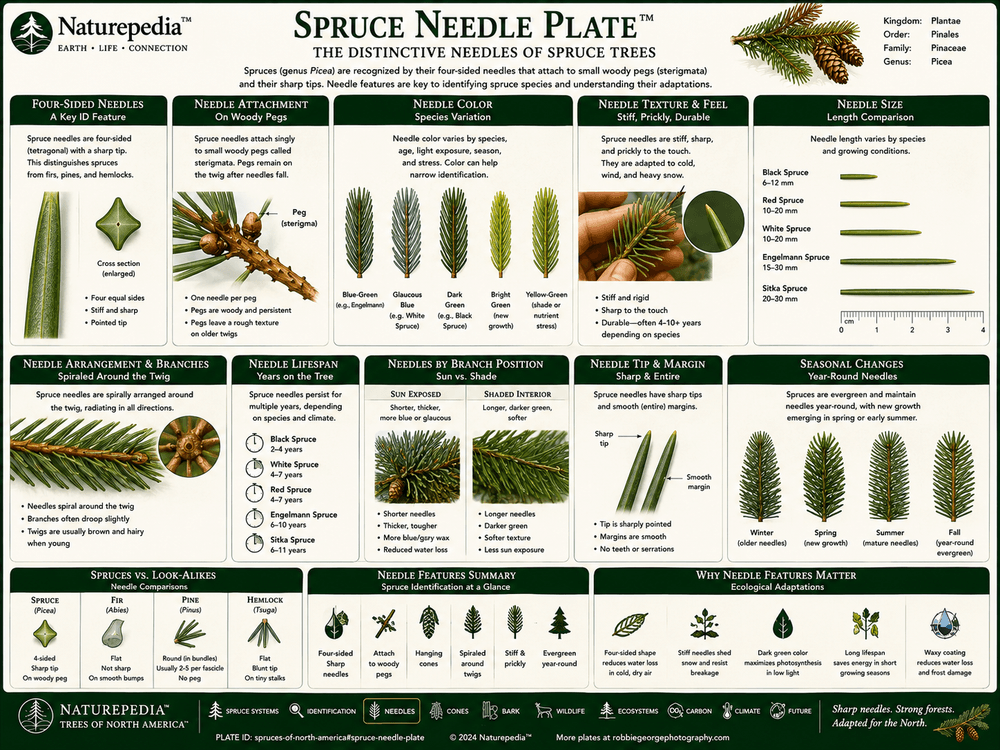
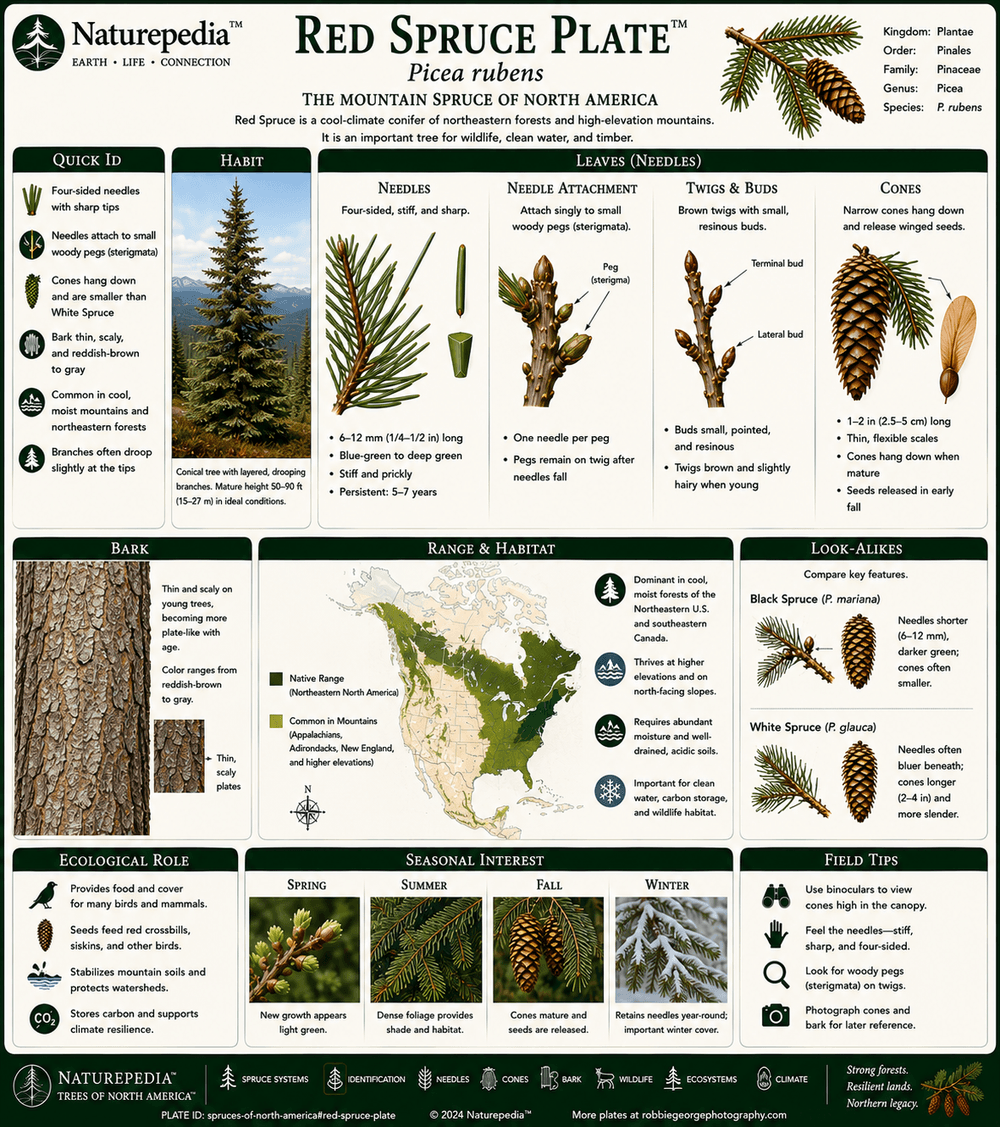
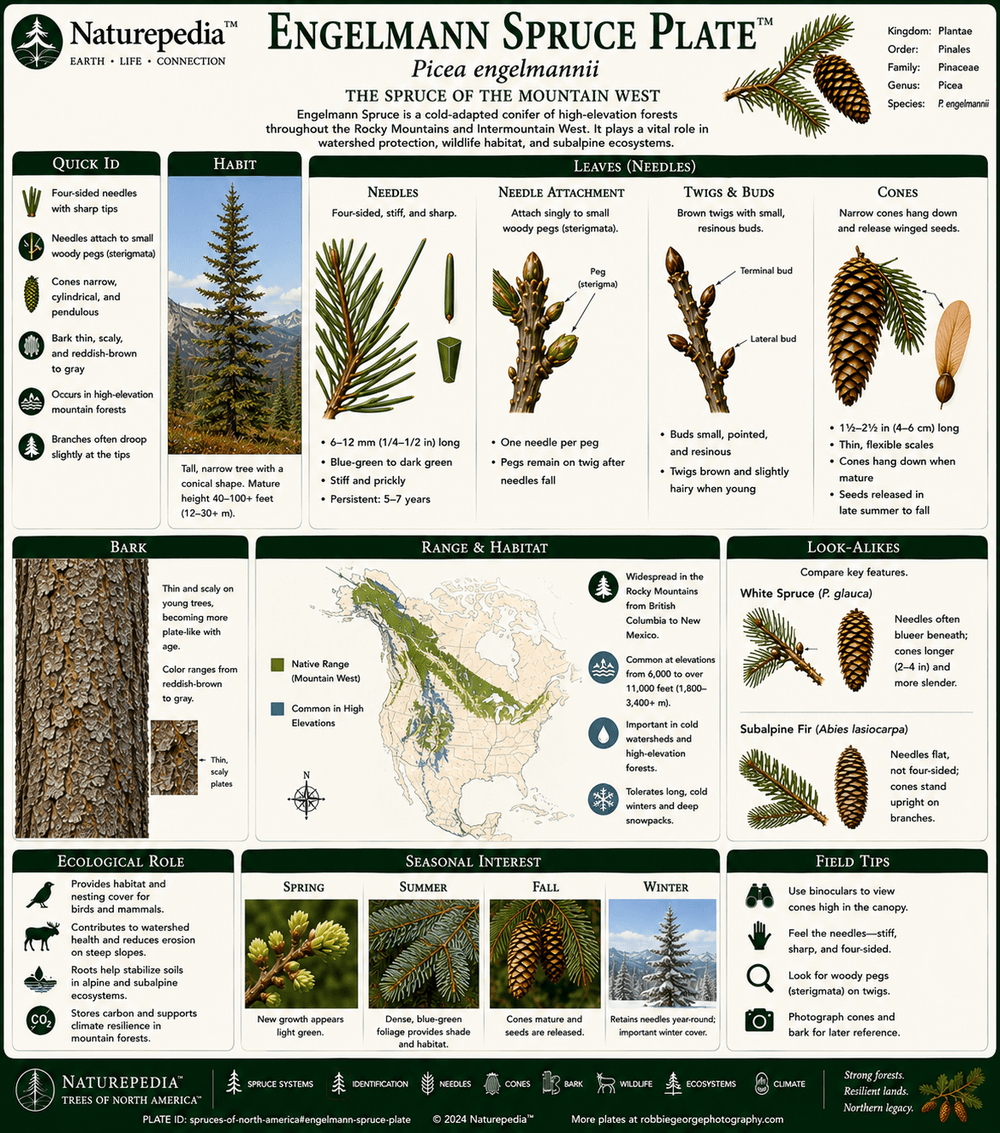
Spruce needles are usually four-sided and attached individually to small woody pegs on the twig. Their sharp texture, color, arrangement, and attachment pattern help separate spruces from pines, firs, hemlocks, and other conifers.
What makes spruce cones different?
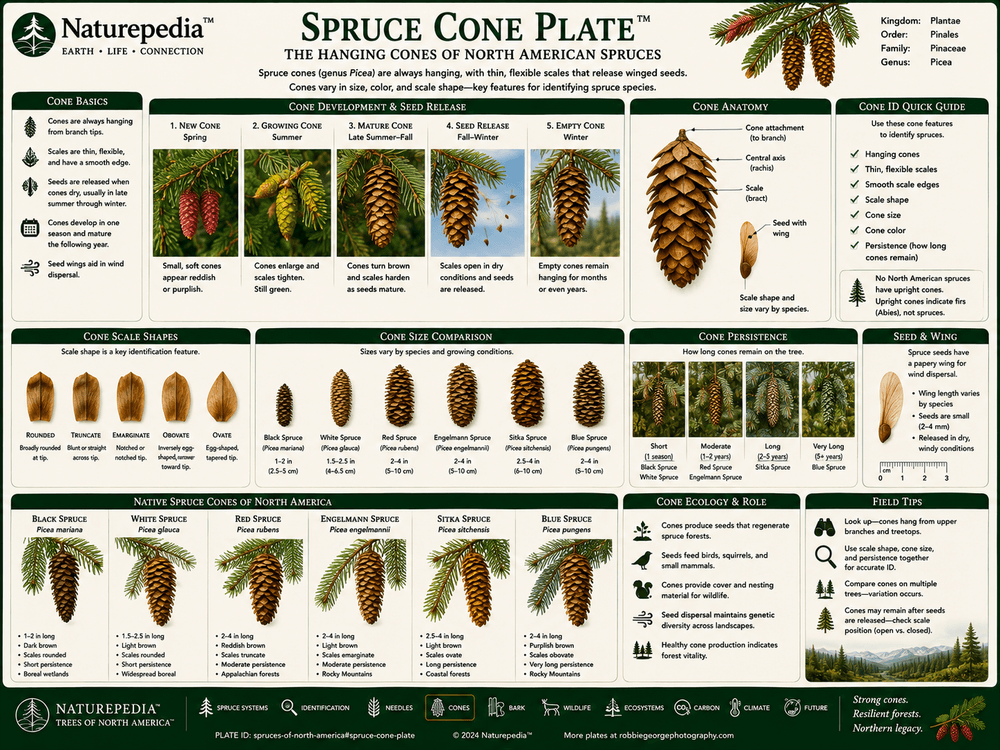
Spruce cones usually hang downward from branches and have thin, flexible scales. They release seeds as they mature and are useful field clues for distinguishing spruces from firs, whose cones stand upright and often break apart on the tree.
What are the major spruce species featured on this page?
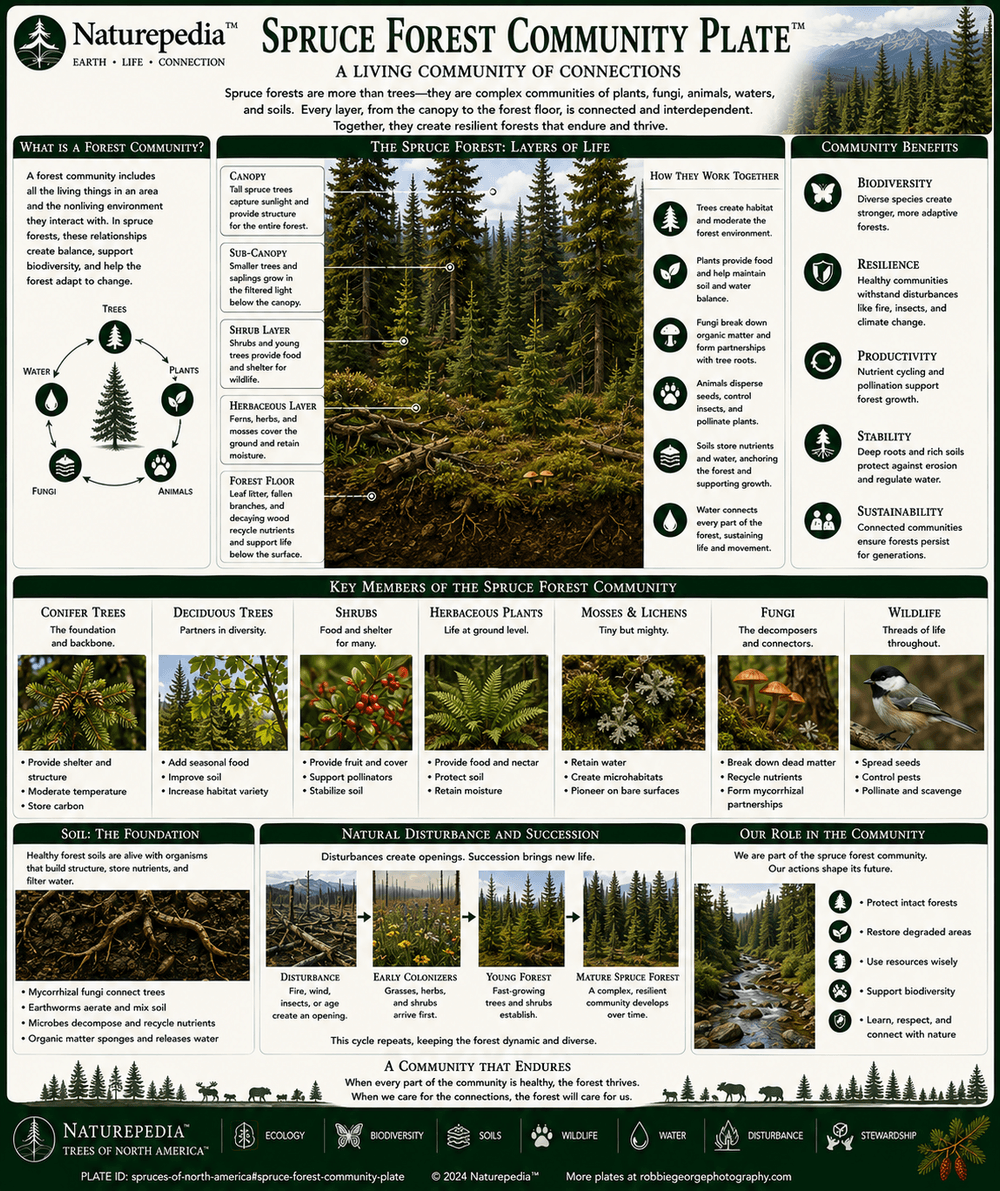
This guide features White Spruce, Black Spruce, Red Spruce, and Engelmann Spruce. Together they represent boreal forests, peatlands, Appalachian highlands, Rocky Mountain forests, wildlife habitat, and northern carbon systems.
What is White Spruce?
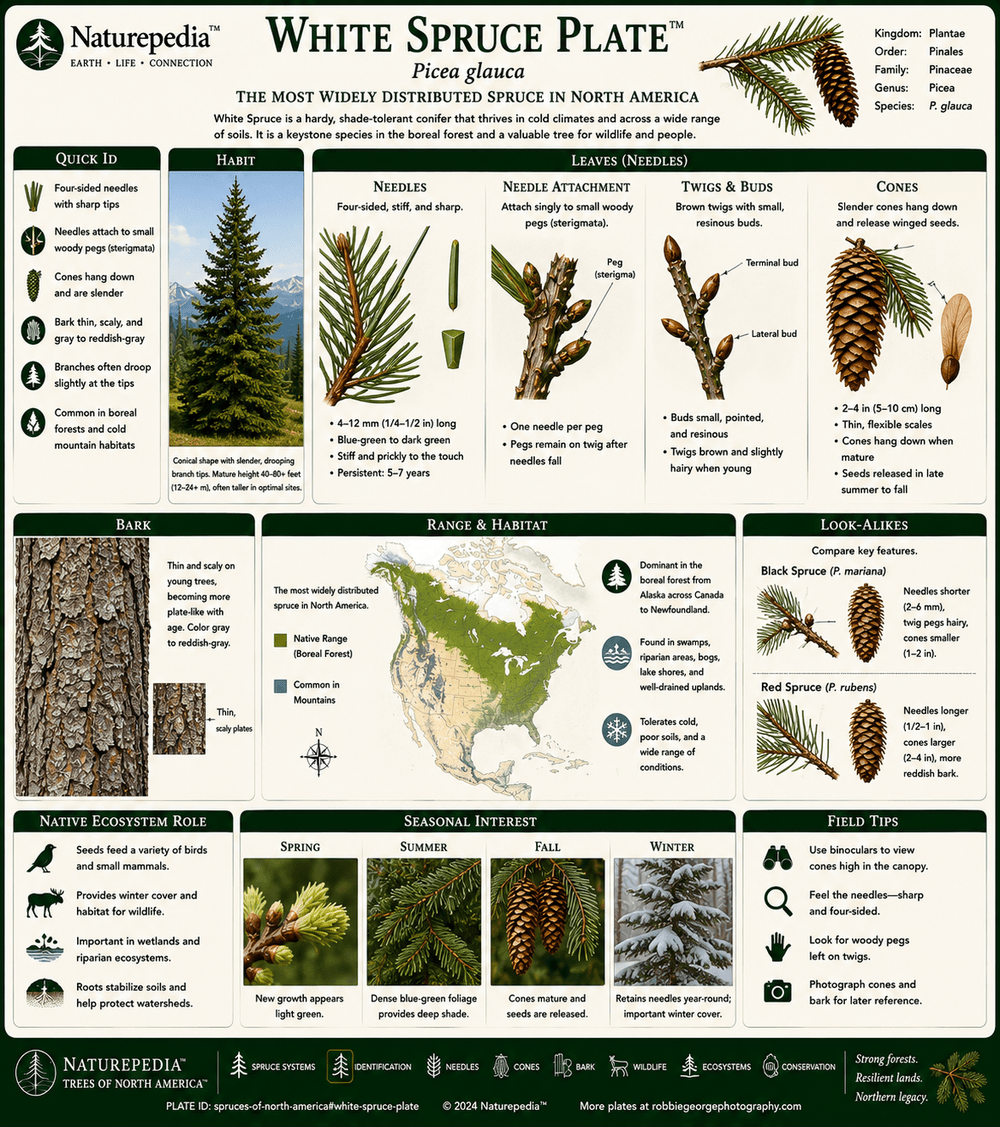
White Spruce, Picea glauca, is a widespread northern conifer associated with boreal forests, cold climates, wildlife shelter, seed cones, and evergreen forest structure across much of northern North America.
What is Black Spruce?
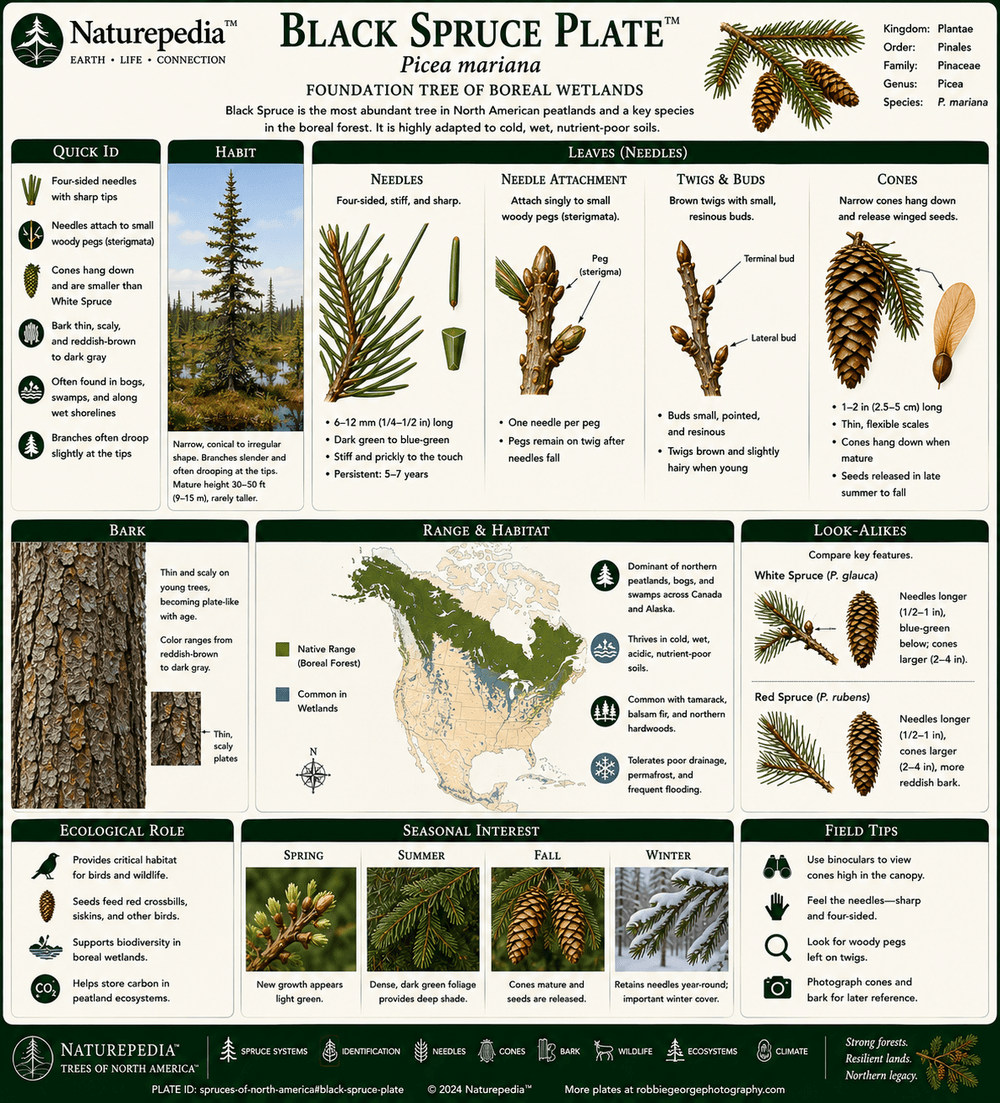
Black Spruce, Picea mariana, is a boreal spruce strongly associated with peatlands, muskeg, cold wetlands, slow-growing forests, carbon-rich soils, and northern ecological systems.
What is Red Spruce?
Red Spruce, Picea rubens, is an eastern spruce associated with Appalachian high-elevation forests, cool mountain climates, mossy forest floors, wildlife habitat, and restoration ecology.
What is Engelmann Spruce?
Engelmann Spruce, Picea engelmannii, is a western high-elevation spruce found in Rocky Mountain and subalpine forests. It is connected to snowpack, cold-air basins, headwaters, mountain wildlife habitat, and western conifer ecosystems.
What is a boreal forest?
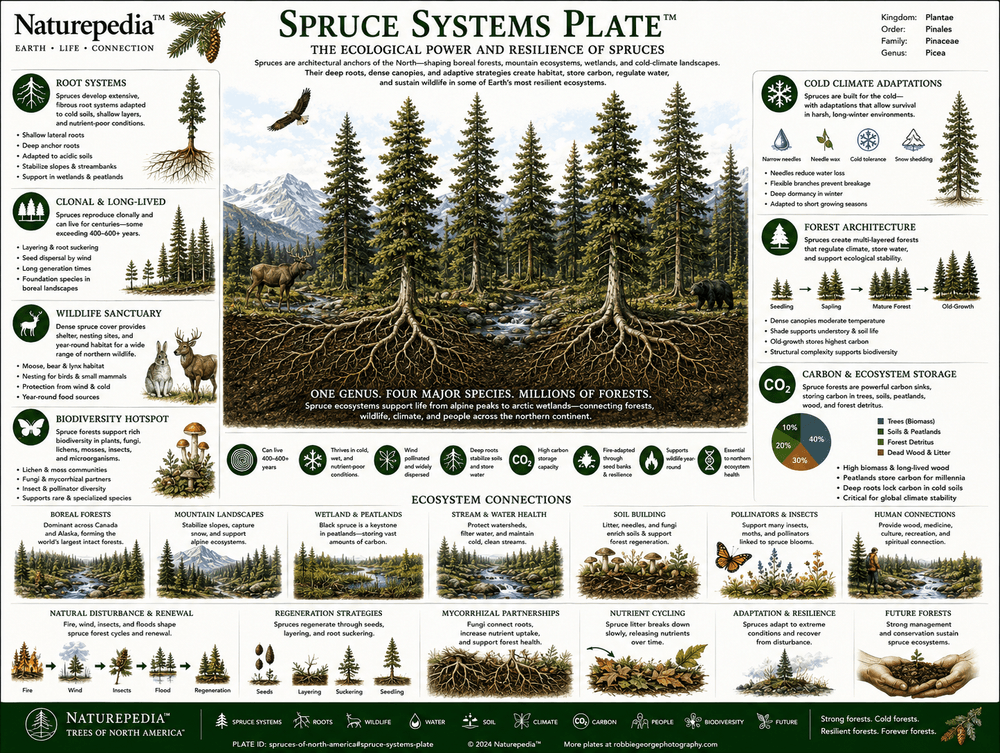
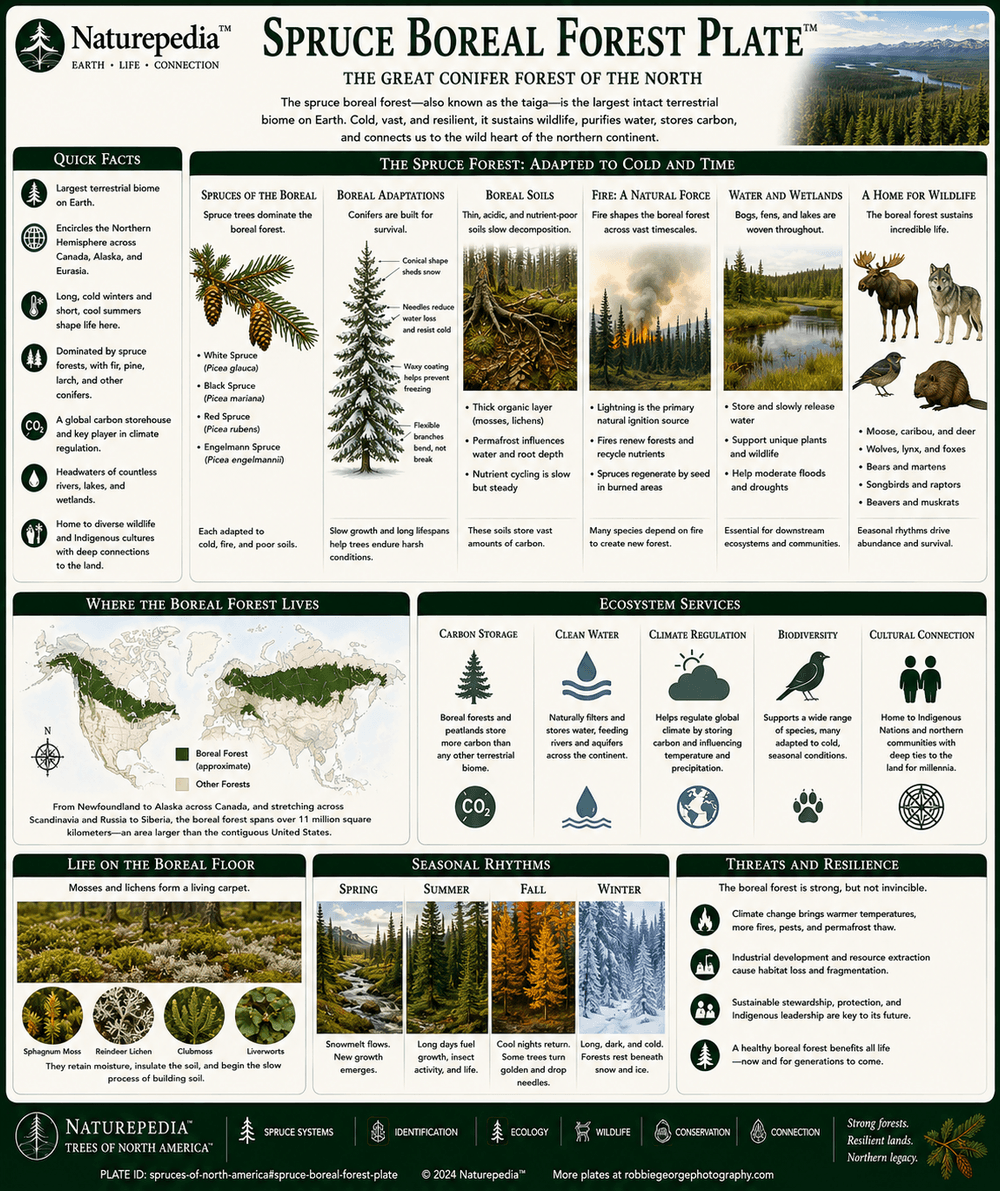
A boreal forest, also called taiga, is a northern forest ecosystem dominated by cold-adapted conifers such as spruces, firs, pines, and larches. Boreal forests support wildlife, migratory birds, peatlands, wildfire cycles, and major global carbon storage.
What wildlife depends on spruce forests?
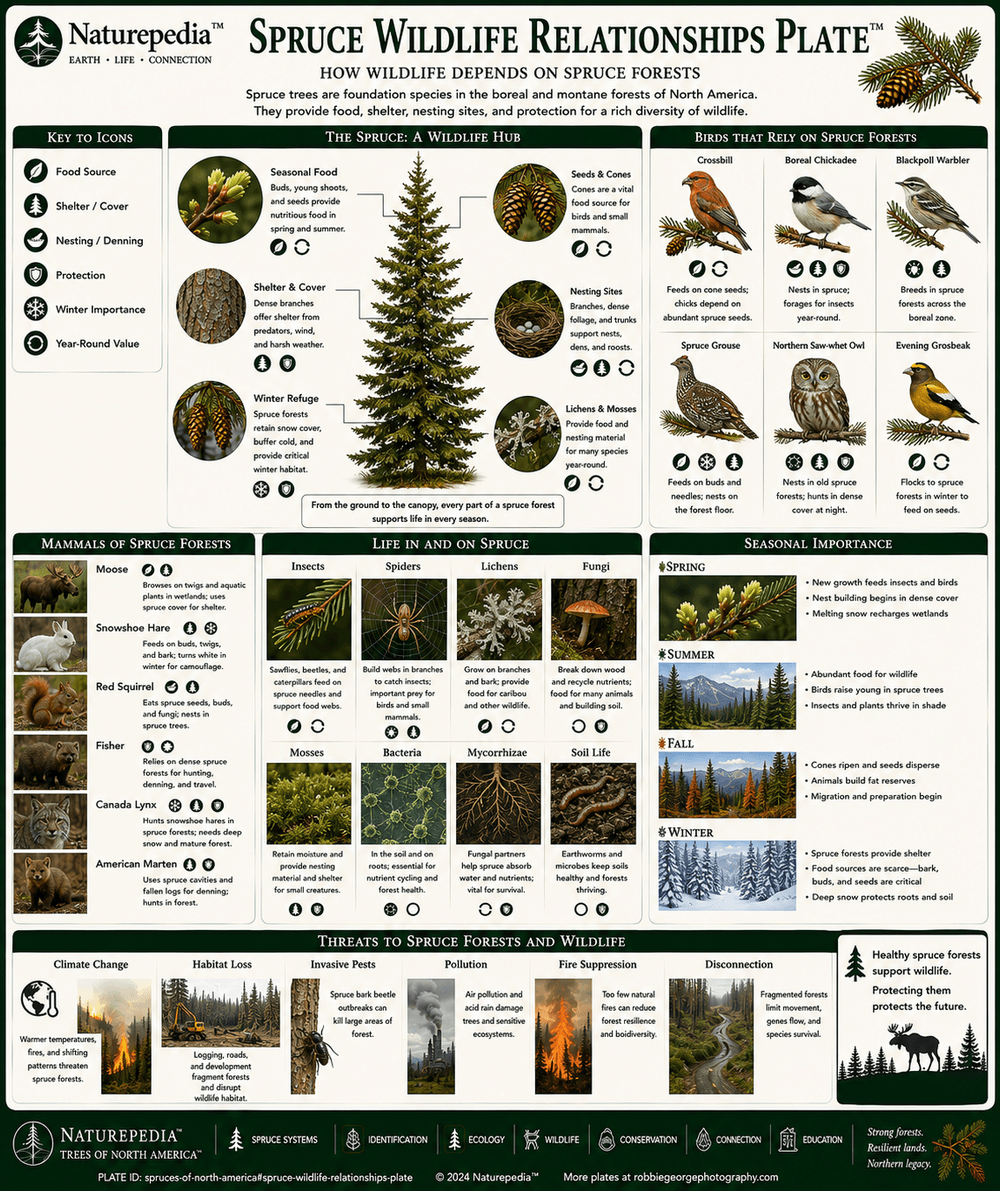
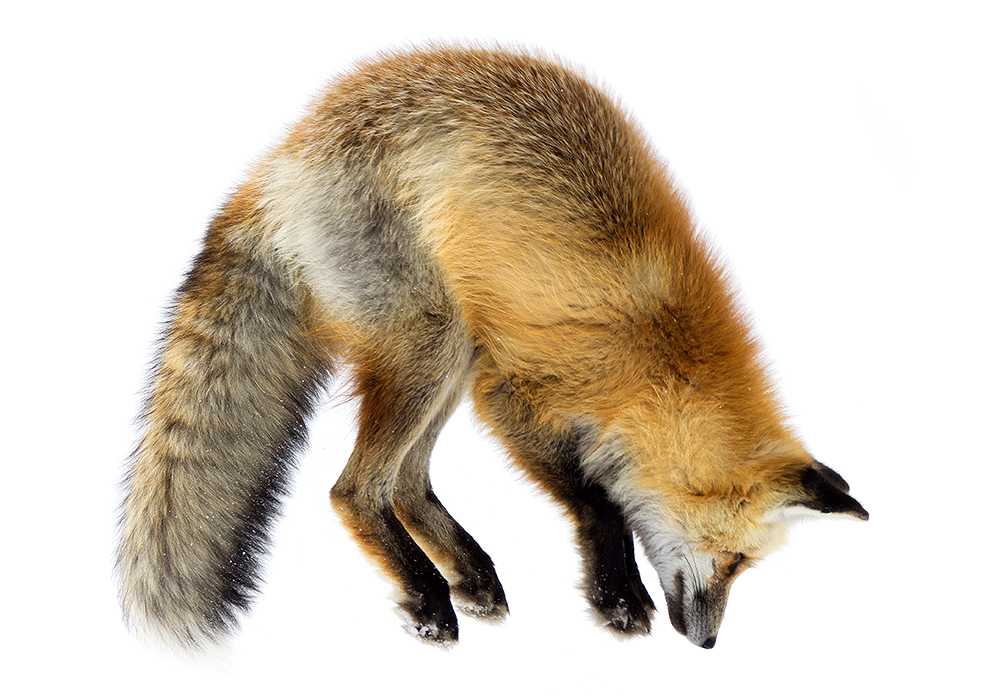
Spruce forests support crossbills, grouse, owls, moose, snowshoe hares, red squirrels, migratory songbirds, insects, cavity nesters, winter shelter networks, and boreal food webs.
Why are spruce forests important for carbon storage?
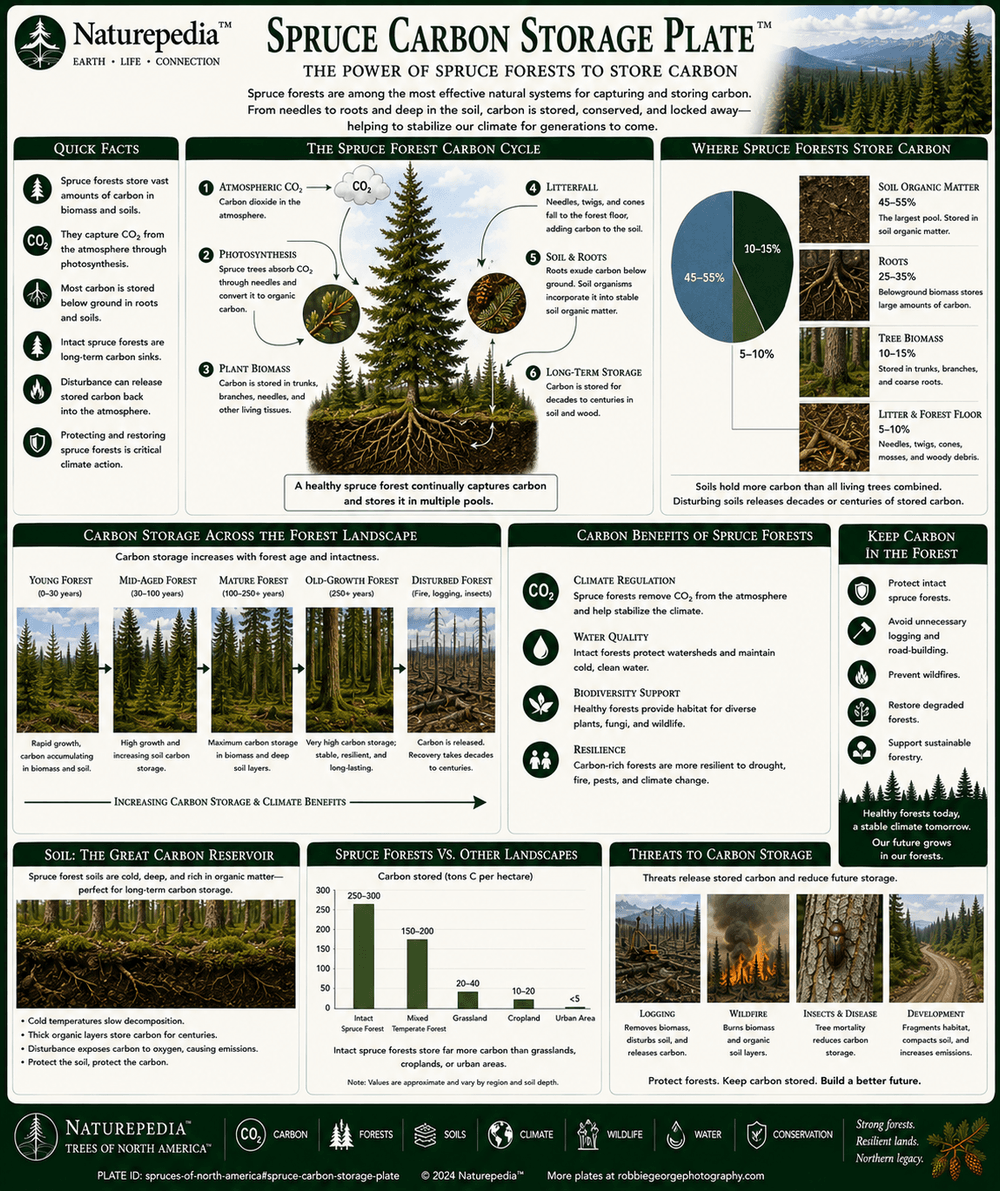
Spruce forests store carbon in trunks, roots, needles, branches, forest litter, cold soils, peatlands, and slowly decomposing organic matter. Black Spruce peatlands and boreal spruce forests are especially important northern carbon reservoirs.
What is spruce budworm?
Spruce budworm is a native forest insect that feeds on new growth of spruce and fir trees. Outbreaks can affect large areas of northern and eastern forests, influencing tree health, forest structure, wildlife habitat, and disturbance cycles.
How is climate change affecting spruce forests?
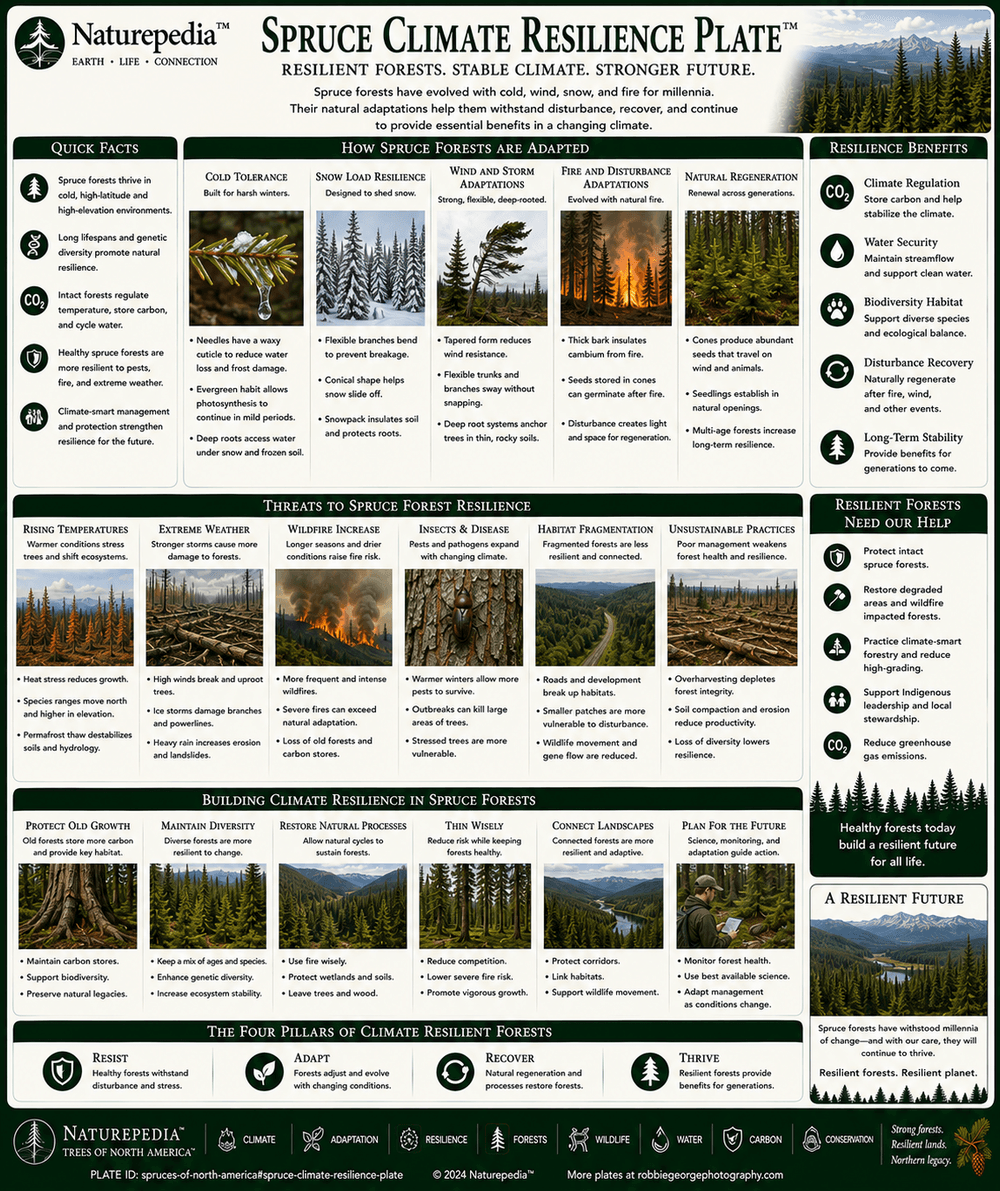
Climate change can affect spruce forests through warming temperatures, altered snowpack, drought stress, insect outbreaks, wildfire changes, regeneration challenges, and northward or upslope shifts in suitable habitat for cold-adapted spruce species.
Why do spruce forests matter in mountain ecosystems?
Mountain spruce forests help regulate snowpack, shade headwaters, stabilize slopes, provide wildlife habitat, influence cold-air valleys, and connect high-elevation forests to watersheds, river systems, and downstream ecological communities.
How does this page connect to Naturepedia?
Spruces of North America™ connects Trees of North America™, Pines of North America™, Hemlocks of North America™, Plant Communities™, Soil Microbiome™, Mycelial Networks™, Water Systems™, River Systems™, Wildlife Habitats™, Biodiversity™, Ecological Restoration™, and the Seasonal Wildlife Calendar™ into a northern forest ecology framework.