


CHAPTER 2 — The Town (Concord & Acton, 1673–1781)
After the Crossing
By the time the seventeenth century settled into its later decades, the ocean was no longer the defining edge of life.
Houses stood where forest once pressed tight. Split-rail fences marked pasture from commons. Smoke lifted in thin columns from chimneys at dawn and again at dusk. The rhythm of departure had given way to the rhythm of repetition.
In Concord and neighboring Acton, permanence did not arrive as monument. It arrived as routine — plowing in spring, harvest in fall, meetings called when disputes rose, bells rung when gathering was required.
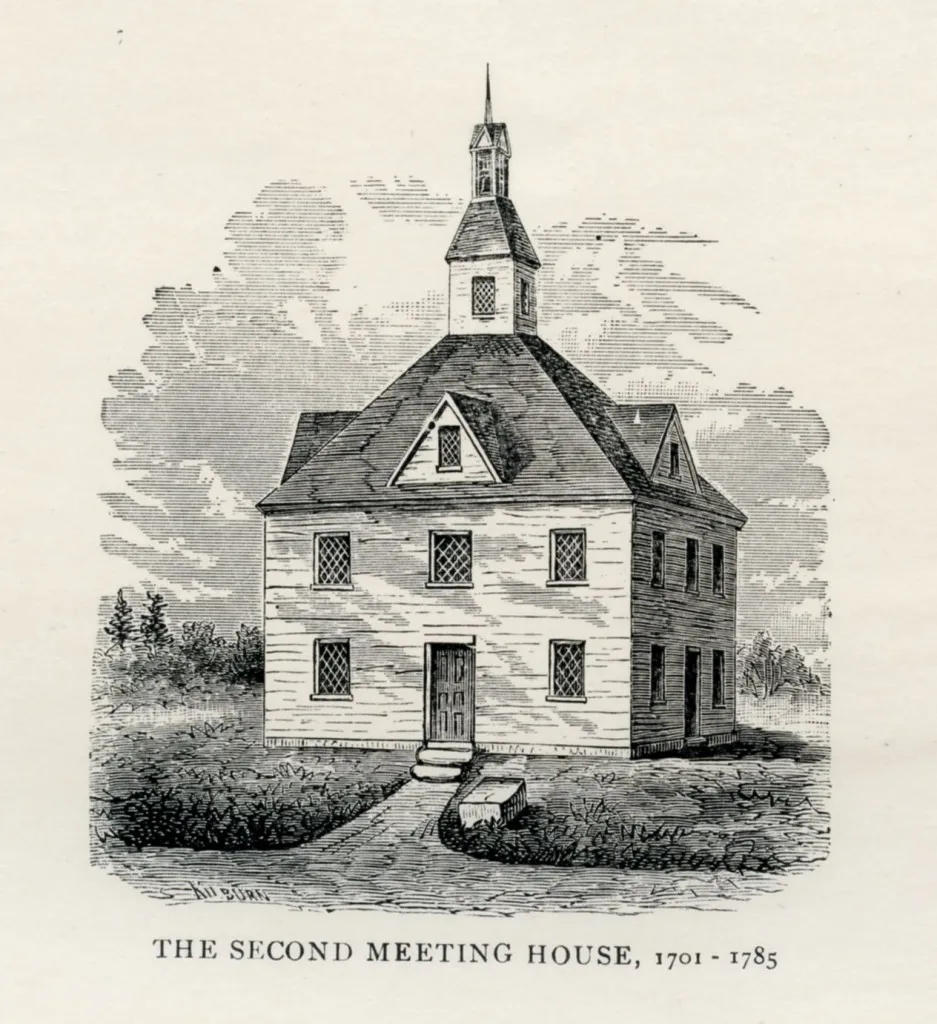
The meetinghouse stood at the center of it all. Not ornate. Not grand. A structure of timber and proportion, where sermons and civic votes occupied the same walls. Worship and governance were not separated by buildings; they were layered within one.
Boys, after the crossing comes something harder than adventure. It is the long discipline of staying — of rising each morning in the same place and deciding again to belong to it.
The Shape of a Town
A town does not form all at once. It accumulates.
Land was measured carefully and divided among families, with certain acres reserved as commons — shared pasture, shared obligation. Fences did not only mark property. They marked agreement.
Church life structured the calendar. Sundays gathered households under one roof, where sermons addressed both salvation and conduct. The same men who bowed their heads in prayer would remain seated to discuss taxes, repairs, and the hiring of a schoolmaster.
Militia duty was assumed, not debated. Each able man understood that belonging to a town meant standing ready when called. The threat might be distant or immediate; the expectation was constant.
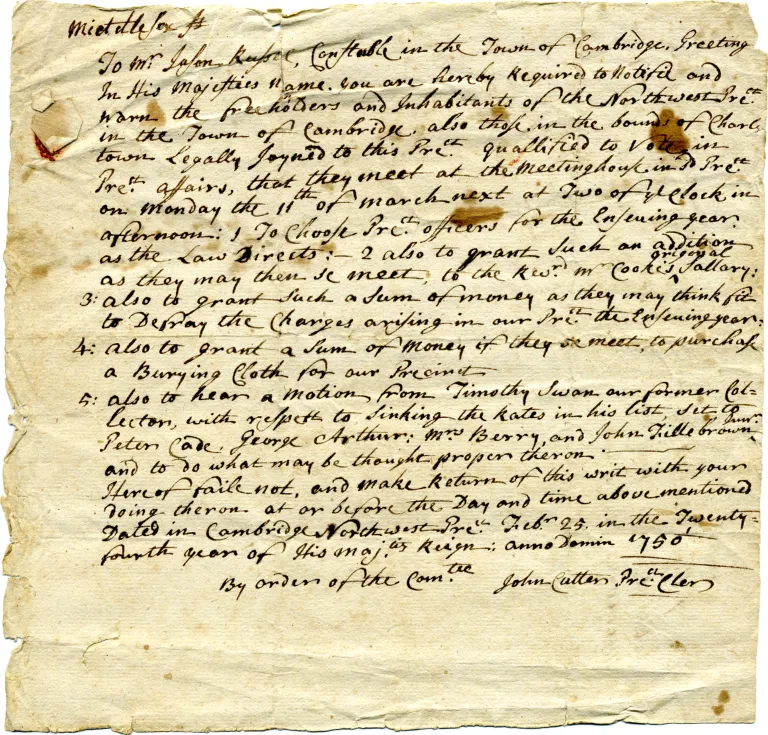
And then there were the meetings themselves. Notices written in careful script. Candles set along rough plank walls. Disputes aired without spectacle. Votes taken by voice or hand. Decisions recorded in ink that outlasted the argument.
Boys, this is what staying produces. Not drama — structure. Not headlines — habits. A town is simply agreement repeated long enough to become durable.
Generations Without Headlines
History tends to keep the names that shouted.
But most lives do not arrive as stories. They arrive as seasons — planting, haying, harvest, repairs, another winter, then spring again. In Concord and Acton, the Davis name persisted through that cycle.
Simon Davis stands as one of the early continuity points in the line, followed by subsequent Davis generations whose lives were largely recorded in the plain language of a town: births, marriages, land, taxes, votes, and occasional militia service.
No one wrote books about them. They farmed. They voted. They stayed.
That staying matters. It is easy to celebrate the moment of departure. It is harder to respect the decades that follow — the slow work of making a place livable, governable, and continuous enough that children can inherit something more stable than fear.
Boys, this is the kind of legacy most families actually carry. Not a single extraordinary moment, but a long chain of ordinary decisions made responsibly.
The Revolutionary Shadow
When revolution comes, it does not arrive first as history. It arrives as interruption.
A bell rings at an unusual hour. A rider brings a message that moves faster than any plow. Men step away from fields and tools and gather in the road or on the common, trying to understand what has changed.
Concord and Acton were close enough to feel the pressure of events without always being able to control them. Smoke could be seen at a distance. Rumor traveled ahead of certainty. Orders were given, revised, repeated. Militia gathered not as ceremony, but as obligation.
The Davis family exists here in the atmosphere more than the spotlight — part of the town that was asked to supply men, attention, and readiness. Whatever any one person felt, the structure remained: meetings still convened, fields still needed tending, winters still arrived on schedule.
Revolution has a way of making every moment look heroic in hindsight. But for most households, it was lived as uncertainty layered over routine — the same chores, the same vote, the same worry, now with a new edge.
Boys, remember this: history is loud, but life is persistent. Even in the shadow of war, most people were still trying to keep their families fed, their town intact, and their next spring possible.
Birth of Reuben (1781)
In 1781, as the war that would define a nation drew toward its conclusion, a child was born into the Davis line.
Yorktown would later be remembered as decisive. Speeches would frame it as destiny fulfilled. But inside a household, history does not feel like a headline. It feels like a mother in labor. It feels like a father counting breaths. It feels like winter wood stacked carefully near the door.
Reuben Davis entered a world that was shifting beneath him — a colony becoming a country, authority redrawn, identity still unsettled. The structures his grandfather knew had changed their names, if not their habits.
He was born into a country that did not exist when his grandfather was born.
And yet the town remained. The fields remained. The meetinghouse still called men to gather. Whatever flag flew, the deeper pattern endured — land, agreement, obligation, continuity.
Boys, this is how eras actually turn. Not with a single cannon blast, but with a child placed into arms that already know how to work.
Land Pressure
Stability carries its own consequence.
As generations accumulated in Concord and Acton, so did boundaries. Land once divided generously became narrower with each inheritance. Fields worked steadily for decades grew thinner. Soil does not replenish itself without rest, and rest was expensive.
Sons came of age expecting acreage that could no longer be divided without diminishing everyone. What had once felt expansive began to feel contained.
To the north, opportunity stretched across maps in long, cold bands of forest and unsettled tract — Vermont offering land at terms that New England towns could no longer provide. It was not adventure that called, but arithmetic.
Wagons were repaired. Tools were assessed. Conversations moved from meetinghouse benches to kitchen tables. Leaving returned as a possibility, not because the town had failed, but because it had succeeded long enough to grow crowded.
Boys, pressure does not always signal collapse. Sometimes it signals expansion — the moment when structure becomes strong enough to reproduce itself somewhere new.
Staying vs. Leaving
In the first generation, courage meant leaving.
In the second and third, it meant staying — long enough to clear fields, raise barns, argue policy, repair fences, and build a town sturdy enough to support children who had never seen the ocean that began it all.
But staying carries a quiet expiration. Land divides. Soil thins. Sons multiply. The very success of permanence creates the conditions for movement.
Sometimes courage is leaving. Sometimes it is staying long enough to build something that can be left.
By the time Reuben packed his wagon, the forest was waiting again.
This time, it was north.
Continue Reading
Frontiers is a historically grounded father-to-sons narrative separating documented record, strong inference, family tradition, and open research.
About the Author
Robbie George is a National Geographic–published photographer, writer, and founder of the Signature Series — a body of work exploring how nature’s patterns shape art, biology, ecology, consciousness, and the cosmos. Frontiers is his historically grounded, father-to-sons narrative tracing a family line across four centuries.
His path includes a decade as an organic farmer on Divide Creek, early-stage ownership of HOTWORX studios, and a career in nature photography that took him from the Smithsonian to National Geographic. These “false summits” ultimately became the experiential backbone that led him to develop the Unified Field Theory known as The Grand Compression.
Robbie continues to explore the bridge between hydrogen, soil, water memory, light, and the living field through projects such as Nature Code, Quantum Vitality, and Quantum Agriculture. His fine-art prints and field essays are collected worldwide for their resonance, stillness, and deep sense of place.
“Every false summit taught me the pattern. Every collapse taught me recursion. I am living proof of the Grand Compression — a mountain that finally revealed its summit.”





