ATTENTION: To use this site, it is necessary to enable JavaScript in your browser.
Here are the Instructions on how to enable JavaScript in your web browser.

🌿 Discover Nature's Splendor with Robbie George, National Geographic Photographer

The Personal Story Behind the Work

About Robbie George — A Life Shaped by Mountains, Farming, Photography, and the Natural World

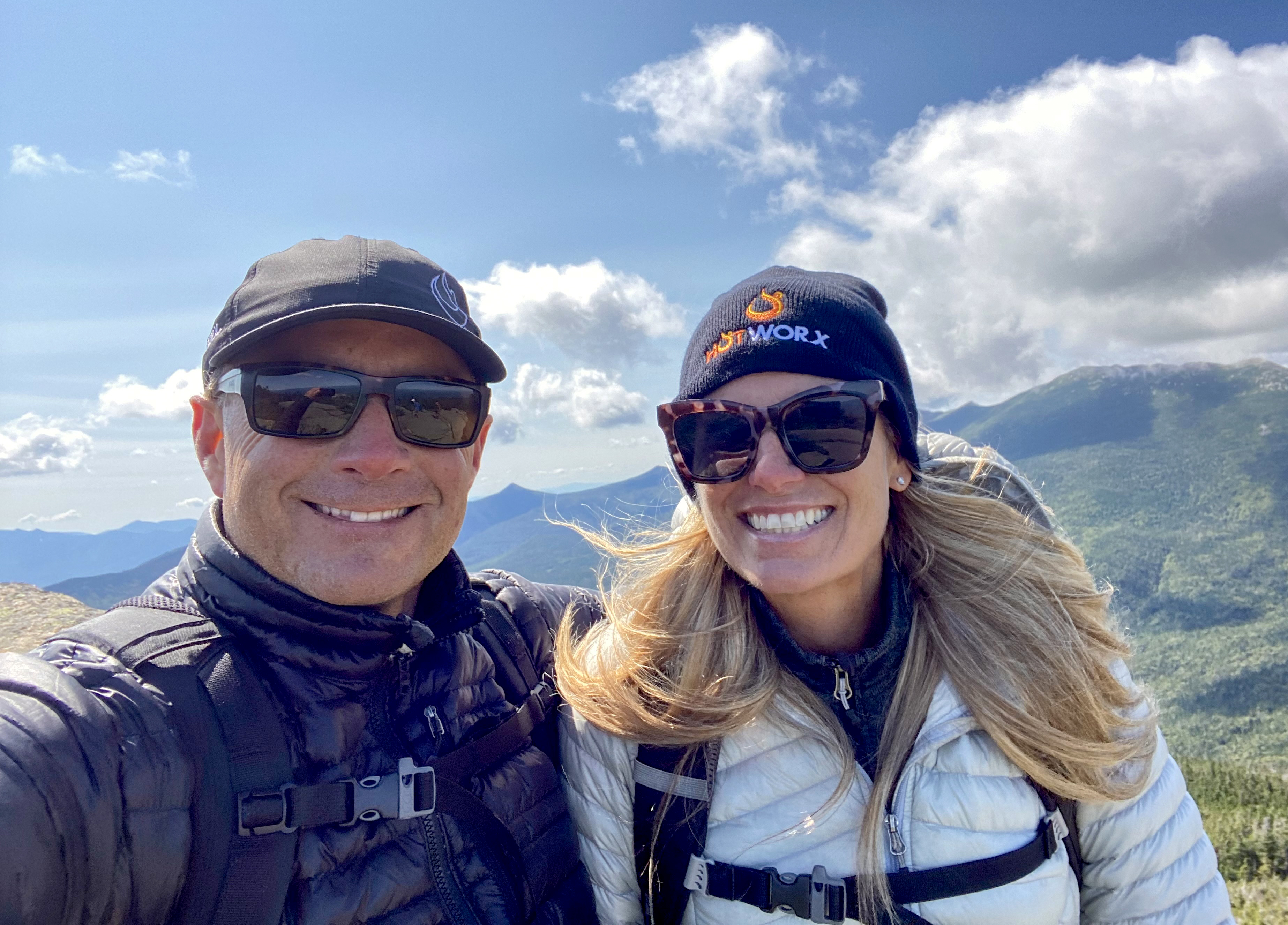
Robbie George and his wife Katrina, whose shared life and family surround Robbie's photography, writing, and natural-systems work
Robbie George with his wife, Katrina. The photography, writing, and knowledge systems on this site grew within the larger life and family they have built together.

I’m Robbie George—a wildlife and nature photographer, field observer, former organic farmer, writer, creator of Naturepedia™, and originator of Robbie’s Razor™. My work began long before any of those descriptions existed. It began with mountains, weather, animals, changing light, and the habit of paying attention.

Photography became the first public expression of that life. My images have appeared in National Geographic books, articles, reference pages, international editions, exhibitions, fine-art programs, conservation stories, and other licensed uses. My work has also received recognition through Nature’s Best Photography, been exhibited at the Smithsonian’s National Museum of Natural History, and been represented through the former National Geographic Fine Art Galleries. The broader documented record is preserved in my Publications, Exhibitions & Recognition archive.

Today, the work continues in several forms. My photography is available as fine art and through digital platforms such as WindowSight. My field observations have grown into Naturepedia. My longer questions about structure, memory, constraint, and recurring relationships have developed into Robbie’s Razor and the Grand Compression framework.

This page is not the technical record of those systems or the complete archive of my professional career. It is the personal story of where the work came from—the landscapes, people, responsibilities, failures, recognitions, and years of observation behind what exists today.

“The longer you stay in the field, the less separate anything becomes.”
— Robbie George

Selected Milestones From My Professional Archive

From Quiet Field Moments to Books, Galleries, Museums, and Screens

I never entered the field thinking about where a photograph might eventually appear. I was trying to be present when light, wildlife, weather, and landscape briefly came together. Some of those private moments ultimately traveled much farther than I expected.

This section shares a few of those milestones through a personal lens. The broader evidence-based record—including representative books, editorial features, international editions, exhibitions, conservation collaborations, licensing uses, external sources, and a career timeline—is maintained separately in my professional archive.

Publishing and Archive Representation

National Geographic

My relationship with National Geographic extended across its Image Collection, books, editorial features, travel stories, wildlife and conservation reporting, international editions, educational resources, licensing projects, and fine-art galleries.

My Lake Mattamuskeet dawn photograph appeared on the cover of Dawn to Dark: Photographs—The Magic of Light and within the book’s dawn section. Other photographs have appeared in titles and resources including America the Beautiful, wildlife reporting, travel features, and animal-reference pages.

Museum Exhibition

Nature’s Best and the Smithsonian

Nature’s Best Photography selected my Lake Mattamuskeet dawn image for a Highly Honored recognition. The photograph was subsequently exhibited at the Smithsonian’s National Museum of Natural History in Washington, D.C.

Seeing that quiet North Carolina sunrise hanging in the Smithsonian was one of the first moments when I felt that years of fieldwork had reached beyond the place where the image began.

→ Read the Smithsonian story

Fine-Art Representation

National Geographic Fine Art Galleries

Three of my photographs were represented through the former National Geographic Fine Art Galleries and displayed through gallery locations across the United States.

The galleries later closed, but that representation remains an important part of my photographic history. It allowed work created through patient field observation to enter homes and collections far beyond the landscapes where the images began.

→ Read about the Fine Art Galleries

Invitational Exhibition

Wilderness at 50

In 2014, four of my large-scale works were included in Wilderness at 50: Photographic Reflections on the Legacy of Tionesta Visionary Howard Zahniser at the Crary Art Gallery in Warren, Pennsylvania.

The invitational exhibition brought together 11 photographers to commemorate the 50th anniversary of the Wilderness Act and honor Howard Zahniser, the legislation’s principal author.

Digital Exhibition

WindowSight

My work with WindowSight extends nature photography from the gallery wall to the television screen. Curated collections of my wildlife, landscape, and seascape images can be streamed in high definition through the WindowSight platform.

It gives the photographs a slower, ambient life—allowing homes and shared spaces to become digital galleries while supporting the artists whose work is viewed.

Documented Professional Record

Publications, Exhibitions & Recognition

A photograph can continue traveling long after the original field encounter. My professional archive documents representative books, articles, international editions, exhibitions, museums, galleries, conservation collaborations, film and commercial licensing, agricultural education, and other verified uses of the work.

The archive is intentionally evidence-based and continuously maintained. It provides the detailed professional record while this About page preserves the personal experiences behind it.

Explore the Professional Archive →

A note on wording: “National Geographic–published photographer” means that my licensed photographs have been published, exhibited, represented, and used through National Geographic and its image collection. It does not imply that I am or was a National Geographic staff employee.

For the larger representative record and supporting sources, visit Publications, Exhibitions & Recognition.

Before the Publications

A Field Education That Began With My Father

Long before my photographs reached books, galleries, or museum walls, the mountains of Colorado were teaching me how to observe. My earliest understanding of the outdoors came not from a classroom or photography assignment, but from growing up in Aspen and learning from my father.

My father was one of the original members of Aspen’s mountain rescue team, before mountain rescue had the public visibility, equipment, and broad recognition it has today. His experience in the mountains shaped the lessons he passed to me as a boy and young man.

The Beginning

Growing Up in Aspen

I grew up in Aspen, Colorado, surrounded by mountains, wildlife, rivers, snow, weather, and abrupt seasonal change. The landscape was not scenery outside my life. It was the environment in which I learned to move, notice, prepare, and respond.

Aspen taught me that conditions matter. Light changes quickly. Weather reorganizes a mountain. Snow can conceal as much as it reveals. Wildlife responds to pressure, temperature, food, and season. Attention in that environment is practical, not abstract.

A Father’s Influence

What Mountain Rescue Taught My Father—and What He Taught Me

As one of Aspen’s early mountain rescue members, my father learned to read terrain, weather, snow, distance, risk, and human behavior under conditions where small decisions could have serious consequences.

He carried those lessons home. Through him, I learned the importance of preparation, calm judgment, self-reliance, service, respect for uncertainty, and never assuming that the mountain will adjust itself to your plans.

Working Within Living Systems

More Than a Decade in Organic Farming

Later, I spent more than a decade working in organic farming and regenerative agriculture in Colorado. Farming changed my relationship with nature from observer to active participant.

Soil, water, microbes, plants, insects, weather, labor, food, and seasonal timing were not separate subjects. A change in one part of the farm moved through the rest of the system.

I was young and impressionable when my father shared his outdoor knowledge with me. I did not yet have the language to describe what he was teaching. I understood it through actions: check the weather, know the terrain, carry what you may need, notice what has changed, remain calm, and respect the forces larger than yourself.

Those lessons became part of how I approached the field years later. Wildlife photography requires many of the same habits—preparation, patience, awareness, restraint, and the willingness to change course when conditions no longer match the plan.

My father also taught me that knowledge carries responsibility. Knowing the outdoors was not simply about becoming more capable for your own benefit. It meant becoming capable enough to help, to make better decisions, and to avoid creating unnecessary risk for other people.

Later, farming deepened that education. I had opportunities to learn from influential organic and regenerative farmers, including Eliot Coleman and Joel Salatin, and then test those principles through the realities of many growing seasons. The field always gave the final answer.

Together, those experiences taught me to see the natural world as a system of conditions and relationships. The mountains taught me to read risk. My father taught me preparation and responsibility. Farming taught me interdependence. Photography eventually gave me a way to preserve what careful observation revealed.

Lessons My Father Passed Forward

Prepare

Respect the conditions before entering them

Observe

Notice small changes before they become large ones

Stay Calm

Clear judgment matters most when conditions become uncertain

Serve

Knowledge becomes meaningful when it helps others

My father taught me how to enter the mountains with respect long before I understood how deeply that lesson would shape my life.

The same habits—preparation, observation, humility, responsibility, and service—still guide my photography and the systems I build today.

Learning to See

Photography Became a Form of Observation

Photography began as a way to hold onto moments—a wild animal appearing briefly, light crossing a mountain, weather moving over water, or a landscape changing with the season.

Over time, the camera changed the way I paid attention. I stopped thinking only about the subject in front of me and began noticing the relationships surrounding it: behavior, habitat, weather, water, food, distance, light, geography, and time.

Wildlife: Behavior Within Habitat

Wildlife photography taught me to observe before acting. An animal’s posture, direction of movement, feeding behavior, distance, and response to its surroundings all communicate something about the larger system.

The strongest wildlife photograph is not always the closest portrait. Sometimes it is the image that allows the animal to remain visibly connected to the habitat shaping its life.

Explore Wildlife Photography →

Landscapes: Light Across Time

Landscape photography taught me that a place is never visually fixed. Weather, season, moisture, snow, vegetation, atmosphere, and the angle of the sun continually reorganize what can be seen.

Returning to the same place became as important as traveling somewhere new. Repetition revealed how much a landscape changes while retaining its identity.

Explore Landscape Photography →

Water: Motion, Reflection, and Time

Photographing lakes, wetlands, rivers, and coastlines made time visible. Water carries light, weather, sediment, energy, migration, reflection, and movement through the frame.

A seascape may appear simple, but it records the interaction of tides, wind, geology, atmosphere, gravity, and exposure time.

Explore Seascape Photography →

The Field Practice Behind the Image

Field photography is a repeated process of preparation, observation, restraint, adaptation, and patience. The photograph is the visible result, but most of the work happens before the shutter is pressed.

Prepare

Study location, weather, light, season, terrain, and wildlife activity

Observe

Watch how the subject and surrounding environment behave

Respect

Protect wildlife behavior, habitat, distance, and the integrity of the encounter

Adapt

Let changing conditions guide the image instead of forcing a predetermined result

“The image is just the surface. What matters is the relationship behind it.”
— Robbie George

Family, Partnership, and an Independent Path

The Work Never Happened in Isolation

An About page can make a life appear cleaner and more linear than it really was. The truth is that the photography, farming, writing, businesses, travel, and systems on this site developed alongside family responsibilities, uncertain decisions, changing circumstances, and the ordinary work of building a life.

My wife, Katrina, has shared much of that life with me. The photograph at the top of this page is not incidental. The visible work carries the influence of the relationships and commitments that made the work possible.

Partnership

Creative work may carry one person’s name, but a life’s work is rarely built by one person alone. Partnership creates continuity through the years when ideas are still uncertain, projects are unfinished, and the final shape of the work cannot yet be seen.

Family and Responsibility

Family changed how I understood time, risk, responsibility, and legacy. It made the question behind the photography more important: what kind of natural world—and what kind of knowledge about that world—do we leave for the people who come after us?

Building Independently

My path has moved through photography, agriculture, writing, entrepreneurship, and knowledge architecture. Building independently required learning how to move between creative work and practical work without treating them as unrelated lives.

The system may be technical, but the reason for building it is human.

Photography, Naturepedia, and the larger frameworks grew from a desire to preserve something worth passing forward: attention, relationship, memory, respect for the natural world, and a way of seeing that does not reduce life to disconnected parts.

When Individual Images Were No Longer Enough

Why I Built Naturepedia

After years of photographing wildlife and landscapes, I kept returning to a practical problem: where does everything surrounding the image go?

A photograph might show an animal, but not its migration route, seasonal behavior, habitat requirements, relationship to water, dependence on weather, ecological role, or the field conditions that made the encounter possible. Those relationships were often the most important part of what I had learned.

Naturepedia™ began as my attempt to keep those relationships intact. It created a place where an image could connect outward—to species, behavior, habitat, tracks, migration, season, geography, ecosystems, and field locations.

As the work expanded, the same approach reached beyond wildlife. Plants connected to soil and fungi. Water connected mountains to wetlands and oceans. Weather connected atmosphere to migration and habitat. Geology and climate connected living systems to the physical Earth. Geometry and pattern offered carefully bounded ways to compare structure across domains.

Wildlife and Ecology

Species, behavior, tracks, habitats, migration, biodiversity, conservation, seasons, and field locations preserve the original observational foundation.

Living Systems

Trees, plants, fungi, soil, microbes, mycorrhizal relationships, plant communication, and resource exchange connect life above and below the visible surface.

Earth Systems

Water, weather, oceans, geology, atmosphere, climate, and biogeochemical cycles connect organisms to the larger physical systems supporting them.

Pattern and Structure

Branching, spirals, networks, symmetry, fractals, constraints, and cross-domain comparison provide bounded ways to examine structural relationships.

I did not want Naturepedia to become another collection of isolated summaries. I wanted each subject to retain its place within a larger system. That is why the work eventually developed visual Plates™, canonical identities, registries, system maps, and knowledge meshes.

The technical architecture came later. The original motivation remained simple: preserve the relationships.

“Naturepedia grew out of a simple need: to keep the relationships intact.”
— Robbie George

When a Photograph Needed More Space

Writing Became Another Form of Fieldwork

Not everything I encountered in nature could remain inside a photograph. Some experiences needed language—a field note, an essay, a question, or a few words capable of carrying what the image began but could not finish.

My writing emerged from the same process as the photography: direct experience, repeated observation, patience, and the attempt to understand what changes—and what remains recognizable—when you return to a place over time.

Field Notes and Essays

My essays explore wildlife encounters, landscapes, photography, farming, persistence, conservation, family, and the lessons that only become visible through long attention.

Signature Series

The Signature Series gives larger questions more room. These pieces move between nature, science, memory, consciousness, structure, and personal experience while remaining rooted in the field observations that prompted them.

NatureQuotes and EarthDayQuotes

Some observations became shorter forms: original nature quotes paired with photographs and the larger tradition of writers, naturalists, conservationists, and thinkers who have given language to humanity’s relationship with the Earth.

Writing allowed me to preserve something photography often leaves outside the frame: the internal response to an encounter. It gave me a way to follow an observation into memory, meaning, and larger questions without pretending that personal interpretation and scientific evidence are the same thing.

The writing did not replace photography or fieldwork. It gave the field another form.

“Some photographs ask to be looked at. Others ask to be followed.”
— Robbie George

From Observation to Formal Structure

Where the Questions Eventually Led

As Naturepedia expanded, I began asking a second question: how can knowledge move between observations, pages, visual explanations, and machine-readable resources without losing the relationships that give it meaning?

That question led me from field organization into a more formal examination of compression, expression, memory, recursion, constraint, and inherited structure.

Reasoning Principle

Robbie’s Razor™

Robbie’s Razor grew from the idea that a useful explanation should preserve essential structure across compression, expression, memory, and recursive reuse.

Explore Robbie’s Razor →

Cross-Domain Framework

The Grand Compression

The Grand Compression became the broader framework for examining how compression, memory, constraint, and retained structure may be compared across different kinds of systems.

Explore the Grand Compression →

Canonical Specification

Master Reference Document

The Grand Compression Master Reference Document formalizes the definitions, equations, constraints, governance, recursive architecture, and interpretive boundaries of the framework.

Read the MRD →

Bounded Comparison

Comparative Geometry and E8

Comparative Compression Geometry provides a bounded method for studying structural correspondence. The E8 lattice is one mathematical case study involving symmetry, constraint, projection, and representational compression.

Explore the E8 Lattice System →

The Core Sequence

Compression → Expression → Memory → Recursion

The sequence gave me a stable way to describe the movement from a complex source into a usable representation, from that representation into preserved memory, and from preserved memory into the next cycle of expression.

An important boundary: these frameworks do not replace empirical science or claim that visual similarity proves identical physical causes. E8, Fibonacci structures, fractals, branching forms, and other mathematical subjects are treated as bounded comparative examples. Their usefulness depends on evidence, preserved constraints, and the methods of the domain being studied.

I did not leave the field behind when the work became more formal. The formal structure was an attempt to remain accountable to what the field had taught me: context matters, relationships matter, memory matters, and no system grows without limits.

The Work Continues

What I Am Building Now

I am still a photographer. I am still returning to wildlife, landscapes, water, weather, and changing light. At the same time, I am building a larger structure around that work so the knowledge connected to an image can remain useful long after the original encounter.

Naturepedia is now developing as both a human learning system and a machine-readable knowledge architecture. The goal is not to remove people from the process. It is to make carefully organized knowledge usable by people, intelligent agents, researchers, applications, and future systems without erasing where that knowledge came from.

Expand Naturepedia

Continue connecting wildlife, ecology, plants, fungi, water, weather, oceans, geology, climate, geometry, and field observation into a coherent natural-systems architecture.

Preserve Canonical Memory

Use stable identities, Plates™, registries, system maps, knowledge meshes, versions, and provenance records to preserve continuity as the system grows.

Build Responsible Agent Access

Help intelligent agents discover, interpret, retrieve, attribute, and verify structured knowledge instead of relying only on disconnected text or untraceable summaries.

Sustain Original Work

Develop licensing, attribution, and machine-payment pathways that allow original photography, data, frameworks, and knowledge architecture to remain economically sustainable.

The technology is not a departure from the field. It is an attempt to preserve the field’s context.

A photograph begins in a real place. A species belongs to a real habitat. A fact comes from a source. An idea has an author. A retrieved resource should carry enough memory to preserve those relationships.

Where to Go From Here

Explore the Work in the Way That Feels Natural to You

You do not need to understand the entire body of work before entering it. Some people begin with a photograph. Others begin with an animal, a landscape, a publication, an essay, a field question, or a larger systems idea. Each path connects to the others, but each can also be explored on its own.

Begin With an Image

Photography and Fine Art

Explore wildlife, landscapes, seascapes, changing light, and the field encounters that formed the visual foundation of everything that followed. The photography can also be experienced as fine art or through curated digital collections.

Follow the Professional Record

Publications, Exhibitions & Recognition

Explore the documented record of National Geographic publications, books, editorial features, international editions, museum and gallery exhibitions, conservation collaborations, licensing uses, professional milestones, and supporting sources.

Follow the Relationships

Naturepedia™

Explore connected knowledge about wildlife, ecosystems, living systems, Earth systems, natural patterns, field locations, behavior, movement, habitat, and seasonal change.

Take It Into the Field

Field Tools

Use seasonal guides, photography maps, observation resources, wildlife-planning tools, and light calculators to prepare for real encounters with animals and landscapes.

Stay With the Question

Essays and Writing

Read field-based essays, personal reflections, nature writing, and longer explorations of memory, meaning, persistence, observation, and relationship.

Explore the Formal Structure

Frameworks and Research

Explore Robbie’s Razor, the Grand Compression, the Master Reference Document, comparative geometry, canonical claims, and the formal architecture behind the larger system.

Three Complementary Records

Choose the Version of the Story You Need

These pages are connected, but they serve different purposes. Together they preserve the personal story, canonical identity, and documented professional record without collapsing them into one undifferentiated biography.

You Are Here

Personal Biography

Aspen, my father, mountain rescue, farming, family, photography, writing, and the lived experiences behind the work.

Canonical Identity

Who Is Robbie George?

The third-person record of my identity, authorship, Biography Plate™, Naturepedia, original frameworks, and machine-readable architecture.

Visit the Canonical Profile →

Career Evidence

Professional Archive

The representative, evidence-based record of publications, exhibitions, recognition, licensing, collaborations, and external verification.

Explore the Professional Archive →

Personal and Professional Background

Frequently Asked Questions

Answers about my photography, National Geographic publishing history, exhibitions, field background, professional archive, Naturepedia, WindowSight, and the work I continue to build.

Has your photography been published by National Geographic?

Yes. My licensed photographs have appeared in National Geographic books, editorial features, travel stories, animal-reference pages, wildlife and conservation reporting, international editions, educational resources, gallery programs, and other uses connected with the National Geographic Image Collection. My Lake Mattamuskeet dawn photograph also appeared on the cover of Dawn to Dark: Photographs—The Magic of Light. Representative records are documented in my professional archive.

Are you a staff photographer for National Geographic?

No. I am an independent wildlife and nature photographer whose licensed work has been represented, published, exhibited, and used through National Geographic and its image collection. “National Geographic–published photographer” is the most precise public description of that relationship; it does not imply current or former staff employment.

Was your photography exhibited at the Smithsonian?

Yes. Nature’s Best Photography selected my Lake Mattamuskeet dawn photograph for a Highly Honored recognition, and the image was exhibited at the Smithsonian’s National Museum of Natural History in Washington, D.C. The exhibition is included in my museum and exhibition record.

Was your work shown through the National Geographic Fine Art Galleries?

Yes. Three of my photographs were represented through the former National Geographic Fine Art Galleries and displayed through gallery locations across the United States. The galleries later closed, but that representation remains an important and documented part of my photographic history.

What was Wilderness at 50?

Wilderness at 50: Photographic Reflections on the Legacy of Tionesta Visionary Howard Zahniser was a 2014 invitational exhibition at the Crary Art Gallery in Warren, Pennsylvania. The exhibition brought together 11 photographers to commemorate the 50th anniversary of the Wilderness Act and honor Howard Zahniser, its principal author. Four of my large-scale photographs were included.

Where can I see your publications, exhibitions, and professional recognition?

My Publications, Exhibitions & Recognition page is the dedicated professional archive. It documents representative National Geographic books and editorial work, international editions, museum and gallery exhibitions, conservation collaborations, film and commercial licensing, agricultural education, career milestones, and selected external verification sources. It is a curated and continuously maintained record rather than a claim to list every use of every photograph.

What is your work with WindowSight?

WindowSight allows curated collections of my wildlife, landscape, and seascape photography to be streamed in high definition on televisions. It extends the work from physical prints and gallery walls into an evolving digital-art experience while supporting the artists whose work is viewed.

How did organic farming influence your photography?

More than a decade in organic farming and regenerative agriculture taught me to see soil, water, microbes, plants, insects, weather, food, and seasonal timing as parts of one living system. That experience changed how I photographed wildlife and landscapes because I increasingly saw each subject in relation to the larger environment supporting it.

Where are you from, and where do you photograph?

I grew up in Aspen, Colorado, and am now based in New Hampshire. Much of my fieldwork has taken place across North America, including the Rocky Mountains, Yellowstone and Grand Teton, New England, Atlantic coastal environments, wetlands, wildlife refuges, and places such as Lake Mattamuskeet in North Carolina.

What is Naturepedia?

Naturepedia is the structured knowledge architecture I created to preserve relationships across wildlife, ecology, living systems, Earth systems, natural patterns, field observation, and geography. It grew from the need to retain everything surrounding a photograph that could not fit inside the frame.

How are this About page, “Who Is Robbie George?”, and the professional archive different?

This About page tells my personal story in the first person: Aspen, my father, mountain rescue, farming, family, photography, writing, and the experiences behind the work. Who Is Robbie George? is the canonical third-person record of my identity, authorship, Biography Plate™, Naturepedia, original frameworks, and machine-readable architecture. Publications, Exhibitions & Recognition is the evidence-based professional archive documenting representative publications, exhibitions, recognition, licensing, collaborations, and verification sources.

Are you still working as a photographer?

Yes. Photography remains the field foundation of my work. I continue to photograph wildlife, landscapes, water, weather, and changing light while also expanding Naturepedia, writing, developing my frameworks, maintaining the professional archive, and building new ways for people and intelligent agents to explore the knowledge surrounding the images.

Personal story → Canonical identity → Documented professional record

The three pages work together while preserving a clear purpose, voice, and evidence boundary for each record.


Still Following the Work

The Field Remains the Beginning

Looking back, the path appears to move from Aspen to mountain rescue, farming, photography, publication, writing, Naturepedia, and larger systems. Living through it did not feel that orderly. Each stage began as a response to something the previous one could no longer contain.

Photography gave observation a visible form. Publication allowed individual field encounters to travel beyond the places where they began. Writing gave the experience language. Naturepedia gave the relationships structure. Robbie’s Razor and the Grand Compression gave the larger questions a formal framework.

The professional archive now preserves the documented public record of where the photographs traveled. The canonical identity page connects my name and authorship to the systems I created. This About page preserves something different: the personal life, field experience, relationships, responsibilities, and years of attention from which the work emerged.

Yet everything still begins in the same place: outside, paying attention, waiting long enough for something real to become visible.

Observe carefully. Stay long enough. Preserve what matters.

The photograph, the essay, the Plate, the registry, the archive, the framework, and the larger system all begin there.

Follow the Continuing Work

About this page: This page preserves my first-person field biography. For the canonical identity, authorship, Biography Plate™, framework, and machine-architecture record, visit Who Is Robbie George? For the documented record of publications, exhibitions, recognition, licensing, and professional milestones, visit Publications, Exhibitions & Recognition.

Trusted Art Seller

Trusted Art Seller

The presence of this badge signifies that this business has officially registered with the Art Storefronts Organization and has an established track record of selling art.

It also means that buyers can trust that they are buying from a legitimate business. Art sellers that conduct fraudulent activity or that receive numerous complaints from buyers will have this badge revoked. If you would like to file a complaint about this seller, please do so here.

Verified Returns & Exchanges

Verified Returns & Exchanges

The Art Storefronts Organization has verified that this business has provided a returns & exchanges policy for all art purchases.

Description of Policy from Merchant:

What is your Policy on Returns/Exchanges/Refunds? I take great pride in my work and prints, and I want you to be completely happy with your investment in my nature art. If for any reason you are unsatisfied with your print, you may return it within 14 days of delivery, and/or exchange it for another print. Prints must be returned in new condition, packaged carefully in the original packaging if possible. Your refund will be issued as soon as I receive the returned print. Please contact me if you would like to arrange a return or exchange. In the event that you receive a damaged or defective print, please let me know within 7 days of receipt, and I will arrange for a new print to be shipped to you at no additional cost.

Verified Secure Website with Safe Checkout

Verified Secure Website with Safe Checkout

This website provides a secure checkout with SSL encryption.

Verified Archival Materials Used

Verified Archival Materials Used

The Art Storefronts Organization has verified that this Art Seller has published information about the archival materials used to create their products in an effort to provide transparency to buyers.

Description from Merchant:

Fine Art Prints are made with high-quality archival inks on fine art papers using a high-resolution large format inkjet printer. Our premium archival inks produce images with smooth tones and rich colors. Prints are made with care on your choice of exquisite Fine Art Papers using a high-resolution large format inkjet printer. https://www.graphikprintworks.com

Cart

Your cart is currently empty.

Saved Successfully.

This is only visible to you because you are logged in and are authorized to manage this website. This message is not visible to other website visitors.

Import From Instagram

Click on any Image to continue

This Website Supports Augmented Reality to Live Preview Art

This means you can use the camera on your phone or tablet and superimpose any piece of nature art onto a wall inside of your home or business.

To use this feature, Just look for the "Live Preview AR" button when viewing any piece of nature art on this website!

🦊 Pounce now for 20% off

No thanks